
Why Does My Tooth Hurt When I Bite Down? 7 Common Causes
Medical Disclaimer
This article, “Why Does My Tooth Hurt When I Bite Down? 7 Common Causes”, has been written by Dr. Suleman Khan (Dental Surgery) for informational and educational purposes only. The content provided here should not be interpreted as professional medical advice, diagnosis, or treatment. Always seek the advice of your dentist or other qualified healthcare provider with any questions you may have regarding a medical or dental condition.
A tooth that behaves normally until the moment you bite into something is unsettling. If you have been wondering why does my tooth hurt when I bite down, the short answer is that pressure is reaching something that isn’t right. It could be a crack, a cavity, a filling that no longer fits, an irritated nerve, an infection at the root, or a tooth that takes more force than it should. This guide covers seven common causes, what your pain pattern can and cannot tell you, and when to book a dentist.
Nothing here can be confirmed from a description alone. Only an examination separates a harmless irritation from a crack or infection that will keep getting worse.
Quick Answer: Why Does My Tooth Hurt When I Bite Down?
A healthy tooth handles chewing without complaint. When biting hurts, the force is usually reaching the hard outer layers, the pulp (the soft core holding the nerves and blood vessels), the ligament that cushions the root, or a filling or crown that no longer sits properly.
The American Association of Endodontists lists decay, a loose filling, a cracked tooth and damage to the pulp as possible causes of sharp pain when biting down on food. Pain that flashes and fades, pain that lingers, pain with swelling, and pain that began right after dental work each point in different directions. These are clues, not a diagnosis.
Seven Common Causes of Tooth Pain When Biting
1. Cracked or Fractured Tooth
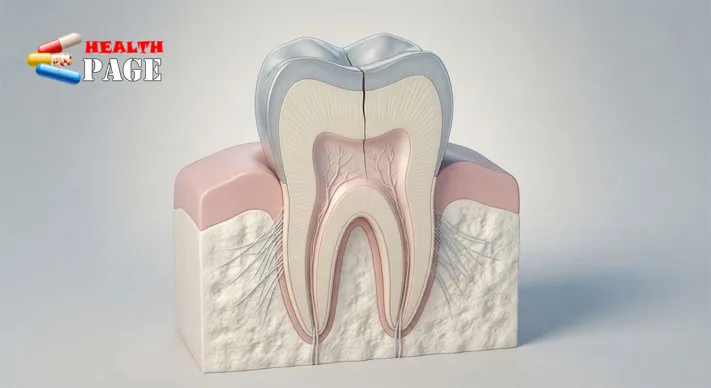
Cracks are among the most frequent reasons for tooth pain when biting, and among the hardest to pin down. When a tooth’s outer layers are cracked, chewing makes the pieces shift slightly and irritates the pulp beneath. The AAE describes cracked tooth symptoms as erratic pain when chewing, sometimes as the bite is released, plus pain with hot or cold temperatures. The pain often comes and goes, and even a dentist may struggle to tell which tooth is responsible.
Not every crack matters. Craze lines are fine cracks in the enamel. They are very common in adults, painless and of no concern beyond appearance. A fractured cusp, where part of the chewing surface breaks off (often around a filling), rarely damages the pulp. The cracks that cause trouble run from the chewing surface toward the root. A vertical root fracture can show few signs until the surrounding gum or bone becomes infected.
A cracked tooth does not heal the way a broken bone does. Treatment ranges from a filling or crown to root canal treatment. If the crack extends below the gum line, extraction may be the only option. The AAE also advises against placing aspirin or numbing ointments directly on a cracked tooth.
A crack is one possible cause, particularly when the pain is sharp, intermittent or strikes as you release your bite. It is far from the only one.
2. Tooth Decay or a Cavity
Decay breaks down the enamel and exposes the softer dentin beneath. Early cavities often cause no pain at all, so a tooth can look fine and still be affected. As decay moves toward the pulp, biting can trigger sensitivity or sharp pain, and tooth decay causing pain tends to get noticed late.
You don’t need a visible hole. Cavities can form between teeth or around the edge of an old filling, where they are hard to see. A guide to what a cavity can look like at different stages shows why a quick check is worth having.
3. A High, Loose or Damaged Filling or Crown
A filling or crown that sits slightly too high makes that tooth meet its partner first, so it takes more than its share of force. A loose or fractured restoration, or decay creeping in around its edge, can expose sensitive dentin.
Pain after a dental filling is fairly common in the short term, because the treatment itself can irritate the pulp. Endodontists note that sensitivity after dental work often settles, and they suggest having it checked if it lasts beyond two to four weeks or gets worse. A bite that feels high is a different matter. Tell your dentist soon, and mention when the pain began and whether that tooth seems to touch first. A dentist can often correct this with a small adjustment, and it should never be attempted at home.
4. Inflamed Tooth Pulp (Pulpitis)
Pulpitis is inflammation of the pulp, usually triggered by deep decay, a crack, trauma or extensive dental work. Dentists describe it as reversible, meaning the pulp can recover once the cause is treated, or irreversible, meaning it cannot.
Sensitivity to hot or cold and pain on biting are common early signs. Pain that lingers for more than about 30 seconds after hot or cold food suggests the pulp may be badly damaged. In time the tooth may ache on its own, including at night. A small problem can become a much more painful one by this route, so a dental assessment is worthwhile at any stage. Root canal treatment may be needed if the pulp cannot recover.
5. Dental Infection or Abscess
When infected pulp tissue dies or bacteria spread past the tip of the root, pus can collect and form an abscess. Pressing on an inflamed area hurts, which is why biting makes the pain worse.
Dental abscess symptoms include constant, severe or throbbing pain, a tooth that is tender to touch, swollen or red gums, a bad taste in the mouth, fever, and swelling of the cheek or jaw. The AAE links constant severe pain and pressure with gum swelling and touch sensitivity to a possible abscess. A bump on the gum near a sore tooth is another sign to have examined, and a guide to a bump on the gums explains the possible causes.
6. Teeth Grinding, Clenching and an Uneven Bite
Grinding (bruxism) and clenching load teeth for hours at a time, often during sleep. The AAE lists bruxism as a cause of dull ache and pressure in the upper teeth and jaw. Over time it can also contribute to cracks and sore supporting tissues.
Clues include jaw stiffness on waking, worn or flattened tooth edges, and soreness in several teeth rather than one. An uneven bite, from a high restoration, shifted teeth or a missing tooth, can concentrate force on a single tooth. A dentist can check your bite and may suggest a night guard.
7. Inflammation of the Tissues Around the Tooth
Each root sits in a thin cushion of fibres called the periodontal ligament. When it becomes inflamed, through gum disease, trauma, excessive bite force or infection at the root tip, the tooth may feel tender, slightly high, or sore to tap. Bite pressure then hurts more than temperature changes do.
This can happen with no visible damage to the tooth. Treatment depends on the source: gum care, bite adjustment, or treating an infected pulp.
Does It Hurt When You Bite Down or When You Let Go?
The moment the pain strikes is a useful clue. Pain as you bite down is non-specific, since decay, restorations, pulp inflammation, infection and ligament irritation can all cause it. Tooth pain when releasing the bite is more distinctive. A crack may open slightly under pressure and snap back as you let go, which produces a brief, sharp pain. The AAE lists release of biting pressure among possible cracked tooth symptoms.
Pain on release can be an important clue to a crack, but a dentist needs to examine the tooth to confirm the cause. If your tooth hurts when biting down on particular foods or at a certain angle, tell your dentist exactly that. It helps them narrow things down.
What Does Sharp Tooth Pain When Biting Down Mean?
Sudden, sharp pain usually suggests a structural problem such as a crack, decay or a damaged filling, or involvement of the pulp. A dull, pressing ache or steady throbbing leans toward inflammation or infection. Treat this table as a rough guide, not a diagnostic chart:
| Pain pattern | Possible explanations |
|---|---|
| Sharp pain as you bite | Crack, decay, restoration problem, pulp involvement |
| Sharp pain as you release | Can be a clue to a cracked tooth |
| Dull pressure or tenderness | Inflamed ligament around the root, grinding |
| Throbbing or constant pain | Pulp inflammation or infection |
| Lingering ache after hot or cold | Pulp may be damaged |
| Pain with swelling, fever or bad taste | Possible dental infection |
| Pain after a recent filling or crown | Temporary irritation or a restoration sitting high |
What If My Tooth Hurts When I Chew?
Chewing adds repetition and sideways force to simple biting pressure, and hard, sticky or fibrous foods make it worse. Tooth pain when chewing does not automatically mean infection, and it does not automatically mean a root canal. The causes are the same ones listed above.
Tooth sensitivity when biting can also come from exposed dentin. The AAE says brief sensitivity may reflect minor decay, a loose filling or slight gum recession. Chewing on the other side may bring some relief, but it is a stopgap and not a plan.
When Should You See a Dentist?
The NHS advises seeing a dentist if toothache lasts more than two days, does not ease with painkillers, or comes with a high temperature, pain when you bite, red gums or a bad taste. The same applies if your cheek or jaw is swollen. In practice, if a tooth repeatedly hurts when you bite or chew, arrange an examination instead of testing it again and again at home.
The NHS toothache guidance also notes that GPs cannot provide dental treatment. If you can’t reach a dentist or get an emergency appointment, call 111.
When Is Tooth Pain an Emergency?
⚠️ Go to A&E if toothache comes with swelling around the eye or neck, or swelling in the mouth or neck that makes it hard to breathe, swallow or speak. The NHS advises against driving yourself. Ask someone to take you or call 999.
Facial swelling with a fever, or symptoms that are worsening quickly, also call for urgent dental or medical help the same day.
What You Can Do Until Your Dental Appointment
Keep it conservative. Avoid chewing on the painful side, choose softer foods, and steer clear of very hot, cold or sweet items. Use a soft toothbrush. The NHS suggests salt-water rinses for adults and painkillers such as ibuprofen or paracetamol, and recommends asking a pharmacist which painkiller suits you, especially if you take other medicines or have a medical condition. Don’t place aspirin tablets against the tooth or gum, and don’t try to file down a filling yourself.
Short-term comfort measures are covered in this guide to home remedies for toothache, though none of them treats the underlying cause.

Do You Need Antibiotics?
Not automatically. A 2019 American Dental Association guideline for healthy adults advises against antibiotics for most pulpal and periapical dental pain. It recommends dental treatment and, if needed, over-the-counter pain relief. Antibiotics may be considered when signs such as fever or swollen lymph nodes appear and treatment isn’t immediately available. A prescription cannot repair a cracked or decayed tooth, so the underlying problem still needs treatment.
How a Dentist Finds the Cause
Expect questions about which tooth hurts, what triggers it, whether the pain comes on biting or releasing, how it reacts to hot and cold, and whether you’ve had recent dental work. The dentist will then examine the tooth and gums, check your bite, and may test the tooth’s response to temperature or tapping. Biting on a small tool, one cusp at a time, can reproduce crack-related pain. X-rays may be taken.
Cracks are often too fine to appear on an X-ray, and the AAE notes that the source can be difficult to locate. Diagnosis sometimes takes more than one visit, which is normal.
Frequently Asked Questions
Why does my tooth hurt when I bite down but not at other times?
Pressure-only pain often points to a crack, a restoration that sits high, early decay or an irritated ligament. Those problems don’t tend to hurt until force is applied. They also don’t resolve on their own, so an examination is worthwhile even if the pain seems minor.
Can a cavity cause pain when I bite?
Yes, once decay has weakened the tooth or reached deeper tissue. Early cavities may cause no pain, so an absence of symptoms doesn’t rule one out.
Why does my tooth hurt when biting after a filling?
The tooth may be briefly irritated, or the filling may sit slightly high. Contact your dentist soon if the bite feels uneven, and mention it if sensitivity persists beyond a few weeks.
Can pain that feels like toothache come from somewhere else?
Yes. Sinus problems, jaw joint disorders and ear infections can cause referred pain, and sinus pain usually affects several upper teeth. Facial nerve conditions can also mimic dental pain, as this guide on what can be mistaken for trigeminal neuralgia explains.
Should I see a dentist if my tooth only hurts when I bite?
Yes. Pain that is repeatable and tied to biting is a good reason for an examination, because cracks and decay worsen with time.
Next Steps If Biting Hurts
So, why does my tooth hurt when I bite down? Usually because pressure is exposing a problem in the tooth structure, its filling, the pulp or the tissue around the root. Your pain pattern can give useful clues, but only an exam can name the cause. Note when the pain started, what triggers it, and whether it comes on biting or releasing. Then book a dental appointment, and seek urgent care if swelling, fever or breathing difficulty appears.
References
- American Association of Endodontists, “Tooth Pain” and “Cracked Teeth” (patient pages): https://www.aae.org/patients/dental-symptoms/tooth-pain/ and https://www.aae.org/patients/dental-symptoms/cracked-teeth/
- NHS, “Toothache”: https://www.nhs.uk/conditions/toothache/
- California Dental Association, “Antibiotics not needed to manage most pulpal-related dental pain, ADA guideline advises” (2019), summarising the ADA guideline: https://www.cda.org/newsroom/2019/antibiotics-not-needed-to-manage-most-pulpal-related-dental-pain-ada-guideline-advises/

Dr. Suleman Khan is a registered Dental Surgeon dedicated to modern preventative oral health, maxillofacial insights, and advanced clinical treatment approaches. Based at the prestigious
Government Dental College and Hospital in Ahmedabad and registered under the Dental Council of India, he brings extensive hands-on experience in public health dentistry and preventative medicine.
As a core specialist panelist on the HealthPage Medical Review Board,
Dr. Khan provides expert clinical oversight, rigorous fact-checking, and medical verification for our oral health and dental surgery articles. He focuses on simplifying dense orthodontic and hygienic concepts into accessible, safe, and actionable guidance that reflects current healthcare standards.
✉ Professional Inquiries:
[email protected]
