
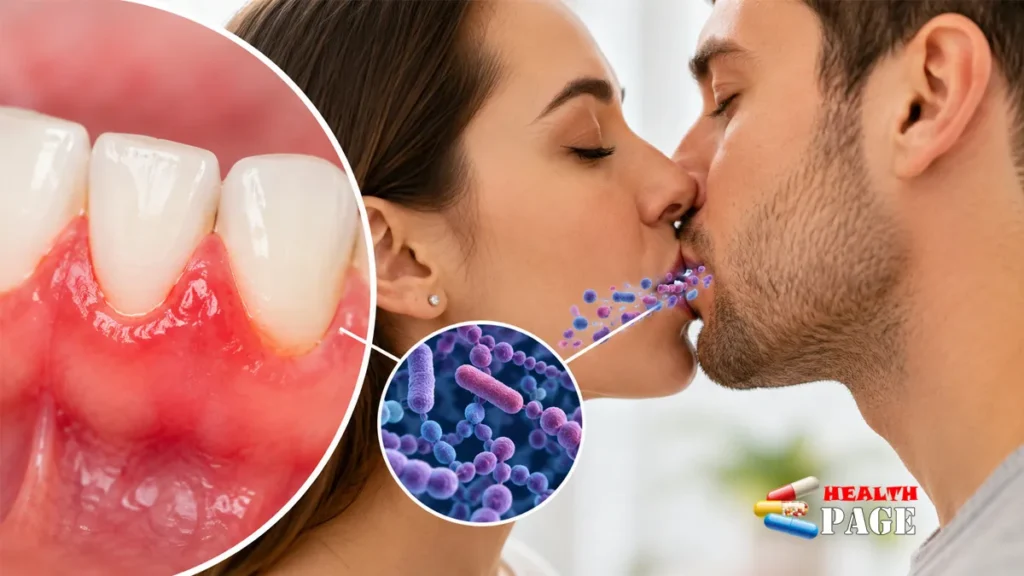
Is Gingivitis Contagious? Can Gum Disease Spread Through Kissing?

Dr. Suleman Khan is a registered Dental Surgeon dedicated to modern preventative oral health, maxillofacial insights, and advanced clinical treatment approaches. Based at the prestigious
Government Dental College and Hospital in Ahmedabad and registered under the Dental Council of India, he brings extensive hands-on experience in public health dentistry and preventative medicine.
As a core specialist panelist on the HealthPage Medical Review Board,
Dr. Khan provides expert clinical oversight, rigorous fact-checking, and medical verification for our oral health and dental surgery articles. He focuses on simplifying dense orthodontic and hygienic concepts into accessible, safe, and actionable guidance that reflects current healthcare standards.
✉ Professional Inquiries:
[email protected]
Medical Accuracy Verified
This article has been written and clinically verified by Dr. Suleman Khan, an expert in Dental Surgery.
Medical Disclaimer: The content on Healthy Post is for educational and informational purposes only and does not substitute for professional dental advice, diagnosis, or treatment. Assessing gum inflammation, checking for periodontal transmission risks, and evaluating oral health conditions require personalized clinical oversight. Always consult a qualified dentist or dental surgeon for regular examinations, proper diagnostic testing, and tailored dental care.
Red, swollen, tender, or bleeding gums can make you wonder whether gum disease can spread from one person to another—especially if your partner has gingivitis. So, is gingivitis contagious? The short answer is no, gingivitis itself is not generally considered a contagious disease. However, bacteria associated with gum disease can be transferred through saliva, including during kissing.
That distinction is important. Being exposed to another person’s oral bacteria does not mean you will automatically develop gingivitis. Plaque buildup, oral hygiene, tobacco use, diabetes, dry mouth, hormonal changes, genetics, certain medications, and other factors can affect whether gum inflammation develops.
In other words, kissing can transfer oral bacteria, but it does not mean you will “catch” gingivitis from your partner.
What Is Gingivitis?
Gingivitis is the earliest and generally reversible form of gum disease. It develops when plaque—a sticky film containing bacteria—builds up around the teeth and irritates the surrounding gum tissue. If plaque remains in place, it can harden into tartar, which is much harder to remove with ordinary brushing and flossing.
Typical gingivitis symptoms include:
- Red or darker-than-usual gums
- Swollen or puffy gums
- Tender or sensitive gums
- Bleeding when brushing or flossing
- Persistent bad breath
Healthy gums are generally firm and pale pink. Bleeding or swollen gums should not simply be accepted as normal, particularly when the problem continues.
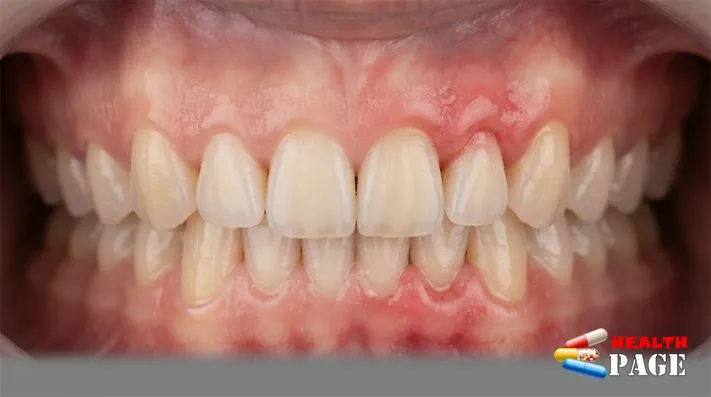
Mayo Clinic explains that plaque is the most common cause of gingivitis and that good oral care can help prevent and reverse the condition.
If you notice an unusual lump or swelling rather than generalized gum inflammation, it may be worth separately considering Treat a Bump on Gums Safely, because not every gum abnormality is gingivitis.
Is Gingivitis Contagious?
Gingivitis itself is not generally considered contagious. However, bacteria associated with gingivitis can be transmitted between people through saliva-to-saliva contact. Cleveland Clinic specifically distinguishes between transmitting the bacteria and transmitting gingivitis as a disease.
A simple way to understand the process is:
Person with gum disease → saliva containing oral bacteria → exposure to another person → bacteria enter that person’s oral environment → individual risk factors influence whether disease develops.
This is different from catching an infection in the usual sense.
The mouth naturally contains a large community of microorganisms. When bacteria from another person’s saliva enter your mouth, they become part of an environment that already contains many microorganisms. Whether gum inflammation develops depends on what happens afterward, including plaque accumulation and the body’s response to the bacterial community.
For that reason, it would be misleading to say that someone will definitely develop gingivitis after kissing a person who has it.
Can Gum Disease Be Passed From Person to Person?
So, can gum disease be passed from person to person? The most accurate answer is that bacteria associated with periodontal disease can pass between people through saliva, but the disease itself is not simply transferred like a contagious respiratory infection.
Repeated saliva-to-saliva contact can expose a person to oral bacteria. But exposure is only one part of the picture.
A person’s susceptibility can also be affected by:
- Plaque control and oral hygiene
- Smoking or chewing tobacco
- Diabetes
- Dry mouth
- Hormonal changes
- Certain medications
- Genetics
- Medical conditions affecting immune function
- Teeth that are difficult to clean
Cleveland Clinic and Mayo Clinic both identify several of these factors as contributors to gum disease risk.
Bacteria transmission is not the same as disease transmission
Imagine two people who are exposed to the same oral bacteria. One maintains excellent oral hygiene and has little plaque, while the other has significant plaque buildup and smokes.
Their risk is not necessarily the same.
The condition of the teeth and gums, the amount of plaque present, individual susceptibility, and other risk factors all influence whether inflammation develops. That is why the phrase “gum disease transmission” needs to be understood carefully.
Can You Catch Gingivitis From Kissing?
If you are specifically asking can you catch gingivitis from kissing, you generally do not “catch” gingivitis simply because you kissed someone who has it.
Kissing can involve saliva exchange, and saliva can transfer oral bacteria between people. Cleveland Clinic states that gingivitis itself is not considered contagious, although the bacteria associated with it can be transmitted through saliva.
This means the following statement is too simplistic:
“Kissing causes gingivitis.”
A more accurate explanation is:
“Kissing can transfer oral bacteria, but exposure to those bacteria does not automatically cause gingivitis.”
The risk may be more relevant when saliva-to-saliva contact is repeated and the person being exposed already has factors that make gum disease more likely.
For most couples, the practical response is not to become afraid of normal affection. Instead, both people should maintain good oral hygiene, avoid sharing toothbrushes, and seek dental care if gum symptoms persist.

Is Periodontitis Contagious?
If you search is periodontitis contagious, the answer is similar: periodontitis itself is not generally described as a contagious disease, although bacteria associated with periodontal disease can be transferred through saliva.
Periodontitis is more serious than gingivitis. It involves inflammation and destruction of the tissues supporting the teeth, including loss of periodontal attachment and alveolar bone. Advanced disease can eventually lead to loose teeth and tooth loss.
The disease process can be simplified as:
Plaque buildup → gingivitis → persistent inflammation in susceptible individuals → periodontitis
However, this does not mean that everyone with gingivitis will develop periodontitis. Early gum disease can often be reversed with appropriate oral care and professional treatment before supporting bone is lost.
Gingivitis vs. Periodontitis
Although the two conditions are related, they are not the same.
| Feature | Gingivitis | Periodontitis |
|---|---|---|
| Stage | Early gum disease | More advanced periodontal disease |
| Main problem | Gum inflammation | Inflammation with destruction of supporting tissues |
| Bleeding gums | Common | Common |
| Bone loss | No | Can occur |
| Reversible | Generally yes when treated appropriately | Tissue and bone damage may be permanent |
| Tooth-supporting structures | Usually not destroyed | Can be progressively damaged |
| Tooth loss | Usually not directly | Can occur |
| Bacterial involvement | Yes | Yes |
The American Dental Association describes periodontitis as an inflammatory disease associated with loss of periodontal tissue attachment and alveolar bone.
That distinction is particularly important if someone has persistent bleeding, receding gums, loose teeth, painful chewing, or other signs that suggest more than simple gingivitis.
Causes of Gum Inflammation and Bleeding Gums
The causes of gum inflammation and bleeding gums are much broader than exposure to another person’s saliva.
Poor oral hygiene
When plaque is not removed effectively, it accumulates around the gumline and can trigger inflammation. Daily brushing and cleaning between the teeth are therefore central to preventing gingivitis.
Plaque and tartar buildup
Plaque is a bacterial film that forms continuously on teeth. If it remains in place, it can harden into tartar. Once tartar forms, professional dental cleaning is generally needed to remove it.
If significant tartar is present, a dentist or hygienist can determine whether professional cleaning is needed. This is different from simply trying to scrape away tartar at home.
Smoking and tobacco
Smoking and other tobacco use increase the risk of gum disease and can make maintaining healthy gums more difficult.
Hormonal changes
Hormonal changes, including those associated with pregnancy and other stages of life, can affect gum health and increase susceptibility to inflammation.
Diabetes
Diabetes is associated with a higher risk of gum disease. Maintaining appropriate medical care and good oral hygiene can therefore be especially important for people with diabetes.
Dry mouth
Saliva plays an important role in maintaining the oral environment. Some medications and medical conditions can reduce saliva production, contributing to dry mouth and potentially increasing oral health problems.
Certain medications
Some medicines can contribute to dry mouth or changes in gum tissue. If gum problems begin after starting a medication, do not stop the medicine on your own; discuss the issue with the prescribing clinician or dentist.
Genetics and other health factors
Some people have a greater susceptibility to periodontal disease because of genetic factors or medical conditions. Family history can therefore matter, even when two people have similar oral hygiene habits.
Can Sharing Utensils or Drinks Spread Gum Disease?
Sharing spoons, forks, cups, drinks, or food can involve exposure to saliva and therefore oral bacteria.
But it would be inaccurate to say that sharing a spoon or drinking from the same glass will automatically give you gingivitis.
Cleveland Clinic specifically notes that people are not likely to get gingivitis simply from kissing or sharing utensils, although saliva-to-saliva contact can transmit bacteria.
The same general principle applies to sharing utensils and gum disease: exposure to bacteria is not equivalent to developing disease.
One item should not be shared, however: a toothbrush. A toothbrush can contain saliva, microorganisms, and potentially traces of blood. Each person should use their own toothbrush.
Who Is More Likely to Develop Gum Disease After Bacterial Exposure?
Exposure to oral bacteria does not determine the outcome by itself.
A person may be more vulnerable to gum disease when they have:
- Poor oral hygiene
- Significant plaque buildup
- Tartar buildup
- Smoking or tobacco use
- Diabetes
- Dry mouth
- Certain hormonal changes
- Certain medications
- Genetic susceptibility
- Certain conditions affecting immune function
This helps explain why bacterial exposure should not be viewed as a guarantee of disease.
Someone with a healthy mouth and effective plaque control may have a different risk profile from someone who already has substantial gum inflammation and plaque accumulation.
How to Prevent Gingivitis and Gum Disease
You cannot control every microorganism you encounter, but you can control many of the factors that affect your gum health.
A practical gum disease prevention routine includes:
- Brush your teeth twice a day with fluoride toothpaste.
- Clean between your teeth daily with floss or another suitable interdental cleaner.
- Have regular dental examinations.
- Get professional cleaning when recommended.
- Avoid smoking and tobacco products.
- Follow appropriate medical care if you have diabetes.
- Do not share toothbrushes.
- Pay attention to persistent bleeding, swelling, tenderness, or bad breath.
Mayo Clinic recommends brushing at least twice daily, cleaning between the teeth daily, and having regular dental checkups to help prevent and reverse gingivitis.
If plaque and tartar have accumulated, professional cleaning may be necessary. For more advanced periodontal disease, treatment can involve procedures designed to remove plaque, biofilm, and calculus and establish an environment that can be maintained with ongoing care.

For readers interested in preventive dental care, Does teeth cleaning harm teeth? is a useful related topic when considering professional cleaning and tartar removal.
Should You Stop Kissing Someone With Gingivitis?
For most people, there is generally no need to completely avoid normal affection solely because a partner has gingivitis.
The key issue is not eliminating every possible exposure to oral bacteria. Instead, both people should focus on maintaining healthy gums and treating existing gum inflammation.
Useful steps include:
- Maintain consistent oral hygiene.
- Do not share toothbrushes.
- Arrange a dental examination when symptoms persist.
- Keep plaque under control.
- Avoid smoking and tobacco.
- Follow professional advice if periodontitis is diagnosed.
A person with persistent gum symptoms should seek dental care rather than simply avoiding kissing. Treating the underlying gum problem is more useful than living in fear of ordinary social contact.
When Should You See a Dentist?
Persistent bleeding gums should not automatically be blamed on kissing, saliva exposure, or another person’s gum disease.
See a dentist if you have:
- Persistent or frequent bleeding gums
- Swollen or painful gums
- Persistent bad breath
- Receding gums
- Loose teeth
- Pus around the gums
- Pain while chewing
- New spaces between teeth
- Changes in how your teeth fit together
- Symptoms that continue despite improved oral hygiene
These symptoms can occur with more advanced periodontal disease. Mayo Clinic lists persistent bad breath, pus, loose teeth, painful chewing, receding gums, and changes in the bite among symptoms that can occur with periodontitis.
A dentist can examine your gums and determine whether the problem is gingivitis, periodontitis, another oral condition, or something unrelated to gum disease.
If you are concerned about long-standing periodontal problems, Causes and treatment of chronic periodontitis can provide additional background, although the terminology and diagnosis should ultimately be determined by a dental professional.
Frequently Asked Questions
Is gingivitis contagious?
Gingivitis itself is generally not considered contagious. However, bacteria associated with gingivitis can be transferred through saliva-to-saliva contact. Exposure does not mean the other person will definitely develop gum disease.
Can you catch gingivitis from kissing?
You do not typically “catch” gingivitis simply from kissing someone who has it. Kissing can transfer oral bacteria through saliva, but the development of gingivitis depends on additional factors such as plaque buildup, oral hygiene, tobacco use, and individual susceptibility.
Can gum disease be passed from person to person?
Bacteria associated with periodontal disease can pass between people through saliva. However, bacterial exposure is not the same as guaranteed transmission of gum disease. A person’s oral health and risk factors influence whether disease develops.
Is periodontitis contagious?
Periodontitis is not generally classified as a contagious disease. Its associated bacteria can be transferred through saliva, but exposure alone does not mean the recipient will develop periodontitis.
Can kissing cause gum disease?
Kissing itself does not directly cause gum disease. Saliva exchange can transfer oral bacteria, while plaque accumulation, oral hygiene, genetics, tobacco use, diabetes, and other factors influence whether gum inflammation develops.
Why are my gums bleeding?
Plaque-related gingivitis is a common cause of bleeding gums, especially during brushing or flossing. Persistent bleeding can have other causes, so recurring or unexplained bleeding should be evaluated by a dentist.
Final Takeaway
So, is gingivitis contagious? Generally, no. Gingivitis itself is not considered a contagious disease, but bacteria associated with gum disease can be transferred through saliva, including during kissing.
That distinction helps answer the concern without creating unnecessary fear. Exposure to oral bacteria does not guarantee that someone will develop gingivitis. Plaque buildup, oral hygiene, smoking, diabetes, dry mouth, hormonal changes, genetics, medications, and other factors influence individual risk.
If you or your partner has persistent bleeding, swelling, gum recession, bad breath, loose teeth, or other concerning symptoms, a dental examination is more useful than simply avoiding normal affection. Early gingivitis is generally manageable and reversible, while untreated periodontal disease can damage the tissues and bone supporting the teeth.
The practical message is simple: do not treat gingivitis as something you automatically “catch” from another person. Focus on controlling plaque, maintaining good oral hygiene, avoiding tobacco, and getting professional dental care when symptoms persist.
References
- Mayo Clinic — Gingivitis: Symptoms and causes
- Cleveland Clinic — Gingivitis and Periodontal Disease
- American Dental Association — Periodontitis

Pingback: What Is the Fastest Way to Cure Dry Mouth? Quick Relief Tips
Pingback: What Is an Endosteal Implant? Procedure, Benefits & Recovery
Pingback: Natural Mouthwash vs. Fluoride Mouthwash: Key Differences