
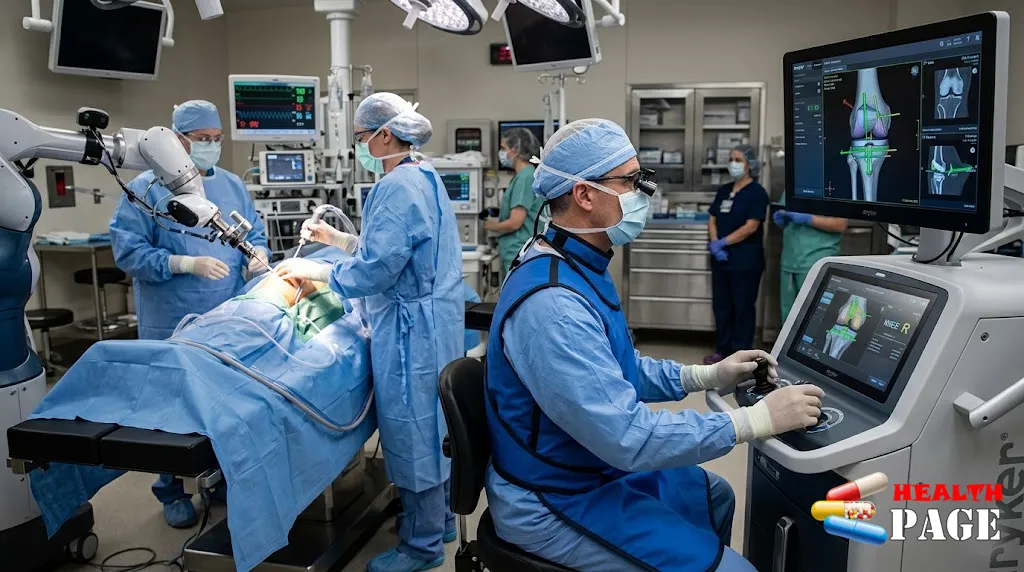
What Are the Complications of Robotic Knee Surgery? The Data-Backed Reality

Dr. John Ma is a dedicated Orthopaedic Surgeon with extensive experience in musculoskeletal health and surgical care. He currently serves at Royal Brisbane and Women’s Hospital, Australia, where he provides expert treatment for complex orthopaedic conditions. Passionate about advancing patient outcomes, Dr. Ma combines evidence‑based practice with compassionate care, helping individuals restore mobility and improve quality of life. Through his contributions to healthcare, he continues to support patients in achieving long‑term wellness and recovery.
✍️ Authored by Dr. John Ma
Medical Disclaimer: This article has been written and clinically compiled by Dr. John Ma (Orthopedic Surgery). The information provided is strictly for educational, informational, and exploration purposes. It does not constitute formal medical advice, diagnosis, or treatment. Always consult with a qualified healthcare specialist or your personal orthopedic surgeon regarding any specific surgical risks, complications, or medical conditions.
Robotic knee surgery is often marketed as the future of joint replacement. But when patients ask, what are the complications of robotic knee surgery, the answer is more nuanced than the brochures suggest. In clinical practice, we see that robotic assistance can improve implant alignment in selected cases, yet it also introduces new robotic knee replacement surgery risks that deserve honest discussion. For people comparing options, the real question is not whether the technology is impressive. It is whether it is safer, more durable, and appropriate for their specific knee anatomy and health profile.
This matters because total knee arthroplasty (TKA) is already a major operation. Robotic tools do not remove the fundamental challenges of surgery: infection risk, bleeding, bone quality, soft tissue balancing, anesthesia exposure, and recovery. They simply change how some steps are performed. That means the benefits and the downsides must both be measured carefully. For some patients, robotics may help. For others, the added complexity may create new robotic knee surgery problems without clear long-term payoff.
The Sunnybrook Study: Why Robotic Knee Surgery Risks Are Higher Than Expected
A large population-based study from the Sunnybrook Research Institute, published in The Journal of Arthroplasty, drew attention because it challenged a common assumption: that robotic-assisted knee replacement automatically lowers complications. The study reviewed nearly 75,000 cases and found a higher rate of major complications within one year for robotic-assisted procedures compared with conventional knee replacement.
The difference was small in absolute terms, but important:
- Robotic-assisted TKA: about 2.0% major complication rate
- Conventional knee replacement: about 1.0%
That does not mean robotics is “bad.” It does mean the marketing language can oversimplify the reality. The most meaningful robotic knee replacement surgery risks in that window included deep joint infection, periprosthetic fracture, and early revision surgery.
These events are uncommon, but they are serious. A deep infection may require washout surgery or implant removal. A fracture around the implant can delay walking and prolong recovery. An early revision means the first surgery did not achieve lasting success.
When we review patient histories, the pattern is often the same: expectations were high, but the informed consent conversation was too shallow. Patients heard about millimeter precision. They were not always told about the tradeoffs.
Hidden Intraoperative Robotic Knee Surgery Problems
Robotic systems are not autonomous surgeons. They are guidance tools. The surgeon still makes the judgment calls. That distinction matters because the technology adds steps, equipment, and points of failure. Some robotic knee surgery problems are unique to the platform itself.
Extended Operative Times & Anesthesia Risks
Robotic total knee replacement often takes longer than conventional surgery. In the Sunnybrook data and related studies, operative time and anesthesia exposure were increased. One commonly cited comparison found average anesthesia time around 101 minutes for robotic surgery versus 89 minutes for traditional procedures.
That may not sound dramatic. But in surgery, even small increases matter. More time under anesthesia can raise the chance of:
- blood pressure instability
- nausea and grogginess after surgery
- confusion in older adults
- longer time in the operating room overall
For patients with heart disease, lung disease, obesity, or frailty, extra minutes are not trivial. They can influence recovery quality and immediate safety.
The Danger of Bone Pins: Fractures and Infections
Many robotic systems require temporary pins or tracking arrays to be fixed into the femur and tibia. This is one of the less discussed robotic knee surgery problems. Those pins help the system map the knee in real time, but they also create extra entry points in bone.
Potential issues include:
- pin-site infection
- local pain and irritation
- stress fractures
- weakening of the bone around the pin track
For patients with osteoporosis or poor bone quality, that risk deserves real attention. A robot may improve implant alignment precision, but it cannot change the biology of fragile bone. This is where soft tissue balancing and bone quality still depend on the surgeon’s skill and judgment.
Mid-Surgery Technical Malfunctions and Conversions
Technology can fail. Cameras lose tracking. Software freezes. Calibration becomes unstable. Robotic arms can require a reset. When that happens, the team may need to convert to manual instrumentation.
That conversion is usually safe in experienced hands, but it can create stress in the operating room and may affect the final workflow. In some cases, a technical problem can disrupt the planned bone cuts or prolong surgery. This is where Mako robotic knee replacement failures are often discussed online, sometimes too casually. Most of the time, the issue is not a dramatic “machine failure” in the movie sense. It is more often a workflow interruption, tracking problem, or learning-curve issue that can still affect precision.
In our review of patient questions, this is one of the most misunderstood areas. Patients assume a robot makes the surgery foolproof. It does not.
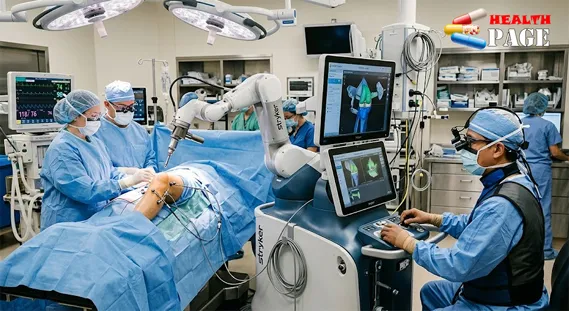
Robotic vs Traditional Knee Replacement Complications
When patients compare robotic vs traditional knee replacement complications, the key is not to focus only on alignment. Alignment matters, but it is only one part of success. A knee replacement also has to balance ligaments, restore function, avoid infection, and heal well.
Here is a simplified comparison:
| Factor | Robotic Knee Replacement | Conventional Knee Replacement |
|---|---|---|
| Bone cut guidance | Computer-assisted | Surgeon-guided |
| Operative time | Often longer | Often shorter |
| Pin-site issues | Possible | Not typical |
| Alignment planning | Highly detailed | More manual |
| Soft tissue balancing | Still surgeon-dependent | Still surgeon-dependent |
| Long-term proof of superiority | Not definitive | Not definitive |
The “precision paradox” is important. A robot can help create very accurate cuts. But the knee is not a machine hinge. It is a living joint with ligaments, muscles, swelling, scar formation, and individual anatomy. That means excellent bone work can still be followed by stiffness or pain if soft tissues are not balanced well.
This is why orthopedic surgeon experience remains one of the strongest predictors of success, regardless of platform. A skilled surgeon using conventional tools may outperform a low-volume surgeon using robotics. The machine cannot substitute for repetition, anatomy knowledge, and judgment.
Robotic Knee Surgery Long Term Side Effects: What We Still Don’t Know
One of the biggest gaps in the conversation is long-term evidence. Patients often ask whether robotic surgery means the implant will last longer. At this point, the answer is cautious: there is no definitive proof that robotic-assisted knee replacement produces better 10- to 20-year outcomes across the board.
That matters because robotic knee surgery long term side effects are still being studied. Current data are stronger on short-term alignment and workflow than on lifetime durability. We do not yet have enough evidence to say that robotic systems consistently reduce wear, revision risk, or chronic pain over decades.
The important questions remain:
- Does better alignment translate into better function for most patients?
- Does robotic planning reduce loosening over time?
- Do some systems outperform others, or is the surgeon the main variable?
Most studies agree that the long-term picture is incomplete. Until more mature data are available, claims of superior longevity should be treated carefully.
This is also where patient selection criteria become central. A patient with severe deformity, advanced osteoporosis, or major obesity may not be the best candidate for robotic assistance. The system may struggle with tracking or fixation. In those cases, the downside of added complexity may outweigh the theoretical benefit.

Who Is Not a Good Candidate for Robotic-Assisted Surgery?
Not every knee is a robotic knee. That is the honest answer.
Patients who may be less suitable include those with:
- severe bone loss or osteoporosis
- major deformity that affects tracking accuracy
- prior hardware or complex revision anatomy
- very high body mass index in some settings
- infection risk or poor wound-healing capacity
These are not absolute exclusions in every hospital. But they are red flags. The issue is not just the device. It is whether the anatomy allows reliable registration and whether the surgeon can execute the plan without unnecessary risk.
If you are evaluating a center, ask practical questions:
- How many robotic TKAs does this surgeon perform each year?
- What is the surgeon’s revision rate?
- How often do cases convert from robotic to conventional technique?
- What happens if the system fails mid-operation?
- How are patients selected for robotics versus standard surgery?
This is where the divide between high-volume and low-volume centers becomes obvious. A surgeon doing 200 robotic cases a year will usually have a smoother workflow than one doing 10. That difference can matter more than the brand name of the robot.
It also matters financially. Some insurance plans do not fully cover the added technology cost. Patients may pay more out of pocket without clear proof of a better long-term outcome. That hidden burden should be part of informed consent.
Recovery Issues After Robotic Knee Surgery
Patients often assume robotics means a faster recovery. Sometimes it does. Sometimes it does not.
Common robotic knee surgery recovery issues include:
- swelling that lasts longer than expected
- stiffness from soft tissue irritation
- pain around pin sites
- delayed confidence in walking
- frustration when progress feels slower than advertised
These issues are not unique to robotics, but the added instrumentation can contribute to them. Recovery is still shaped by pain control, physical therapy, sleep, wound healing, and preoperative fitness. If a patient expected a “light-speed” recovery because of the robot, disappointment can be significant.
For readers also navigating other recovery topics such as Tibial Plateau Fracture Recovery, fracture healing stages, or What is Arthralgia, the same principle applies: biology sets the pace, not branding.
FAQs
Is robotic knee surgery safer than traditional surgery?
Not automatically. It may improve planning and alignment in some patients, but it also introduces new risks. Safety depends on patient selection and surgeon experience.
What are the most common robotic knee surgery problems?
The most discussed issues are pin-site complications, longer anesthesia time, software or tracking problems, and recovery stiffness.
Does robotic surgery reduce revision rates?
Current evidence does not prove a consistent long-term reduction in revisions. More long-term studies are still needed.
Are Mako robotic knee replacement failures common?
True failures are uncommon, but technical interruptions, learning-curve issues, and workflow problems can happen. Experience matters.
Who should avoid robotic-assisted knee replacement?
Patients with poor bone quality, severe deformity, complex anatomy, or high surgical risk may be less ideal candidates.
Can a robot improve implant alignment precision?
Yes, it can help with planning and bone cuts. But soft tissue balancing still depends on the surgeon.
Conclusion: The Best Outcomes Come From Careful Matching, Not Hype
So, what are the complications of robotic knee surgery? The answer is a mix of familiar surgical risks and newer technology-related concerns. The data do not support blind enthusiasm. They support careful selection, honest counseling, and strong surgeon experience.
Robotic systems can be useful tools. But they are not a guarantee of better results. The safest path is often not the newest machine. It is the right procedure, for the right patient, performed by a high-volume specialist in a center that knows how to handle both routine cases and unexpected problems.
If you are weighing robotic vs traditional knee replacement complications, ask for the numbers, not the slogans. Ask who is operating. Ask how often they perform the procedure. Ask whether robotics changes your cost, your risk, and your recovery in a meaningful way. That is how you make a decision grounded in evidence, not advertising.
For patients also exploring related topics like fracture healing stages, What is Arthralgia, or Tibial Plateau Fracture Recovery, the broader lesson is the same: durable healing comes from matching treatment to anatomy, risk profile, and real-world expertise.
References:
- Journal of Arthroplasty: https://www.arthroplastyjournal.org/
- NHS knee replacement guidance: https://www.nhs.uk/conditions/knee-replacement/