
5 Gentle Pelvic Floor Warm-Up Exercises: A Simple Pre-Workout Routine
This article, “5 Gentle Pelvic Floor Warm-Up Exercises: A Simple Pre-Workout Routine,” has been written by Dr. Wang Zhixin (Gynecology).
Medical Disclaimer: This article is intended for general educational and informational purposes only. The exercises and information provided are not a substitute for professional medical advice, diagnosis, or treatment. Pelvic floor needs vary from person to person, and not everyone benefits from strengthening exercises. If you experience pelvic pain, urinary or bowel difficulties, pelvic pressure, or discomfort during exercise, consult a qualified healthcare professional or pelvic health physiotherapist before starting or continuing a routine. Stop any exercise that causes pain or worsens your symptoms.
Pelvic floor warm-up exercises are a short sequence of breathing, mobility and muscle-awareness movements done before a walk, yoga class or gym session. The aim is not to build maximum strength. It is to help the muscles at the base of your pelvis coordinate with your breathing and release as readily as they contract. The five movements below take roughly five to eight minutes and suit most adults without pelvic symptoms or exercise restrictions. If you do have symptoms, the later sections explain why a general routine may not be the right starting point.
Medical note: this article is for general education. It is not a treatment plan and does not replace assessment by a doctor or pelvic health physiotherapist.
What Are Pelvic Floor Muscles?
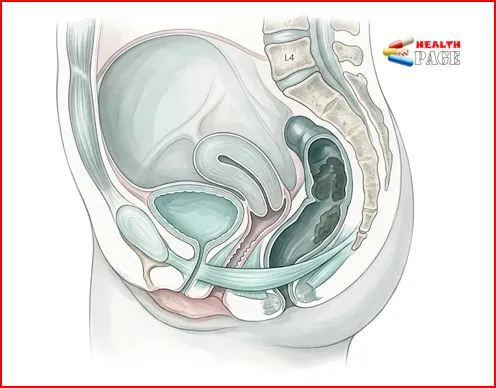
The pelvic floor is a group of muscles and connective tissues that forms a supportive base for the pelvis. A hammock or sling is the usual comparison. The bladder, bowel and, in women, the uterus rest above it, and the openings for urine and stool pass through it.
These muscles help with several everyday jobs:
- Supporting the bladder, bowel and reproductive organs
- Helping control urination and bowel movements
- Working with the diaphragm and abdominal muscles as you breathe and as pressure inside the abdomen changes
- Steadying the body during coughing, sneezing, lifting and exercise
- Contributing to sexual function and pelvic stability
The muscles also work alongside the urinary system, and if you want background on how the body makes urine, that explains what the pelvic floor is helping to hold and release.
Why Is Pelvic Floor Health Important?
Pelvic floor health is often reduced to strength, but strength is only one part of it. These muscles also need flexibility, coordination, endurance and, importantly, the ability to relax fully. A muscle that cannot let go can cause as many problems as one that cannot hold.
Several life events and habits can affect how the pelvic floor works. They include pregnancy and childbirth, ageing, pelvic or abdominal surgery, chronic constipation, a persistent cough and certain movement patterns. Hormonal change after menopause is another factor, and our overview of low estrogen symptoms covers that wider picture.
Pelvic floor dysfunction symptoms can include:
- Urinary leakage when exercising, coughing, sneezing or laughing
- Frequent urination or sudden urges
- Difficulty emptying the bladder or passing stool
- Pelvic pressure or a feeling of heaviness
- Pelvic, hip or lower abdominal discomfort
- Pain during sex
These symptoms have different causes. Some people have weak or poorly coordinated muscles, while others have muscles that stay too tense. So leakage or pressure should not automatically be blamed on weakness, and more squeezing is not always the answer.
Why Warm Up Your Pelvic Floor Before Exercise?
Running, jumping, lifting and even a deep squat raise pressure inside the abdomen, and the pelvic floor has to respond. A brief warm-up gives you a chance to notice how your breathing, pelvis and deep muscles are behaving before that load arrives.
It is worth being clear about the evidence. These five exercises are a gentle preparation sequence, not a clinically validated universal protocol. They are reasonable, low-risk movements that build awareness, but they have not been shown to prevent injuries, cure incontinence or correct prolapse. Think of them as a way to arrive at your workout breathing comfortably and moving freely, not as treatment.
5 Gentle Pelvic Floor Warm-Up Exercises
1. Diaphragmatic Breathing
Purpose: To encourage coordination between the diaphragm and pelvic floor and to promote relaxation.
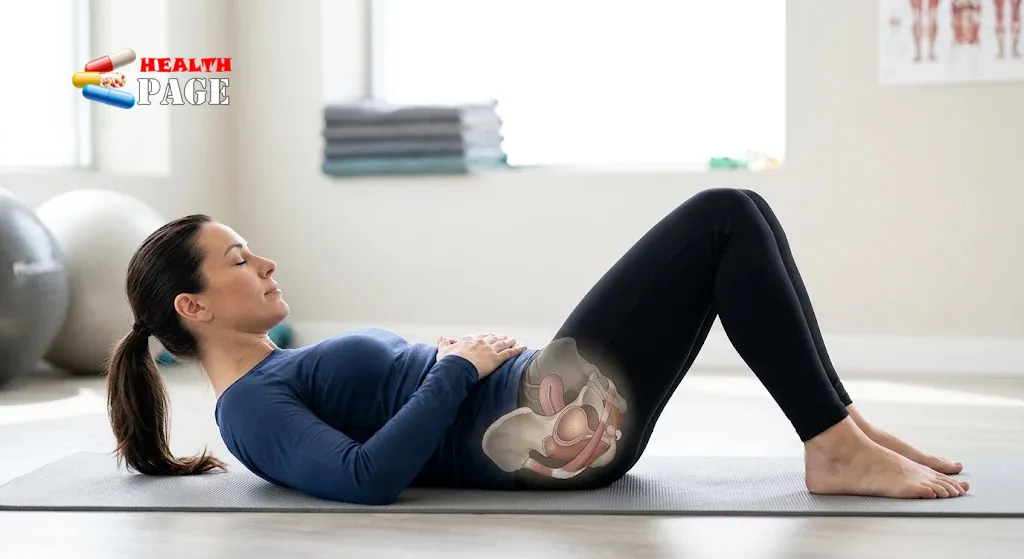
Lie on your back with your knees bent. Rest one hand on your chest and the other on your lower abdomen. Breathe in gently through your nose and let your lower ribs and belly widen, then exhale slowly without pulling your stomach in. Many people notice the pelvic floor soften and lower slightly on the inhale and return on the exhale. If you cannot feel that, don’t force it. Awareness often develops with practice.
Safety: keep the breath unhurried. Dizziness means you are breathing too hard, so ease off.
2. Gentle Pelvic Tilts
Purpose: To introduce small, controlled pelvic movement and improve awareness of pelvic position.
Stay on your back with your knees bent and feet flat. On an exhale, tilt your pelvis so your lower back moves toward the mat. Then return slowly to a comfortable neutral position as you inhale. The movement is small, and the goal is smoothness, not a deep flattening of the spine.
Safety: skip any tilt that pinches the lower back or produces pelvic pain.
3. Cat-Cow Stretch
Purpose: To encourage spinal and pelvic mobility while linking movement to breath.
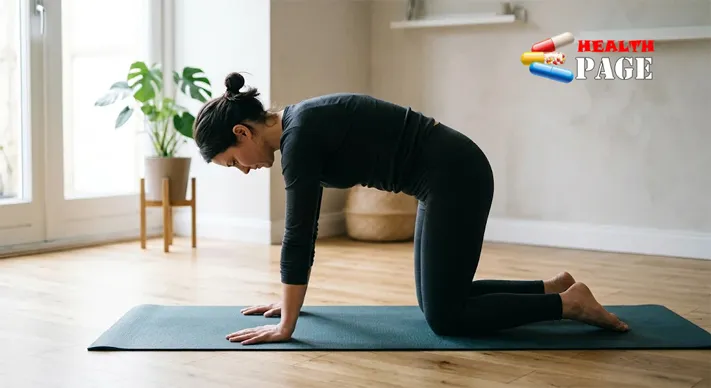
Start on your hands and knees, wrists under shoulders and knees under hips. Inhale as your back gently arches and your tailbone lifts, then exhale as you round your spine comfortably. Move slowly through a range that feels easy. If your wrists complain, rest on your forearms instead.
Safety: a pain-free range matters more than depth, particularly during pregnancy or if you have back problems.
4. Gentle Hip Circles
Purpose: To prepare the hips and surrounding muscles for movement and improve pelvic awareness.
Stand with your feet about hip-width apart and your knees slightly soft. Draw small, controlled circles with your hips, as though tracing the inside of a shallow bowl. After several circles, reverse direction. Breathe normally and keep the shoulders relaxed.
Safety: if you notice deep, persistent buttock or hip pain, particularly pain that travels down the leg, it may have a cause unrelated to the pelvic floor, such as piriformis syndrome, and is worth having assessed.
5. Pelvic Floor Activation and Relaxation
Purpose: To practise a gentle, controlled contraction followed by a full release.
Lie comfortably with your knees bent. Breathe in and let the pelvic floor soften. As you breathe out, gently lift and draw the muscles inward, if that is appropriate for you. Hold for a moment without holding your breath, then let go completely before the next repetition. Two or three slow repetitions are enough for a warm-up.
Safety: this one is not a suitable strengthening drill for everyone. If you have pelvic pain, painful sex or difficulty relaxing the muscles, leave it out and seek assessment first.
How to Build a Simple Pelvic Floor Warm-Up Routine
A practical sequence needs no equipment and no complicated schedule. This is an illustrative example for adults without pelvic symptoms or exercise restrictions:
- Diaphragmatic breathing: 1–2 minutes
- Gentle pelvic tilts: about 1 minute
- Cat-cow stretch: about 1 minute
- Gentle hip circles: about 1 minute
- Pelvic floor activation and relaxation: 1–2 minutes, if appropriate
These durations are editorial suggestions, not a medically established prescription. No universal timing exists, so adjust or drop movements according to comfort and professional advice. The sequence fits before walking, yoga, Pilates or general fitness training, as long as every movement feels comfortable.
Pelvic Floor Activation vs. Relaxation Exercises
The most useful idea in pelvic floor training is that contraction and release belong together. Each term below describes a different quality of the muscle:
| Quality | What it means |
|---|---|
| Activation | Gently contracting and lifting the muscles |
| Relaxation | Letting tension go so the muscles soften |
| Strength | Producing an appropriate contraction |
| Endurance | Sustaining a controlled contraction |
| Coordination | Working in time with breathing and movement |
| Mobility | Allowing the muscles and nearby structures to move freely |
A gentle contraction is often described as closing and lifting around the urethra and anus. Women may picture drawing the vaginal and anal openings inward and up, while men may picture gently drawing the base of the penis and testicles upward. Breathe normally, keep the buttocks and thighs soft, avoid bearing down, and release fully afterward.
Not everyone finds the right movement straight away. The US National Institute of Diabetes and Digestive and Kidney Diseases (NIDDK) notes that people may need practice and advises asking a health professional for a plan suited to them. It also advises against Kegel exercises done regularly while urinating, since stopping the bladder from emptying fully could raise the risk of a bladder infection. Stopping the stream once is at most a way to understand which muscles are involved, not a training method.
Relaxation deserves equal attention, especially for people whose muscles stay tense. Useful approaches include slow diaphragmatic breathing, allowing the pelvic floor to lengthen as you inhale, gentle hip mobility, a relaxed child’s pose if it is comfortable, and supported deep breathing in a resting position. Relaxing does not mean pushing down. It means letting the muscles release without straining.
Common Pelvic Floor Exercise Mistakes to Avoid
- Holding your breath. This interferes with the natural coordination between the diaphragm and pelvic floor.
- Tightening the buttocks and thighs. Surrounding muscles should not do the pelvic floor’s work.
- Contracting without relaxing. The release phase matters as much as the squeeze.
- Doing too many repetitions. More is not automatically better. NIDDK warns that overdoing Kegel exercises can lead to straining when you urinate or move your bowels, so keep the volume where it is.
- Assuming every problem means weakness. Some people need relaxation, coordination training or treatment of an underlying condition instead.
- Forcing technique during exercise. Pulling the abdomen hard inward, pushing down or bracing the core rigidly can interfere with comfortable pelvic floor movement.
On that last point, abdominal bracing is worth extra care after pregnancy, when the abdominal muscles may have separated, a condition covered in our comparison of an epigastric hernia and diastasis recti.
Do Pelvic Floor Exercise Devices Really Help?
Devices are not automatically better than exercises, and it helps to know what each approach does.
- Biofeedback devices show you information about muscle activity so you can see when you are contracting or relaxing.
- Electrical stimulation devices use impulses to prompt muscle contractions in selected circumstances.
- Manual exercise training relies on voluntary contraction, relaxation, breathing and movement, with no equipment.
Some people who cannot identify their pelvic floor muscles benefit from professional assessment and selected use of biofeedback or stimulation. Most people do not need a device, and a device should not replace an individual plan. NICE’s guideline on pelvic floor dysfunction covers prevention, assessment and non-surgical management and recommends interventions based on a person’s specific symptoms, which is the principle to keep in mind when shopping for gadgets.
Who Should Take Extra Care?
A general online routine is a poor substitute for personal advice if any of these apply:
- You are pregnant, especially with pregnancy-related pain or exercise restrictions
- You are recovering from childbirth
- You are recovering from pelvic or abdominal surgery
- You have pelvic organ prolapse
- You have urinary or bowel incontinence
- You have chronic pelvic pain or painful intercourse
- You have difficulty emptying your bladder or bowel
- You feel pain or pressure during exercise
Postpartum recovery varies widely, so follow your maternity care team’s guidance on returning to exercise rather than assuming you can restart straight after delivery. If you are pregnant, our guide on exercising during pregnancy offers broader context. People with persistent or worsening symptoms should seek medical assessment instead of relying on a warm-up routine.
Frequently Asked Questions
Are pelvic floor activation exercises the same as Kegels?
Not exactly. Kegels are deliberate pelvic floor contractions. Activation can also mean coordinating these muscles with breathing and movement, as in the fifth exercise above.
Can pelvic floor muscles be too tight?
Yes. Some people carry excess tension or struggle to relax after contracting. They may need relaxation-focused treatment instead of extra strengthening.
Can I do these exercises every day?
Gentle breathing and mobility can usually be practised regularly. Repeated strengthening should match your own muscle function and recovery, ideally with professional input.
Can men do pelvic floor warm-up exercises?
Yes. Men also have pelvic floor muscles involved in bladder and bowel control, organ support and sexual function.
What are the best pelvic floor stretches before exercise?
Diaphragmatic breathing, gentle pelvic tilts, cat-cow and easy hip mobility are reasonable starting points, along with a relaxed child’s pose.
Should I stop exercising if I feel pelvic pain?
Stop the movement causing the pain, and seek medical or pelvic health physiotherapy advice, particularly if the pain persists.
Conclusion
Pelvic floor warm-up exercises work best when they are gentle, unhurried and honest about their limits. The sequence here offers a simple way to connect breathing, pelvic movement and muscle awareness before you exercise, while recognising that healthy pelvic floor function depends on relaxation as much as on strength. If you notice leakage, pressure, pain or trouble emptying your bladder or bowel, a pelvic health physiotherapist can assess what your muscles actually need, and that is a better next step than adding more repetitions.
References
- National Institute of Diabetes and Digestive and Kidney Diseases (NIDDK), “Kegel Exercises”: https://www.niddk.nih.gov/health-information/urologic-diseases/bladder-control-problems-women/kegel-exercises
- National Institute for Health and Care Excellence (NICE), “Pelvic floor dysfunction: prevention and non-surgical management” (NG210): https://www.nice.org.uk/guidance/ng210

Dr. Wang Zhixin is a distinguished Chief Physician specializing in comprehensive gynecology, perinatology, and maternal healthcare systems. She serves at the acclaimed
Shenzhen Maternity and Child Healthcare Hospital, a premier Grade-III Class-A medical center associated with Southern Medical University. With decades of clinical leadership, Dr. Wang is widely recognized for her contributions to reproductive wellness, prenatal diagnostic precision, and advanced clinical research safeguarding maternal-fetal medical outcomes.
As a core specialist panelist on the HealthPage Medical Review Board,
Dr. Wang leverages her senior clinical oversight to meticulously fact-check, audit, and medically verify our reproductive medicine and maternal wellness guides. Her analytical reviews ensure that intricate obstetric protocols and feminine wellness data are rendered into safe, authoritative, and completely evidence-based reference resources for global audiences.
✉ Professional Inquiries:
[email protected]