
What Is a Water Birth? 7 Important Benefits, Risks, and What to Expect
Medical Disclaimer: This article, “What Is a Water Birth? 7 Important Benefits, Risks, and What to Expect,” is intended for general educational and informational purposes only. It discusses the potential benefits, risks, and considerations of water birth but should not replace professional medical advice, diagnosis, or treatment.
Every pregnancy and childbirth experience is different. The suitability of water birth depends on individual medical circumstances and should be assessed by a qualified obstetrician or midwife. Always consult your healthcare provider before making decisions about your birth plan.
Written by: Dr. Wang Zhixin (Gynecology)
Labor asks a lot of the body, and many expectant mothers look for ways to take the edge off the pain. A birthing pool is one option that draws plenty of curiosity, and it usually prompts the same question: what is a water birth, exactly? In short, it is a vaginal delivery in which the baby is born while the mother is immersed in warm water. Many women find the buoyancy and warmth soothing, and the pool gives them room to shift position. It is not painless, though, and it is not automatically safer than delivering on land. Professional opinion is also less settled on birth in water than on simply laboring in it, a distinction this guide returns to throughout.
What Is a Water Birth?
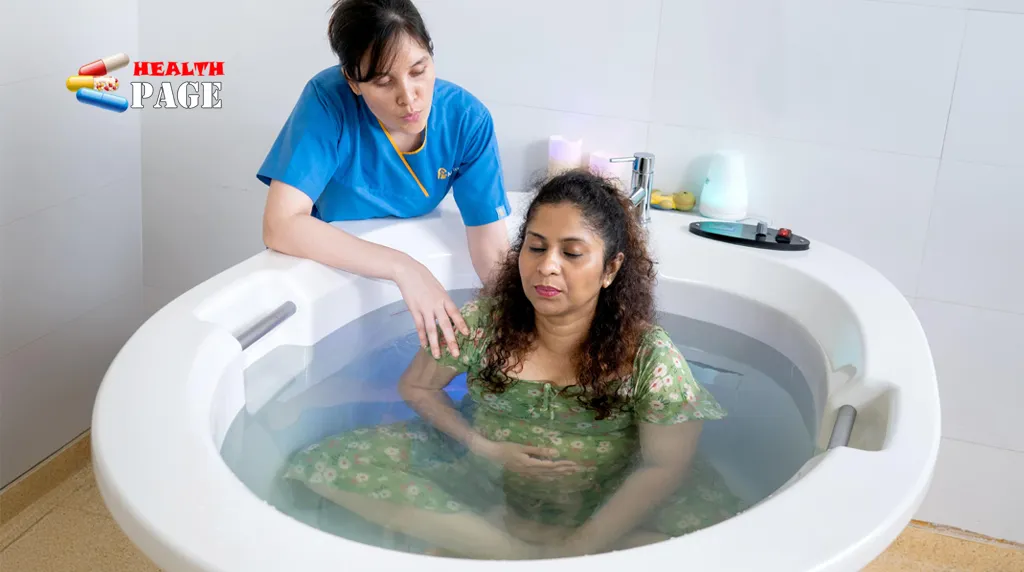
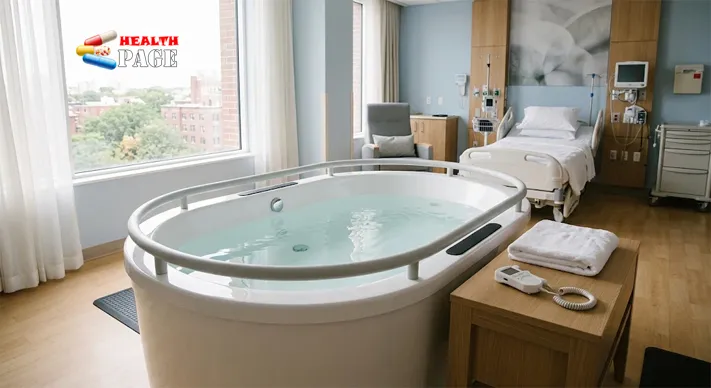
A water birth is a form of vaginal delivery in which the mother stays in a specially designed birthing pool of warm water while the baby is born. It is not a type of C-section, and it is not the same as settling into an ordinary household bathtub. Birthing pools are built so the mother can sit, kneel, or lean with the water carrying part of her weight, and so a midwife or obstetric clinician can reach her and the baby quickly. Staff keep track of her temperature, the water temperature, how labor is progressing, and the baby’s heart rate, and she may be asked to leave the pool if anything changes.
Two practices are often blurred together, and they are not medically identical:
- Water immersion during labor: the mother spends part of the first stage in the pool for comfort, then gets out before the baby is born.
- Water birth (underwater delivery): the baby is born while the mother is still in the water.
The distinction matters because the evidence differs. The American College of Obstetricians and Gynecologists (ACOG) says immersion during the first stage of labor may be offered to healthy women with uncomplicated pregnancies between 37 and 41 6/7 weeks, but it recommends that the birth itself take place on land because there are not enough data on delivery in water.
How a Water Birth Delivery Works, Stage by Stage
First stage: dilation. Contractions gradually open the cervix to about 10 centimeters. Some units ask mothers to be in established labor before entering the pool, because getting in too early may slow contractions for some women. Once in the water, she can move between positions while staff check her temperature, the water temperature, and the baby’s heartbeat at intervals.
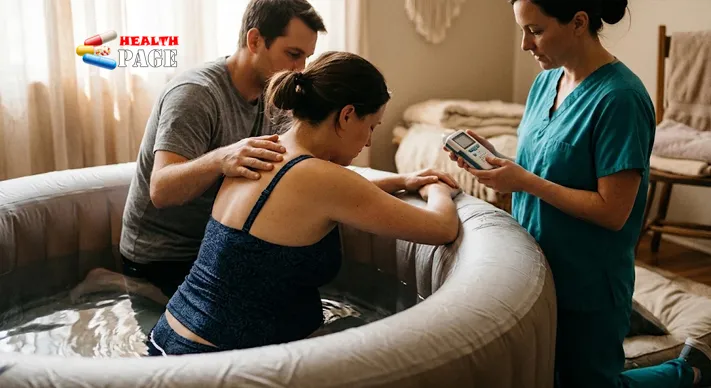
Second stage: birth. The mother follows her body’s urge to push, guided by the maternity team. In a planned water birth, the baby is born under the water and a trained professional gently lifts the newborn to the surface. The baby is then assessed, dried, kept warm, and usually placed skin-to-skin. If a concern arises at any point, such as a worrying heart-rate pattern, the mother is asked to get out.
Third stage: the placenta. After the baby is born, the placenta separates from the uterine wall and is delivered. Protocols differ between facilities. Many ask the mother to leave the pool for this stage and for her postpartum assessment, so it is worth asking how your chosen facility handles it.
What Is a Water Birth Like?
Women who describe the experience often start with the warmth. Water surrounds the body, takes weight off the hips and back, and makes it easier to rock, kneel, or float between contractions. Many also notice that they can change position more freely than on a delivery bed.
The sensations of labor do not disappear, however. Contractions, pressure, and the intensity of pushing are all still there. For some mothers the water helps them settle into a rhythm. For others it feels confining, too warm, or simply unhelpful, and they move to a bed or ask for a different form of pain relief. That is an ordinary part of labor and not a failure of the plan. A midwife or other trained professional stays available throughout, and when the baby is born underwater, he or she is brought to the surface carefully and right away.
7 Potential Water Birth Benefits
Warm water and buoyancy can make labor more comfortable for some women. Still, not every proposed benefit rests on strong evidence, outcomes vary from person to person, and many of the clearest findings concern laboring in water rather than delivering in it.
- Pain relief. Warm water may ease the discomfort of contractions, although it does not remove it.
- Muscle relaxation. Warmth can help relax the back, abdominal, and pelvic muscles, which may make stronger contractions feel more manageable.
- Freedom of movement. Buoyancy supports body weight, so kneeling, squatting, or finding a comfortable posture can take less effort.
- Fewer epidurals and spinals. A Cochrane review summarized by ACOG found slightly lower use of epidural, spinal, or paracervical analgesia among women who labored in water (risk ratio 0.90), along with a first stage that was about 32 minutes shorter on average. ACOG cautions that other features of the care setting may explain part of that difference.
- Calmer surroundings. A quiet room, warm water, and a supportive team help some women relax. Immersion is not a treatment for fear of childbirth, though.
- Possible perineal comfort. Warm water may soften the tissue around the vaginal opening, but the evidence on tearing is mixed. Pooled trial data in ACOG’s review showed no difference in perineal trauma with first-stage immersion, and water birth does not guarantee that tearing or an episiotomy will be avoided. Women who want to understand what repair of the perineum can involve later may find this overview of perineoplasty and recovery useful.
- A more positive experience. Questionnaires cited by ACOG describe feelings of relaxation, warmth, privacy, and control. Satisfaction matters, although it is not a measure of safety.
None of this means water birth shortens labor, prevents all tearing, or leads to better newborn outcomes. Those claims are not established.
Water Birth Risks: What Mothers Should Know
Giving birth in water adds considerations because mother and baby are in a setting where an emergency response takes extra steps. ACOG describes the serious newborn complications as rare, but they have been reported and their true frequency has not been measured in population-based studies. The main concerns are:
- Umbilical cord “snapping.” The cord can tear as the baby is lifted from the water, causing bleeding that may need a transfusion or intensive care. ACOG cites a retrospective review that found about 3.1 cases per 1,000 deliveries in water.
- Breathing problems. Water aspiration, respiratory distress, and oxygen deprivation have all been reported after underwater delivery (see the question below).
- Infection. Rare but serious newborn infections, including Pseudomonas and Legionella, have been reported. In several cases the pool had been poorly disinfected, the water was heated, or the pool had been filled weeks earlier. Strict cleaning and infection-control routines are essential.
- Slower emergency response. Concerning heart-rate changes, heavy bleeding, fever, or labor that stalls all require leaving the pool, and getting a mother out takes time.
- Overheating. Water that is too warm, or long immersion without checks, can raise a mother’s temperature, so both are monitored.
- Limited pain relief. An epidural generally means leaving the pool, and so do some other medications.
- An unplanned change of plan. A mother who intends a water birth may end up delivering on land or needing an emergency C-section. Changing course for medical reasons is not a failure, and it helps to know how recovery compares after a C-section in case it happens.
Can a Baby Drown During a Water Birth?
Before birth, a baby receives oxygen through the placenta and umbilical cord, and breathing air begins after delivery. Some sources reassure parents that a baby born underwater will not breathe until it reaches the surface. ACOG’s review is more cautious. The protective “diving reflex” can be overridden in newborns who are compromised, for instance those who have been short of oxygen, and cases of water aspiration have been reported. Underwater delivery is therefore not certain to cause harm, but it is not risk-free either, and immediate access to newborn resuscitation equipment and trained staff matters.
What Does the Research Say About Water Birth Safety?
Guidance in the United States is cautious. ACOG’s committee opinion, which the American Academy of Pediatrics endorses and which was last reaffirmed in April 2021, recommends that birth occur on land. A woman who asks to give birth in water should be told that the benefits and risks have not been studied enough to either support or discourage her request, and that rare but serious newborn complications have been reported.
More recent UK data paint a somewhat more reassuring picture for low-risk women. The Cardiff-led POOL study analyzed 60,402 women without pregnancy or labor complications who used a birthing pool in NHS maternity care between 2015 and 2022, and 39,627 of them gave birth in the water. According to a NIHR Evidence summary of the study, giving birth in the pool was not linked to more serious tears, or to a higher rate of a combined measure that included newborn deaths, admissions needing breathing support, and intravenous antibiotics. Cord snapping was more common in the water (1% versus 0.3%), and neonatal unit admissions were somewhat higher (1.5% versus 0.8%).
The two sources are not easy to reconcile, partly because of how they were built. POOL is an observational study based on NHS records that could not be checked for accuracy, and it took place in a model of care in which midwives ask women to leave the pool when concerns arise. Its findings may not carry over to every hospital or birth center. ACOG’s opinion also predates the study. If you are weighing this option, ask your clinician how current guidance and local protocols apply to you.
Who Can Consider a Water Birth, and Who Should Avoid It?
Water birth is generally considered only for carefully assessed pregnancies without major complications. Facilities set their own policies, so the following is a general picture and not an eligibility checklist. Women who may be candidates usually have:
- A full-term pregnancy, meaning 37 weeks or later (how a baby develops up to full term is explained step by step)
- One baby in a head-down position
- Stable maternal health and reassuring signs of fetal wellbeing
- No need for interventions that cannot be done in water
- Access to a facility with trained staff and emergency arrangements
Water birth is usually avoided, or needs extra assessment, with preterm labor, breech or other abnormal fetal positions, multiple pregnancy (depending on the facility), significant vaginal bleeding or placenta previa, severe preeclampsia or other serious maternal conditions, suspected fetal distress, maternal fever or active infection, and any situation that requires continuous monitoring or urgent intervention.
A previous C-section, diabetes, or a larger estimated baby does not settle the question in either direction. These situations call for individual assessment by an obstetrician or midwife, and no fixed baby-weight or maternal-age cutoff applies to everyone.
Water Birth vs. Traditional Vaginal Delivery
| Feature | Water birth | Land delivery |
|---|---|---|
| Setting | Specially prepared birthing pool | Delivery bed or other birth setting |
| Comfort | Warm water and buoyancy may help | Depends on pain-relief methods |
| Movement | Water supports position changes | Depends on setting and monitoring |
| Monitoring | Intermittent checks with water-compatible devices | Continuous or intermittent, as needed |
| Pain medication | Some options require leaving the pool | Wider range available |
| Emergencies | Mother must exit the pool first | Immediate access to bed and equipment |
| Evidence on the birth itself | ACOG: insufficient data; UK cohort: no higher serious outcomes in low-risk women | The standard comparison point |
Neither route is automatically better for every mother. The right choice depends on medical circumstances, personal preferences, and what local maternity services offer.
Water immersion vs. an epidural. Warm water promotes comfort and relaxation without any injected anesthetic, and in the first stage of labor it may reduce the need for an epidural, but it does not eliminate pain. An epidural places medication near the spinal nerves through a catheter, usually relieves pain more effectively, calls for monitoring by an anesthesia professional, and generally means the mother cannot stay in the pool. There is no universal winner. It can help to read about the pain of natural childbirth and then talk through pain-relief options with your obstetrician or midwife.
Preparing for a Water Birth and What It May Cost
Before labor, talk with an obstetrician or qualified midwife about eligibility, and ask whether your hospital or birth center offers pools for labor, for birth, or both. Find out how infection control is handled, how the baby’s heart rate is checked in the water, what situations would mean leaving the pool, and what your backup plan for pain relief would be. Packing a hospital or birth-center bag ahead of time also makes a change of plan less stressful.
During labor, follow the team’s advice on when to enter the pool, drink fluids as directed, and speak up about dizziness, overheating, unusual pain, or anything that feels wrong. If staff recommend getting out, do so promptly.
After delivery, let clinicians assess the newborn, follow guidance on skin-to-skin contact and keeping the baby warm, and complete postpartum checks. Call your care team about unusual bleeding, fever, or other warning signs.
There is no single national price for a water birth in the United States. Cost depends on whether the facility offers it, whether a pool is included in maternity services, facility and clinician fees, insurance coverage, and whether complications call for extra care. Contact your insurer and your chosen facility before labor to confirm coverage and likely out-of-pocket costs.
Frequently Asked Questions
Can every pregnant woman have a water birth?
No. Eligibility depends on maternal health, the baby’s position, pregnancy complications, how labor is progressing, and the facility’s own policies.
Does water birth prevent vaginal tearing?
No. Water may make the tissues more comfortable, but pooled trial data show no clear reduction in perineal trauma with first-stage immersion, and tearing can still happen.
Can you have an epidural during a water birth?
Usually not while in the pool. An epidural generally requires leaving the water because of the monitoring and mobility restrictions that come with it.
When might a mother need to leave the birthing pool?
Reasons include concerns about the baby’s heart rate, heavy bleeding, fever, slow or abnormal labor progress, a request for pain relief that cannot be given in water, or any need for medical intervention.
Is water birth available at U.S. hospitals?
It varies widely. Some hospitals and many freestanding birth centers offer pools for laboring, fewer support delivery in the water, and policies differ by state and facility. Ask your provider directly.
Conclusion
Water birth is one option some women consider when planning childbirth. Warm water and buoyancy may bring real comfort during labor, while delivering underwater adds medical considerations that U.S. guidance treats with caution and that newer UK data suggest may be lower-risk than once feared for carefully selected women. Understanding what is a water birth, and how it differs from labor in a tub, makes those conversations with your care team more useful.
Before deciding, learn the potential benefits and risks, share your full medical history with your obstetrician or midwife, choose a facility with trained staff and clear emergency arrangements, and stay open to changing the plan if it becomes medically necessary. For more reading, browse HealthPage’s women’s health guides. The best birth plan is the one that respects your preferences while keeping the health and safety of both mother and baby first.
References
- American College of Obstetricians and Gynecologists. Committee Opinion No. 679: Immersion in Water During Labor and Delivery (replaces No. 594; reaffirmed April 2021).
- NIHR Evidence. Water births do not increase risks for mother or baby (January 28, 2025).
- Sanders J, et al. Maternal and neonatal outcomes among spontaneous vaginal births occurring in or out of water following intrapartum water immersion: The POOL cohort study. BJOG 2024;131:1650–1659.

Dr. Wang Zhixin is a distinguished Chief Physician specializing in comprehensive gynecology, perinatology, and maternal healthcare systems. She serves at the acclaimed
Shenzhen Maternity and Child Healthcare Hospital, a premier Grade-III Class-A medical center associated with Southern Medical University. With decades of clinical leadership, Dr. Wang is widely recognized for her contributions to reproductive wellness, prenatal diagnostic precision, and advanced clinical research safeguarding maternal-fetal medical outcomes.
As a core specialist panelist on the HealthPage Medical Review Board,
Dr. Wang leverages her senior clinical oversight to meticulously fact-check, audit, and medically verify our reproductive medicine and maternal wellness guides. Her analytical reviews ensure that intricate obstetric protocols and feminine wellness data are rendered into safe, authoritative, and completely evidence-based reference resources for global audiences.
✉ Professional Inquiries:
[email protected]