
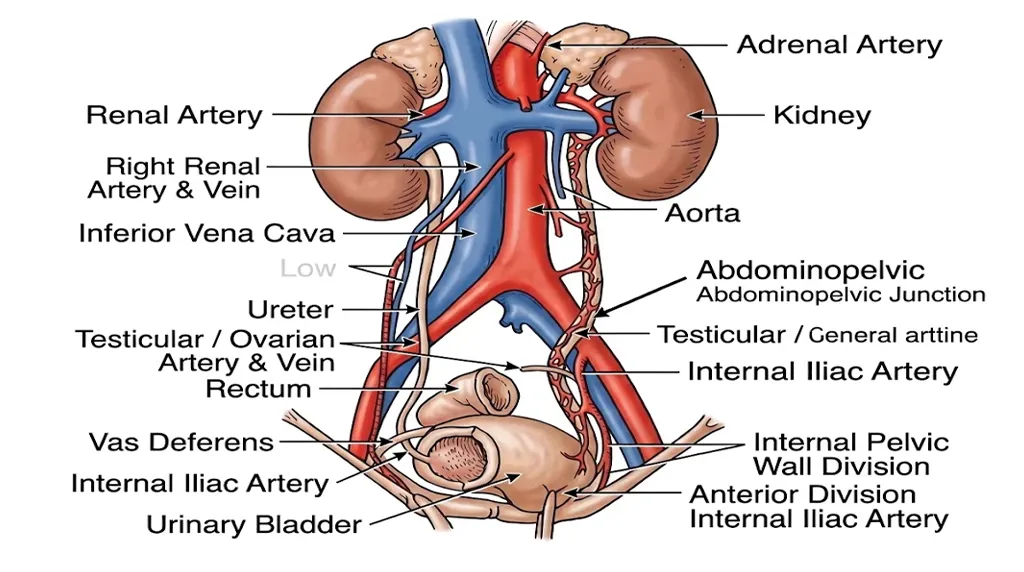
Women’s Urinary System: Anatomy, Functions & Diagram Explained
The women’s urinary system is the network of organs that filters waste from the blood, turns it into urine, stores it, and carries it out of the body. It has four main parts: two kidneys, two ureters, one bladder, and one urethra. Because these structures sit close to the reproductive organs, people often mix them up, especially when they look at a diagram for the first time. This guide covers what each organ does, how urine travels from kidney to toilet, where the urethral opening sits, and which problems are most common.
The urinary system is also called the urinary tract. The National Institute of Diabetes and Digestive and Kidney Diseases (NIDDK) describes it as the body’s drainage system for removing urine, which is made up of waste and extra fluid. It does more than get rid of waste, though. It helps regulate fluid balance, electrolytes such as sodium and potassium, blood acidity, and blood pressure. The kidneys also release a hormone, erythropoietin, that supports red blood cell production.
Doctors often split the tract in two. The upper urinary tract is the kidneys and ureters. The lower urinary tract is the bladder and urethra.
Women’s Urinary System Diagram: Understanding the Anatomy
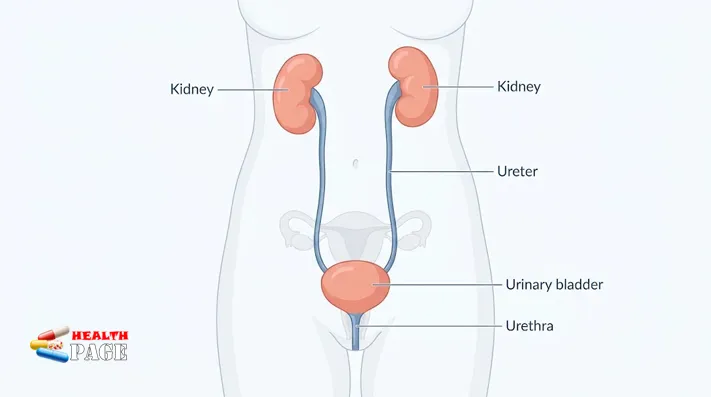
A women’s urinary system diagram reads best from top to bottom, following the path urine takes.
At the top are the kidneys, tucked toward the back of the upper abdomen on either side of the spine, just below the rib cage. Two narrow, muscular tubes, the ureters, run down from them into the pelvis. There they meet the bladder, a hollow, stretchy organ that holds urine. The last structure is the urethra, the short tube that carries urine from the bladder to the outside.
On a labelled diagram of the women’s urinary system, the sequence is simple:
- Kidneys filter blood and make urine.
- Ureters move urine down to the bladder.
- The bladder stores urine until you are ready to go.
- The urethra lets urine leave the body.
If a diagram labels the uterus, ovaries, fallopian tubes, or vagina, those belong to the reproductive system. They are drawn nearby only because the two systems share the same part of the body. All four urinary organs have to work together for urination to feel normal and complete.
The Four Parts of the Female Urinary System and Their Functions
The anatomy is the same in men and women for the kidneys, ureters, and most of the bladder. The differences show up in the urethra and in the surrounding structures. Here are the parts of the female urinary system and their functions, one at a time.
Kidneys
The kidneys are two bean-shaped organs, each roughly the size of a fist. They sit behind the abdominal cavity, and the right one usually lies slightly lower than the left because the liver takes up space above it. Each kidney contains about a million microscopic filters called nephrons.
Urine forms in two broad stages. First, blood enters tiny filtering clusters called glomeruli, and water and small dissolved substances pass into the nephron. Then, as that fluid moves along the nephron’s tubules, the kidney takes back what the body still needs and adjusts how much water, salt, and waste stays in. The leftover fluid is urine. It collects in the renal pelvis, a funnel-shaped space inside the kidney, and drains into the ureter.
This selectivity is easy to overlook. The kidneys don’t just strain everything out. They keep useful substances, remove waste, and fine-tune the balance of fluid and minerals, which is why kidney problems can affect so much more than urination. They also activate vitamin D, which supports healthy bones. For a step-by-step walk through the filtration process, HealthPage has a separate guide on how the body makes urine.
Ureters
Each ureter is a muscular tube, roughly 25 to 30 cm long in adults, that connects a kidney to the bladder. The wall of the ureter contracts in waves, a process called peristalsis, so urine keeps moving even when you are lying down.
Where the ureter enters the bladder, it passes at a slant through the bladder wall. This works like a one-way flap. As the bladder fills and presses on that segment, urine is less likely to flow backward toward the kidneys.
In women, the ureter runs close to the cervix and passes beneath the uterine artery. That closeness is the reason surgeons take particular care to identify the ureters during pelvic operations such as hysterectomy.
The ureter also has three naturally narrower points: where it leaves the kidney, where it crosses the vessels near the pelvic brim, and where it enters the bladder. A kidney stone that travels down the ureter tends to get stuck at one of these spots, which is why the pain can be so sudden and intense.
Urinary Bladder
The bladder sits in the pelvis, behind the pubic bone and in front of the uterus and vagina. When it is empty it is small and somewhat pyramid-shaped. As it fills it stretches into a rounder form. Adult capacity varies from person to person, but 350 to 500 mL is a reasonable reference range, and the urge to go often arrives well before the bladder is full.
Inside, the bladder lining is folded into rugae, which flatten out as the organ fills. At the base is a smooth triangular patch called the trigone, outlined by the two ureter openings and the exit to the urethra. The bladder wall contains the detrusor muscle, which stays relaxed while the bladder fills and contracts to push urine out.
Two sets of sphincter muscles keep urine in. The internal sphincter around the bladder outlet works automatically. The external sphincter is under voluntary control, which is what allows you to hold on until you reach a bathroom. The pelvic floor muscles beneath the bladder add support. In women, pregnancy, childbirth, and aging can weaken them, which may contribute to leakage. Gentle strengthening can help, and HealthPage’s pelvic floor warm-up exercises are a reasonable starting point for building awareness of these muscles.
Female Urethra
The female urethra is a short tube, usually about 3 to 5 cm long, running from the bladder neck through the pelvic floor to an opening in the vulva. It is shorter than the male urethra, and it carries only urine. It plays no role in reproduction.
Small glands called the paraurethral glands, or Skene’s glands, lie around the lower end of the urethra. Their ducts open close to the urethral opening and release a little lubricating fluid. They aren’t a fifth urinary organ. They are part of the surrounding anatomy, and they can occasionally become blocked and form a small cyst.
Where Is the Female Urethral Opening Located?
The urethral opening sits in the vulvar vestibule, the area enclosed by the inner folds of skin (the labia minora). It is below the clitoris and above the vaginal opening. The two openings are separate, and the vaginal one is larger.
The urethral opening can be small and tricky to spot, and its appearance varies from person to person. That is normal. A diagram shows an idealized layout, not what everyone will see.
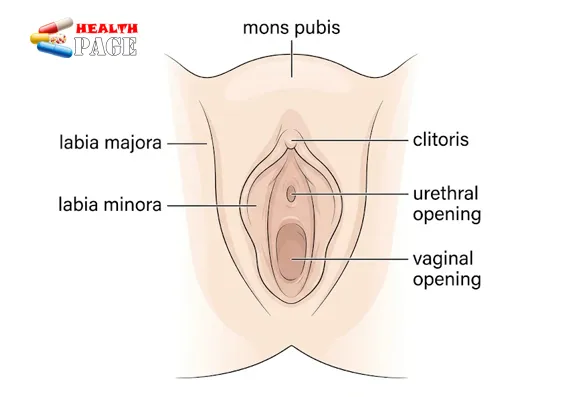
Female Urethra vs. Vagina
Because the openings are close, people sometimes assume they connect. They don’t.
| Female urethra | Vagina | |
|---|---|---|
| Main role | Carries urine out | Reproductive and sexual functions, birth canal |
| Begins at | Bladder neck | Vaginal opening |
| Position | In front of the vagina | Behind the urethra |
| Urine passes through | Yes | No |
| Menstrual blood passes through | No | Yes |
A vaginal infection is also not the same as a urinary tract infection (UTI). Symptoms such as discomfort or irritation can overlap, and both can occur at once, but they are different conditions with different treatments. If your main concern is unusual odor or discharge, HealthPage’s article on vaginal odor treatment explains the usual causes.
How the Female Urinary System Works
Normal urination is a tidy sequence, and it involves the brain and nerves as well as the organs.
- Blood reaches the kidneys through the renal arteries.
- Nephrons filter it, adjusting water, salts, and waste. What remains becomes urine.
- Urine flows through the ureters, pushed along by peristalsis.
- The bladder fills. The detrusor stays relaxed while the sphincters stay closed.
- Stretch signals reach the brain. Nerves tell you the bladder is filling.
- You urinate. The pelvic floor and sphincters relax, the detrusor contracts, and urine leaves through the urethra.
According to NIDDK, healthy kidneys produce about 1 to 2 quarts (roughly 1 to 2 liters) of urine a day, though the amount depends on how much you drink, your activity, the weather, medications, and your health.
Normal urine ranges from pale yellow to amber. Darker urine often just means it is more concentrated, which can happen when you haven’t had much to drink. Pink, red, or brown urine, however, deserves a medical check, as it may point to blood. Color and smell alone can’t diagnose an infection.
Common Urinary Problems in Women
This isn’t a full disease guide, but these are the conditions women most often meet.
Urinary tract infections. A UTI is usually caused by bacteria entering through the urethra. Women get them more often than men, partly because the female urethra is shorter and bacteria have less distance to travel. Typical signs include burning when urinating, frequent urges, lower abdominal discomfort, and cloudy or bloody urine. The NIDDK page on bladder infections notes that these are the most common type of UTI and that antibiotics are the usual treatment. Antibiotics shouldn’t be started without a proper diagnosis.
Urinary incontinence. This means involuntary leakage. Stress incontinence happens with coughing, sneezing, or exercise. Urge incontinence follows a sudden, hard-to-control need to go. Many women have a mix of both. Pregnancy, childbirth, menopause, and pelvic floor weakness can contribute.
Kidney stones. These are hard mineral deposits that can cause severe pain in the back or side that spreads toward the groin, blood in the urine, and nausea. Stones that move into the ureter can become lodged at its narrow points.
Overactive bladder. Sudden urgency, frequent visits to the bathroom, and getting up at night to urinate are the main features, with or without leakage.
Urinary retention. When the bladder doesn’t empty fully, you may notice a weak stream, trouble starting, or a feeling of fullness after you’ve gone. Being completely unable to urinate is a medical emergency.
Urethral conditions. A urethral caruncle is a small, usually harmless growth at the urethral opening, more often seen after menopause. A urethral diverticulum is a small pouch along the urethra that can cause recurrent UTIs or pain. A paraurethral cyst can form when a gland duct is blocked. None of these can be reliably identified from symptoms alone, so an exam is needed.
When to See a Doctor
Book an appointment for burning with urination, repeated UTIs, blood in the urine, persistent urgency or frequency, unexplained leakage, difficulty emptying the bladder, or ongoing pain around the bladder or urethra. Fever, chills, nausea, vomiting, or pain in the back or side along with urinary symptoms can signal a kidney infection and call for prompt care. Pregnant women with any urinary symptoms should get them checked early, since UTIs in pregnancy need proper treatment. The NHS guidance on UTIs sets out when to call a GP or seek urgent help.
Keeping Your Urinary Tract Healthy
Most of what protects this system is ordinary habit:
- Drink enough fluid, adjusting for heat, activity, and any medical advice you’ve been given.
- Don’t routinely hold in urine for long stretches, and take time to empty the bladder fully.
- Wipe from front to back to reduce bacteria moving toward the urethra.
- Wash the external genital area gently, and avoid douching and scented products.
- Urinate after sex if it’s helpful for you. It may help, though it doesn’t guarantee prevention.
- Avoid smoking, which is a recognized risk factor for bladder cancer.
- Look after your pelvic floor.
- See a clinician for recurring symptoms rather than treating them repeatedly yourself.
Cranberry products and supplements shouldn’t be treated as cures for an existing infection.
Urinary System vs. Female Reproductive System
The urinary and reproductive systems lie close together but do different jobs. The urinary system removes waste and extra fluid. The reproductive system covers egg production, menstruation, conception, pregnancy, and childbirth. The organs don’t line up one-to-one: the kidneys, ureters, bladder, and urethra belong to the first, and the ovaries, fallopian tubes, uterus, and vagina belong to the second. Both systems can be affected by life stages like pregnancy and menopause, which is why symptoms sometimes feel tangled together. HealthPage’s women’s reproductive health section covers the second system in more depth.
Frequently Asked Questions
How long is the female urethra?
Generally about 3 to 5 cm, though measurements vary.
How much urine can a woman’s bladder hold?
Capacity differs between people. A rough adult range is 350 to 500 mL, but the urge to urinate usually comes before the bladder is completely full.
Why are women more prone to UTIs?
One important reason is the shorter urethra, which gives bacteria a shorter route to the bladder. Other factors include sexual activity, menopause-related changes, and pregnancy.
Are the urethra and the vagina the same thing?
No. The urethra carries urine, and the vagina is part of the reproductive system. They have separate openings.
Does a blocked or irritated urethral gland always mean an infection?
Not necessarily. A small cyst or irritation near the urethral opening can have several causes, and an exam is the only reliable way to tell them apart.
What are warning signs of a urinary problem?
Painful or frequent urination, blood in the urine, leakage, trouble emptying the bladder, and persistent pelvic or back pain are all worth discussing with a clinician.
Conclusion
The women’s urinary system is simple in design: kidneys filter, ureters transport, the bladder stores, and the urethra releases. Understanding that path, and how the urethra differs from the vagina, makes it easier to read a diagram and to describe symptoms clearly to a doctor. If something changes, such as pain, blood in the urine, new leakage, or repeated infections, early assessment usually makes the next steps simpler.
References
- NIDDK, The Urinary Tract & How It Works: https://www.niddk.nih.gov/health-information/urologic-diseases/urinary-tract-how-it-works
- NIDDK, Bladder Infection (Urinary Tract Infection—UTI) in Adults: https://www.niddk.nih.gov/health-information/urologic-diseases/bladder-infection-uti-in-adults
- NHS, Urinary tract infections (UTIs): https://www.nhs.uk/conditions/urinary-tract-infections-utis/

Medical Reviewer: Dr. He Feng, MD
Specialist in Urology & Andrology | Clinical Contributor
Dr. He Feng is an expert urologist and andrologist practicing at
Beijing Jishuitan Hospital, widely recognized as the
Fourth Medical College of Peking University in China. With extensive clinical experience
in advanced genitourinary health, Dr. Feng specializes in the diagnostic assessment, management,
and treatment of complex urological conditions, obstructive urinary disorders, and male reproductive health.
His medical contributions on HealthPage focus on translating complex urological pathologies—such
as prostate health, urolithiasis (kidney stones), and renal system care—into highly accessible,
evidence-based guidance for patients globally.
Clinical Affiliation & Triage:
Beijing Jishuitan Hospital (The Fourth Medical College of Peking University)
Professional Inquiries:
[email protected]