

7 Powerful Ways to Get Rid of Turkey Neck Without Regret

Dr. Jacob Cote, MD, FRCPC, is a board-certified dermatologist practicing at The Ottawa Hospital in Ontario, Canada. Specializing in medical dermatology, clinical skin pathology, and advanced acne therapies, Dr. Cote brings years of institutional hospital experience to the editorial board. He is dedicated to translating complex, evidence-based dermatological research into practical preventative skin health strategies for everyday readers. At HealthPage, he ensures all clinical guidelines and skincare recommendations are rigorously reviewed and align with current Canadian Dermatology Association standards.
🩺 Custom Medical Disclaimer Block
This clinical guide on non-surgical and aesthetic approaches to managing a turkey neck (submental skin laxity) has been authored directly by Dr. Jacob Cote, a specialist in Dermatology. This material is designed to provide health consumers with evidence-based insights into skin anatomy, collagen degradation, and modern dermatological interventions. Because structural changes in the neck and jawline can vary based on individual genetic factors, skin elasticity, and platysma muscle banding, this information is intended strictly for educational and informational purposes. It does not constitute personal medical advice, a formal dermatological diagnosis, or a specific treatment plan. Online resources cannot replace an in-person clinical skin assessment. Before initiating any specialized skincare regimens, targeted exercises, or localized aesthetic procedures, always consult a qualified dermatologist or cosmetic surgeon.
Dermatological & Aesthetic Care Disclaimer:
If you have started noticing loose skin, crepey texture, or soft banding under the chin, you are not alone. Turkey Neck is one of the most common cosmetic concerns we see discussed in clinic notes, dermatology journals, and patient consultations. It can feel frustrating because the neck often shows age sooner than the face. In our medical editorial practice, we often notice that people care for their cheeks, eyes, and forehead consistently, yet overlook the neck until changes become hard to ignore.
The good news is not that there is one miracle fix. There is not. The more honest answer is that turkey neck usually responds best to a mix of prevention, targeted skin care, in-office treatments, and in some cases surgery. The right approach depends on what is driving the change: skin thinning, dermal elastosis and collagen loss, platysma muscle laxity, or submental fat accumulation (the pockets under the chin).
If you are also researching How to Get Rid Jowls or wondering about What Not to Do After Botox, that makes sense. The jawline, chin, and neck age as a connected unit. Treating one area while ignoring the others often leads to uneven results.
Below are seven practical, evidence-aligned ways to address turkey neck without regret, with realistic expectations and patient-friendly guidance.
1. Understand what is actually causing turkey neck
Before choosing a cream, device, or procedure, it helps to know what turkey neck really is. The term describes sagging, wrinkled, or loose skin around the neck and jawline. Medically, it often reflects cervicofacial aging.
Most studies agree that several changes happen at once:
- Dermal elastosis and collagen loss
- Weakening of the platysma muscle
- Loss of structural subcutaneous support
- Redistribution of fat under the chin or along the jaw
- Long-term sun damage
- Lifestyle factors such as smoking, poor sleep, and fluctuating weight
At the tissue level, the neck ages because dermal fibroblasts and extracellular matrix activity slows over time. In plain language, the skin becomes less able to rebuild the collagen, elastin, and structural proteins that keep it firm.
What causes turkey neck at a young age?
This question comes up often. What causes turkey neck at a young age is not always premature aging in the usual sense. In our review of patient histories, early neck laxity is often associated with:
- Genetics
- Rapid weight loss
- Hormonal shifts
- Poor posture and constant downward screen use
- High UV exposure without sunscreen
- Naturally thin skin
A 32-year-old patient may not have “old” skin, but may still show neck creasing because of inherited anatomy, low collagen reserves, or early sun damage.
2. Start with daily skin care that supports collagen
For mild to moderate turkey neck, skin care may help reduce roughness, dryness, and fine lines. It will not mimic surgery, but it can improve texture and support prevention.
When patients ask about neck firming creams that actually work, we advise looking past marketing language and focusing on ingredients with a plausible mechanism.
Ingredients worth looking for
- Peptides such as acetyl hexapeptide or palmitoyl oligopeptides
- Antioxidants like vitamin C or niacinamide
- Ceramides for barrier repair
- Hyaluronic acid, especially formulas that explain hyaluronic acid serum molecular weight
- Broad-spectrum SPF 30 or higher
Lower molecular weight hyaluronic acid may penetrate more effectively, while higher molecular weight forms help hydrate the skin surface. Together, they can improve the look of crepey neck skin, though results are usually modest.
What realistic improvement looks like
A well-formulated neck cream may help with:
- Dryness
- Mild rough texture
- Superficial lines
- Temporary plumping
- Better skin comfort
It usually does not correct:
- Significant sagging
- Heavy platysma bands
- Major submental fat accumulation (the pockets under the chin)
If you are already reading about Fix Blotchy Skin and Red Blotchy Skin on Legs, the same principle applies here too: skin care works best when matched to the actual problem, not just the visible symptom.
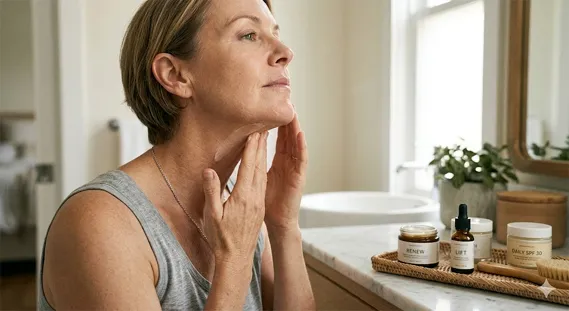
3. Use topical retinoids carefully and consistently
Among non-surgical options, topical retinoids for neck skin laxity have one of the strongest evidence bases. Retinoids encourage cell turnover and may stimulate collagen production over time.
This includes over-the-counter retinol as well as topical retinoids and prescription tretinoin. Prescription products tend to be stronger, but the neck is also more prone to irritation than the face.
How retinoids may help
They may improve:
- Fine lines
- Uneven texture
- Mild pigment changes from sun exposure
- Early collagen decline
They may not fully reverse:
- Deep folds
- Skin redundancy
- Pronounced muscle banding
In practice, we often suggest starting slowly. Two nights a week is enough in the beginning. Apply a pea-sized amount, then follow with moisturizer. If the skin burns, flakes excessively, or becomes inflamed, the treatment plan may need to be adjusted.
For patients managing eczema-prone or reactive skin, this matters even more. If you have ever asked How Does Eczema Develop, you already know that a damaged skin barrier can turn a helpful active ingredient into a major irritant.
A useful rule: retinoids are a marathon, not a rescue treatment. Results often take several months.
For general safety information on retinoid use and cosmetic products, the FDA remains a trusted source.
4. Try exercises and posture correction, but keep expectations realistic
A lot of people search for exercises to get rid of turkey neck because they want a natural option. That is understandable. Facial yoga, chin lifts, resistance stretches, and posture training may help muscle awareness and neck positioning. They may also reduce the appearance of heaviness caused by slouching.
Still, most experts agree the results are limited.
Where exercises may help
- Improving posture
- Reducing tension in the jaw and neck
- Creating a slightly more lifted appearance in mild cases
- Supporting overall neck awareness
Where they fall short
- They do not replace collagen
- They do not remove excess skin
- They do not significantly reduce fat pockets
- They do not tighten advanced platysma bands
One simple example: a patient who spends 8 to 10 hours a day looking down at a laptop may notice deeper horizontal neck lines. Correcting monitor height and posture may soften that pattern over time, but it will not erase established laxity.
Think of exercises as supportive, not curative. Helpful for some. Overpromised online.
5. Consider injectables and energy-based treatments for moderate changes
When skin care is not enough, non-invasive or minimally invasive office treatments can offer a middle ground. This is often the most practical step for people who are not ready for surgery.
Common options include
- Botox for platysma band relaxation
- Dermal fillers in select cases
- Radiofrequency treatments
- Micro-focused ultrasound
- Fractional laser resurfacing
These approaches work in different ways. Botox may soften visible vertical bands. Ultrasound and radiofrequency aim to stimulate deeper collagen remodeling. Lasers can improve surface texture and fine wrinkling.
The NHS offers useful background on cosmetic procedures and the importance of informed decision-making before treatment.
Surgical neck lift vs non invasive options
This is one of the most important comparisons. Surgical neck lift vs non invasive options is not just about cost. It is about anatomy and expectations.
| Option | Best For | Pros | Limits | Downtime |
|---|---|---|---|---|
| Neck creams and retinoids | Early texture changes | Affordable, easy to maintain | Mild results only | None |
| Botox and fillers | Banding or volume imbalance | Quick treatment, low downtime | Temporary, maintenance needed | Minimal |
| Radiofrequency or ultrasound | Mild to moderate laxity | Collagen stimulation, non-surgical | Gradual results, often subtle | Low |
| Laser treatments | Fine lines and texture | Improves surface quality | Does not remove loose skin | Low to moderate |
| Surgical neck lift | Moderate to severe laxity | Most dramatic, longer-lasting | Higher cost, recovery, surgical risks | Moderate |
If your concern is mostly crepey skin, a device may help. If there is hanging skin and deep banding, a device may disappoint.
Patients researching What Not to Do After Botox should also know that aftercare matters. Even excellent treatment can produce uneven results when instructions are ignored.

6. If laxity is advanced, surgery may be the most effective option
For pronounced turkey neck, surgery remains the most reliable option. That may include a neck lift, liposuction under the chin, or a platysmaplasty.
Platysmaplasty procedure cost and recovery
The platysmaplasty procedure cost and recovery conversation should always be individualized. Costs vary widely by region, surgeon training, facility fees, and whether the procedure is combined with a facelift.
In general:
- Recovery often takes about 2 to 3 weeks
- Swelling and bruising are common early on
- Final contour settles gradually over several weeks to months
- Costs can range from several thousand dollars upward depending on location and complexity
In our editorial review of cosmetic surgery outcomes, the highest satisfaction usually comes from patients who understood two things before surgery:
- What the procedure could realistically improve
- What recovery would actually feel like
That matters because surgery can produce dramatic improvement, but it is still surgery. There are scars, healing variables, and standard operative risks.
If you are considering care abroad, especially in medical tourism hubs such as Turkey or Thailand, verify clinic accreditation, surgeon board certification, follow-up planning, and complication support. Cost savings mean little if continuity of care is poor.
For evidence summaries on cosmetic and reconstructive literature, PubMed is a strong reference point.
7. Prevent further neck aging with daily habits that matter
If you want to get rid of turkey neck without regret, prevention should be part of the plan. This is the step many people skip, and it is often the reason results fade faster than expected.
Daily habits that may help slow progression
- Apply sunscreen to the neck and chest every morning
- Reapply during prolonged outdoor exposure
- Avoid smoking
- Keep weight changes gradual when possible
- Stay hydrated
- Prioritize protein, fruits, and vegetables
- Reduce repetitive “tech-neck” posture
- Extend your facial skin care down to the neck
Most studies agree that UV damage is one of the largest preventable contributors to cervicofacial aging. Sun exposure accelerates collagen breakdown and worsens dermal elastosis and collagen loss.
A simple example: one patient may spend hundreds on in-office tightening, then continue daily unprotected driving with the neck exposed to sunlight through the car window. That pattern often undermines progress.
Prevention is less glamorous than procedures. It is also one of the highest-value things you can do. 🌿
FAQs About Turkey Neck
Can turkey neck go away without surgery?
Mild cases may improve with skin care, retinoids, injectables, energy-based devices, and lifestyle changes. More advanced laxity often responds best to surgery.
Do neck firming creams that actually work exist?
Some products may improve hydration, texture, and the look of fine lines, especially if they contain peptides, antioxidants, and hyaluronic acid. They do not usually remove significant loose skin.
What causes turkey neck at a young age?
Genetics, rapid weight loss, sun damage, thin skin, posture habits, and hormonal factors may all play a role.
Are exercises to get rid of turkey neck worth trying?
They may help posture and muscle awareness, but usually produce modest results. They are best used as a supportive strategy, not a primary fix.
Is a neck lift better than non-invasive treatments?
For moderate to severe skin laxity, yes, often. For early changes, non-invasive approaches may be reasonable first steps. The best choice depends on anatomy, goals, and tolerance for downtime.
Can turkey neck be related to other skin concerns?
Yes. Patients concerned about neck aging often also ask about How to Get Rid Jowls, Fix Blotchy Skin and Red Blotchy Skin on Legs, or barrier issues such as How Does Eczema Develop because skin quality and visible aging often overlap across body areas.
Conclusion
Turkey Neck can feel discouraging, but it is not a dead end. In most cases, it reflects a mix of collagen decline, muscle laxity, fat redistribution, and environmental stress. That is why the best solution is rarely one-size-fits-all.
If your changes are mild, start with smart skin care, sunscreen, and topical retinoids for neck skin laxity. If the issue is moderate, injectables or collagen-stimulating devices may help. If there is advanced sagging, a surgical approach may be more satisfying than repeated temporary treatments. The goal is not perfection. It is choosing the option that fits your anatomy, budget, and tolerance for maintenance.
In our clinical-style editorial experience, the people happiest with their results are not the ones chasing quick fixes. They are the ones who understand the cause, ask better questions, and choose treatment with clear eyes. If you are exploring options for Turkey Neck, a consultation with a qualified dermatologist, facial plastic surgeon, or board-certified cosmetic clinician is a sensible next step.