
Pes Anserine Bursitis Exercises: A Complete Orthopaedic Rehabilitation Guide

Dr. John Ma is a dedicated Orthopaedic Surgeon with extensive experience in musculoskeletal health and surgical care. He currently serves at Royal Brisbane and Women’s Hospital, Australia, where he provides expert treatment for complex orthopaedic conditions. Passionate about advancing patient outcomes, Dr. Ma combines evidence‑based practice with compassionate care, helping individuals restore mobility and improve quality of life. Through his contributions to healthcare, he continues to support patients in achieving long‑term wellness and recovery.
Orthopaedic Surgery & Rehabilitation Verification
This comprehensive orthopaedic rehabilitation guide on managing pes anserine bursitis exercises and inner knee recovery protocols was fully reviewed, fact-checked, and clinically verified by Dr. John Ma, Specialist in Orthopaedic Surgery. All physical therapy, stretching matrices, and diagnostic criteria align strictly with current global musculoskeletal guidelines and British Orthopaedic Association standards.
Medical & Rehabilitation Disclaimer: The therapeutic exercises and clinical timelines outlined below are intended exclusively for educational awareness and patient rehabilitation support. Medial knee pain can frequently mimic or coexist with medial meniscus tears or joint osteoarthritis. This guide does not replace a formal physical assessment. Always consult a qualified orthopaedic surgeon, physiotherapist, or primary healthcare provider before beginning a new exercise regimen, especially if you have a history of knee surgery.
If you are searching for pes anserine bursitis exercises, chances are your inner knee has been reminding you of every stair, squat, or step out of a chair. We see this often in clinic notes and rehabilitation reviews. The pain is usually localised, tender, and frustratingly persistent. The encouraging part is that most cases improve with a structured, conservative plan. That usually includes the right stretches, progressive strengthening, and a clear sense of what not to do.
Pes anserine bursitis affects the small fluid-filled bursa on the inner side of the knee, roughly 2 to 3 inches below the joint line. This area sits where the Sartorius tendon, Gracilis muscle, and Semitendinosus tendon attach to the tibia. When these tissues become irritated, the result can feel like a deep ache, burning tenderness, or stiffness during walking, climbing stairs, or getting up after sitting.
In our clinical practice, we often see pes anserine pain alongside hamstring tightness, weak hip muscles, altered gait, and sometimes knee osteoarthritis. It may also show up after a spike in training, a new footwear change, or recovery from another lower-limb issue. In that sense, the knee is rarely working alone. It is part of a larger kinematic chain.
This guide explains what helps, what aggravates symptoms, how to progress safely, and how to think about pes anserine bursitis recovery time in a realistic way.
1. What pes anserine bursitis actually is
Pes anserine bursitis is inflammation of the bursa located at the inner upper shin, just below the medial knee. The term “pes anserinus” means “goose’s foot,” a reference to the way three tendons fan out and attach in this area.
Common signs include:
- Pain at the inner knee below the joint
- Joint line tenderness or tenderness slightly below it
- Localised swelling
- Pain when climbing stairs
- Discomfort rising from a chair
- Soreness during repetitive bending
- Tenderness after walking, running, or kneeling
This condition is often linked to:
- Overuse injury
- Tight hamstrings or adductors
- Weak gluteal muscles
- Poor lower-limb alignment
- Flat feet or unsupportive footwear
- Excess load from weight gain
- Knee osteoarthritis
- Post-surgical gait changes
It can sometimes mimic other problems. For example, an irritated medial meniscus, early arthritis, or a ligament issue may also cause inner knee pain. A clinician may use history, examination, and tests such as a valgus stress test to rule out other causes.
If your pain follows a significant twist, locking, giving way, fever, or major swelling, you need medical assessment rather than a home exercise trial.
2. Why exercise is the cornerstone of recovery
Rest matters in the early phase. But complete inactivity rarely fixes the underlying problem.
Most studies agree that conservative management works best when it combines:
- Relative rest
- Ice and pain control
- Mobility work
- Strengthening
- Activity modification
- Gradual return to normal loading
That is why pes anserine strengthening exercises matter. They do more than calm pain. They improve how force travels through the knee, hip, and ankle. When glutes are weak, for instance, the knee may drift inward during walking or stairs. When hamstrings are tight, they can pull more aggressively on the pes anserine area. The result is repeated irritation.
We often explain this to patients using a simple analogy. Think of the knee as a busy train station. If the tracks above and below are poorly aligned, the station absorbs more stress than it should.
This is also where related musculoskeletal issues matter. Someone recovering from Tibial Plateau Fracture Recovery may overload the inner knee as they regain confidence. A person compensating for upper-body discomfort, such as scapular pain caused by posture changes, may move differently than expected. Even chronic conditions like cervical spine disease can alter gait and balance in subtle ways. The body compensates widely.
3. Best warm-up and inner knee bursitis stretches
Before strengthening, calm the tissue and prepare it for movement. Gentle mobility reduces stiffness and may help reduce pain sensitivity.
Hamstring stretch
This is one of the most useful inner knee bursitis stretches, especially when hamstring tightness is obvious.
How to do it:
- Sit with one leg straight and the other bent
- Keep your back long
- Lean forward from the hips until you feel a mild stretch behind the thigh
- Hold 30 to 45 seconds
- Repeat 2 to 3 times
You can also do a doorway or wall hamstring stretch if seated positions are uncomfortable.
Adductor stretch
Tight inner-thigh muscles can increase pull across the medial knee.
How to do it:
- Stand with feet wide apart
- Shift weight to one side
- Keep the opposite leg straight
- Hold 30 seconds
- Repeat 2 to 3 times each side
Calf stretch
The calf is often overlooked. Yet a stiff calf can alter stride length and load the knee differently.
How to do it:
- Place hands on a wall
- Step one foot back
- Keep heel down and knee straight
- Lean forward gently
- Hold 30 to 45 seconds
Quadriceps stretch
This helps balance tension across the front of the thigh and knee.
How to do it:
- Stand holding a support
- Bend the knee and bring heel toward buttock
- Hold ankle if comfortable
- Keep knees close together
- Hold 30 seconds
Butterfly stretch
This is a gentle hip adductor stretch.
How to do it:
- Sit with soles of the feet together
- Let knees fall outward
- Lean forward slightly
- Hold 30 seconds
Important rule: stretching should feel mild to moderate, not sharp. Aggressive stretching is one of the classic pes anserine bursitis exercises to avoid.
4. The most useful pes anserine strengthening exercises
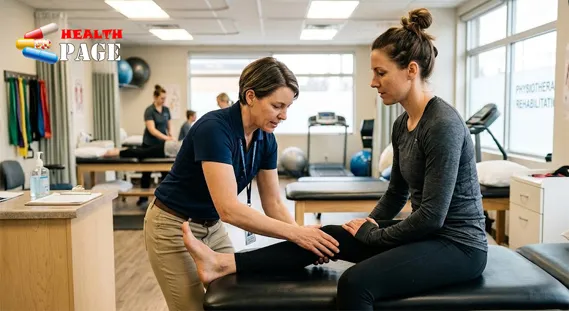
Strength work should be progressive, controlled, and low-irritation. Start with pain-free range and simple patterns.
1. Quad sets
How to do it:
- Sit or lie with the leg straight
- Tighten the front thigh by pressing the knee gently downward
- Hold 5 seconds
- Repeat 10 to 15 times
Why it helps:
It activates the quadriceps without much joint movement.
2. Short arc quads
How to do it:
- Place a rolled towel under the knee
- Straighten the knee by lifting the foot
- Hold briefly
- Lower slowly
- Repeat 10 to 15 times
3. Straight leg raises
How to do it:
- Lie on your back
- One knee bent, the other straight
- Tighten the straight leg
- Lift to the height of the opposite knee
- Lower slowly
- Repeat 8 to 12 times
4. Side-lying hip adduction
How to do it:
- Lie on one side
- Cross the top leg over the bottom leg
- Lift the bottom leg upward
- Lower slowly
- Repeat 10 to 12 times
This directly targets the inner thigh but should be done cautiously if the area is very tender.
5. Glute bridges
How to do it:
- Lie on your back with knees bent
- Tighten your core and glutes
- Lift hips until shoulders, hips, and knees align
- Lower with control
- Repeat 10 to 15 times
Glute strength often reduces stress on the medial knee.
6. Clamshells
How to do it:
- Lie on your side with knees bent
- Keep feet together
- Lift the top knee without rolling the pelvis
- Lower slowly
- Repeat 12 to 15 times
7. Side-lying leg raises
How to do it:
- Lie on your side
- Keep top leg straight
- Lift slightly behind the body line
- Lower slowly
- Repeat 10 to 15 times
8. Wall squats, shallow range
How to do it:
- Stand with your back against a wall
- Slide down slightly, staying in a comfortable range
- Hold 5 to 10 seconds
- Return to standing
- Repeat 8 to 10 times
Keep the bend shallow at first. Deep squats are among the common pes anserine bursitis exercises to avoid, especially during a flare.
Exercise progression table
| Exercise | Early Stage | Mid Stage | Progression |
|---|---|---|---|
| Quad sets | 10 reps, 1–2 sets | 15 reps, 2 sets | Add longer holds |
| Straight leg raises | 8 reps | 10–12 reps | Add ankle weights |
| Glute bridges | 10 reps | 15 reps | Single-leg bridge, if pain-free |
| Clamshells | 12 reps | 15 reps | Add resistance band |
| Wall squats | Shallow hold 5 sec | Hold 10 sec | Increase reps before depth |
| Side-lying adduction | 8 reps | 12 reps | Add light ankle weight |
A simple rule we use: pain during exercise should stay mild and should settle within 24 hours. If it spikes and lingers, the load was too high.
5. Pes anserine bursitis exercises to avoid
This section matters as much as the rehab plan itself. Some movements repeatedly aggravate symptoms.
The key pes anserine bursitis exercises to avoid include:
- Deep squats beyond your comfortable range
- Deep lunges with forward knee collapse
- High-impact running during flare-ups
- Jump training
- Aggressive adductor stretching
- Fast side-to-side cutting drills
- Heavy stair workouts early on
- Kneeling on hard surfaces if painful
Why these aggravate the area:
- They compress the irritated bursa
- They increase friction at the tendon attachment
- They challenge control before the hip and core are ready
Low-impact alternatives are often better in the short term:
- Flat walking
- Gentle cycling with low resistance
- Pool walking
- Controlled strengthening
- Mobility drills
For some patients, Kinesiology taping or a soft brace may provide symptom relief, though evidence is mixed. It may help as a short-term comfort tool, not a standalone treatment.
6. How to relieve pes anserine pain fast
If you are wondering how to relieve pes anserine pain fast, the goal is not a miracle fix. It is to settle inflammation and reduce mechanical irritation.
The most practical early strategies are:
- Ice for 15 to 20 minutes every 6 to 8 hours
- Relative rest from provoking activity
- Topical anti-inflammatory gel, such as diclofenac, if appropriate for you
- Supportive footwear or temporary orthotics
- Sleeping with the knee in a comfortable neutral position
- Gradual return to activity rather than complete stop-start cycles
Footwear matters more than many people expect. In some patients, poor arch support increases inward knee load. Addressing that part of the kinematic chain can reduce recurrence. This is especially relevant in runners and adults with mild arthritis.
In select cases, clinicians may discuss corticosteroid injection for short-term symptom reduction. It may help when pain blocks rehabilitation, but it is not a substitute for exercise-based recovery.
7. Pes anserine bursitis recovery time: what is realistic?
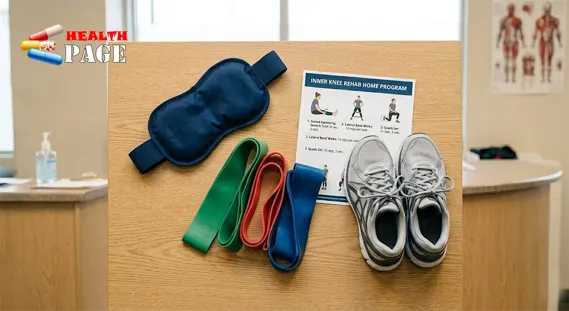
Pes anserine bursitis recovery time varies. Most uncomplicated cases improve within 6 to 8 weeks. But that depends on the cause, age, overall health, and whether the patient is still doing the activity that triggered symptoms.
A useful framework:
Acute phase: 1 to 2 weeks
Focus on:
- Rest from aggravating activity
- Ice
- Gentle stretching
- Pain control
- Walking modification
Rehabilitation phase: 3 to 6 weeks
Focus on:
- Mobility
- Gradual strengthening
- Gait correction
- Return to stairs and daily function
Full recovery: around 6 to 8 weeks
For many people:
- Pain fades
- Strength improves
- Daily movement becomes easier
Recovery may take longer if there is:
- Untreated knee osteoarthritis
- Obesity
- Significant weakness
- Persistent overuse injury
- Biomechanical problems
- Post-surgical sensitivity
If pain continues beyond 3 months, reassessment is sensible. That may involve imaging, gait review, or checking for other causes such as meniscal irritation, referred pain, or inflammatory conditions. Questions around overlapping symptoms can also come up in broader pain discussions, including conditions like What is Arthralgia, where joint pain may have multiple contributors.
8. A practical weekly plan you can actually follow
Patients do better with simple routines than perfect ones.
Example starter plan
Daily
- Ice after activity if flared
- Hamstring stretch
- Calf stretch
- Adductor stretch
3 to 4 days per week
- Quad sets
- Straight leg raises
- Bridges
- Clamshells
After 2 weeks if improving
- Add side-lying adduction
- Add shallow wall squats
- Increase walking time gradually
After 4 to 6 weeks
- Progress resistance
- Add step-ups if pain-free
- Begin sport-specific drills if needed
A short real-world example from our editorial review meetings: a 58-year-old walker with inner knee pain and mild osteoarthritis improved when she paused hill walking, switched to flatter routes, added glute work, and replaced worn-out shoes. Her pain did not vanish overnight. But it became manageable within two weeks and steadily improved across six.
FAQs
What is the fastest way to calm a pes anserine flare-up?
The best short-term approach is relative rest, ice, and avoiding painful loading. If appropriate for you, topical anti-inflammatory treatment may help. Then restart gentle motion and basic pes anserine bursitis exercises rather than staying inactive for too long.
Can I walk with pes anserine bursitis?
Usually yes, if walking does not sharply worsen pain. Shorter, flatter walks are often better than hills or stairs early on. Good shoes matter. If you are also recovering from Tibial Plateau Fracture Recovery, your walking plan should be more individualized.
Are squats bad for pes anserine bursitis?
Not always. Deep or painful squats are among the common pes anserine bursitis exercises to avoid. Shallow, controlled wall squats may be introduced later if symptoms are settling.
How do I know if it is bursitis and not a meniscus tear?
Pes anserine bursitis usually causes tenderness below the inner joint line with activity-related soreness and mild swelling. Meniscus problems more often involve locking, catching, or twisting pain. A clinician may use exam findings, including the valgus stress test and other maneuvers, to sort this out.
Do inner knee bursitis stretches really help?
Yes, when done gently. Effective inner knee bursitis stretches can reduce tension from tight hamstrings, adductors, calves, and quadriceps. They work best when combined with hip and thigh strengthening.
Can posture or spine issues affect my knee pain?
Sometimes. Movement patterns are connected. Someone dealing with cervical spine disease or chronic compensations from scapular pain caused by posture changes may move differently through the trunk and lower limbs, which can indirectly affect knee loading.
Conclusion
The right pes anserine bursitis exercises can make a meaningful difference. Not because they “fix” the knee in isolation, but because they calm the irritated tissues and improve how the whole leg works together. Start with gentle stretching. Progress to smart strengthening. Avoid movements that compress or overload the inner knee too early. Respect the typical pes anserine bursitis recovery time, but remember that recovery is rarely perfectly linear.
Most people do well with consistent conservative care. If symptoms persist, worsen, or do not match the usual pattern, a medical review is important. That is especially true if there is marked swelling, instability, fever, or night pain.
For readers exploring related orthopaedic issues, it may also help to review What is Arthralgia, Tibial Plateau Fracture Recovery, and broader movement patterns linked to cervical spine disease. Sometimes the best knee rehab plan starts by seeing the bigger picture. 🦵
Pingback: Safe Knee Exercises for Arthritis: Relief, Stretches & Movement