
Disc Degeneration: 7 Symptoms, Causes and Treatment Options
Medical Disclaimer: This article, “Disc Degeneration: 7 Symptoms, Causes and Treatment Options” written by Dr. John Ma (Orthopedic Surgery), is provided for educational and informational purposes only and does not constitute medical advice, diagnosis, or treatment. Always seek the advice of your physician or another qualified healthcare provider with any questions you may have regarding a medical condition or treatment plan.
If a scan report has mentioned disc degeneration, the phrase can sound as though something in your spine is steadily failing. In reality it is closer to greying hair: a common, age-related change in the cushions between the spinal bones, and one that many people have without ever feeling pain. When it does cause problems, the usual picture is neck or lower-back pain that flares and settles, sometimes with stiffness or tingling that travels into an arm or leg. This article covers the seven symptoms most often linked to it, what drives the process, how it is diagnosed, and which treatments and exercises current guidance supports.
What disc degeneration actually means
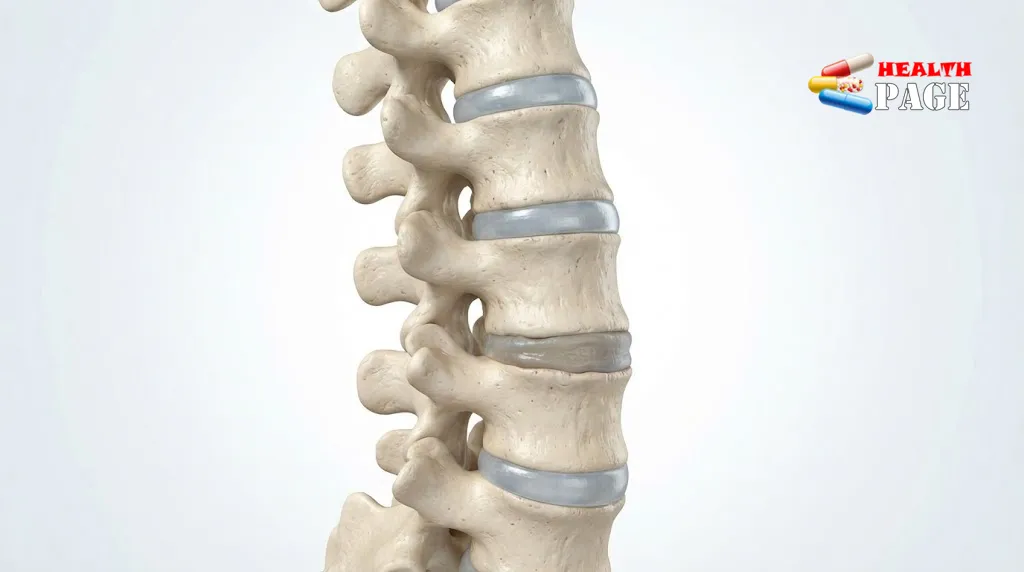
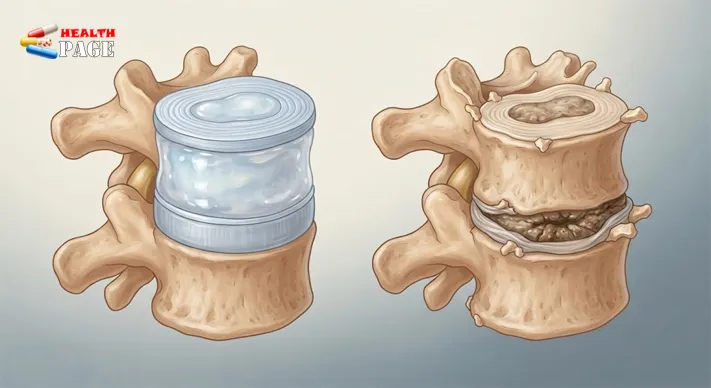
Between each pair of vertebrae sits an intervertebral disc. Each one has a tough, fibrous outer ring and a softer, water-rich centre, and together they act as shock absorbers while letting the spine bend and twist. Over the years the centre loses water, the disc becomes thinner and less springy, and small tears can appear in the outer wall. Doctors call this spinal disc degeneration or intervertebral disc degeneration, and it becomes increasingly common from middle age onwards.
The more familiar label, degenerative disc disease, is a little misleading. As Cleveland Clinic explains, it is better understood as a condition of wear than a disease in the strict sense, and it does not always cause symptoms. Three points are worth holding on to before you read any scan report:
- Degeneration does not automatically mean pain. Plenty of people have worn discs and no back trouble at all.
- A scan shows structure, not necessarily the source of a symptom. Changes on an image can be real and still unrelated to why you hurt.
- Treatment generally aims to improve pain and everyday function. It does not restore a disc to its younger state.
Degenerative disc disease symptoms: seven signs to recognise
No one has to experience every item below, and some people notice none of them. What you feel depends largely on which part of the spine is involved and whether a nearby nerve is irritated.
- Neck or lower-back pain. This is the most common complaint. It is often a dull ache, occasionally sharp, and sits in the neck and upper shoulders for cervical degeneration or low in the back for lumbar degeneration.
- Stiffness. Many people notice it first thing in the morning or after a long drive, easing once they start moving.
- Pain that changes with position. Sitting for long periods, bending, twisting and lifting commonly make it worse, while some people find walking or lying down more comfortable.
- Intermittent flare-ups. Episodes can last days, weeks or even months, with calmer stretches in between. Sometimes there is an obvious trigger such as unaccustomed gardening; often there is not.
- Pain spreading into the buttocks, arms or legs. When a degenerating disc irritates a nearby nerve, discomfort can travel away from the spine. In the neck this may reach the shoulder and arm, and some people feel it mainly in the area around the shoulder blade, which this guide to shoulder blade pain linked to cervical spondylosis describes in more detail. In the lower back it tends to reach the buttock or thigh.
- Tingling or numbness. Pins and needles usually follow the pattern of a particular nerve, so they appear in one hand or one foot rather than everywhere at once.
- Muscle weakness. A significantly irritated or compressed nerve can weaken the muscles it supplies, causing difficulty gripping or a foot that catches on the ground. New or worsening weakness deserves prompt medical assessment.
Some findings often listed alongside these are not symptoms at all. Reduced disc height, bone spurs (osteophytes) and bulging discs are things a scan can show, and they can be present without any of the seven signs above. That is why clinicians pay more attention to your symptoms and examination than to the image alone.
Disc degeneration causes and risk factors
Ageing is the main driver, but it is rarely the whole story. Several factors appear to influence how quickly discs change and whether the change becomes painful:
- Genetics. Family patterns are well recognised, which is one reason two people with similar lifestyles can have very different spines.
- Smoking. It is repeatedly named as a risk factor, and Cleveland Clinic notes that it can also make pain worse and treatment less effective.
- Previous injury. A fall or other spinal injury can leave a disc more prone to wear.
- Physically demanding work. Repeated heavy lifting, and for some people long hours of driving, add load to the discs.
- Excess body weight. Additional weight increases the load carried through the lower spine.
Posture and screen habits come up often in this context. Hours spent looking down at a phone can leave the neck muscles tired and sore, a pattern widely called tech neck. Whether that posture directly causes disc degeneration is less clear than its role in aggravating existing neck pain, so it is best treated as something that can make symptoms worse rather than a proven cause.
Cervical and lumbar disc degeneration
Degeneration can affect any level of the spine, but it is mostly discussed in two regions. Cervical disc degeneration involves the neck. It tends to produce neck pain and stiffness, and when nerves are involved, tingling, numbness or weakness in the shoulder, arm or hand. Lumbar disc degeneration involves the lower back, which carries most of the body’s weight and moves constantly. Pain there often worsens with sitting, bending or lifting and may spread into the buttocks or legs.
The neck is not always the whole story either. Pain in the neck and shoulders can arise from muscles, joints and discs without any nerve being pinched, a distinction explored in this explainer on cervical spine disease that is not caused by nerve compression. Knowing which situation applies matters because it changes what treatment is likely to help.
Herniated disc vs degenerative disc disease
The two are often confused, and they can overlap. A herniated (sometimes called slipped) disc happens when some of the soft centre pushes through a weak point in the outer wall. A degenerated disc is more likely to do that, but degeneration itself is the slower process of drying and thinning.
| Feature | Disc degeneration | Herniated disc |
|---|---|---|
| What happens | Gradual drying, thinning and wear | Inner material bulges or pushes through the outer wall |
| Pace | Develops over years | Can appear suddenly or build up over time |
| Typical symptom | Recurring neck or back pain and stiffness | Pain along an arm or leg, with or without back pain |
| Nerve involvement | Only when narrowing or irritation develops | Common, because displaced material can press on a nerve root |
| Relationship | Raises the chance of herniation | Often occurs in a disc that is already worn |
When a herniated lumbar disc presses on a nerve root, the result is often the shooting leg pain known as sciatica. If that sounds familiar, this overview of sciatica causes, symptoms and relief explains how it differs from ordinary back pain.
How disc degeneration is diagnosed
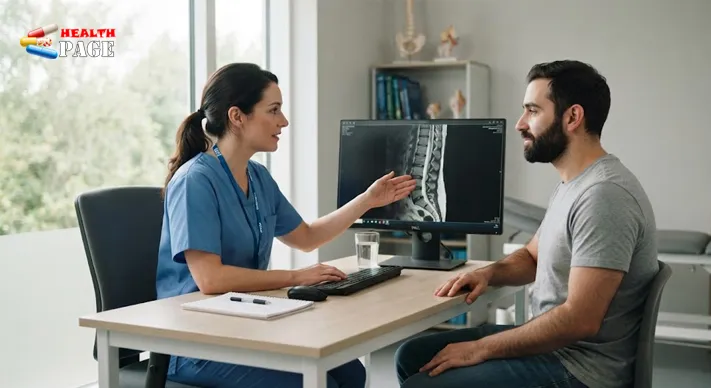
Diagnosis starts with a conversation. A clinician will ask when the pain began, what makes it better or worse, whether you have had an injury, and whether you have tingling, numbness or weakness. A physical and neurological examination follows, usually checking movement, reflexes, muscle strength and sensation.
Imaging is less routine than many people expect. X-rays can show reduced disc space and bone spurs, while MRI gives a clearer view of discs and nerves. However, NICE guidance on low back pain and sciatica advises against routinely offering imaging in non-specialist settings, and suggests considering it in specialist care only when the result is likely to change management. In practice, a scan becomes more useful when surgery or an injection is being considered, or when there are warning signs of a more serious cause.
Cleveland Clinic describes four imaging-based stages of degeneration, from early dysfunction through to collapse of the disc. These stages describe appearance rather than prognosis. Someone with an advanced-looking scan can have little pain, and someone with a modest one can have a lot, so the stage alone should not be read as a forecast of how you will feel.
Degenerative disc disease treatment: what usually helps
For most people, treatment is non-surgical and built around staying active rather than resting. Prolonged bed rest tends to prolong stiffness, whereas keeping up gentle, regular movement is a consistent theme in NHS and NICE advice. A sensible plan often combines several elements:
- Activity and pacing. Continue normal activities as far as pain allows, and reduce rather than stop the things that provoke flare-ups.
- Physiotherapy. A physiotherapist can assess how you move, identify what aggravates symptoms and build a graded programme around it.
- Pain relief. Simple painkillers are sometimes appropriate, and anti-inflammatory tablets are another option. Anti-inflammatories can irritate the stomach and affect the kidneys and blood pressure, so a pharmacist or GP should confirm they suit you.
- Heat or cold. A hot-water bottle or cold pack may bring short-term comfort, though neither changes the underlying disc.
It is also useful to know what is not recommended. NICE advises against several treatments that are sometimes offered for low back pain, including belts and corsets, traction, acupuncture, ultrasound and TENS. It also advises against spinal injections for general low back pain, while the management of sciatica from a compressed nerve is considered separately. In other words, an intervention that suits one nerve-related condition may be inappropriate for ordinary degenerative back pain.
Surgery is needed by only a minority of people. It may be considered when disabling pain or weakness persists despite proper non-surgical care, when a nerve is clearly compressed, or when neurological problems progress. Procedures include removing part of a disc, widening the space around a nerve, spinal fusion and, in selected cases, disc replacement. An MRI showing degeneration is never a reason for surgery by itself.
Disc degeneration exercises: principles that matter more than any routine
There is no single routine that suits everyone with this condition, and any programme that promises to reverse degeneration should be treated with caution. NICE recommends considering an exercise programme chosen to suit the person’s needs, preferences and capabilities, which is a sensible way to think about it: the right exercise depends on where your symptoms are, how fit you are and whether any nerve is involved.
A few general principles apply:
- Start gently and progress gradually. Walking, swimming and cycling are common low-impact starting points that keep the spine moving and build general fitness.
- Add strength over time. Strengthening the muscles of the trunk, hips and, for neck problems, the upper back gives the spine more support. Physiotherapists often use movements such as pelvic tilts, bridges, bird-dog exercises or chin tucks, but the choice should be individual.
- Expect some discomfort, not escalating pain. A mild, short-lived ache can be acceptable. Pain that sharply worsens, spreads further down an arm or leg, or comes with new numbness or weakness is a reason to stop and seek advice.
- Be consistent rather than heroic. Regular, moderate sessions usually serve better than occasional intense ones.
If you are unsure where to begin, an NHS or private physiotherapist can tailor a programme and show you correct technique.
Everyday habits that may help
Nothing below reverses degeneration, but several habits can make symptoms easier to live with. Stopping smoking is probably the clearest single step, given its link with worse pain. Maintaining a healthy weight reduces load on the lower spine. Breaking up long periods of sitting with a short walk or stretch every half hour or so eases stiffness, and varying your position at a desk is more useful than searching for one perfect posture. When lifting, keeping the load close to your body and avoiding twisting while carrying weight reduces strain. Supplements and gadgets are heavily marketed for spinal health, but none has been shown to restore a degenerated disc.
When to get urgent medical help
Seek emergency care straight away if back pain comes with any of the following: new difficulty passing urine or controlling your bladder or bowels; numbness or tingling around your genitals, buttocks or back passage; numbness, tingling or new weakness in both legs; or changes in sexual sensation. These can signal pressure on the nerves at the base of the spine and need urgent assessment. The NHS advice on back and joint problems explains when to call 999, go to A&E or contact NHS 111.
Urgent assessment is also sensible for back pain with a high temperature or feeling generally unwell, severe pain after an injury, or weakness that is getting worse quickly. For less alarming situations, book a GP appointment if pain is not starting to improve after a few weeks, keeps returning, or limits your sleep, work or daily activities.
FAQs
Can disc degeneration be reversed? A worn disc does not regrow to its earlier condition, and no supplement, posture correction or exercise has been shown to reverse it. That said, symptoms often improve substantially even though the scan does not change, because pain depends on more than disc structure.
Does disc degeneration always cause pain? No. It is common in people with no symptoms, which is why a scan finding should be matched against your symptoms before conclusions are drawn.
Will it keep getting worse? Degeneration tends to progress slowly with age, but pain does not follow the same curve. Many people have long quiet periods, and staying active and avoiding smoking give the best chance of keeping symptoms manageable.
Do I need an MRI? Usually not at first. Most episodes of back or neck pain are managed without imaging, and a scan is more useful when symptoms are persistent, nerve-related or when a specialist is weighing up an injection or surgery.
Is walking safe if I have disc degeneration? For many people it is a helpful, low-impact option. Begin with short distances, build up gradually, and speak to a clinician if walking triggers worsening leg pain, numbness or weakness.
Living well with disc degeneration
Disc degeneration is a normal part of ageing for many people, and the great majority manage it without surgery. The most reliable approach combines gentle, regular activity, sensible pain relief, attention to habits such as smoking and prolonged sitting, and a clinician who looks at your symptoms rather than your scan alone. If you want to read more about related joint and spine problems, our collection of orthopaedic conditions and guides is a good place to continue. And if your symptoms are persistent, are changing, or come with any of the warning signs above, get an individual assessment rather than waiting it out.
References
- Cleveland Clinic. Degenerative Disk Disease. https://my.clevelandclinic.org/health/diseases/16912-degenerative-disk-disease
- National Institute for Health and Care Excellence (NICE). Low back pain and sciatica in over 16s: assessment and management (NG59), Recommendations. https://www.nice.org.uk/guidance/ng59/chapter/Recommendation
- NHS. Get NHS help for back or joint problems: check if the service is right for you. https://www.nhs.uk/nhs-services/get-nhs-help-for-back-joint-problems/check-if-the-service-is-right-for-you/

Dr. John Ma is a dedicated Orthopaedic Surgeon with extensive experience in musculoskeletal health and surgical care. He currently serves at Royal Brisbane and Women’s Hospital, Australia, where he provides expert treatment for complex orthopaedic conditions. Passionate about advancing patient outcomes, Dr. Ma combines evidence‑based practice with compassionate care, helping individuals restore mobility and improve quality of life. Through his contributions to healthcare, he continues to support patients in achieving long‑term wellness and recovery.