
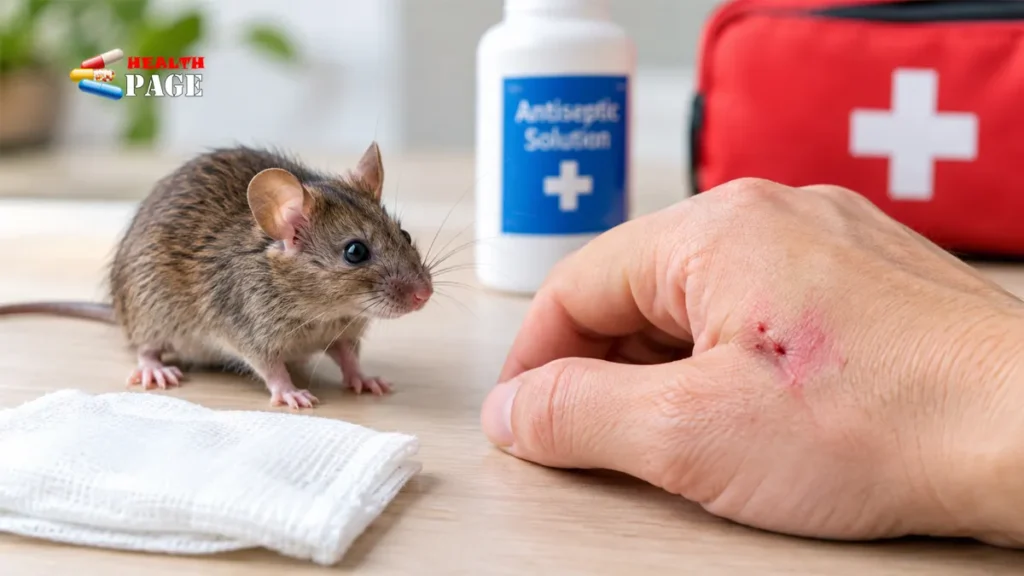
Mouse Bites: First Aid, Infection Risks, and When to See a Doctor

Dr. Sana Lodhi is a qualified medical doctor (MBBS) with a strong commitment to patient care and evidence‑based medicine. With years of clinical experience and her current role at Liaquat University of Medical & Health Sciences (LUMHS), she brings trusted medical insights to readers, simplifying complex health topics into clear, practical guidance. Her passion lies in promoting preventive healthcare, empowering individuals to make informed decisions, and bridging the gap between medical knowledge and everyday wellness. At HealthyPost.co.uk, Dr. Lodhi shares expert perspectives on health, lifestyle, and medical awareness to help readers live healthier, more balanced lives.
This article has been written by Dr. Sana Lodhi (General Medicine), specializing in primary care, acute wound management, and infectious disease prevention.
Medical Disclaimer: The information provided on Health Page regarding mouse bites, wound care, and infection risks is for educational and informational purposes only and does not constitute formal medical advice, diagnosis, or treatment. Rodent bites can carry risks of bacterial or viral infections and may require prompt medical evaluation, antiseptics, antibiotics, or a tetanus booster. Always seek immediate professional medical attention from a qualified physician or healthcare provider if you have suffered a rodent bite or are experiencing symptoms of infection.
A mouse bite can look like nothing more than a tiny puncture, but if the skin is broken, it should be cleaned promptly and monitored carefully. Mouse bites can introduce bacteria into the wound and, less commonly, expose a person to rodent-associated infections such as rat-bite fever. The immediate priorities are straightforward: move away from the animal, wash the wound thoroughly with soap and running water, control any bleeding, cover the injury, and consider whether medical assessment or tetanus protection is needed.
Most minor bites do not become serious, but the size of the wound does not tell you everything about the potential risk. A puncture can be deeper than it appears, and some rodent-associated illnesses may cause symptoms days after the bite.
What Are Mouse Bites?
A mouse bite is a puncture or tearing injury caused by a mouse’s teeth. It can happen when someone attempts to catch a wild mouse, reaches into an area where a mouse is hiding, handles a trapped animal, or is bitten by a pet mouse.
Mouse teeth are capable of creating small puncture wounds. These may bleed only slightly and can begin closing quickly, which sometimes leads people to assume that no further attention is necessary.
The main concerns following a bite include:
- Bacterial infection of the wound
- Rat-bite fever
- Tetanus, depending on the wound and vaccination history
- Deeper tissue infection or damage
- Other rodent-associated infections depending on the exposure and location
Rodents that carry certain bacteria may look completely healthy, so it is not possible to determine infection risk simply by looking at the animal.
What to Do If a Mouse Bites You
If the bite breaks the skin, prompt mouse bite wound treatment starts with thorough cleaning.
1. Get away from the animal
Move away from the mouse before treating the wound. Do not attempt to pick up or restrain a wild or frightened rodent with your bare hands.
If the animal is still present, keep children and pets away from it as well.
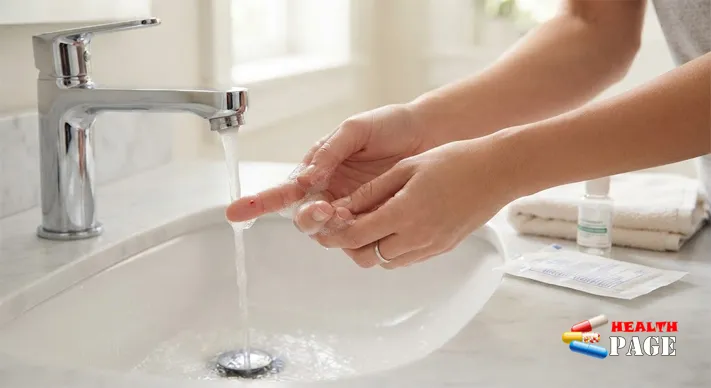
2. Wash the wound thoroughly
Wash the bite with soap and running water. Cleaning removes saliva, dirt and other contaminants from the injured area and is one of the most important first-aid steps after an animal bite.
NHS guidance recommends cleaning animal bites with soap and warm water, while CDC wound guidance emphasizes cleaning wounds and removing foreign material.
Do not rely on simply wiping the surface with a tissue. If the wound is a puncture, take care to wash around the opening thoroughly without aggressively digging into the tissue.
3. Control bleeding
If the wound is bleeding, apply firm, gentle pressure with clean gauze or a clean cloth.
Minor punctures often stop bleeding relatively quickly. If bleeding is heavy or does not stop with sustained pressure, the injury needs urgent medical assessment.
4. Cover the wound
After cleaning, gently dry the surrounding skin and apply a clean dressing. Keep the dressing clean and change it when necessary.
Avoid repeatedly touching the wound with unwashed hands.
5. Consider whether medical assessment is appropriate
A healthcare professional may need to assess the depth and location of the wound, your vaccination history, the circumstances of the exposure and whether treatment is needed.
A deeper puncture, substantial tissue damage, a bite on the hand or face, persistent bleeding, or developing infection deserves particular attention.
Rodent Bite Infection Symptoms to Watch For
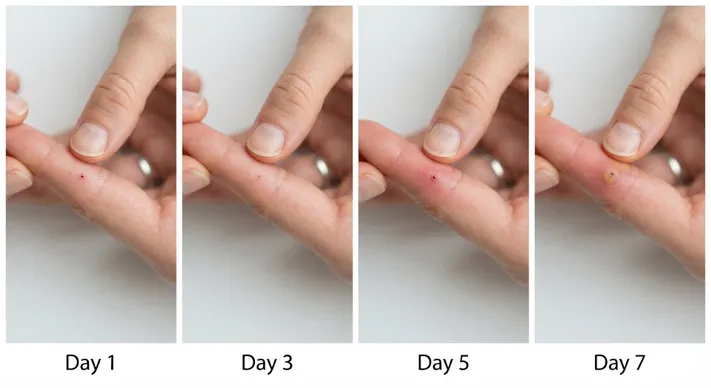
A mouse bite infection may initially be difficult to distinguish from normal healing. Mild tenderness immediately after the injury is not necessarily a sign of infection.
What matters is the direction of change. If the wound becomes progressively more painful, red, swollen or warm rather than gradually settling, it should be assessed.
Possible rodent bite infection symptoms include:
- Increasing redness around the wound
- Increasing swelling
- Worsening pain or tenderness
- Warmth around the bite
- Pus or other drainage
- Red streaking extending away from the wound
- Fever
- Feeling increasingly unwell
NHS guidance specifically identifies increasing heat, swelling, pain, redness, discharge and fever as reasons to seek medical advice after an animal bite.
An infected mouse bite does not necessarily become dramatic immediately. That is why checking the wound over the following days is useful.
Mouse bite swelling and redness: when is it concerning?
Some redness or tenderness can occur immediately after an injury because the tissue has been damaged.
More concerning patterns include redness that expands, swelling that continues to increase, worsening pain, warmth, drainage or systemic symptoms such as fever.
If you are unsure whether the wound is healing normally, a healthcare professional can assess it rather than relying on its appearance alone.
Rat-Bite Fever and Mouse Bites
The term rat-bite fever and mouse bites can seem confusing because the disease’s name suggests that rats are the only source.
They are not.
The CDC explains that rat-bite fever (RBF) is associated with infected rodents and that mice, as well as rats and several other rodents, can carry the bacteria responsible for the disease. Transmission can occur through bites or scratches, but exposure to rodent saliva, urine or contaminated materials can also transmit the infection.
This does not mean that every mouse bite will cause rat-bite fever. RBF is uncommon, and the risk from an individual exposure cannot be calculated simply from the fact that a mouse was involved.
What are the symptoms of rat-bite fever?
Symptoms depend partly on the organism involved and the geographic setting. CDC information describes symptoms such as:
- Fever
- Chills
- Headache
- Muscle aches
- Nausea or vomiting
- Joint pain or swelling
- Rash
For infections caused by Streptobacillus moniliformis, symptoms commonly begin about 3–10 days after exposure, although they can occur as late as 21 days. Spirillum minus, which is more associated with parts of Asia, can have a longer incubation period and may cause an ulcer at the bite site, swollen lymph nodes, fever and a distinctive rash.
That delayed timing matters. Someone can have a bite that appears to be healing and later develop fever, rash or joint symptoms.
If these symptoms occur after contact with a mouse or another rodent, tell the healthcare professional about the exposure. RBF can become serious without appropriate treatment, but antibiotics can treat the infection when started appropriately.
Do not use leftover antibiotics or someone else’s prescription. The correct treatment depends on the suspected infection and individual circumstances.
Tetanus Shot After a Mouse Bite
Whether you need a tetanus shot after a mouse bite depends on both the wound and your vaccination history.
CDC guidance classifies animal bites as dirty or major wounds because they can involve saliva and puncture the skin. For someone who has completed the primary tetanus vaccination series, a booster is generally recommended for a dirty or major wound when the last tetanus-containing vaccine was 5 or more years ago. If vaccination history is unknown, the person is unvaccinated or the primary series is incomplete, vaccination may be recommended regardless of wound type.
In certain people with dirty or major wounds and an unknown, absent or incomplete vaccination history, a clinician may also consider tetanus immune globulin.
This is why it is useful to tell the healthcare professional:
- When you last received a tetanus-containing vaccine
- Whether you completed your primary vaccination series
- Whether the bite punctured the skin
- Whether the wound was contaminated
- Whether you have conditions that affect immune function
A mouse bite does not automatically mean that everyone needs a tetanus injection. The decision is based on the wound and vaccination history.
When to See a Doctor for a Mouse Bite
You do not necessarily need emergency care for every minor mouse bite, but medical assessment becomes more important when the injury is deep, contaminated, located in a sensitive area or accompanied by symptoms.
Seek prompt medical advice if:
- The bite is deep or extensive.
- Bleeding does not stop with pressure.
- The bite is on the hand, face, foot or near a joint.
- The wound becomes increasingly red, swollen, hot or painful.
- Pus or other fluid develops.
- You develop fever, chills or feel generally unwell.
- Red streaks appear around or away from the wound.
- You develop a rash, joint pain, vomiting or other systemic symptoms.
- You do not know whether your tetanus vaccination is up to date.
- You have a condition or treatment that significantly affects your immune system.
Large or deep wounds and bleeding that cannot be controlled require urgent medical attention.
If symptoms suggest rat-bite fever, seek medical care promptly and specifically mention the recent rodent exposure.
Can a Mouse Bite Cause Rabies?
Rabies deserves a slightly different explanation.
Rabies is transmitted by infected mammals, but small rodents such as mice are very different from animals that commonly account for human rabies exposures. CDC guidance has historically noted that rabies infection in small rodents is extremely uncommon in the United States.
However, rabies risk is geographically dependent, and recommendations can vary according to the animal, its behavior, the circumstances of the bite and local public-health guidance.
Therefore, do not make a rabies decision based solely on the assumption that “mice cannot carry rabies.” If the animal was wild, behaved unusually, was unidentified, or the exposure occurred in a region where rabies is a concern, contact a healthcare professional or local public-health authority promptly.
The wound should still be washed immediately regardless of whether rabies is ultimately considered a risk.
What Not to Do After a Mouse Bite
Several common reactions can make wound care less effective.
Do not ignore the bite because it looks tiny. Small rodent bites can be puncture wounds, and bacteria can enter through broken skin.
Do not simply wipe it clean. Wash the wound thoroughly with soap and running water.
Do not use leftover antibiotics. Antibiotics are not automatically necessary for every bite, and treatment should be selected according to the clinical situation.
Do not wait for severe symptoms if warning signs develop. Fever, rash, joint pain, worsening wound inflammation or other systemic symptoms following rodent exposure warrant medical attention.
Do not handle the animal unnecessarily. Trying to catch a frightened mouse can result in another bite or additional exposure.
How Long Should You Watch a Mouse Bite?
There is no single monitoring period that covers every possible complication because different infections have different incubation periods.
During the first several days, pay particular attention to the wound:
- Is redness expanding?
- Is swelling increasing?
- Is pain getting worse?
- Is the area becoming increasingly warm?
- Is pus appearing?
- Are red streaks developing?
Continue paying attention to your general health after the wound begins to heal. Rat-bite fever can appear several days after exposure, and in some cases symptoms can occur after the bite itself has largely healed.
If fever, rash, vomiting, significant muscle aches or joint pain develops after rodent exposure, tell your healthcare provider that you were bitten or otherwise exposed to a rodent.
Mouse Bite vs. Rat Bite: Is the Risk the Same?
Both mice and rats are rodents and can carry organisms capable of causing human illness, but an individual exposure cannot be judged solely by the species.
Relevant factors include:
| Factor | Why it matters |
|---|---|
| Type of animal | Different rodents can carry different organisms |
| Wild or pet animal | Exposure circumstances and health history may differ |
| Bite depth | Deeper wounds can require more medical attention |
| Bite location | Hands, face, feet and areas near joints can be more concerning |
| Vaccination history | Determines aspects of tetanus prevention |
| Symptoms afterward | Fever, rash or worsening wound changes may indicate illness |
| Geographic location | Some infections and rabies risks vary by region |
The name “rat-bite fever” should therefore not be interpreted as meaning that only rats are relevant. CDC specifically identifies mice among rodents that can carry the bacteria responsible for RBF.
How Doctors Evaluate Mouse Bites
When you seek medical care, the clinician may consider several parts of the exposure rather than looking at the bite alone.
They may assess:
- The wound — its depth, location, contamination and tissue damage.
- Signs of infection — including increasing redness, warmth, swelling, pain or drainage.
- Tetanus vaccination history — particularly the date of the last dose.
- The exposure — whether the mouse was wild, a pet, trapped or behaving unusually.
- Symptoms beyond the wound — such as fever, rash, vomiting or joint pain.
- Individual risk factors — including circumstances that could increase the likelihood of complications.
Depending on the findings, treatment can range from wound care and vaccination to antibiotics or additional testing.
Preventing Mouse Bites and Rodent Exposure
The simplest form of mouse bite prevention is reducing direct contact with rodents.
Practical measures include:
- Avoid handling wild mice with bare hands.
- Keep children away from wild rodents.
- Do not allow pets to interact closely with wild rodents.
- Use appropriate precautions when dealing with traps.
- Store food in sealed containers.
- Clean food spills promptly.
- Seal gaps and openings where mice can enter buildings.
- Follow appropriate precautions when cleaning areas contaminated by rodents.
Reducing contact is useful not only because it lowers the chance of a bite, but also because some rodent-associated infections can spread through exposure to saliva, urine or contaminated materials without an obvious bite.
Frequently Asked Questions About Mouse Bites
Are mouse bites dangerous?
Most minor bites do not lead to serious illness, but a bite that breaks the skin can introduce bacteria. Rodent-associated infections, including rat-bite fever, are possible, so proper cleaning and monitoring are important.
What should I do immediately after a mouse bite?
Wash the wound thoroughly with soap and running water, control bleeding with clean pressure if necessary, cover it with a clean dressing and assess whether medical advice or tetanus protection is needed.
Can a mouse bite cause rat-bite fever?
Yes. Despite its name, rat-bite fever can be associated with exposure to several rodents, including mice. Symptoms can include fever, vomiting, headache, muscle aches, joint pain and rash.
How quickly can rat-bite fever symptoms appear?
For Streptobacillus moniliformis, symptoms commonly appear 3–10 days after exposure but may occur as late as 21 days. Other forms can have different timing.
Do I need a tetanus shot after a mouse bite?
Possibly. CDC recommendations depend on whether the wound is considered dirty or major and whether you have completed the primary vaccination series and when your last tetanus-containing vaccine was given.
When should I see a doctor for a mouse bite?
Seek medical advice for deep wounds, uncontrolled bleeding, bites involving the hand or face, increasing redness or swelling, pus, fever, or systemic symptoms such as rash and joint pain. Medical advice is also appropriate when your tetanus vaccination status is uncertain.
Conclusion
A mouse bite may be small, but it deserves sensible first aid when the skin has been broken. Wash the wound promptly with soap and running water, control bleeding, cover the area and watch for changes rather than assuming that a tiny puncture cannot cause problems.
The symptoms that deserve particular attention include increasing redness, swelling, warmth, pain or drainage at the wound, as well as fever, rash, vomiting, muscle aches or joint pain. Rat-bite fever is uncommon but can follow exposure to rodents, including mice, and requires appropriate antibiotic treatment when it occurs.
Tetanus protection is another reason to review your vaccination history after a bite. If the wound is deep, bleeding cannot be controlled, infection develops, or you become unwell after the exposure, seek medical care rather than waiting for symptoms to become severe.
Medical note: This article is for general educational purposes and does not replace an examination or individualized medical advice. Decisions about antibiotics, tetanus vaccination, rabies assessment and other treatment should be based on the wound, vaccination history, exposure circumstances and applicable local public-health guidance.
References
- Centers for Disease Control and Prevention (CDC) — About Rat-bite Fever (RBF)
CDC: About Rat-bite Fever - Centers for Disease Control and Prevention (CDC) — Clinical Guidance for Wound Management to Prevent Tetanus
CDC: Tetanus Wound Management Guidance - NHS — Animal and Human Bites
NHS: Animal and Human Bites
Pingback: How to Remove Stuck Bracelet Safely: 7 Easy Methods