
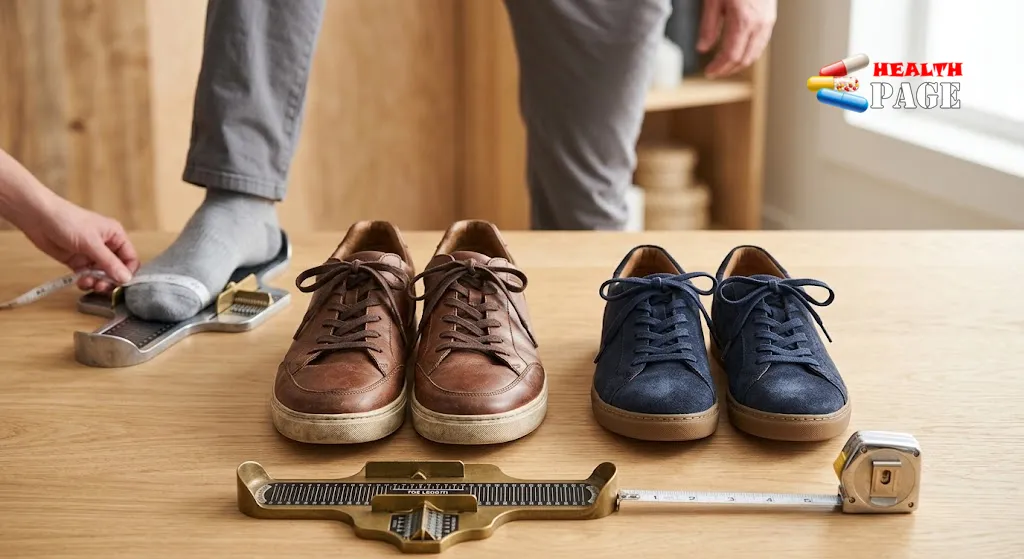
Average Male Shoe Size: US & UK Averages Explained
The average male shoe size in the United States is most often put at around a men’s 10.5, with sizes 10 to 11 covering the commonly cited range. In the UK, retail sales data points to a men’s size 9. Both figures are estimates rather than official national statistics, and neither tells you which size you should actually wear. This guide explains where the numbers come from, how US and UK sizes compare, and how to measure your own feet.
Most people look this up out of curiosity, because they are buying a gift, or because they suspect their current shoes are the wrong size. All three are sensible reasons, and the honest answer is a little more interesting than a single number.
What Is the Average Male Shoe Size?
An average is a midpoint, and shoe sizes are an awkward thing to average. A size 10 is a label set by manufacturers rather than a direct measurement of a foot, so the average foot size for men changes depending on the data behind it. Foot scans, surveys and shoe sales each tell a slightly different story.
Three ideas often get blurred together:
- The average size is a statistical midpoint across a group of men.
- The most commonly bought size is whatever sells in the greatest numbers, which reflects stock levels and shopping habits as well as foot length.
- Your right size depends on your foot length, width and shape, and on the particular shoe.
Healthline notes that there is no official data on men’s average shoe size, and that men’s sizes around the world tend to cluster between 9 and 12 (Healthline: average shoe size for men). So if you are asking what is the average male shoe size, the most accurate reply is a range with a likely midpoint, plus the admission that the midpoint is an estimate.
What Is the Average Male Shoe Size in the US?
For the United States, the figure most often quoted is a men’s 10.5. Healthline describes it as anecdotal rather than measured, and pairs it with a medium (D) width and an average adult male height of around 5 feet 9 inches. Many sources frame it as a range of 10 to 11, which is probably the safer way to read it.
Two details are worth keeping in mind. Because there is no national dataset, the average male shoe size in the US works better as a reference point than as a census result. And width matters as much as the number: many men’s shoes are sold only in a medium width, so a man with broad feet can struggle to find a comfortable pair even when his length is perfectly standard.
Average Shoe Size for Men in the UK
The UK figure usually traced back to Shoe Zone, a British footwear retailer. Its analysis of its own sales records has put the average men’s size at 9, with 6 the most popular women’s size. Some other reports place the male average closer to 10, which shows how much the answer depends on who was counted.
That caveat deserves some weight. A sales-based figure describes what customers of one retailer bought. It cannot separate a man buying for himself from someone buying for a son or a partner, and shoppers at a low-price chain are not a random cross-section of the population. It is useful evidence, though it is not a measurement of every man’s foot.
The same type of data hints at regional differences. An earlier Shoe Zone analysis, reported in 2019, found that nearly one in ten men in Hull had bought a size 12 or above in the previous year, while Oxford was among the places with the smallest sizes. Averages hide a lot of local variation.
US vs UK Men’s Shoe Sizes
The two systems start counting from different points, so the same foot gets a different number on each side of the Atlantic. In men’s sizing, the UK number is usually about one lower than the US number.
| US men’s size | Approximate UK men’s size |
|---|---|
| 7 | 6 |
| 8 | 7 |
| 9 | 8 |
| 10 | 9 |
| 11 | 10 |
| 12 | 11 |
| 13 | 12 |
Treat this as a starting point rather than a rule. Brands cut their lasts (the foot-shaped moulds shoes are built around) differently, and some list their own half-size equivalents, so check the maker’s chart before you order. The table also shows that the two averages sit closer together than they first appear: a US 10 to 11 corresponds to roughly a UK 9 to 10, so the US and UK estimates are describing broadly similar feet, even though the samples behind them are different.
A men’s shoe size is also not a length in centimetres or inches. If you need the actual measurement, use the brand’s own size chart rather than converting the number yourself.
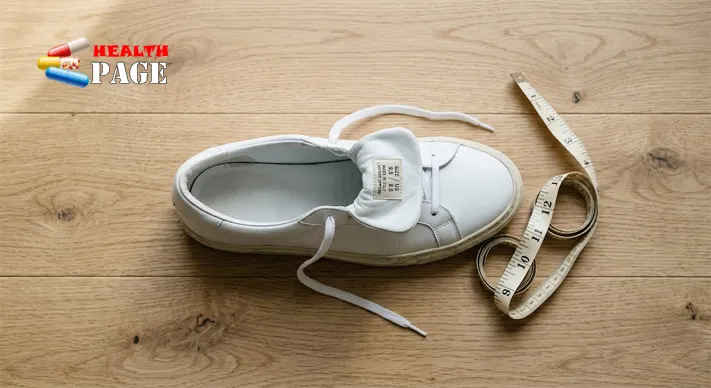
Why Men’s Foot Sizes Differ
Healthline says shoe size is relatively proportional to height in males, especially after puberty, and that taller men tend to have larger feet. That is a population-level pattern, not a prediction for any one person. Several other factors help explain why two men of the same height can wear different sizes:
- Genetics and body proportions. Inherited traits shape foot length, width and arch height.
- Age. Healthline notes that foot and shoe size often increase as men get older, as arches and other tissues change over time.
- Width and shape. Two men with the same foot length may need different widths, toe-box shapes or styles.
- Weight and swelling. Weight changes, and swelling that is temporary or persistent, can alter how a shoe fits.
- Foot conditions. Bunions and hammer toe can mean a man needs a larger or roomier shoe.
- Childhood nutrition. Healthline also mentions that nutrition before puberty can influence height and, with it, shoe size.
If you suspect a structural problem such as a bunion, our orthopedics articles cover common bone and joint conditions in more detail.
How to Measure Your Feet at Home
A national average is a poor guide to your own feet, and a few minutes with a pencil is more useful. The method below follows common podiatry advice.
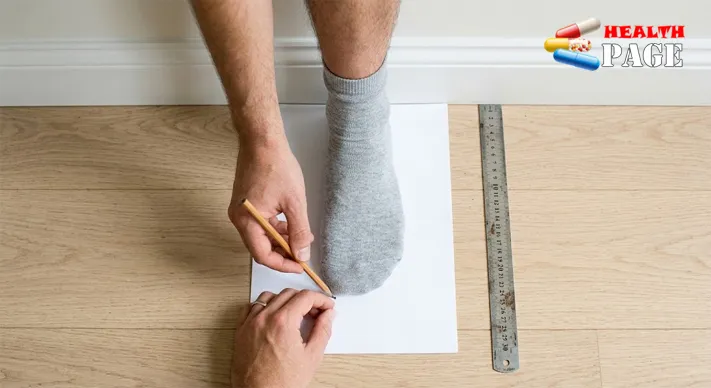
- Tape a sheet of paper to a hard, level floor with one edge against a wall.
- Stand on the paper wearing the socks you normally wear with your shoes, heel touching the wall, with your weight spread evenly.
- Ask someone to mark the tip of your longest toe, or lean down and do it carefully yourself. The longest toe is not always the big toe.
- Measure from the wall to the mark to get your foot length.
- Repeat with the other foot. It is normal for feet to differ slightly, and NHS footwear guidance advises fitting the larger foot, preferably measured in the afternoon or evening when feet are at their largest.
- Compare your measurements with the manufacturer’s size chart, including a width option where one is offered.
Width is harder to judge at home. Measure across the widest part of the ball of your foot and check whether the brand offers wider or narrower fittings. If shoes of the correct length consistently pinch at the sides, width is the likely culprit.
Does Shoe Size Affect Foot Health?
The number printed inside a shoe is not a health score. A man who wears a 12 is no more or less healthy than one who wears an 8, and no size is considered abnormal. What matters is whether the shoe suits the foot inside it.
Oxford Health NHS Foundation Trust’s podiatry guidance says shoes should be wide enough that the toes are not squashed together, long enough that the toes do not touch the end, and firm around the heel so they do not rub. It also recommends a secure fastening such as a lace or strap, and notes that slip-on shoes often stay on only because they are too small or because the wearer curls the toes, neither of which is good for the feet.
Shoes that are too short or narrow can compress the toes and contribute to rubbing, blisters and corns. Shoes that are too loose cause a different problem, since a foot that slides around inside the shoe is a foot that rubs. A few practical checks when trying on a pair:
- Stand up, because feet lengthen under body weight. Some NHS podiatry services suggest leaving roughly 1 to 2 cm between the longest toe and the end of the shoe.
- Walk around and confirm the heel stays put instead of lifting with each step.
- Feel across the ball of the foot to check the shoe is neither tight nor loose there.
- Wear new shoes for an hour or two at first and build up gradually, as Oxford Health advises.
Persistent foot pain, numbness, swelling or a noticeable change in the shape of your foot is worth raising with a GP or podiatrist. People with diabetes or reduced feeling in their feet should take particular care with footwear and follow the advice of their care team.
Frequently Asked Questions
Is a US men’s size 10 the same as a UK size 10?
No. The UK number is usually about one lower, so a US 10 is typically a UK 9, and some brands list it as a UK 9.5. Always check the conversion chart of the brand you are buying from.
Is size 12 big for a man?
It sits above the commonly cited US midpoint of 10.5, though it falls inside the 9 to 12 band where Healthline says men’s sizes tend to cluster, and Healthline considers any men’s shoe size normal. The practical issue is availability, so larger sizes and wider fittings are often easier to find from specialist or online retailers.
Does height determine shoe size?
Not reliably. Taller men do tend to have larger feet on average, but genetics, foot shape and individual variation mean that men of the same height can take quite different sizes.
Can men’s feet get bigger with age?
Yes, foot size and shape can change over time as arches and soft tissues alter. The amount varies from person to person, so it is sensible to re-measure your feet every so often instead of assuming your size is fixed.
How do I find my size when ordering shoes online?
Measure both feet, use the larger measurement, and compare it with the size guide on the specific product page, since sizing differs by brand. Reviews that mention whether a style runs small, large or narrow are useful, as is a clear returns policy in case the fit is off.
Final Thoughts: Using the Averages Wisely
The average male shoe size is a handy reference, but it is a rough one: around a US 10.5, within a 10 to 11 range, and around a UK 9 in retail sales data. Neither number comes from an official national survey, and both say more about what is typical than about what is right for you.
Your best guide is your own foot. Measure both feet in the afternoon, check length and width against the brand’s chart, and make sure your toes have room and your heel stays secure. If something feels persistently wrong, our wider general health guides are a good place to continue reading, and a podiatrist can assess anything more specific.
References
- Healthline. “Average Shoe Size for Men.”
- Oxford Health NHS Foundation Trust. “Footwear” (Podiatry, Foot Health).
- NHS podiatry service footwear guidance. “Footwear advice” (bdct.nhs.uk).

Dr. John Ma is a dedicated Orthopaedic Surgeon with extensive experience in musculoskeletal health and surgical care. He currently serves at Royal Brisbane and Women’s Hospital, Australia, where he provides expert treatment for complex orthopaedic conditions. Passionate about advancing patient outcomes, Dr. Ma combines evidence‑based practice with compassionate care, helping individuals restore mobility and improve quality of life. Through his contributions to healthcare, he continues to support patients in achieving long‑term wellness and recovery.