

Motion Sickness: Causes, Medicines, Patches, Glasses & Permanent Relief
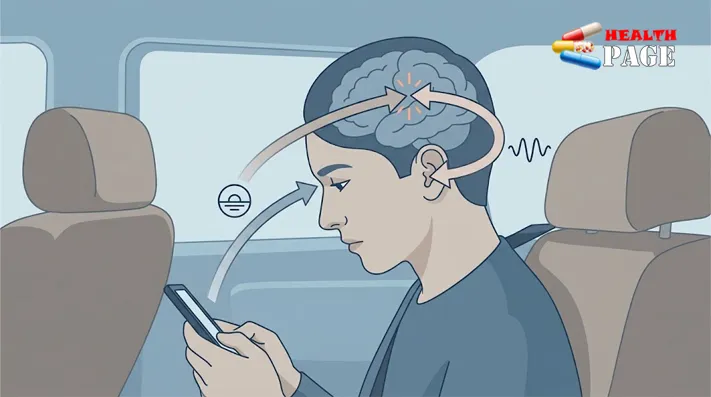
Motion sickness is the queasy, clammy, off-balance feeling that appears when your body senses movement your eyes or brain don’t expect. It can spoil a school bus ride, a ferry crossing or a drive along winding roads. For some people, scrolling a phone in the back of a car is enough to trigger it. Most episodes settle soon after the movement stops, and there are practical ways to prevent them: choosing where you sit, timing medicine correctly, using a patch for longer journeys, or gradually training your body to tolerate motion. This guide covers what works, what the evidence says about glasses and wristbands, and when symptoms deserve a doctor’s attention.
What Is Motion Sickness and Why Does It Happen?
Your sense of movement draws on three sources: the inner ear (which detects acceleration and head position), your eyes, and the position sensors in your muscles and joints. When those sources disagree, the brain reacts as if something is wrong. The CDC’s travel-health reference describes this as the sensory conflict, or neural mismatch, theory. It is the most widely accepted explanation. According to that same source, almost anyone with a working balance system can become motion sick if the stimulus is strong enough.
Common symptoms of motion sickness
Nausea and vomiting are the headline symptoms, but they rarely arrive first. The NHS lists dizziness, feeling or being sick, headache, going pale and cold, and sweating. The CDC adds drowsiness, yawning, increased saliva, a sense of bodily warmth and loss of appetite. A typical build-up starts with stomach awareness and a clammy feeling, then moves through dizziness and nausea, and may end in vomiting. Catching the early signs matters, because treatment works far better before nausea takes hold.
What causes motion sickness in cars, boats and planes?
The trigger is always a mismatch, but it looks different in each vehicle:
- Cars and buses: Your inner ear feels every bend and brake, while your eyes are fixed on a book, phone or the seat in front. The “reading in the car” problem is the classic example.
- Boats: The deck moves in slow, irregular waves. If you’re below deck without a view of the horizon, your eyes report stillness while your inner ear reports constant motion.
- Planes: Turbulence and banking produce sensations your eyes can’t confirm, especially in a window-less aisle seat.
- Screens and virtual reality: Here the conflict runs the other way. Your eyes see motion that your body isn’t actually experiencing. This is why the question “why do I get motion sickness when looking at my phone?” is common. Scrolling or watching fast-moving video, especially in a moving vehicle, can create the mismatch.
Who is more likely to experience motion sickness?
Susceptibility varies widely. The CDC reports that children under two rarely get it, that it peaks between roughly seven and twelve, and that it then tends to decline through adulthood. Women report it more often than men, although age matters more than sex. People with migraine, vertigo or vestibular disorders are more prone, and twin studies suggest genetics explains a large share of individual differences, with heritability estimates of 55–70%. If your parents were poor travellers, you may well be too. Anxiety, tiredness, alcohol and smoking can all make symptoms worse.
If headaches are part of your pattern, it may be worth reading about the causes of headaches, because migraine and motion sensitivity often overlap.
Can You Cure Motion Sickness Permanently?
Honest answer first: for most people, there’s no one-time cure, but there are ways to reduce susceptibility substantially, sometimes to the point where symptoms rarely appear. If you’re searching for how to cure motion sickness permanently, the real goal is long-term adaptation rather than a switch that turns it off.
Can your body adapt to motion sickness?
Yes, and adaptation is the most effective tool known. The CDC calls habituation, the gradual desensitisation that comes from repeated exposure, the most effective countermeasure, and says that fully acquired habituation outperforms any current anti-motion-sickness drug while having no side effects. It also reports that susceptibility declines with age, which is probably habituation at work. That is why sailors develop “sea legs” and why many children grow out of car sickness.
The catch is that habituation can be slow, is often specific to a type of motion (sea legs may not help in a car), and can fade without periodic re-exposure.
Habituation and vestibular rehabilitation
A 2011 BMJ review noted that controlled studies support habituation as a treatment, and that military programmes using it work but take time; for best results, exposure needs to be frequent and graded. In everyday terms, that means short, regular, mild exposures that stay below the point of real sickness, such as short drives as a passenger or brief time on a gently moving swing, then gradually building up. Specialist vestibular physiotherapists can design structured programmes, sometimes using head-movement exercises or visual-motion training, and some clinics use virtual reality. The evidence for these supervised programmes is still limited, so treat claims of guaranteed results with caution.
When persistent motion sickness needs medical assessment
If you feel dizzy or unsteady between journeys rather than only during them, that points away from simple motion sickness. Vestibular conditions such as benign paroxysmal positional vertigo, Ménière’s disease or vestibular migraine can mimic or amplify motion sensitivity, and they are managed differently. Some, such as BPPV, can be treated with specific repositioning manoeuvres. If you suspect something like this, the ENT health guides on HealthPage are a useful starting point for background reading before you see a clinician.
Effective Motion Sickness Medicines and Treatments
Medicine is most useful when habituation isn’t practical, for example on a one-off cruise or a holiday road trip. The principle that matters most is timing: the CDC advises taking motion sickness medicine before exposure, because once nausea starts, the stomach slows down and oral tablets may not absorb well.
Best motion sickness medicine for adults
There is no single best medicine, since the right choice depends on journey length, how intense the motion will be, and how much drowsiness you can tolerate. The CDC’s adult guidance for shorter exposures (up to about six hours) suggests meclizine or dimenhydrinate for mild to moderate motion and promethazine for intense motion. For longer exposures, it suggests the same first two for mild motion and a scopolamine patch for moderate to intense motion.
Over-the-counter medicines and prescription options
Over-the-counter options vary by country. Dimenhydrinate and meclizine are the common OTC antihistamine choices in many places, while hyoscine (scopolamine) tablets and cinnarizine are familiar in the UK. Promethazine and scopolamine patches may be prescription-only depending on where you live. A pharmacist can advise on what is available locally. For a broader look at drug-related articles, you can browse the medicine guides on HealthyPost.
| Option | Suited to | Main trade-off |
|---|---|---|
| Meclizine or dimenhydrinate | Mild to moderate motion, shorter trips | Drowsiness |
| Hyoscine (scopolamine) tablets | Short journeys | Wears off in a few hours; dry mouth |
| Scopolamine patch | Long or intense exposure (up to 3 days) | Dry mouth, blurred vision; not for everyone |
| Cinnarizine (not available in the US) | Planned journeys in countries where sold | Needs to be taken well in advance |
| Promethazine | Intense motion | Most sedating of the group |
Source: CDC Yellow Book, Table 7.6.2 and general recommendations. Product availability and labelling differ by country.
Side effects and medicine safety
Drowsiness is the most common side effect, which makes these medicines a poor match if you will be driving. Dry mouth and dry eyes are common too, particularly with scopolamine. Alcohol can add to the sedation. The CDC also notes that the newer “non-drowsy” allergy antihistamines such as cetirizine and loratadine don’t work for motion sickness, nor does the anti-sickness drug ondansetron, because they don’t act on the brain’s balance centres. If you have glaucoma, urinary retention or take other sedating medicines, ask a pharmacist or doctor first. For children, medicines should be used with extra caution, and exact dosing needs to come from the product label, a pharmacist or the child’s doctor.
Do Motion Sickness Patches Work?
For longer journeys, a motion sickness patch is one of the better-supported options, particularly for moderate to intense motion such as a rough crossing or a multi-day voyage.
How scopolamine patches work
The patch contains scopolamine, an anticholinergic drug that blocks signals involved in the nausea response. It releases the drug through the skin steadily and is designed to last up to three days. Because it delivers medicine slowly, it needs lead time, so don’t put it on once you already feel sick.
How to use a motion sickness patch safely
According to MedlinePlus, apply the patch to clean, dry, hairless skin behind the ear at least four hours before you need it. The CDC’s table lists a slower onset, around six to eight hours, so putting it on the evening before a morning departure is a sensible approach. If you need it for more than three days, replace it with a new patch behind the other ear. Wash your hands after handling it, and never cut a patch, because cutting disrupts how the drug is released. Only one patch should be worn at a time.

Side effects and precautions
The most common effects are dry mouth, drowsiness and blurred vision with widened pupils. MedlinePlus warns about hyperthermia (overheating with reduced sweating), so avoid heating pads and heated blankets while wearing one, and remove the patch if you notice a rise in body temperature. Scopolamine isn’t suitable for people with narrow-angle glaucoma or those at risk of urinary retention, and the CDC advises avoiding it in children because it can cause confusion and hallucinations. In the UK, the NHS says patches can be used by adults and by children over 10, so check what applies in your country and always follow the product leaflet.
How Motion Sickness Glasses Help Prevent Nausea
Motion sickness glasses have become a popular gadget, and they’re worth discussing carefully because the marketing is stronger than the evidence.
How liquid-filled motion sickness glasses work
The best-known designs are lens-free frames with rings partly filled with coloured liquid. As the vehicle moves, the liquid tilts and settles, creating an artificial horizon in your peripheral vision. The idea is to give your eyes a movement cue that agrees with what your inner ear feels. The manufacturer’s guidance is to put them on at the first sign of symptoms, wear them for about ten to twelve minutes, then remove them.
Do motion sickness glasses really work?
The concept isn’t absurd. Reference to the horizon is a well-established countermeasure. The CDC notes that a visual horizon view gives some protection in ships, buses and cars. But the specific claims are another matter. The makers have cited success rates as high as 95%, yet reviews have pointed out that no published research confirms the figures. A kinesiology professor who studies motion sickness, quoted by Smithsonian magazine, was skeptical that such devices would be especially effective. The honest summary is that they may help some people, may do little for others, and are unproven.
Glasses versus medicines and other treatments
Glasses have no drug side effects and don’t cause drowsiness, which is attractive for drivers’ passengers, children over the recommended age and anyone sensitive to medication. They also cost less than a long run of patches. On the other hand, they require you to feel the first symptoms before you act, and they might not be enough on a rough sea. A reasonable approach is to treat them as an optional extra alongside proven measures, not a substitute for medicine on a demanding trip. If you try them, test them on a short journey before a big trip.
Natural Ways to Prevent and Relieve Motion Sickness
Ginger, acupressure and other remedies
Ginger is the most popular natural remedy, and the NHS suggests ginger as a tablet, biscuit or tea. It is generally gentle, but the CDC states that evidence for ginger and supplements is weak and contradictory. Similarly, acupressure wristbands didn’t outperform placebo in laboratory trials, although the CDC acknowledges that placebo effects can be strong, so if a band helps you, using it does no harm. Slow, controlled breathing at your normal resting pace has better support: lab trials suggest it’s roughly half as effective as medication, with no side effects, though it takes some practice.
Travel tips for cars, planes, boats and trains
Small choices make a measurable difference, so how to stop motion sickness fast often comes down to reducing the mismatch:
- Sit where there is least movement: the front seat of a car, over the wings on a plane, the middle of a boat or ferry.
- Look at the horizon or a fixed point far ahead, and avoid reading or using screens.
- Get fresh air on your face, and take breaks on long drives.
- Avoid heavy, spicy meals and alcohol before and during travel, as the NHS recommends.
- Sleep well beforehand, since tiredness makes symptoms worse.
- If possible, take the driver’s seat, because feeling in control reduces symptoms.
- On bends, as a car passenger, leaning gently into the turn can help.
Motion Sickness in Children, Adults and During Pregnancy
Children aged roughly 7 to 12 are the most susceptible. Non-drug measures should come first for them: a seat with a forward view, regular stops, snacks that are light, and distractions such as music or conversation that don’t involve looking down. If medicine is needed, use only products labelled for the child’s age, and ask a pharmacist for advice, because sedating antihistamines can have unexpected effects in children.
In adults, susceptibility generally eases with age, though a small minority find it getting worse in later life. During pregnancy, hormonal changes can make some women more sensitive to motion, and medicine choices are more restricted. Check with a midwife, doctor or pharmacist before taking anything, including ginger supplements. For more background on related health topics, HealthPage’s pregnancy and women’s health guides cover many common concerns.
When Should You See a Doctor for Motion Sickness?
Ordinary motion sickness doesn’t usually need medical care. It’s worth seeing a doctor or pharmacist if:
- symptoms keep happening and limit your travel or daily life;
- you feel dizzy or unsteady when you’re not moving;
- vomiting is severe enough that you can’t keep fluids down;
- a rocking or swaying sensation lingers for weeks after a boat trip (a rare condition called mal de débarquement syndrome, which the CDC says needs a vestibular specialist).
Seek urgent help if dizziness comes with sudden severe headache, weakness, trouble speaking, double vision or loss of hearing, because those signs suggest something other than motion sickness.
Frequently Asked Questions About Motion Sickness
What is the fastest way to stop motion sickness?
Stop or reduce the motion if you can: pull over, step onto deck, or look at the horizon. Get fresh air, loosen tight clothing, breathe slowly and avoid screens. Oral medicine taken after nausea begins may not absorb well, so prevention is more reliable than rescue.
What is the best medicine for motion sickness?
That depends on the trip. Antihistamines like meclizine or dimenhydrinate suit shorter, milder journeys, while a scopolamine patch suits long or rough ones. Taking the right medicine early matters more than which one you pick.
Can motion sickness go away permanently?
It can fade substantially through habituation, and many children outgrow it, but it often returns after long breaks from exposure or in a new type of motion. Some people also find a different underlying cause, such as migraine.
Are motion sickness glasses worth buying?
They’re low-risk and may suit people who want a drug-free option, but published evidence is lacking, so don’t rely on them alone for a difficult journey.
How long does a motion sickness patch last?
Up to three days. If you need protection for longer, replace it with a fresh patch behind the other ear.
Why do I get motion sickness when looking at my phone?
If you’re in a moving vehicle, your inner ear senses movement while your eyes are locked on a still screen. Fast-scrolling content can create the opposite mismatch, even when you’re sitting still.
Conclusion
Motion sickness is common, often hereditary and usually manageable. The strongest approaches are the least glamorous ones: choose your seat well, keep your eyes on the horizon, take medicine before you need it, and use a patch for longer trips. Over time, regular mild exposure can retrain your balance system and may bring lasting improvement. Glasses and wristbands may help some travellers, but they are best treated as extras. If your symptoms don’t fit the usual pattern, or you feel unsteady when not travelling, a clinician can check for other causes. For your next trip, a small test run of any new medicine or gadget at home is a sensible first step.
This article is for general information and does not replace advice from a doctor or pharmacist.
References
- NHS. “Motion sickness.” https://www.nhs.uk/conditions/motion-sickness/
- Centers for Disease Control and Prevention. “Motion Sickness,” CDC Yellow Book 2026. https://www.cdc.gov/yellow-book/hcp/travel-air-sea/motion-sickness.html
- MedlinePlus (U.S. National Library of Medicine). “Scopolamine Transdermal Patch.” https://medlineplus.gov/druginfo/meds/a682509.html

Dr. Sana Lodhi is a qualified medical doctor (MBBS) with a strong commitment to patient care and evidence‑based medicine. With years of clinical experience and her current role at Liaquat University of Medical & Health Sciences (LUMHS), she brings trusted medical insights to readers, simplifying complex health topics into clear, practical guidance. Her passion lies in promoting preventive healthcare, empowering individuals to make informed decisions, and bridging the gap between medical knowledge and everyday wellness. At HealthyPost.co.uk, Dr. Lodhi shares expert perspectives on health, lifestyle, and medical awareness to help readers live healthier, more balanced lives.