

Hand, Foot, and Mouth Disease Rash: Is It Itchy and What Does It Look Like?

Dr. Jacob Cote, MD, FRCPC, is a board-certified dermatologist practicing at The Ottawa Hospital in Ontario, Canada. Specializing in medical dermatology, clinical skin pathology, and advanced acne therapies, Dr. Cote brings years of institutional hospital experience to the editorial board. He is dedicated to translating complex, evidence-based dermatological research into practical preventative skin health strategies for everyday readers. At HealthPage, he ensures all clinical guidelines and skincare recommendations are rigorously reviewed and align with current Canadian Dermatology Association standards.
Medical Disclaimer
The content provided in this article is for informational and educational purposes only and does not constitute formal medical advice, diagnosis, or treatment. Always seek the advice of your physician or other qualified health provider with any questions you may have regarding a medical condition.
— Written by Dr. Jacob Cote (Dermatology)
Hand, foot, and mouth disease (HFMD) can be worrying when a child suddenly develops spots or blisters on the hands and feet, especially when you are unsure whether the rash should itch. So, is hand mouth and foot disease itchy? Usually, no. The classic HFMD skin rash is generally not itchy. Instead, the spots or blisters may feel tender, uncomfortable, or occasionally painful.
HFMD is a contagious viral infection that mainly affects young children, although older children and adults can also develop it. The typical illness combines fever or flu-like symptoms, painful mouth sores, and a rash that commonly affects the palms, fingers, soles, and toes. Most people recover without specific treatment within about 7 to 10 days.
If you are trying to identify an HFMD rash, the location, appearance, and accompanying symptoms are more useful than itching alone.
What Does a Hand, Foot, and Mouth Disease Rash Look Like?
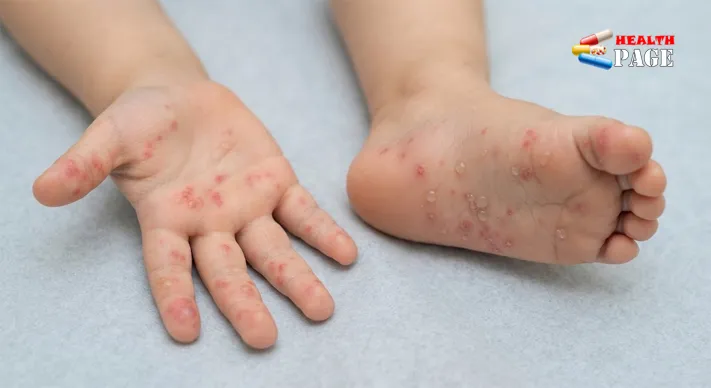
The typical hand foot and mouth disease rash begins as small red or pink spots. These spots may be flat or slightly raised and can develop into small fluid-filled blisters.
The palms of the hands and soles of the feet are particularly characteristic locations. Spots may also appear on the fingers and toes, while some people develop lesions on the buttocks, legs, arms, groin, or diaper area.
The appearance can vary considerably between people. On lighter skin, lesions may look pink or red. On darker skin, they may appear darker than the surrounding skin or be less obviously red. The NHS specifically notes that HFMD spots can look pink, red, or darker depending on skin tone.
Where Can HFMD Skin Lesions Appear?
Although the name suggests that the rash is restricted to three areas, it is not.
Common locations include:
- Palms of the hands
- Fingers and around the fingers
- Soles of the feet
- Toes
- Buttocks
- Legs
- Arms
- Groin or diaper area
Some cases can have a broader distribution. Therefore, a rash outside the hands and feet does not automatically exclude HFMD, particularly when painful mouth sores and other typical symptoms are present.
The American Academy of Pediatrics also describes small red spots and blisters on the hands and feet, including the palms, fingers, soles, and toes.
Is Hand, Foot and Mouth Rash Itchy?
For parents searching is hand foot and mouth rash itchy, the short answer is usually not.
The CDC specifically says that the HFMD rash usually is not itchy. It can instead appear as flat or slightly raised red spots, sometimes with blisters.
That does not mean every person with HFMD will experience exactly the same sensation. Skin lesions can feel tender or uncomfortable, and individual cases may not follow the textbook pattern.
A useful way to think about it is:
So, if itching is the dominant complaint, especially if there are no mouth sores, fever, or characteristic lesions on the palms and soles, another skin condition may deserve consideration.
For example, some fungal rashes are characteristically itchy. HealthPage’s information on fungal skin infections and their symptoms discusses itching, redness, scaling, and other features that can occur with fungal conditions.
Are Hand Foot and Mouth Blisters Painful or Itchy?
If you are wondering whether hand foot and mouth blisters painful or itchy, pain or tenderness is generally more characteristic than itching.
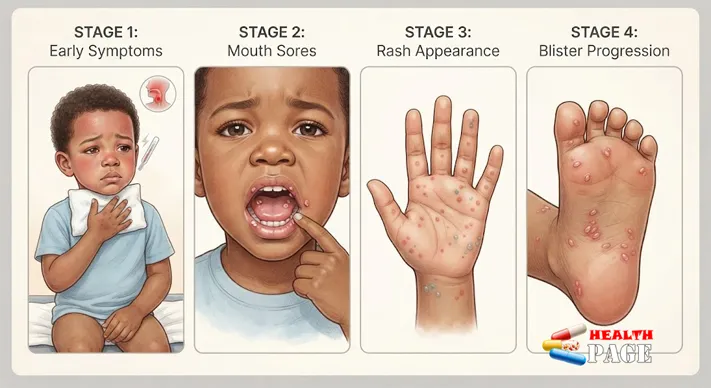
The difference becomes especially noticeable when comparing skin lesions with mouth sores. HFMD can cause small blisters or ulcers inside the mouth, including on the tongue and inside the cheeks. These lesions can be painful enough to make eating and drinking uncomfortable.
The skin blisters themselves may be uncomfortable, particularly on the hands and feet where they can be exposed to pressure or friction.
For example, a blister on the sole may become more noticeable when a child walks. A lesion on a finger can feel uncomfortable when gripping toys or other objects. That discomfort does not necessarily mean the rash is itchy.
The NHS describes HFMD spots as potentially developing into greyish or lighter-colored blisters that can be painful.
Why Are the Mouth Sores Often More Troublesome?
The mouth is one of the most important parts of the illness to watch.
Mouth sores can develop on:
- The tongue
- Inner cheeks
- Gums
- Other areas inside the mouth
Because these areas are constantly exposed to food, drinks, and saliva, even small ulcers can hurt. A young child may therefore refuse food or drink, drool more than usual, or prefer cold liquids.
This is also why hydration is an important part of caring for someone with HFMD. The CDC identifies dehydration as one of the main concerns when painful mouth sores make drinking difficult.
What Are the Hand Foot and Mouth Symptoms on Skin?
The hand foot and mouth symptoms on skin generally follow a recognizable pattern, although not every person develops every lesion.
The rash may start with small discolored spots. Some remain flat or slightly raised, while others develop into small vesicles, meaning fluid-filled blisters.
The most characteristic pattern involves the palms and soles.
Hands
On the hands, lesions may occur on the palms, fingers, and around the joints or sides of the fingers. They can range from tiny flat spots to raised blister-like lesions.
Feet
The soles and toes are common locations. Because the feet experience pressure from walking, lesions there may become tender even if they are not itchy.
Buttocks and other areas
The buttocks are another recognized location. Some children can also develop lesions on the legs, arms, or around the groin or diaper region.
The number of spots varies. One child might have only a handful of lesions, while another may have many more.
What Other Hand, Foot and Mouth Disease Symptoms Occur?
The rash is only one part of HFMD.
Early symptoms can resemble an ordinary viral infection. According to the CDC, children may develop fever and flu-like symptoms such as sore throat, reduced appetite, and feeling unwell before the mouth sores and skin rash become obvious.
Typical symptoms can include:
- Fever
- Sore throat
- Feeling tired or unwell
- Reduced appetite
- Painful mouth sores
- Red or pink skin spots
- Small blisters on the hands and feet
The timing can help provide context. Symptoms may begin several days after infection, followed by mouth lesions and the characteristic skin eruption.
Not everyone has every symptom, however. Some people can have a relatively mild illness, while others experience considerable mouth pain.
How Is HFMD Different From an Itchy Rash?
An intensely itchy rash does not fit the classic HFMD pattern as well as a non-itchy or tender rash does.
That distinction can be useful, but it should not be used as a diagnostic test by itself. Several childhood illnesses can produce spots or blisters, and different conditions can sometimes overlap in appearance.
For instance, an itchy fungal infection may have scaling and a different distribution from HFMD. Eczema may produce dry, inflamed, itchy areas. Other viral infections can also cause rashes.
This is why the overall picture matters:
HFMD is more suggestive when there is a combination of fever or feeling unwell, painful mouth sores, and small spots or blisters involving the palms, fingers, soles, or toes.
An intensely itchy rash without those accompanying features deserves a different assessment rather than automatically being labeled HFMD.
HealthPage also has a dermatology-focused article on a red circle on skin that is not itchy that can provide additional context about how the appearance and sensation of a skin lesion can help narrow down possible causes. The site’s homepage currently identifies the article as a medically reviewed Skin guide, although its direct article URL was not exposed by the site’s searchable page data during this research.
How Long Does Hand Foot and Mouth Rash Last?
If you are searching how long does hand foot and mouth rash last, the overall answer is usually about 7 to 10 days for the illness.
The CDC says most people recover within 7 to 10 days, and the NHS gives the same general timeframe.
The rash itself can change during this period. Spots may become more noticeable, some may develop into blisters, and the lesions gradually become less prominent as the infection resolves.
There is no requirement for every spot to disappear on exactly the same day. One area may improve before another.
The American Academy of Pediatrics notes that the rash on the hands and feet can last around 10 days and may subsequently peel.
A useful general timeline is:
Early illness: Fever, sore throat, reduced appetite, or feeling unwell.
Following days: Painful mouth sores and characteristic spots or blisters develop.
Around the first week: Symptoms generally begin settling.
By about 7–10 days: Most people have substantially recovered.
If symptoms are getting worse rather than gradually improving, or significant symptoms remain beyond this period, medical advice is appropriate.
What Can You Do at Home?
Because HFMD is caused by a virus, treatment is generally focused on comfort, fluids, and monitoring rather than antibiotics.
For someone with mouth discomfort:
- Offer plenty of cool fluids.
- Choose soft foods that are easier to swallow.
- Avoid foods that are very hot, salty, or spicy.
- Monitor fluid intake and urination.
- Use age-appropriate fever or pain medicine according to medical advice or the product instructions.
The NHS recommends cool fluids and soft foods, while the CDC emphasizes adequate hydration and symptom relief.
Do not pop HFMD blisters. The CDC notes that blister fluid can contain the virus, so keeping lesions clean and avoiding unnecessary touching can help reduce transmission.
HFMD is also highly contagious. Regular handwashing, cleaning commonly touched surfaces, and limiting close contact while someone is unwell can reduce the chance of spreading the infection.
When Should You Contact a Doctor?
Most HFMD cases are mild, but certain symptoms deserve medical attention.
The CDC recommends contacting a healthcare provider if a child:
- Cannot drink adequately or may be dehydrated
- Has a fever lasting longer than three days
- Has severe symptoms
- Has symptoms that do not improve after 10 days
- Is younger than six months
- Has a weakened immune system
Dehydration is particularly important because mouth sores can make swallowing painful.
Watch for signs that the child is drinking much less than usual, urinating less frequently, or becoming unusually sleepy or difficult to wake. If you are concerned about dehydration or the child’s overall condition, seek medical advice promptly.
A diagnosis is generally made from the characteristic combination of symptoms and examination of the rash and mouth. Laboratory testing is not routinely necessary in uncomplicated cases, although a healthcare professional may order testing when the diagnosis is uncertain or symptoms are severe.
Frequently Asked Questions
Is hand mouth and foot disease itchy?
Usually, no. The classic HFMD skin rash is generally not itchy. The lesions can instead be tender or uncomfortable, while the mouth sores are often painful.
Can HFMD blisters hurt?
Yes. Skin blisters can be tender or painful, particularly on areas exposed to pressure. Mouth blisters and ulcers can be especially painful because they can interfere with eating and drinking.
Does HFMD always cause a rash on both hands and feet?
No. The distribution can vary. The palms, fingers, soles, and toes are characteristic sites, but lesions can also occur on the buttocks, legs, arms, or groin area.
Can adults get hand, foot, and mouth disease?
Yes. Although HFMD is particularly common among young children, adults can also become infected. The NHS notes that symptoms can occur in both adults and children.
How long does HFMD usually take to go away?
Most people recover within about 7 to 10 days. Individual symptoms may improve at different rates, so the rash or peeling skin may not disappear simultaneously everywhere.
Should an extremely itchy rash be assumed to be HFMD?
No. Severe itching is not the classic HFMD pattern. If the rash is intensely itchy or lacks the typical mouth sores and hand-and-foot lesions, another cause should be considered and evaluated when appropriate.
Conclusion
So, is hand mouth and foot disease itchy? Usually, the answer is no. The classic HFMD rash tends to consist of small red or pink spots that may become small blisters, especially on the palms, fingers, soles, and toes. The lesions can be tender or painful, but itching is not usually their defining feature.
The mouth sores are often more uncomfortable than the skin rash because they can make eating and drinking painful. Fever, sore throat, reduced appetite, and feeling unwell may occur around the same time.
For most people, HFMD is a short-lived illness that improves within 7 to 10 days. Keeping the person hydrated, providing appropriate comfort measures, and watching for signs of dehydration or worsening illness are the most important practical steps.
If the symptoms are severe, the fever persists, drinking becomes difficult, or the illness is not improving after about 10 days, contact a healthcare professional rather than relying on the appearance of the rash alone.
References
- CDC — About Hand, Foot, and Mouth Disease — symptoms, contagiousness, recovery, hydration, and general management.
- CDC — HFMD Symptoms and Complications — rash appearance, itching, mouth sores, complications, and when to seek medical care.
- NHS — Hand, Foot and Mouth Disease — rash appearance across skin tones, blisters, symptoms, and typical 7–10 day recovery.