
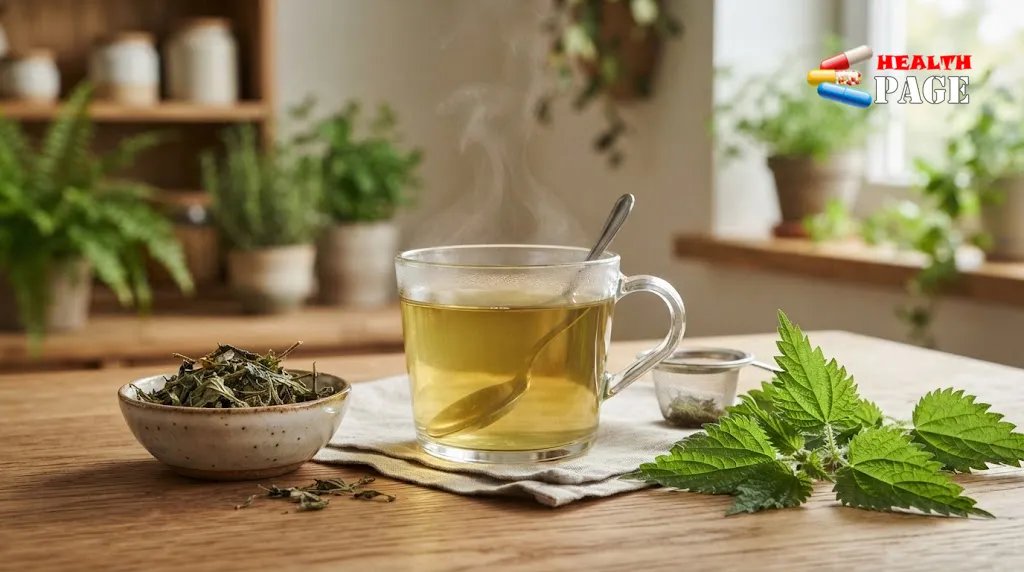
Stinging Nettle Tea: 7 Potential Benefits and Side Effects
Stinging nettle tea is an herbal infusion made from the dried leaves of Urtica dioica, the same plant that leaves a prickly rash on anyone who brushes past it on a walk. Drying the leaves and steeping them in hot water takes the sting out, and what remains is a mild, green-tasting drink that people have sipped for centuries, usually in the hope of easing allergies, aching joints, urinary complaints, or high blood sugar and blood pressure. Whether it does any of those things is a good deal less certain than many wellness pages suggest. This article sets out what is actually known, which findings come from extracts or roots rather than the tea itself, how to brew a cup, what it tastes like, and who should speak to a doctor or pharmacist before drinking it regularly.
What Is Stinging Nettle Tea?
Sold as tea bags or loose dried leaves, stinging nettle tea is sometimes labelled nettle leaf infusion or Urtica dioica tea. A few products use the root or the whole above-ground plant. European regulators call the dried above-ground parts “nettle herb,” and the European Medicines Agency (EMA) recognises certain preparations, including the cut herb taken as an infusion, as traditional herbal medicines for minor urinary complaints and minor joint pain, according to its 2025 assessment report on nettle herb. “Traditional” has a narrow meaning here. It signals that products have been in documented use for decades, which supports their plausibility for self-care. The same report concludes that clinical evidence is inconclusive and does not meet the standard for “well-established use.”
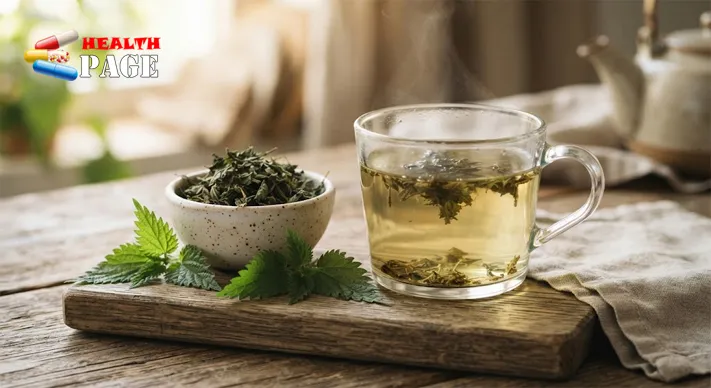
Tea Is Not the Same as an Extract
A good deal of what is written about nettle draws on studies that never used tea. A concentrated root extract, a standardised leaf extract in a capsule and a mug of steeped leaves differ in what they contain and in how much reaches the body, so a result from one cannot simply be borrowed for another. Memorial Sloan Kettering Cancer Center’s herb resource makes a related point: it is the root, not the leaf, that is widely used for prostate symptoms, and it is usually combined with other herbs such as saw palmetto. The same logic applies across herbal products, and a separate guide to reishi mushroom tea, powder and supplements shows how forms of a single ingredient can differ in benefits and risks.
| Form | What research tends to examine | Does it apply to tea? |
|---|---|---|
| Leaf tea | Mostly traditional use; few direct human trials | This is the topic, but evidence is thin |
| Leaf extract | Blood sugar, in small trials | Not automatically |
| Root extract | Prostate symptoms, often with saw palmetto | No, root and leaf differ |
| Applied to the skin | Joint pain, including trials of topical use | No |
Stinging Nettle Tea Benefits: 7 Areas of Potential Interest
The seven areas below are the ones readers ask about most. They are topics researchers have explored, not seven established health effects, and where the evidence is weak the text says so.
1. Antioxidant compounds
Nettle leaves contain flavonoids such as quercetin and kaempferol, plant pigments with antioxidant activity in laboratory tests, according to the EMA’s assessment. Activity in a test tube is not proof that a cup of tea protects against disease, and no study has shown that the amounts in a brewed mug change health outcomes.
2. Blood sugar
Some small studies of nettle preparations have found lower fasting blood glucose, and one randomised trial summarised by Memorial Sloan Kettering tested a leaf extract in people with advanced type 2 diabetes. These were extracts rather than tea, and larger studies are still needed. There is a risk on the other side as well: a case report describes low blood sugar in an older man who took a herbal remedy containing nettle. Anyone using diabetes medicine should speak to their prescriber first, because nettle tea is not a substitute for treatment.
3. Blood pressure
The evidence is preliminary and partly indirect. In the EMA’s review, blood-pressure-lowering effects of nettle extracts were seen mainly in animals, often after intravenous dosing, which says little about drinking tea. A registered dietitian quoted by Cleveland Clinic says some evidence suggests regular nettle tea may lower blood pressure in certain people, but stresses that it is no replacement for prescribed medicine. For anyone already taking blood pressure tablets, an additive effect is plausible, which is why nettle tea and blood pressure is a question for a pharmacist.
4. Seasonal allergies
Laboratory work shows that nettle extract can interfere with histamine receptors and with inflammatory enzymes involved in hay fever. Evidence in people is much weaker: Memorial Sloan Kettering describes it as lacking, and Cleveland Clinic calls the studies mixed. Isolated reports also describe allergic rhinitis triggered by nettle pollen itself. If pollen season leaves you sneezing, a proven antihistamine remains the sensible first step, with nettle tea at most a warm extra.
5. Urinary and prostate symptoms
This is the area with the most research, although it mostly concerns root extracts, often paired with saw palmetto, for benign prostatic hyperplasia (BPH), a non-cancerous enlargement of the prostate. Those findings do not transfer neatly to leaf tea. Nettle herb is also described traditionally as a mild diuretic, though the EMA notes that experimental support is limited, with a clear effect shown only by intravenous dosing in rats. Painful urination, fever, blood in the urine or symptoms that keep worsening need a clinician’s attention rather than another cup of tea.
6. Inflammation and joint discomfort
Using nettle for achy joints is an old tradition, and the EMA recognises traditional use of some preparations for minor joint pain. The better human data, however, involve nettle applied to the skin or specific extract products, and even those findings need larger studies to confirm them. For sipped tea there is no direct trial evidence to lean on. Joint pain with swelling, redness or fever should be examined by a doctor.
7. Nutritional contribution
Fresh nettle is mineral-rich. The EMA’s report lists roughly 1,050 mg of calcium and 613 mg of potassium per 100 g of fresh herb, alongside iron and magnesium. Those figures describe the plant, not a brewed cup, and how much dissolves into the water depends on the product and the steeping time. As a source of nutrients, a mug of tea is a light contribution at best.
How to Make Stinging Nettle Tea
Tea bags and commercially dried leaves are the simplest starting point because the product is designed to be steeped. A basic method, following Cleveland Clinic’s directions:
- Put a tea bag in a mug, or loose leaves in an infuser, using the amount shown on the packaging.
- Pour in 8 to 10 ounces (240 to 300 mL) of freshly boiled water.
- Cover the mug and steep for up to 10 minutes. Package directions may differ, and a longer steep gives a stronger flavour.
- Remove the bag or infuser, or strain out loose leaves.
- Taste it, and add lemon or a little honey if you like.
Fresh leaves work too, but they need gloves until they have been in boiling water, and they should come from clean, untreated ground away from roadsides. If you are building a small shelf of caffeine-free infusions, a roundup of herbal teas for a sore throat offers some company for evenings when nettle is not what you feel like. Since nettle may increase urination, daytime is the better time for a cup.
What Does Stinging Nettle Tea Taste Like?
Mild, earthy and a little grassy is the usual description, often likened to vegetable broth or cooked greens such as spinach. It is not sweet, and there is a faint mineral, savoury note that some people enjoy and others find flat. Steeping for longer deepens the flavour, while lemon or honey softens it. Nettle itself contains no caffeine, which suits people who are cutting back, perhaps because they have noticed how caffeine affects heart rate. Blends are a different matter, so check labels on mixes that include black or green tea, mint or other herbs.
Stinging Nettle Tea Side Effects
The EMA concluded that nettle herb is generally well tolerated at usual doses in its traditional forms, but side effects are still possible. Reported ones include nausea, vomiting and diarrhoea, gastric irritation, and allergic skin reactions such as itching, rash or hives. Increased urination is expected given the plant’s reputation as a mild diuretic. Memorial Sloan Kettering also lists isolated case reports of breast enlargement in a man and nipple discharge in a woman after drinking nettle tea. These are rare and their significance is unclear, but they show why unusual symptoms are worth reporting to a doctor. Hives, swelling or trouble breathing call for urgent medical care.
Stinging Nettle Tea Precautions: Who Should Check First
Pregnancy and breastfeeding
The EMA states that safety during pregnancy and breastfeeding has not been established and that use in these groups is not recommended. Its report also notes that nettle is traditionally reputed to affect the menstrual cycle and that uterine activity has been seen in animal studies. Cleveland Clinic likewise advises avoiding the tea during pregnancy.
Medicines
Cleveland Clinic lists several medicines that nettle tea may interfere with: aspirin, anticoagulants, blood pressure medicines, diuretics, diabetes medicines and lithium. The evidence behind that list is uneven. The EMA found that most references report no known interactions, though excessive use might add to diabetes or blood pressure treatment, and it judged nettle’s vitamin K content too low to interact with warfarin-type drugs. Memorial Sloan Kettering cites animal studies suggesting effects on liver enzymes that process some drugs and additive effects with diuretics and blood pressure medicines, noting that clinical relevance is unknown. Because the picture is incomplete, the practical step is to tell your pharmacist or doctor about every herbal tea and supplement you use. Even a familiar supplement like fish oil has side effects worth knowing before you combine products.
Other situations
The EMA advises against nettle preparations for people who have been told to limit their fluid intake, such as some with heart or kidney conditions, and it contraindicates use in anyone with a known nettle allergy. Safety data in children are lacking. There is also no established safe daily amount: products vary in strength, and traditional-use instructions are not proof of effectiveness or safety for everyone. Nobody should stop prescribed medicine because of nettle tea, and persistent urinary symptoms, uncontrolled blood sugar or high blood pressure belong with a healthcare professional.
Frequently Asked Questions
What is stinging nettle tea good for?
Traditionally it has been used as a gentle drink for urinary comfort, achy joints and seasonal sniffles. Evidence for the tea itself is limited, so it is best seen as a caffeine-free beverage with a modest nutritional contribution rather than a remedy.
Can I drink it every day?
No daily amount has been established. Sources describe it as generally safe for most people, but personal factors such as medicines, pregnancy and fluid restrictions matter. If you want it as a habit, mention it to a pharmacist and start with a single daytime cup to see how your stomach responds.
Will it help my hay fever?
Probably not enough to rely on. Lab results are interesting, but human evidence is mixed to lacking, so keep using any allergy medicine that works for you.
Can I take it with blood pressure or diabetes medicine?
Ask first. If your prescriber agrees, tracking home readings and telling them about any changes gives them something concrete to work with.
Is it safe to pick nettles and brew them myself?
The main risks are misidentifying the plant and harvesting from contaminated ground. Boiling water removes the sting, but if you have any doubt about the plant or the site, buy a labelled product instead.
A Mild Herbal Drink, Not a Treatment
Stinging nettle tea is an agreeable, caffeine-free infusion with a long history, and some of the research on nettle is genuinely interesting. Most of it, though, concerns root or leaf extracts rather than tea, and the human trials are small. The firmest practical points are simpler: steep it for up to ten minutes, drink it earlier in the day, avoid it in pregnancy and while breastfeeding, and check with a pharmacist if you take regular medicines. If you are curious about what else could enrich your plate, the healthy food guides on Healthy Post are a sensible next stop.
References
- European Medicines Agency, Committee on Herbal Medicinal Products. “Assessment report on Urtica dioica L.; Urtica urens L., herba” (Final, Revision 1; EMA/HMPC/261303/2022), 22 January 2025.
- Memorial Sloan Kettering Cancer Center. “Nettle: Purported Benefits, Side Effects & More”, Integrative Medicine herbs resource (last updated 7 December 2021).
- Cleveland Clinic Health Essentials. “Health Benefits of Nettle Tea”, 3 October 2025.

Dr. Sana Lodhi is a qualified medical doctor (MBBS) with a strong commitment to patient care and evidence‑based medicine. With years of clinical experience and her current role at Liaquat University of Medical & Health Sciences (LUMHS), she brings trusted medical insights to readers, simplifying complex health topics into clear, practical guidance. Her passion lies in promoting preventive healthcare, empowering individuals to make informed decisions, and bridging the gap between medical knowledge and everyday wellness. At HealthyPost.co.uk, Dr. Lodhi shares expert perspectives on health, lifestyle, and medical awareness to help readers live healthier, more balanced lives.