
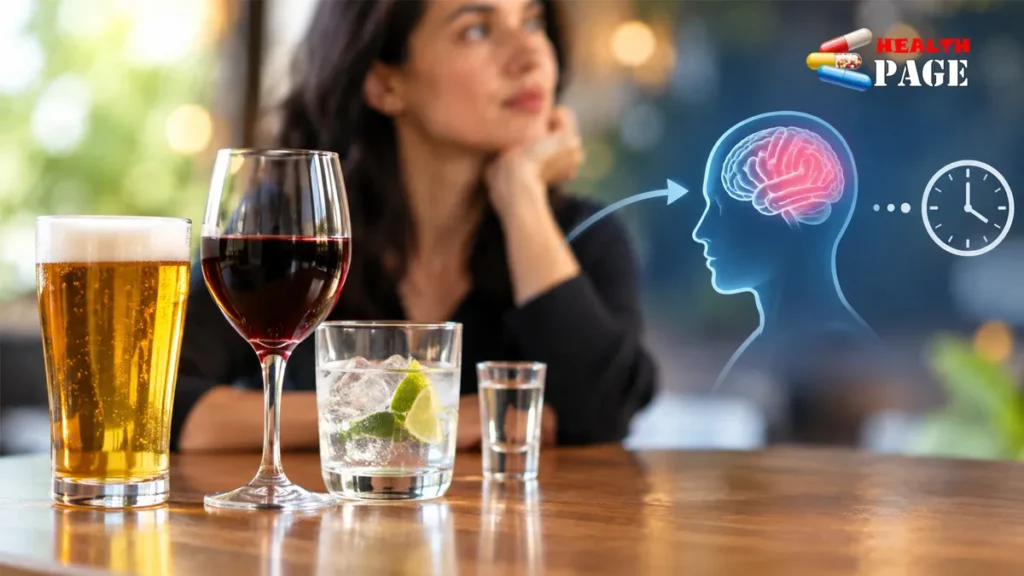
How Long Does It Take for Alcohol to Hit? 5 Key Facts
Most people feel the first effects of a drink within about ten minutes, but that figure is an average, not a promise. So how long does it take for alcohol to hit? Alcohol begins entering the bloodstream within minutes of the first sip, and a mild lift in mood or a slightly warm, relaxed feeling often follows soon after. Stronger effects build more slowly, and the point at which your blood alcohol level peaks can come well after you’ve put the glass down.
The timing shifts from person to person and even from night to night. A drink on an empty stomach after a long day can feel very different from the same drink alongside dinner. This article separates the stages that are often blurred together (absorption, the first noticeable effects, peak impairment, and breakdown by the liver) and explains why you can’t reliably judge your own condition by how you feel.
The Short Answer: A Timeline in Four Stages
Alcohol doesn’t hit all at once. It moves through four overlapping stages, and each runs on its own clock.
| Stage | What is happening | Typical timing |
|---|---|---|
| Absorption | Alcohol passes from the digestive tract into the blood | Starts within minutes of drinking |
| First noticeable effects | Relaxation, warmth, lightheadedness | Often around 10 minutes, but variable |
| Peak blood alcohol concentration (BAC) | Alcohol level in the blood reaches its highest point | Commonly cited as roughly 30 minutes to an hour or more after drinking, later with food or fast drinking |
| Metabolism | The liver gradually breaks alcohol down | Slow and steady; roughly one UK unit per hour, varying by person |
These are ranges, not rules. Anyone offering exact minutes is simplifying.
The 5 Key Facts
1. Alcohol can start affecting you within minutes
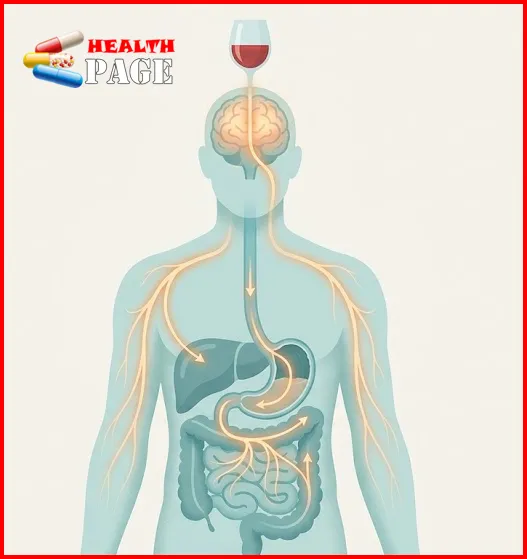
Unlike most food and drink, alcohol doesn’t need to be digested before the body can take it up. It passes through the lining of the stomach and, mainly, the small intestine into the blood. This is the answer to how long it takes for alcohol to enter your bloodstream: it starts almost immediately, though how much arrives in the first few minutes depends on what else is in your stomach.
From the blood, alcohol travels throughout the body, including the brain. That is why the earliest signs of alcohol’s effects on the brain are often subtle: a looser, more talkative mood, a slight lowering of inhibitions, a feeling of warmth. Many people notice something around the ten-minute mark, and some feel it sooner or later. Treat ten minutes as a reasonable average rather than a guarantee.
2. Absorption and peak effects are not the same thing
This is the point most people miss, and it explains many unpleasant surprises. Alcohol entering the blood and your BAC reaching its highest level are separate events. BAC measures how much alcohol is in the bloodstream, and it can keep climbing for a while after you stop drinking, because alcohol still in your stomach and intestines continues to be absorbed.
Researchers at the US National Institute on Alcohol Abuse and Alcoholism (NIAAA) describe the rise in BAC as depending on how quickly alcohol leaves the stomach and on how much is broken down on its first pass through the stomach and liver, a process called first-pass metabolism, in an overview of how the body handles alcohol. Put simply, the stomach’s emptying speed acts like a valve: the faster it opens, the faster the level climbs.
A practical consequence is that peak timing can’t be pinned to a single number. After a single drink on an empty stomach it may arrive within the hour. After several drinks, or after a heavy meal, it can come later and stay elevated longer.
3. Food changes how quickly alcohol is absorbed
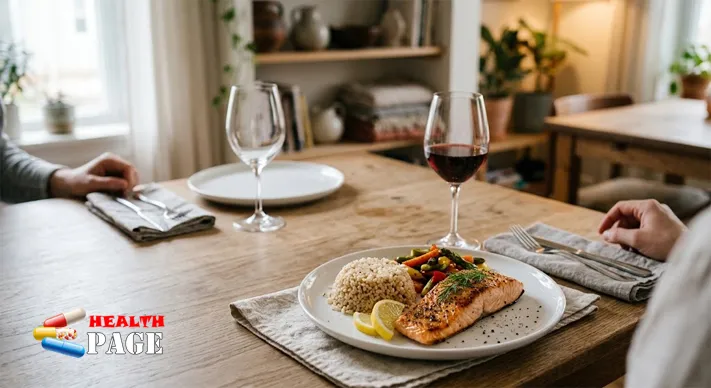
Drinking on an empty stomach generally speeds absorption, because alcohol moves quickly into the small intestine, where most of it is taken up. Food slows stomach emptying, so alcohol arrives in the blood more gradually and the peak is usually lower and later. This is why the same drink can feel gentle after dinner and sharp before it.
Meals that include protein and fat tend to slow stomach emptying the most, so a substantial dinner works better than a handful of crisps. If you want ideas for building balanced meals, our healthy food guides are a reasonable starting point.
One caveat matters here. Food does not prevent intoxication. It softens and delays the rise, but if you keep drinking, your BAC will still climb, and a full stomach can give a false sense of safety.
4. The amount, strength and speed of drinking all matter
A pint of lager, a glass of wine and a measure of spirits are not equivalent, and the label on the bottle matters more than the category. What counts is the amount of pure alcohol. In the UK, one unit is 10 ml (8 g) of pure alcohol, and the units in a drink depend on its size and strength. A large glass of strong wine can contain several times the alcohol of a small measure of spirits.
Speed matters as much as quantity. The liver breaks alcohol down at a limited pace, often described as roughly one unit an hour, according to an NHS hospital alcohol care team. Drink faster than that and the surplus accumulates in the blood. Three drinks over three hours and three drinks in forty minutes produce very different peaks, even though the total is identical.
Some people believe fizzy mixers or sparkling wine hit faster. The claim circulates widely, but the evidence is not strong enough to rely on, so it is better to focus on strength, size and pace.
5. Feeling fine does not mean you are unimpaired
Alcohol blunts the very faculties you would use to assess how affected you are, including judgment, coordination, reaction time and decision-making. Impairment can therefore exist before you feel drunk. And because absorption can continue after you stop, someone who feels reasonably steady at the end of an evening may be more impaired half an hour later.
This is also why the “I only had two” reasoning is unreliable for driving or any task needing sharp responses. Elapsed time and drink counts are rough guides at best. Feeling normal is not evidence of safe performance.
Why the Timing Is Different for Everyone
Ask a group of friends who shared the same round of drinks and you will hear very different stories. Several factors work together.
- Food in the stomach: as above, a meal slows absorption and lowers the early peak.
- Drinking pattern: sipping slowly versus finishing quickly changes the curve.
- Body composition: alcohol dissolves in body water, so differences in size and composition influence concentration. Body weight or sex alone cannot reliably predict how drunk someone will be.
- Biology and genetics: differences in the enzymes that break alcohol down, including in the stomach and liver, affect how much reaches the blood.
- Tolerance: regular drinkers may feel less obvious effects at a given BAC, but their blood alcohol level and risks are no lower.
- Medications and other substances: some interact with alcohol and amplify its effects.
- Health and liver function: liver conditions can slow breakdown.
Even within one person, the same drink can behave differently depending on tiredness, hydration, and whether it’s the first drink of the evening or the fifth. That variability is why this article avoids a calculator-style answer. No formula based on weight and time can reliably tell you how impaired you are.
Safety: What Doesn’t Work and What Does
A few myths are worth addressing directly, because acting on them can cause harm.
Coffee, cold showers, exercise and water do not sober you up. They may make you feel more awake, but the alcohol in your blood remains until the liver processes it. Time is the only thing that lowers BAC. Water is still worthwhile, since it helps with dehydration and can slow your pace, but it does not reverse intoxication.
Alcohol and medicines can be a risky mix. Combining alcohol with opioids, sedatives, sleep medicines, and certain other drugs can increase serious risks, including dangerously slowed breathing. Even some over-the-counter antihistamines can interact with alcohol. If you take regular medication, check the leaflet or ask a pharmacist before drinking, and see our medicine section for general medication guides.
Know the signs of alcohol poisoning. An alcohol overdose happens when so much alcohol is in the blood that the parts of the brain controlling breathing, heart rate and body temperature begin to shut down, as the NIAAA explains in its guidance on alcohol overdose. Warning signs include:
- being unable to wake up
- confusion or stupor
- repeated vomiting
- seizures
- slow or irregular breathing
If you suspect alcohol poisoning, call emergency services immediately (999 in the UK, 911 in the US). Do not leave the person alone, and do not assume they can sleep it off. BAC can keep rising even after someone passes out.
FAQs
How long does alcohol take to kick in after the first sip?
Alcohol starts entering the blood within minutes, and many people notice a first effect around ten minutes later. On a full stomach it may take longer, and some people feel it sooner.
How quickly does alcohol affect you if you drink on an empty stomach?
Typically faster and more intensely, because alcohol moves quickly to the small intestine and a higher peak BAC is likely than after eating. It still varies by person, so use it as a general tendency, not a precise prediction.
Can I feel the effects after just one drink?
Yes. A single drink can produce noticeable effects, especially for people who rarely drink, who are smaller, who drink quickly, or who take certain medications. Even small amounts can affect reaction time and judgment.
Why do effects sometimes seem delayed?
Because absorption and peak BAC lag behind the act of drinking. If you drink quickly, you may feel fairly normal at first, then notice stronger effects as the alcohol you’ve already consumed continues to be absorbed. Food in the stomach also postpones the rise.
Does coffee help you sober up?
No. Caffeine may increase alertness, but it doesn’t lower BAC or restore judgment, and a more alert drinker may misjudge their own condition. Caffeine also affects the heart, as explained in this overview of caffeine’s effects on heart rate, which is one more reason not to treat it as a fix.
The Takeaway
For most adults, how long it takes for alcohol to hit is a matter of minutes for the first effects, but the full picture takes longer to unfold. Absorption, noticeable effects, peak BAC and breakdown are separate processes, and the peak can arrive after you stop drinking. Food, drink strength, pace, body, medication and tolerance all shift the timing, and none of them reliably tells you how impaired you are.
The practical step is simple: eat first, drink slowly, count units rather than glasses, and never judge your fitness to drive or make safety-critical decisions by how you feel. If someone shows signs of alcohol poisoning, call emergency services at once.
Medical disclaimer: This article is for general information only and is not medical advice. If you are concerned about your own drinking or a medical emergency, contact a qualified healthcare professional or emergency services. Health claims, medication guidance and emergency advice should be verified by a qualified medical reviewer before publication.
References
- Zakhari, S. “Overview: How Is Alcohol Metabolized by the Body?” National Institute on Alcohol Abuse and Alcoholism (via PubMed Central). https://www.ncbi.nlm.nih.gov/pmc/articles/PMC6527027/
- National Institute on Alcohol Abuse and Alcoholism. “Understanding the Dangers of Alcohol Overdose.” https://www.niaaa.nih.gov/publications/brochures-and-fact-sheets/understanding-dangers-of-alcohol-overdose
- Bradford Teaching Hospitals NHS Foundation Trust. “Alcohol Care Team.” https://www.bradfordhospitals.nhs.uk/alcohol-care-team/

Dr. Sana Lodhi is a qualified medical doctor (MBBS) with a strong commitment to patient care and evidence‑based medicine. With years of clinical experience and her current role at Liaquat University of Medical & Health Sciences (LUMHS), she brings trusted medical insights to readers, simplifying complex health topics into clear, practical guidance. Her passion lies in promoting preventive healthcare, empowering individuals to make informed decisions, and bridging the gap between medical knowledge and everyday wellness. At HealthyPost.co.uk, Dr. Lodhi shares expert perspectives on health, lifestyle, and medical awareness to help readers live healthier, more balanced lives.