

Can Stress Cause Chest Pain? Understanding Symptoms, Risks, and When to Seek Help

Dr. Akram Chang is a veteran Cardiac Specialist with extensive clinical experience serving at the historic
Gulab Devi Teaching Hospital in Lahore.
Specializing in clinical cardiology, myocardial preservation, and preventative cardiovascular health, he dedicates his medical career to both critical inpatient care and global public health literacy.
As a core panelist on the HealthPage Medical Review Board,
Dr. Chang provides rigorous clinical oversight, expert fact-checking, and medical verification for our thoracic and circulatory care resources. His analytical oversight ensures that complex hospital diagnostics are translated into safe, actionable, and strictly evidence-based lifestyle habits.
✉ Professional Inquiries:
[email protected]
Editorial & Clinical Verification
This article was written by the HealthyPost Editorial Team and has been thoroughly inspected, fact-checked, and approved for accuracy by Dr. Akram Chang, Specialist in Cardiovascular Medicine at the historic Gulab Devi Teaching Hospital.
Contact Reviewer: [email protected] | Editorial Panel: [email protected]
Chest pain can be frightening. For many patients we see in medical editorial review and clinical practice, the first thought is often the same: “Is this my heart?” That fear is understandable. But can stress cause chest pain? Yes, it can. Stress, anxiety, and panic may trigger real chest discomfort that feels intense, alarming, and sometimes very similar to heart-related pain. At the same time, not every episode of chest pain is harmless. Knowing the difference matters.
In this guide, we’ll explain how stress affects the body, why can stress cause chest pain is such a common question, and what warning signs should never be ignored. We’ll also cover Heart attack vs panic attack symptoms, when to consider Cardiac screening for anxiety patients, and how related symptoms such as Heart Palpitations may fit into the picture.
1. Yes, Stress Can Cause Chest Pain
Stress is not “just in your head.” It triggers a full-body survival response. When the brain perceives danger, it activates the fight-or-flight system. Adrenaline and cortisol rise. Heart rate increases. Blood pressure may climb. Muscles tighten. Breathing becomes faster and shallower.
That combination can lead to anxiety-related chest tightness or sharp pain. In some people, the discomfort lasts seconds. In others, it may linger for minutes or return in waves throughout the day.
Common stress-related body changes include:
- Faster heartbeat
- Muscle tension in the chest wall
- Rapid breathing or hyperventilation
- Increased sensitivity to normal bodily sensations
- A surge of fear that makes pain feel worse
This is why psychosomatic chest pain symptoms are very real. “Psychosomatic” does not mean fake. It means psychological stress is affecting physical symptoms through real biological pathways.
2. What Stress Chest Pain Usually Feels Like
Stress-related chest discomfort varies from person to person. Some describe it as a stabbing pain near the left side of the chest. Others feel pressure, burning, tightness, or a fluttering sensation.
Typical descriptions include:
- Sharp or stabbing discomfort
- A tight band across the chest
- Localized pain that changes with posture
- Pressure that improves after calming down
- Pain paired with tingling, dizziness, or racing thoughts
Patients often ask, can stress cause chest pain on left side? Yes. Muscle tension and heightened nerve sensitivity can make pain feel very localized. The same is true for can stress cause chest pain on right side. The body does not always follow neat patterns, especially during anxiety episodes.
Another common concern is can stress cause chest pain and shortness of breath? Yes. Hyperventilation during panic or anxiety can create both chest discomfort and the sensation of not getting enough air, even when oxygen levels are normal.
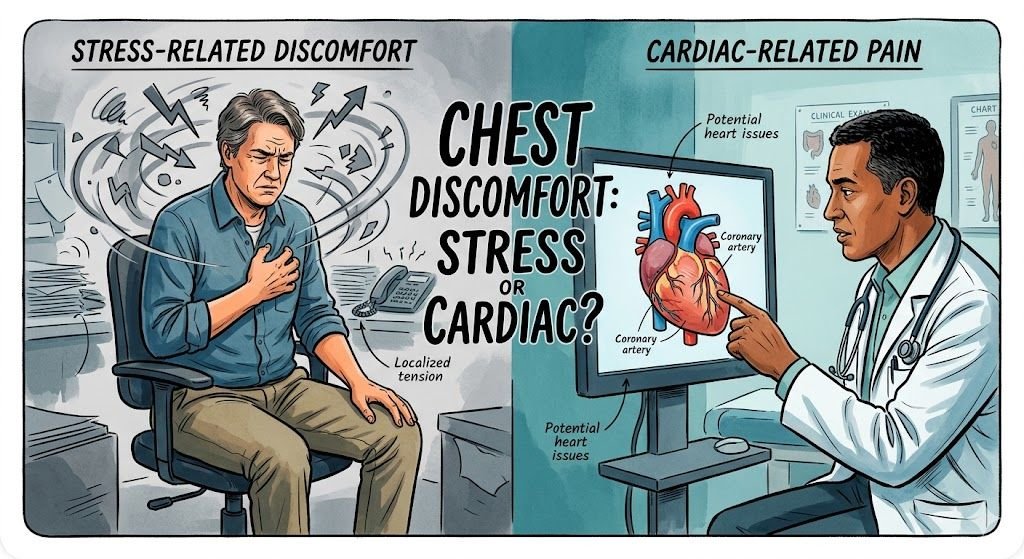
3. Stress Chest Pain vs Heart-Related Chest Pain
This is the most important distinction. Stress pain can mimic heart pain. But some features raise concern for a cardiac emergency.
Here is a simple comparison:
| Indicator | Stress-Induced Chest Pain | Heart-Related Chest Pain |
|---|---|---|
| Onset | Often sudden during anxiety or panic | May build gradually, especially with exertion |
| Duration | Seconds to minutes, may come and go | Often persistent or worsening |
| Sensation | Sharp, stabbing, localized, variable | Heavy, squeezing, pressure-like |
| Radiation | Less likely to spread | May radiate to arm, jaw, neck, or back |
| Breathing | Often linked to hyperventilation | Shortness of breath may occur with exertion or rest |
| Relief | May improve with relaxation or position change | Often does not fully improve with rest |
| Associated symptoms | Palpitations, trembling, fear, dizziness | Sweating, nausea, fainting, severe breathlessness |
A useful rule in clinical care: if chest pain is new, severe, prolonged, or accompanied by red-flag symptoms, treat it seriously until a clinician says otherwise.
For readers trying to understand Heart attack vs panic attack symptoms, overlap is common. Both can involve chest pressure, sweating, dizziness, and shortness of breath. That is why self-diagnosis is risky.
For more context, patients with recurring symptoms may also benefit from learning about What Are the 3 Types of Stress Tests, especially if a clinician recommends further heart evaluation.
4. Why the Pain Feels So Real
Many patients feel dismissed when told stress may be involved. We think that is a mistake. In practice, symptoms caused by stress are often vivid and deeply distressing.
There are several reasons the pain feels so convincing:
Muscle tension
Stress causes the chest wall, shoulders, and upper back muscles to tighten. That alone can create pain, soreness, or a pulling sensation.
Hyperventilation
Fast breathing changes carbon dioxide levels in the blood. This may cause chest tightness, tingling in the hands, lightheadedness, and a feeling of air hunger.
Heightened body awareness
Anxious patients often become highly alert to every heartbeat, twinge, or sensation. Minor discomfort can quickly feel major.
Esophageal spasm or reflux
Stress may worsen acid reflux or trigger spasms in the esophagus, both of which can resemble cardiac pain.
Existing heart disease plus stress
Stress can also worsen symptoms in people who already have cardiovascular risk factors. In some cases, the term stress-induced angina is used when emotional stress appears to trigger chest pain related to reduced blood flow to the heart.
5. When Chest Pain May Be an Emergency
Even if stress seems likely, certain symptoms should prompt immediate medical care. As a medical editorial team, we follow the same standard public health guidance used by bodies such as the NHS and American Heart Association: do not ignore warning signs.
Seek urgent help if chest pain:
- Lasts more than a few minutes
- Feels crushing, heavy, or severe
- Spreads to the arm, jaw, neck, shoulder, or back
- Happens with fainting or near-fainting
- Comes with nausea, sweating, or marked shortness of breath
- Occurs during exercise or physical effort
- Feels different from anything you have had before
If in doubt, emergency evaluation is the safer choice. Tests such as ECG, troponin blood work, echocardiogram, CT imaging, or supervised stress testing may be used to rule out dangerous causes.
For trusted public guidance, the American Heart Association and the NHS chest pain resource both emphasize urgent assessment when symptoms suggest a possible cardiac event.
6. Long-Term Effects of Chronic Stress on the Heart
The answer to can stress cause chest pain does not stop at temporary discomfort. Long-term stress may also affect cardiovascular health over time.
Most studies agree that chronic stress is associated with:
- Higher blood pressure
- Poorer sleep quality
- Increased inflammation
- Less physical activity
- Higher alcohol or caffeine intake
- Greater risk of smoking relapse
- Worsening of existing heart conditions
This is especially relevant in urban settings. In Pakistan, including Karachi and Hyderabad, clinicians have reported more emergency visits related to anxiety, burnout, and chest pain after prolonged social and economic stress. Similar trends have been discussed globally since the pandemic era, with workplace strain and mental health disorders contributing to more frequent episodes of unexplained chest pain.
Stress may not always be the direct cause of heart disease, but it can amplify the habits and biological responses that raise risk.
7. Who May Be More Vulnerable?
Stress chest pain can affect anyone, but some groups appear more likely to experience it:
- People with anxiety or panic disorder
- Adults under prolonged work stress
- Caregivers under emotional strain
- People with poor sleep or burnout
- Those with previous heart scares
- Individuals with reflux, asthma, or chronic pain
- Women, who may experience and describe chest symptoms differently than men
Gender differences matter. In practice, some women report chest pressure, fatigue, nausea, or upper back discomfort rather than classic “crushing” pain. That can make symptom interpretation harder, not easier.
If someone has repeated symptoms, a clinician may recommend Cardiac screening for anxiety patients to rule out hidden risk factors while also addressing mental health triggers. This is not about overtesting. It is about choosing the right evaluation based on age, symptoms, family history, blood pressure, cholesterol, and lifestyle.
8. How Doctors Evaluate Stress-Related Chest Pain
A careful assessment usually starts with the basics:
- When did the pain start?
- What does it feel like?
- Does it happen during panic, exercise, or rest?
- Does it spread anywhere?
- Are there palpitations, nausea, or breathlessness?
- Do you have diabetes, smoking history, or family history of heart disease?
Depending on the case, a clinician may order:
- ECG
- Troponin blood test
- Chest X-ray
- Echocardiogram
- Holter monitor for rhythm issues
- Exercise stress testing
- Anxiety and panic disorder screening
Some patients who notice a racing or pounding heartbeat alongside chest discomfort may also want to explore Heart Palpitations, since rhythm awareness can overlap with anxiety symptoms.
For evidence-based reference, MedlinePlus chest pain offers a clear overview of common causes and when urgent care is needed.
9. Practical Ways to Reduce Stress Chest Pain
If a doctor has ruled out an emergency, the next step is reducing recurrence. The goal is not just symptom control. It is better whole-body resilience.
Breathing reset
Try this simple pattern:
- Inhale for 4 seconds
- Hold for 4 seconds
- Exhale slowly for 6 seconds
- Repeat for 2 to 5 minutes
This may help slow the stress response and reduce chest tightness.
Progressive muscle relaxation
Tense and release muscle groups from shoulders to hands to chest. Many patients do not realize how much pain comes from bracing the body all day.
Improve sleep
Aim for 7 to 9 hours. Sleep loss lowers stress tolerance and increases sensitivity to pain.
Moderate caffeine and alcohol
Too much caffeine can worsen palpitations, tremor, and chest awareness. Alcohol may disturb sleep and heighten next-day anxiety.
Move regularly
Walking, cycling, or medically approved exercise helps lower baseline stress hormones. If symptoms occur with exertion, get medical advice before starting a program.
Consider therapy
Cognitive behavioral therapy, counseling, or treatment for panic disorder may reduce recurrent psychosomatic chest pain symptoms and improve quality of life.
Use digital tools wisely
Stress-tracking apps, guided breathing tools, and tele-cardiology follow-ups may be useful, especially for people balancing busy city life and limited appointment access.
Related concerns like high blood pressure symptoms, anxiety and dizziness, and causes of shortness of breath are also worth discussing with a clinician if they occur frequently.
10. A Short Real-World Example
One patient we reviewed in editorial rounds was a 34-year-old office worker with repeated left-sided chest pain during late-night deadlines. He worried each episode was a heart attack. His emergency workup was normal. A clearer pattern emerged: shallow breathing, excess caffeine, poor sleep, and escalating panic whenever symptoms started.
His care plan focused on follow-up with his primary clinician, reducing stimulants, daily walks, breathing practice, and anxiety treatment. The pain did not vanish overnight. But over several weeks, the episodes became less intense and less frequent. That kind of gradual improvement is common when the root pattern is addressed.
FAQs
1. Can stress cause chest pain every day?
Yes, it can, especially during chronic anxiety or burnout. Daily chest pain still deserves medical assessment if it is persistent, changing, or paired with red-flag symptoms.
2. Can stress cause chest pain on left side?
Yes. Left-sided pain can occur from muscle tension, hyperventilation, or heightened pain sensitivity. But left-sided pain should not automatically be assumed to be harmless.
3. Can stress cause chest pain on right side?
Yes. Stress-related muscle strain or tension can affect either side of the chest, not just the left.
4. Can stress cause chest pain and shortness of breath?
Yes. Anxiety may trigger rapid breathing, chest tightness, and a feeling of not getting enough air. Severe or sudden shortness of breath still needs urgent evaluation.
5. How can I tell Heart attack vs panic attack symptoms apart?
It is not always possible at home. Heart pain often feels heavier, lasts longer, and may radiate to the arm or jaw. Panic attacks often peak quickly and include fear, trembling, and hyperventilation. When uncertain, seek urgent care.
6. Should I ask about Cardiac screening for anxiety patients?
If you have repeated chest pain, cardiovascular risk factors, family history, or exertional symptoms, yes. A clinician can decide whether testing is appropriate.
Conclusion
So, can stress cause chest pain? Absolutely. Stress can create sharp pain, tightness, breathlessness, and palpitations that feel alarming and very physical. But the key message is balance: do not dismiss chest pain, and do not assume the worst without evaluation. New, severe, radiating, or persistent pain needs prompt medical attention. Once dangerous causes are ruled out, treating stress, sleep problems, anxiety, and lifestyle strain may help reduce symptoms and improve overall heart health.
If this topic feels familiar, it may also help to explore Heart Palpitations and What Are the 3 Types of Stress Tests as part of a fuller understanding of chest symptoms and cardiac evaluation.
References
- American Heart Association: https://www.heart.org/
- NHS chest pain: https://www.nhs.uk/conditions/chest-pain/
- MedlinePlus chest pain: https://medlineplus.gov/chestpain.html/
Pingback: How Sleep Patterns Affect Heart Rhythm: Expert Tips for Cardiovascular Health
Pingback: Rib Fracture Healing Time: Recovery and Persistent Pain
Pingback: Atrial Fibrillation ICD 10: Complete Code List & Updates