
Piriformis Syndrome: 7 Symptoms, Causes, and Treatment Options
This article, “Piriformis Syndrome: 7 Symptoms, Causes, and Treatment Options,” was written by Dr. John Ma (Orthopedic Surgery).
The information provided is intended for educational purposes only and should not be considered a substitute for professional medical advice, diagnosis, or treatment. Piriformis syndrome can cause symptoms similar to other conditions, including lumbar spine disorders and sciatica. Consult a qualified healthcare professional for an accurate diagnosis and an appropriate treatment plan. Do not start or continue exercises that worsen your symptoms without seeking professional guidance. If you experience new bladder or bowel problems, numbness around the groin or saddle area, or rapidly worsening leg weakness, seek urgent medical attention.
You get up from a long drive or a day at your desk, and a deep ache sits in one buttock. Sometimes it creeps down the back of the thigh. Most people assume a slipped disc or “sciatica” and start worrying about their spine. Yet there is another possible source, and it sits much lower: piriformis syndrome, a condition in which a small muscle deep in the buttock irritates or squeezes the sciatic nerve nearby.
The short answer to what most readers want to know is this: piriformis syndrome can imitate lumbar disc problems closely, it is diagnosed mainly by careful clinical assessment, and it usually responds to a combination of activity changes, targeted rehabilitation and, occasionally, medical treatment. This guide explains how the muscle works, what may trigger the pain, how clinicians sort it from similar problems, and which gentle exercises are commonly used.
What Is Piriformis Syndrome?
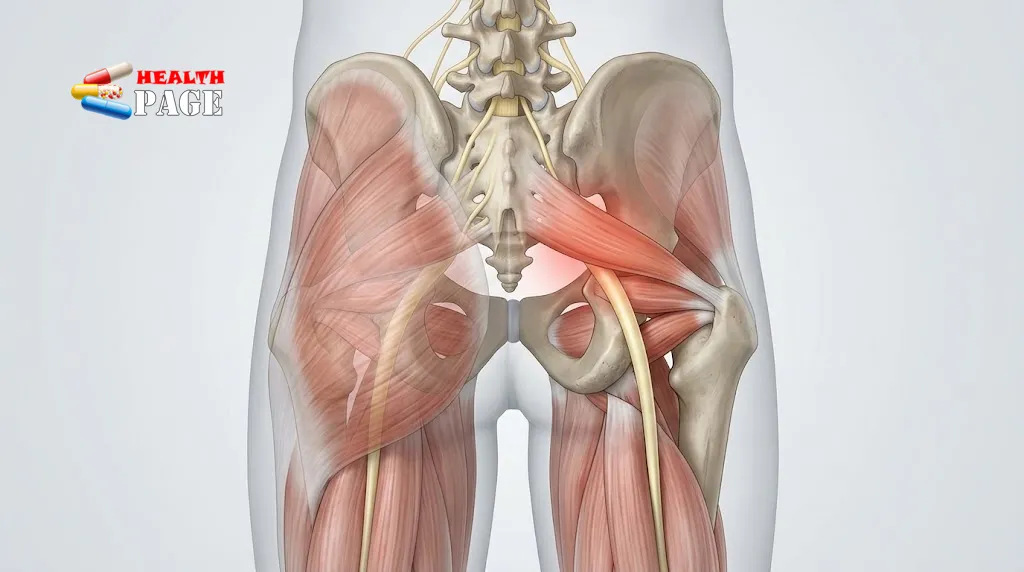
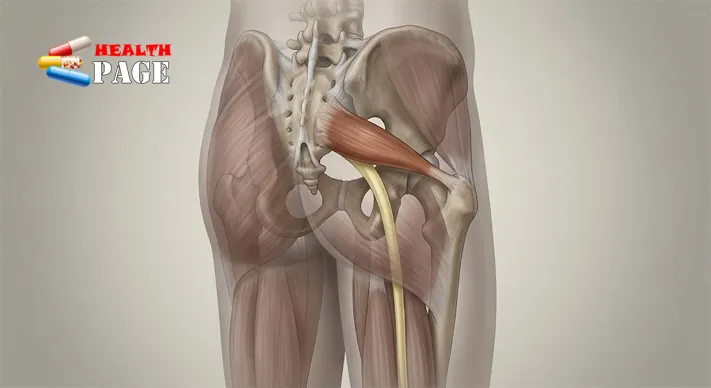
The piriformis is a flat, pear-shaped muscle tucked under the gluteus maximus, the large muscle you sit on. It runs from the front of the sacrum, the triangular bone at the base of the spine, outward through an opening in the pelvis called the greater sciatic foramen, and attaches near the top of the thigh bone. Its main job is to rotate the hip outward, and depending on hip position it also helps move the leg away from the body.
The sciatic nerve, the thickest nerve in the body, travels right beside it. In most people the nerve exits the pelvis just below the piriformis. Anatomical reviews describe several variants, though. In a minority of people, one division of the nerve passes through or above the muscle (StatPearls: Anatomy, Sciatic Nerve). When the muscle becomes tight, inflamed or overworked, it may irritate or compress the nerve, producing pain, tingling or numbness from the buttock into the leg.
It helps to separate two terms that are often blurred. Sciatica describes a pattern of symptoms, pain that follows the sciatic nerve’s path. Piriformis syndrome is one possible reason for that pattern, and a fairly uncommon one. StatPearls estimates that it may account for roughly 0.3% to 6% of low back pain and sciatica cases (StatPearls: Piriformis Syndrome). Some specialists now group it under the broader label of deep gluteal syndrome, which covers several causes of sciatic nerve entrapment outside the spine (StatPearls: Gemelli Muscles).
Piriformis Syndrome Causes
No single event explains every case. Clinicians usually describe a mix of mechanical stress on the muscle, and in some people, anatomy that makes nerve irritation more likely. Commonly discussed contributors include:
- Long periods of sitting. Desk work, long drives and sitting with crossed legs keep pressure on the deep gluteal region for hours. Prolonged sitting is more often an aggravating factor than a root cause, but it can keep symptoms going.
- Repetitive or sudden exertion. Running, especially uphill, repeated squatting, lunges and abrupt jumps in training volume can overload the muscle. Starting hard exercise without a warm-up may add to the strain.
- Injury. A fall onto the buttock, a twisting injury, or lifting something heavy with a sudden rotation can leave the muscle irritated or in spasm. StatPearls lists trauma to the hip or buttock among the recognized causes.
- Weakness elsewhere in the hip. If the gluteus medius and other stabilizers do not do their share, the piriformis may compensate and work harder than it was built to.
- Anatomical variation. As noted above, the relationship between nerve and muscle differs between people, which may make some more susceptible.
None of these guarantees the condition. Plenty of people sit all day or run hills with no trouble. The pattern that matters is a combination of load, recovery, hip mechanics and individual anatomy.
Seven Possible Piriformis Syndrome Symptoms
These are seven symptoms that people report, not a checklist for self-diagnosis. Few people have all of them, and several overlap with other conditions.
- Deep buttock pain. An aching, burning or sharp pain on one side, often described as sitting “inside” the buttock rather than on the surface.
- Pain traveling down the leg. The discomfort may extend into the back of the thigh and sometimes toward the calf or foot, which is why it is so often mistaken for a spinal problem.
- Pain that builds with sitting. Many people notice it worsens after a long meeting or drive, and that standing up is stiff and uncomfortable.
- Local tenderness. Pressing on the deep buttock may reproduce the pain, which helps a clinician during examination.
- Tingling or numbness. Pins and needles, burning, or a patch of reduced feeling can reach the thigh, calf or foot. If numbness is your main complaint, one-leg numbness has a range of possible causes worth understanding.
- Pain with activity. Stairs, squatting, longer walks and certain hip-rotation movements may provoke symptoms.
- Reduced mobility. In more severe cases, people limp, shorten their stride or avoid some movements altogether.
How Piriformis Syndrome Differs From Sciatica and a Herniated Disc
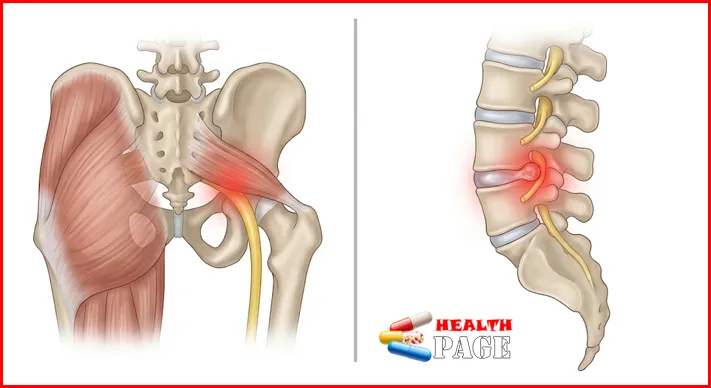
A herniated lumbar disc can press on a nerve root and cause leg pain that looks nearly identical. StatPearls notes that patients often arrive with sciatica-type symptoms and that it can be hard to tell whether the source is the spine or the piriformis. The comparison below shows general tendencies, not rules.
| Feature | Piriformis syndrome | Lumbar disc herniation |
|---|---|---|
| Typical pain origin | Deep buttock | Lower back |
| Buttock pain | Common | Possible |
| Leg pain | Common | Common |
| Effect of sitting | May worsen symptoms | May worsen symptoms |
| Local buttock tenderness | Often present | Not necessarily |
| Neurological findings | Variable | May include nerve-root deficits |
| Typical work-up | Clinical assessment, other causes excluded | Clinical assessment, imaging when indicated |
Buttock pain alone cannot tell the two apart, and the two can coexist. Other conditions can overlap as well, including sacroiliac joint problems, hip disorders and age-related wear in the spine. For example, degenerative changes in the discs can produce back and leg symptoms of their own. Narrowing of the spinal canal or the nerve exits is another possibility, and our explainer on spinal stenosis versus foraminal stenosis shows how those patterns differ.
How Piriformis Syndrome Is Diagnosed
No single test confirms it. Because several conditions mimic it, clinicians usually build the picture from the history, the examination and sometimes tests that rule other problems out.
History and examination. Expect questions about where the pain started, whether it travels, how long it has lasted, what makes it worse and whether you have noticed numbness or weakness. The examiner will check hip motion, strength, sensation, walking pattern and tenderness in the buttock.
Provocation tests. These reproduce your familiar pain by placing the hip in particular positions. Three are common:
- FAIR test: the hip is flexed, adducted and internally rotated.
- Pace test: you push the leg outward against resistance while seated.
- Beatty test: lying on the unaffected side, you lift the upper knee while the foot stays on the supporting surface.
A positive result supports suspicion of piriformis involvement but does not prove it. The straight-leg raise is also used to assess nerve irritation, but it is not specific to the piriformis.
Imaging and nerve studies. MRI, CT, ultrasound and electromyography (EMG) are mostly used to exclude other causes, such as disc problems or other nerve disorders. A normal scan does not rule out the condition, and an abnormal one does not establish it.
Piriformis Syndrome Treatment Options
Treatment depends on how severe the symptoms are, what seems to be driving them and your general health. Most plans start conservatively, with the aim of calming irritation, restoring movement and rebuilding hip strength.
Activity changes. Short-term adjustments often make the biggest difference: breaking up long sitting with regular walking, easing off the specific activity that sets symptoms off, and avoiding aggressive stretching during a painful flare-up. Return to full activity gradually.
Physical therapy. A physical therapist can tailor a program to your examination findings. It may include gentle piriformis stretches, hip mobility work, gluteal strengthening, pelvic stability training, and correction of movement or posture habits.
Heat, cold and manual therapy. Heat can relax tight muscle and cold may ease a recent acute strain, though neither suits everyone and skin should be protected. Hands-on techniques from a trained therapist may relieve muscle tension. Deep massage should not be forceful over tender areas or directly over an irritated nerve.
Nerve gliding. These controlled movements aim to help the sciatic nerve slide more freely among surrounding tissues. They are best learned from a professional first.
Medication and injections. Over-the-counter pain relievers or prescription anti-inflammatory drugs may help some people, depending on their health. In selected cases, image-guided injections of local anesthetic or a corticosteroid may be offered, and botulinum toxin is sometimes used. The StatPearls review notes that these may ease pain but do not necessarily fix the underlying cause, and that outcomes are better when combined with rehabilitation.
Surgery. Surgery to release structures pressing on the nerve is uncommon and reserved for people with persistent, disabling symptoms who have not improved with proper conservative care. It is not a routine step.
Piriformis Syndrome Exercises
Exercises are a central part of rehabilitation, but the right ones depend on your symptoms and examination findings. The movements below are gentle and commonly used. They are not a prescription, and they are not meant to cure the condition on their own. If you are unsure, have a physical therapist check your technique.
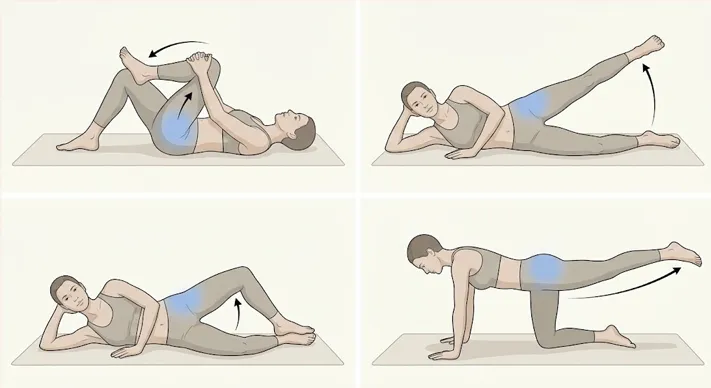
Figure-four stretch. Lie on your back with both knees bent. Cross one ankle over the opposite thigh, then gently draw the supporting thigh toward your chest until you feel a mild stretch in the buttock. Hold briefly and release. For flexibility, many programs use holds of roughly 20 to 30 seconds, repeated a few times, though your therapist may suggest otherwise.
Knee-to-opposite-shoulder stretch. Lying on your back with one knee bent, guide that knee toward the opposite shoulder only as far as feels comfortable. Release slowly.
Side-lying leg raise. Lie on your side with the hips stacked. Lift the top leg slowly and lower it with control, keeping your pelvis from rolling backward. This works the hip abductors, including the gluteus medius.
Clamshell. Lie on your side with knees bent and feet together. Lift the top knee while keeping the pelvis still, then lower it slowly. It builds hip stability.
Gentle hip extension. From hands and knees, lift one bent leg backward and upward without arching your lower back, then return slowly.
A few rules keep these exercises safe. Start gently, and never force the hip into a painful position. Stop if the movement increases radiating pain, numbness or tingling. Move on to more demanding work only as symptoms settle. Skip jump squats, forceful stretching and aggressive foam rolling while the area is irritated, because they can aggravate some people.
Ways to Reduce the Risk of Flare-Ups
Prevention comes down to a few habits that spread load across the hips and avoid sudden stress:
- Break up long periods of sitting with a short walk or stand every 30 to 60 minutes.
- Warm up with light activity and dynamic movements before running or heavy lower-body training, and raise intensity gradually.
- Keep the gluteal muscles and hip stabilizers strong, as part of a balanced routine.
- When lifting, bend at the hips and knees and avoid sudden twisting under load, with enough recovery between hard sessions.
How Long Does Recovery Take?
No dependable timetable exists. Recovery depends on the cause, how irritated the muscle and nerve are, how long symptoms have been present, whether other conditions are involved and how consistently you follow your rehabilitation plan. Some people improve within weeks with conservative care. Others need longer, or further investigation if progress stalls. For a general sense of how muscle recovery unfolds, our guide to how long a pulled muscle takes to heal gives useful context, though nerve irritation can behave differently.
When to See a Doctor
Arrange an assessment if you have buttock or leg pain that persists, keeps returning, or interferes with daily life. The same applies to numbness or tingling that does not improve, increasing difficulty walking, new or worsening leg weakness, or symptoms that get worse despite sensible self-care.
Seek urgent medical attention for new bladder or bowel control problems, numbness around the groin or saddle area, or rapidly worsening leg weakness. These can signal a serious spinal or neurological problem rather than piriformis syndrome.
Frequently Asked Questions
What is the first sign of piriformis syndrome?
A deep ache in one buttock, often after prolonged sitting, is a common early sign. It may then spread into the back of the thigh. Early symptoms are easy to mistake for ordinary muscle soreness, so persistent or spreading pain deserves a proper assessment.
Can it go away on its own?
Mild cases linked to a clear trigger, such as a sudden increase in training, may settle once the trigger is removed and the muscle gets time to recover. Persistent or recurring pain usually needs a proper evaluation, since other conditions can look similar.
Is walking good for it?
Gentle walking on level ground is often tolerated and breaks up sitting time. If walking, stairs or hills clearly provoke radiating pain or numbness, scale back and ask a clinician for guidance on what level of activity suits you.
Can it feel like a herniated disc?
Yes. Both can cause buttock pain and pain traveling down the leg. Lower back pain, nerve-root weakness or particular findings on examination may point toward the spine, though only a clinical assessment, sometimes with imaging, can sort it out.
How do doctors test for it?
Mainly through history and examination, including provocation tests such as the FAIR, Pace and Beatty tests. Imaging or EMG is typically used to rule out other causes. No single test settles the diagnosis.
What is the fastest way to ease the pain?
There is no guaranteed shortcut. Cutting back on whatever provokes symptoms, taking regular movement breaks, using heat if it feels good, and doing gentle movements are common first steps. If pain is severe, or comes with numbness or weakness, see a clinician.
Putting It All Together
Piriformis syndrome sits in an awkward diagnostic space. It can feel like a disc problem but originates deep in the buttock, and no single test proves it. The most useful steps are practical ones: recognize the pattern, change what aggravates it, strengthen the hips gradually, and get a proper examination if symptoms persist or progress. If you recognize your own pain in this article, take the description to a physical therapist or doctor rather than relying on self-diagnosis.
Medical disclaimer: This article is for general education and is not a substitute for professional diagnosis or treatment. Consult a qualified healthcare professional about your symptoms.
References
- StatPearls. “Piriformis Syndrome.” NCBI Bookshelf, National Library of Medicine. https://www.ncbi.nlm.nih.gov/books/NBK448172/
- StatPearls. “Anatomy, Sciatic Nerve.” NCBI Bookshelf, National Library of Medicine. https://ncbi.nlm.nih.gov/books/NBK482431
- StatPearls. “Anatomy, Bony Pelvis and Lower Limb, Gemelli Muscles.” NCBI Bookshelf, National Library of Medicine. https://ncbi.nlm.nih.gov/books/NBK557420

Dr. John Ma is a dedicated Orthopaedic Surgeon with extensive experience in musculoskeletal health and surgical care. He currently serves at Royal Brisbane and Women’s Hospital, Australia, where he provides expert treatment for complex orthopaedic conditions. Passionate about advancing patient outcomes, Dr. Ma combines evidence‑based practice with compassionate care, helping individuals restore mobility and improve quality of life. Through his contributions to healthcare, he continues to support patients in achieving long‑term wellness and recovery.