
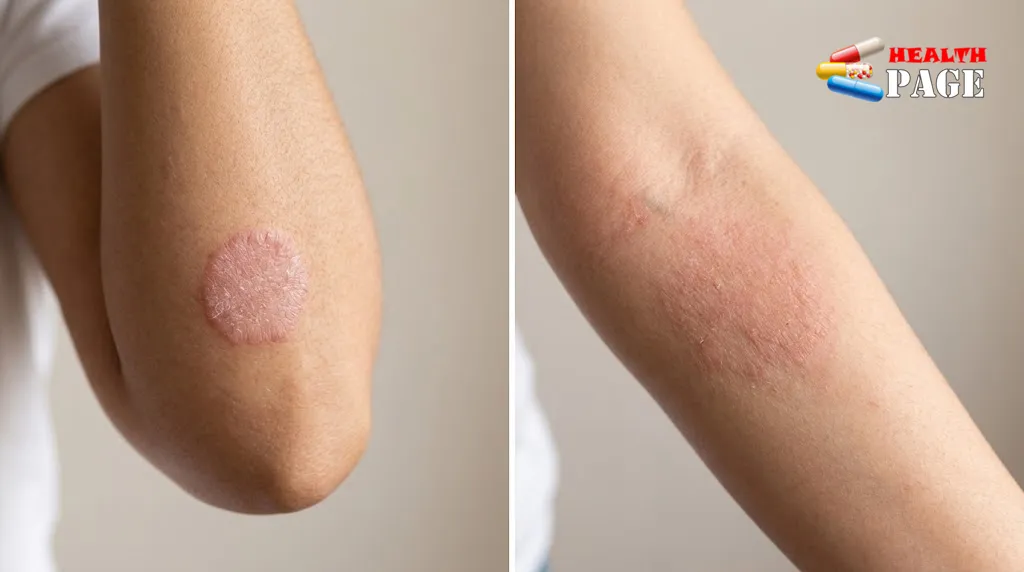
Psoriasis vs Eczema: 7 Key Differences in Symptoms and Treatment
If you have ever looked at a dry, red, flaky patch of skin and wondered whether it is psoriasis or eczema, you are in good company. Psoriasis vs eczema is one of the most common skin questions people bring to pharmacists and GPs, because both conditions can cause itchy, irritated, scaly skin, both tend to flare and settle over the years, and neither is contagious. The short answer is that they are different conditions with different causes. Psoriasis is an immune-mediated condition in which skin cells build up faster than usual, which often produces thick, sharply outlined plaques. Atopic eczema (also called atopic dermatitis) is linked to a weakened skin barrier and typically causes dry, intensely itchy, inflamed skin.
Those are general patterns rather than diagnostic rules, and the overlap is real. This guide walks through seven practical differences in symptoms, triggers and treatment, explains what photographs can and cannot tell you, and sets out when it is worth seeing a doctor.
What Is Psoriasis?
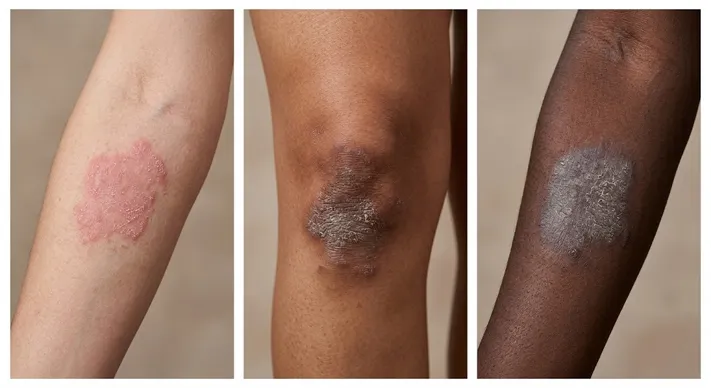
Psoriasis is a long-term inflammatory skin condition. The immune system sends signals that speed up the growth of skin cells, so they pile up on the surface instead of shedding gradually. The result is raised, thickened patches called plaques, usually with a dry scale on top and a clearly defined edge. They can itch, sting, feel sore or crack. On lighter skin the plaques often look pink or red with silvery scale; on brown or black skin they may look purple, dark brown or grey, and the scale can be harder to spot.
The usual sites are the scalp, elbows, knees and lower back, though psoriasis can appear almost anywhere. Scalp involvement is common enough that many people first meet it as stubborn flaking, and an overview of scalp treatments can help you understand the options a dermatologist might discuss. Psoriasis can also affect the nails, causing tiny pits, thickening or lifting from the nail bed, and a minority of people develop psoriatic arthritis, which inflames the joints.
Psoriasis tends to run in families, although the exact role of genetics is not fully understood. Flares can be set off by skin injuries, throat infections, stress or certain medicines, but this varies a great deal: a trigger that matters to one person may have no effect on another. According to the NHS overview of psoriasis, it affects around 2 in 100 people in the UK, and it cannot be caught or passed on.
What Is Eczema?
Eczema is an umbrella term for a group of conditions that leave the skin dry, irritated and inflamed. The most common type is atopic eczema, which is the form people usually mean when they compare it with psoriasis. It develops through a combination of an impaired skin barrier, immune over-reactivity, genetic susceptibility and environmental influences. When the barrier is weak, moisture escapes and irritants get in more easily, which keeps the skin inflamed and itchy. A separate guide explains how eczema develops in more detail.
Typical symptoms include intense itching, dryness, redness or darker discolouration, scaling and cracking. In active flares there may be small fluid-filled bumps, weeping or crusting. Atopic eczema often appears in the creases of the elbows and knees, on the hands, wrists and face, though it can turn up elsewhere. Many people with it also have asthma, hay fever or other allergies, or have relatives who do, but that is not universal.
Common aggravating factors include soaps and detergents, fragrances, sweat, heat, cold dry weather and stress. The NHS guidance on atopic eczema also points out that there are other forms, such as contact dermatitis, discoid eczema and pompholyx. Contact dermatitis is worth singling out: it is a reaction to something the skin touches, such as nickel, cosmetics or cleaning products, and it follows the pattern of contact rather than the pattern of atopic disease. A visual guide to the different types of eczema rash shows how much these forms vary.
Psoriasis vs Eczema: 7 Key Differences
A quick comparison first, then the detail.
| Feature | Psoriasis | Atopic eczema |
|---|---|---|
| Appearance | Thick, raised, well-defined plaques with scale | Dry, inflamed patches with less defined edges; may ooze or crust |
| Itch | Variable; may itch, sting or burn | Often intense, can disturb sleep |
| Typical sites | Scalp, elbows, knees, lower back | Skin folds, hands, wrists, face |
| Underlying cause | Immune activity and rapid skin-cell turnover | Skin-barrier problems plus immune and environmental factors |
| Common triggers | Skin injury, infections, stress, some medicines | Irritants, allergens, weather, sweat, stress |
| Nails and joints | Nail pitting; possible psoriatic arthritis | Nails less often affected; allergies and asthma more common |
| Usual onset | Any age | Often childhood, but can start or continue in adulthood |
The table is a guide to tendencies. The difference between psoriasis and eczema is rarely settled by a single feature, and anyone who matches half the psoriasis column and half the eczema column is not unusual.
1. Appearance and skin texture
This is the difference people notice first. Psoriasis plaques tend to be thick and raised, with a defined border where affected skin meets normal skin and a layer of dry, flaky scale. Eczema looks more like skin that has lost its moisture and become inflamed: dry and rough patches with blurry edges that can crack, weep or crust when scratched. If you are comparing psoriasis vs eczema skin appearance, think of a sharply drawn patch versus a diffuse, irritated one.
2. Itching and discomfort
Itch is usually the loudest symptom of eczema, sometimes enough to wake you at night. Psoriasis can itch too, but it is just as likely to sting, burn or feel sore. The American Academy of Dermatology notes that children with psoriasis tend to have mild itching while itching in eczema can be intense. Individual experience varies widely, so itch alone is a weak clue.
3. Common body locations
Psoriasis favours the scalp, elbows, knees and lower back. Atopic eczema favours skin folds, such as the inner elbows and backs of the knees, along with the hands, wrists and face. Either condition can show up in unexpected places, and psoriasis can also appear in folds (inverse psoriasis), which is one reason location is a supporting clue rather than proof.
4. Underlying causes
Psoriasis is driven by immune-system activity that accelerates skin-cell turnover. Eczema centres on a faulty skin barrier combined with inflammation, genetic susceptibility and environmental exposure. Both involve the immune system, but in different ways, which is why a treatment aimed at one is not automatically suited to the other.
5. Triggers and flare-ups
Psoriasis and eczema triggers overlap, as stress can worsen either, but there are tendencies. Psoriasis flares often follow skin injury (even a scratch or sunburn), throat infections or certain medicines. Eczema flares more often follow contact with irritants and allergens, sweating, heat, dry cold air or harsh cleansing. Keeping a short diary of flares is more useful than assuming any list applies to you.
6. Nails and associated conditions
Pitting, thickening or separation of the nails can accompany psoriasis, and joint pain or swelling may signal psoriatic arthritis. Nail changes are not exclusive to psoriasis, though, since eczema around the nail folds can distort nails as well. People with atopic eczema are more likely to have asthma or hay fever.
7. Age of onset and long-term pattern
Atopic eczema usually begins in childhood and often eases with age, but it can continue into adulthood or appear for the first time later. Psoriasis can begin at any age. In both cases the long-term pattern is a series of flares and quieter spells rather than a single episode.
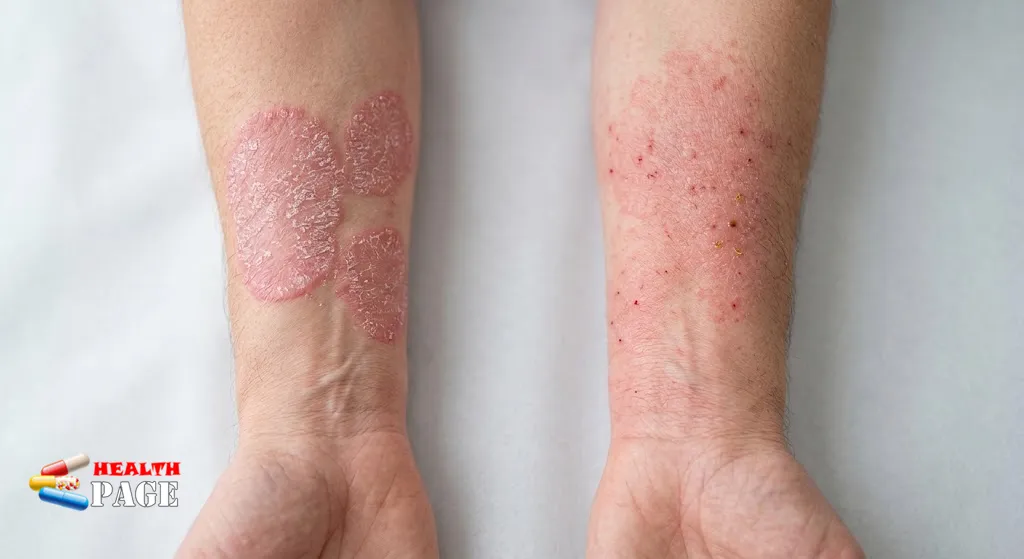
Psoriasis or Eczema on the Skin: How Can You Tell?
People often ask how to tell psoriasis from eczema at home. The honest answer is that you can notice clues but not confirm a diagnosis. Thick, sharply outlined plaques with obvious scale lean towards psoriasis, while very itchy, dry, cracked or weeping patches in the elbow creases lean towards eczema. Itchy red patches on the skin can have many other explanations, so neither pattern should be treated as conclusive. If eczema is your main suspicion, this guide to identifying eczema lists the signs to look for.
Several other conditions can resemble either one. Contact dermatitis, seborrhoeic dermatitis (greasy, yellowish flaking on the scalp, face and chest), ringworm and rosacea when it affects the face can all produce red, irritated skin. Ringworm is worth mentioning because, unlike psoriasis and eczema, it is a fungal infection that can spread, and a steroid cream can make it worse. When the picture is unclear, a clinician will examine the skin, ask about your history, family history, medicines and exposures, and occasionally take a skin sample (biopsy) or arrange other tests. Doctors may use the term psoriasiform dermatitis when a rash sits between the two, which happens most often in children.
Psoriasis vs Eczema Pictures: What Images Can and Cannot Show
Photographs are useful for learning what each condition can look like, and psoriasis vs eczema pictures are among the most searched aspects of this topic. They have limits, though. Any gallery shows a handful of examples, not the full range, and the same condition looks different at different stages. Fresh eczema can be moist and red while long-standing eczema becomes thickened and leathery, which makes it resemble psoriasis.
Skin tone matters too. Redness is easy to see on pale skin but may look purple, brown, grey or simply darker on brown and black skin, and scale can look ashen rather than silvery. If most of the images you find show only light skin, the match to your own skin may be poor. Look for sources that show a range of tones, and treat a close match as a reason to get checked, not as a verdict. Equally, a rash that does not match an online example is not automatically harmless.
A Note for Parents
Both conditions can affect children, and they are hard to tell apart in young skin. The American Academy of Dermatology explains in its comparison of eczema and psoriasis that more children have eczema than psoriasis, but almost 1 in 100 children have psoriasis, and psoriasis in children is often first mistaken for another condition. Psoriasis in a child can appear on the face, scalp or buttocks. A rash that is persistent, does not respond to emollients, or looks unusually thick and well defined deserves a professional opinion rather than repeated guessing with creams.
Psoriasis vs Eczema Treatment
Treatment depends on the correct diagnosis, severity, which parts of the body are involved, age, other health conditions and how you respond. A product that suits one condition can be ineffective or inappropriate for the other, so it is worth getting a diagnosis before committing to a routine. Neither condition has a permanent cure, but both can usually be controlled well enough to protect quality of life.
For eczema, the foundation is regular moisturising with emollients, a gentle cleansing routine (these skincare steps for sensitive skin are a reasonable starting point) and avoiding irritants you have identified. During flares, clinicians commonly recommend topical anti-inflammatory treatments, which may include corticosteroids or other prescription medicines. The NHS advises against using aqueous cream, which can irritate the skin. Persistent or severe eczema may need specialist care, including phototherapy or systemic treatments.
For psoriasis, moisturisers help with dryness and scale, and prescribed topical treatments may include corticosteroids or vitamin D analogues. More extensive or stubborn disease can call for phototherapy or systemic medicines, including biologics, under specialist supervision. Psoriasis with joint symptoms usually needs input from rheumatology as well.
Dosing, strengths and combinations are decisions for a clinician who has seen your skin, so this guide does not recommend specific products or schedules.
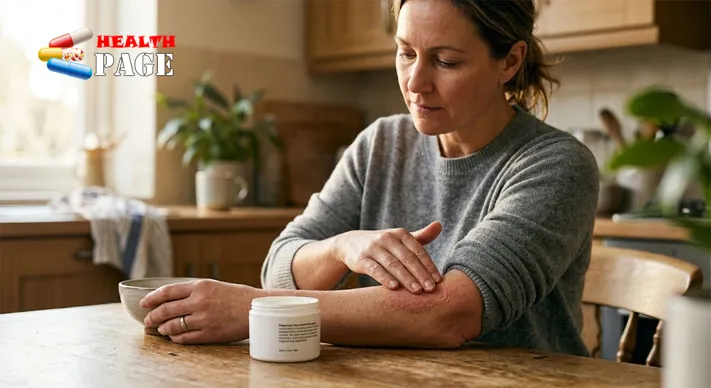
When Should You See a Doctor?
Book a medical assessment for any new, persistent, worsening, painful or unexplained rash, particularly when you are unsure of the cause or when itching and discomfort are affecting sleep and daily life. Seek prompt advice if you suspect infection: spreading redness, increasing warmth, pus or worsening pain. The NHS advises urgent help for people with eczema who develop painful clusters of blisters or a rapidly worsening rash, and a fever alongside a worsening rash needs urgent assessment.
If you have possible psoriasis and notice joint pain, swelling or morning stiffness that lasts, mention it. Psoriatic arthritis can cause lasting joint damage if it goes unrecognised, and treating it early matters. The first call is usually your GP, who can often diagnose either condition from examination and history and refer you to a dermatologist if the diagnosis is uncertain or the condition is severe.
Preparing for your appointment
A little preparation makes the visit more useful. Photograph the rash when it is at its worst, write down when it started and how it changes, list possible triggers (new soaps, stress, illness, medicines), note any family history of psoriasis, eczema, asthma or allergies, and bring a list of everything you have already tried, including over-the-counter products.
Frequently Asked Questions
Is psoriasis itchier than eczema?
Usually not. Eczema tends to cause more intense itching, while psoriasis more often brings soreness, stinging or burning along with milder itch. Some people with psoriasis find it very itchy, so use itch as one clue among several.
Can psoriasis look like eczema?
Yes. Psoriasis in skin folds or on the hands and feet can look much like eczema, and long-standing eczema can become thick and scaly like psoriasis. When even specialists cannot separate them, the term psoriasiform dermatitis may be used.
Can someone have psoriasis and eczema at the same time?
Yes, it is uncommon but possible. Having one condition does not rule out the other, and a person with both may need treatment tailored to each.
Are psoriasis and eczema contagious?
No. Neither can be caught from or passed to another person through touch, sharing towels or close contact.
Can psoriasis or eczema be cured?
There is currently no cure for either condition. Treatment aims to control symptoms and reduce flares. Atopic eczema often improves as children grow older, and psoriasis can go through long quiet periods.
Which doctor should diagnose a persistent skin rash?
Start with your GP or a pharmacist for mild problems. A GP can often diagnose either condition and refer you to a dermatologist if the rash is severe, atypical or not responding to treatment.
Conclusion
The psoriasis vs eczema question comes down to a set of tendencies: psoriasis leans towards thick, sharply defined, scaly plaques linked to immune activity, while eczema leans towards very itchy, dry, inflamed skin linked to a weak skin barrier. Location, triggers, nail changes and age of onset add clues, but none is decisive, and the two can overlap or even coexist. The most useful next step is to note when and where your rash appears, photograph it, and have a clinician confirm what it is so that treatment can be matched to the right condition.
References
- NHS. Psoriasis.
- NHS. Atopic eczema.
- American Academy of Dermatology Association. What’s the difference between eczema and psoriasis?

Dr. Jacob Cote, MD, FRCPC, is a board-certified dermatologist practicing at The Ottawa Hospital in Ontario, Canada. Specializing in medical dermatology, clinical skin pathology, and advanced acne therapies, Dr. Cote brings years of institutional hospital experience to the editorial board. He is dedicated to translating complex, evidence-based dermatological research into practical preventative skin health strategies for everyday readers. At HealthPage, he ensures all clinical guidelines and skincare recommendations are rigorously reviewed and align with current Canadian Dermatology Association standards.