
Pumpkin Seed Oil Capsules: 7 Benefits, Side Effects and Dosage
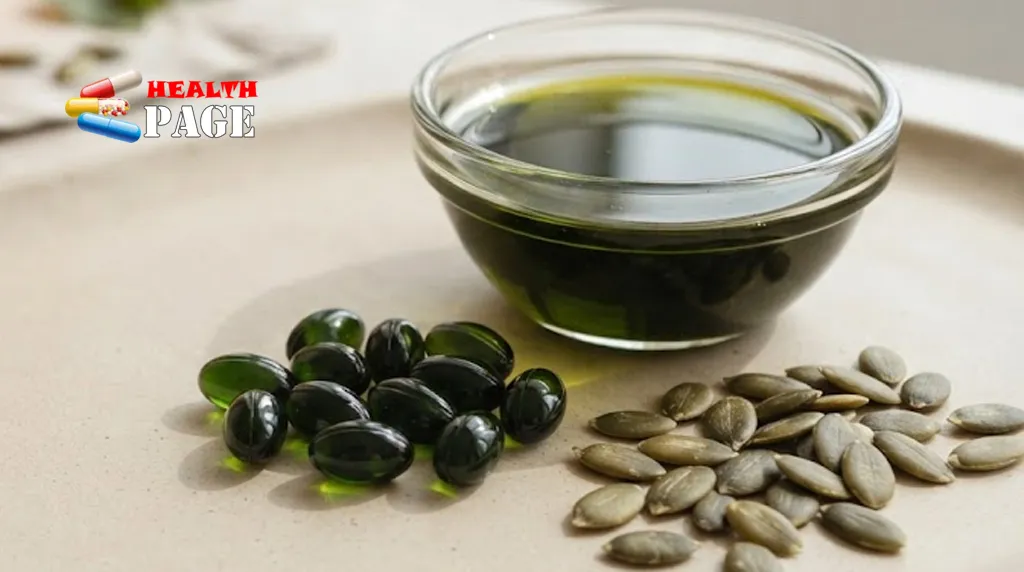
Pumpkin seed oil capsules are a convenient way to consume oil extracted from pumpkin seeds. They contain unsaturated fatty acids and plant compounds that researchers have investigated for hair growth, prostate health and urinary symptoms. However, the strength of the evidence varies considerably, and these supplements are not proven treatments for every condition they are marketed for.
The most encouraging human research includes a small clinical trial investigating hair growth in men and studies examining urinary symptoms associated with an enlarged prostate. Other proposed benefits, including better heart health, skin health and blood sugar control, remain less certain.
If you are considering a pumpkin seed oil supplement, it helps to understand what research has actually shown, how to interpret dosage information, when to take the capsules and what safety precautions to consider. This guide separates promising findings from claims that still need stronger evidence.
What are pumpkin seed oil capsules?
Pumpkin seed oil is extracted from the seeds of pumpkins, commonly from Cucurbita pepo. The oil is rich in unsaturated fats, particularly linoleic acid (an omega-6 fatty acid) and oleic acid (an omega-9 fatty acid). It also contains phytosterols and other plant compounds, although the exact composition varies with the pumpkin variety and extraction method.
Capsules and softgels provide the oil in a measured serving without requiring you to use liquid oil in food.
It is useful to distinguish three products:
- Pumpkin seed oil: The extracted oil, which is rich in fats but is not equivalent to eating whole pumpkin seeds.
- Pumpkin seed extract: A concentrated preparation that may contain different amounts and types of compounds.
- Whole pumpkin seeds: A food that provides protein, fibre and minerals in addition to fat.
These forms are not interchangeable. A study involving whole seeds or a particular extract does not automatically establish the same benefit for ordinary oil capsules. As the US National Center for Complementary and Integrative Health explains in its guidance on dietary and herbal supplements, products available commercially may differ from those tested in research.
7 potential pumpkin seed oil capsules benefits
The following benefits have different levels of scientific support. Some have been investigated in human clinical trials, while others are based mainly on the nutritional properties of the oil or preliminary research.
1. May support hair growth
Hair loss is one of the most frequently discussed reasons for taking this supplement. Researchers have investigated whether pumpkin seed oil might influence processes involved in androgenetic alopecia, also known as male-pattern hair loss.
A 2014 randomised, double-blind, placebo-controlled trial published in Evidence-Based Complementary and Alternative Medicine included 76 men with mild to moderate androgenetic alopecia. Participants received either 400 mg of pumpkin seed oil daily or a placebo for 24 weeks.
At the end of the study, the pumpkin seed oil group experienced an average increase in hair count of approximately 40%, compared with 10% in the placebo group. However, this was a relatively small trial involving men and a particular supplement formulation.
The findings are promising, but they do not establish that every commercial product produces the same result. The study also does not prove that the supplement works equally well in women or in people experiencing hair loss from nutritional deficiencies, thyroid conditions, stress or other causes.
Evidence assessment: Promising but limited. Pumpkin seed oil capsules for hair growth should be considered a possible supplement approach, not a proven replacement for established hair-loss treatments.
Readers interested in broader hair-care options may also find our guide to scalp massage and its potential benefits useful, although massage itself is not an established treatment for pattern hair loss.
2. May help relieve symptoms of an enlarged prostate
The prostate is a small gland below the bladder in men. As men age, it can enlarge through a noncancerous condition called benign prostatic hyperplasia (BPH).
BPH can cause symptoms such as:
- Frequent urination, particularly at night
- A weak or interrupted urine stream
- Difficulty starting urination
- A feeling that the bladder has not emptied completely
Researchers have examined pumpkin seed oil for prostate health because it contains plant compounds that may influence biological processes involved in urinary symptoms.
In a 2021 randomised clinical trial, 73 men with BPH received either pumpkin seed oil or tamsulosin, a medicine commonly prescribed to relieve urinary symptoms. The pumpkin seed oil group received 360 mg twice daily for three months.
Both groups experienced improvements in symptom scores. However, tamsulosin produced greater improvement during the study period. The trial was relatively small and does not establish that pumpkin seed oil is equally effective or suitable for everyone.
Evidence assessment: Preliminary human evidence suggests a possible benefit for urinary symptoms, but the supplement should not replace prescribed treatment or a medical assessment.
3. May support urinary comfort
Pumpkin seed preparations have also been studied for lower urinary tract symptoms, including frequent urination and waking at night to pass urine.
A one-year study known as the GRANU trial investigated pumpkin seeds and pumpkin seed extract in more than 1,400 men with urinary symptoms associated with BPH. Its findings differed between the preparations: whole pumpkin seeds showed a favourable result on one symptom-response measure, whereas pumpkin seed extract did not differ significantly from placebo on that primary measure.
This distinction matters because whole seeds, seed extracts and oil capsules have different compositions. Evidence for one preparation cannot simply be transferred to another.
Evidence assessment: There is some research interest in pumpkin seed preparations for urinary health, but the evidence for ordinary oil capsules remains insufficient to establish a reliable treatment effect.
4. Provides unsaturated fatty acids
Pumpkin seed oil contains unsaturated fats, including linoleic and oleic acids. These fats can contribute to a balanced diet when they replace some sources of saturated fat.
However, taking an oil capsule is not the same as improving the overall quality of your diet. The amount of oil in a supplement is usually small compared with the quantities used in cooking, and capsules do not provide the full nutritional profile of whole pumpkin seeds.
Evidence assessment: The nutritional composition is established, but this does not prove that taking capsules independently improves health outcomes.
5. May contribute to normal skin function
The fatty acids in pumpkin seed oil are involved in normal skin structure and function. This has encouraged interest in the oil for skin hydration and general skin health.
Nevertheless, it is not established that oral pumpkin seed oil capsules treat eczema, acne, psoriasis or other skin conditions. Results from topical oil applications or laboratory experiments cannot automatically be applied to oral supplements.
If you have persistent dryness, itching, a rash or inflammation, the cause matters more than choosing a supplement based on its marketing claims.
Evidence assessment: Nutritional plausibility, but limited clinical evidence for specific skin benefits from oral capsules.
6. May be of interest for metabolic health
Researchers have investigated pumpkin seed oil and related pumpkin preparations for possible effects on blood glucose, cholesterol and other metabolic markers. Much of this work involves animals, laboratory models or particular formulations.
Those findings can help scientists identify questions for future clinical trials, but they do not establish that pumpkin seed oil capsules prevent diabetes or reliably lower cholesterol in humans.
People managing diabetes or high cholesterol should continue following their treatment plan and use established monitoring methods rather than relying on an unproven supplement.
Evidence assessment: Early and insufficient for recommending pumpkin seed oil capsules as a metabolic treatment.
7. Contains plant compounds with antioxidant activity
Pumpkin seed oil contains phytosterols and other plant compounds that have attracted scientific interest. Some compounds show antioxidant activity in laboratory research, meaning they can interact with molecules involved in oxidative processes.
But antioxidant activity in a laboratory does not necessarily translate into a measurable health benefit in people. There is not enough clinical evidence to conclude that pumpkin seed oil capsules prevent cancer, cardiovascular disease or other chronic illnesses.
Evidence assessment: Biologically interesting, but specific disease-prevention claims remain unproven.
How strong is the evidence?
| Potential benefit | What the research suggests | Main limitation |
|---|---|---|
| Hair growth | Promising result in one small trial in men | Needs larger, independent studies |
| Prostate symptoms | Possible improvement in BPH symptoms | Small trial; less improvement than tamsulosin |
| Urinary health | Some findings for pumpkin preparations | Results vary by preparation |
| Unsaturated fat intake | Established source of unsaturated fats | Capsules are not a substitute for a balanced diet |
| Skin health | Nutritional plausibility | Limited evidence for treating skin conditions |
| Metabolic health | Preliminary research interest | Not established as a treatment |
| Antioxidant activity | Plant compounds show activity in laboratory studies | Clinical benefits are uncertain |
The main takeaway is that a plausible biological mechanism is not the same as a demonstrated benefit. The type of product, amount taken, study duration and condition being investigated all affect how research should be interpreted.
Pumpkin seed oil dosage: How much should you take?
There is no universally established pumpkin seed oil dosage that is appropriate for everyone or effective for every intended use. Research doses vary according to the preparation, condition studied and length of treatment.
For example, the hair-growth trial used 400 mg daily for 24 weeks, while the BPH trial used 360 mg twice daily for three months. These are study-specific regimens, not general dosing recommendations.
Before choosing a daily dose, consider the following:
- Check the amount per serving. A label stating 1,000 mg per serving may refer to the total oil in a serving rather than the amount in each capsule.
- Distinguish oil from extract. A 500 mg seed extract is not equivalent to 500 mg of pumpkin seed oil.
- Follow the manufacturer’s directions. Do not exceed the recommended serving in an attempt to obtain faster results.
- Seek professional advice when appropriate. A pharmacist or clinician can help you assess whether the supplement is suitable alongside your medicines and existing health conditions.
More is not necessarily better. Higher doses have not been established as more effective, and safety information for long-term use remains limited.
How long does it take to notice a benefit?
There is no reliable timeline for all uses.
In the hair-growth trial, outcomes were assessed over 24 weeks. The BPH trial measured urinary symptoms over three months. These study periods do not guarantee that another person will notice an improvement within the same timeframe.
If you are using a supplement for a specific concern, consider discussing a reasonable review period with your healthcare professional. Avoid continuing it indefinitely if there is no meaningful benefit.
What is the best time to take pumpkin seed oil capsules?
There is no well-established universal best time to take pumpkin seed oil capsules. The timing depends largely on the product instructions and your ability to take it consistently.
For practical use:
- Morning: Suitable if the label recommends taking the supplement with breakfast or if this fits your routine.
- Evening: May be convenient if the manufacturer’s directions allow it and you prefer taking supplements at night.
- With a meal: May be more comfortable for some people, particularly if taking capsules on an empty stomach causes digestive discomfort.
The hair-growth trial used divided doses before breakfast and dinner. That was the protocol for the particular product studied, not evidence that taking capsules before meals is universally superior.
Choose a consistent schedule that follows the label rather than assuming that morning, bedtime or an empty stomach produces better results.
Side effects of pumpkin seed oil capsules
Pumpkin seed oil is used as a food ingredient, but the safety evidence for concentrated supplements is more limited. Small clinical trials cannot identify every possible adverse effect or establish the safety of long-term use in all populations.
Possible concerns include:
- Digestive discomfort: Some people may experience stomach upset or other digestive symptoms when taking an oil supplement. The frequency of these effects with pumpkin seed oil capsules is not well established.
- Allergic reactions: Anyone with a known allergy to pumpkin or related ingredients should check the product carefully and seek advice before use.
- Ingredient-related problems: Softgels may contain gelatin, colouring agents or other ingredients that are unsuitable for some people.
- Uncertain long-term effects: There is insufficient evidence to confidently describe the risks of prolonged use at high doses.
Stop taking the supplement and seek medical advice if you develop persistent symptoms. Seek urgent medical attention for signs of a severe allergic reaction, such as difficulty breathing or swelling of the tongue or throat.
Who should consult a healthcare professional first?
Speak with a doctor or pharmacist before starting a pumpkin seed oil supplement if you:
- Are pregnant, breastfeeding or trying to conceive.
- Take prescription medicines or several supplements.
- Have a significant medical condition or a history of allergic reactions.
- Are preparing for surgery.
- Want to use the supplement to manage prostate, urinary, metabolic or other persistent symptoms.
The NCCIH guidance on supplement safety explains why supplement quality, potential interactions and individual health circumstances deserve attention.
Do not stop or reduce a prescribed medicine to make room for a supplement without discussing the change with your prescriber.
When urinary symptoms need medical attention
Frequent urination, difficulty starting a stream and a weak flow should not automatically be attributed to an enlarged prostate. Urinary infections, medication effects and other conditions can produce similar symptoms.
Arrange a medical assessment for new or persistent urinary problems. Seek urgent medical care if you cannot pass urine at all, or if urinary symptoms occur with fever, severe pain or significant blood in the urine.
How to choose a quality pumpkin seed oil supplement
Product labels can be confusing, particularly when different brands use different capsule sizes and formulations. A higher milligram number does not necessarily mean a product is better.
Before purchasing, check the following:
- Amount of oil per serving: Confirm whether the stated amount applies to one capsule or the entire daily serving.
- Ingredients: Look for a clear ingredient list, including the capsule shell, added oils and other active ingredients.
- Manufacturer information: Choose a supplier that provides contact details, batch information and clear usage instructions.
- Quality testing: Look for credible independent testing or certification where available. A certification is useful only if its scope and testing standards are clear.
- Suitability: Check whether the capsule contains gelatin if you follow a vegetarian or vegan diet, and review any potential allergens.
- Realistic claims: Be cautious of products promising guaranteed hair regrowth, prostate treatment or disease prevention.
Avoid choosing a product solely because it has a higher concentration, more positive marketing language or a long list of claimed benefits. Research on one formulation does not establish the effectiveness of every product sold under the same supplement category.
Frequently asked questions
1. Can pumpkin seed oil capsules help with hair growth?
They may help, but the evidence is limited. One small 2014 trial found improved hair counts in men with pattern hair loss after 24 weeks. More research is needed to confirm the findings and establish whether they apply to other people and products. Read the original clinical trial on pumpkin seed oil and hair growth.
2. Can I take pumpkin seed oil capsules every day?
Daily use depends on the product’s instructions, your health circumstances and the reason for taking it. There is no single daily dose established as appropriate for everyone. Ask a pharmacist or clinician if you take medicines or intend to use the supplement long term.
3. Do pumpkin seed oil capsules increase testosterone?
There is insufficient clinical evidence to conclude that pumpkin seed oil capsules reliably increase testosterone in humans. Claims about hormones, dihydrotestosterone (DHT) and hair loss should be interpreted cautiously because proposed biological mechanisms do not prove a particular hormonal effect in people.
4. Are pumpkin seed oil capsules better than eating pumpkin seeds?
Neither form is universally better. Capsules provide a convenient way to consume the oil, while whole pumpkin seeds supply protein, fibre and minerals as well as fat. Choose according to your dietary needs and intended use, remembering that research findings for one form may not apply to the other.
5. Can pumpkin seed oil capsules replace prostate medication?
No. Although some studies suggest possible improvements in urinary symptoms, the evidence is not strong enough to recommend these capsules as a substitute for prescribed treatment. Discuss prostate symptoms with a healthcare professional before changing any medication.
6. What happens if I take more than the recommended dose?
Taking extra capsules has not been shown to produce better results. It may increase exposure to unwanted effects, and the safety of high doses is not well established. Follow the product label and seek advice if you have accidentally taken substantially more than directed.
Conclusion
Pumpkin seed oil capsules have attracted interest for hair growth, prostate health and urinary comfort, but the evidence is uneven. A small clinical trial offers encouraging findings for male-pattern hair loss, while research on prostate symptoms suggests possible benefits that require further confirmation. Claims about cardiovascular protection, blood sugar control and disease prevention remain unproven.
If you are considering a supplement, check the oil content, distinguish oil from concentrated extracts, follow the product directions and discuss possible risks with a healthcare professional when necessary. For persistent hair loss or urinary symptoms, identifying the underlying cause is more useful than relying on a supplement alone.
The most sensible approach is to view pumpkin seed oil as a possible addition to a broader health plan—not a guaranteed treatment or a replacement for evidence-based medical care.
References
1. Cho YH, et al. Effect of pumpkin seed oil on hair growth in men with androgenetic alopecia: A randomized, double-blind, placebo-controlled trial. Evidence-Based Complementary and Alternative Medicine. 2014.
2. Zerafatjou N, et al. Pumpkin seed oil versus tamsulosin for benign prostatic hyperplasia symptom relief: A single-blind randomized clinical trial. BMC Urology. 2021.
3. National Center for Complementary and Integrative Health. Dietary and Herbal Supplements.

Dr. Sana Lodhi is a qualified medical doctor (MBBS) with a strong commitment to patient care and evidence‑based medicine. With years of clinical experience and her current role at Liaquat University of Medical & Health Sciences (LUMHS), she brings trusted medical insights to readers, simplifying complex health topics into clear, practical guidance. Her passion lies in promoting preventive healthcare, empowering individuals to make informed decisions, and bridging the gap between medical knowledge and everyday wellness. At HealthyPost.co.uk, Dr. Lodhi shares expert perspectives on health, lifestyle, and medical awareness to help readers live healthier, more balanced lives.