
BPA-Free Mouth Night Guard: 5 Safety Checks Before You Buy
Medical Disclaimer: This article, titled “BPA-Free Mouth Night Guard: 5 Safety Checks – Before You Buy” and written by Dr. Suleman Khan (Dental Surgery), is provided for informational and educational purposes only. It does not substitute for professional medical or dental advice, diagnosis, or treatment. Always seek the advice of your dentist or other qualified health provider with any questions you may have regarding a medical condition or dental appliance.
If you wake up with a tight jaw, a dull headache or teeth that feel oddly flat, a night guard is probably on your mind. The next question is the one that brings many people here: what is the guard made of? A BPA-free mouth night guard is one made without bisphenol A, a chemical used in some plastics and resins. Plenty of people prefer to avoid it in something they wear for seven or eight hours a night. The catch is that “BPA-free” on a product page is a claim, not proof of anything else. It says nothing about fit, durability or whether the guard suits your mouth. This guide covers what BPA means in dentistry, how guards are made, and five checks that help you choose with confidence.
What Is a BPA-Free Mouth Night Guard?
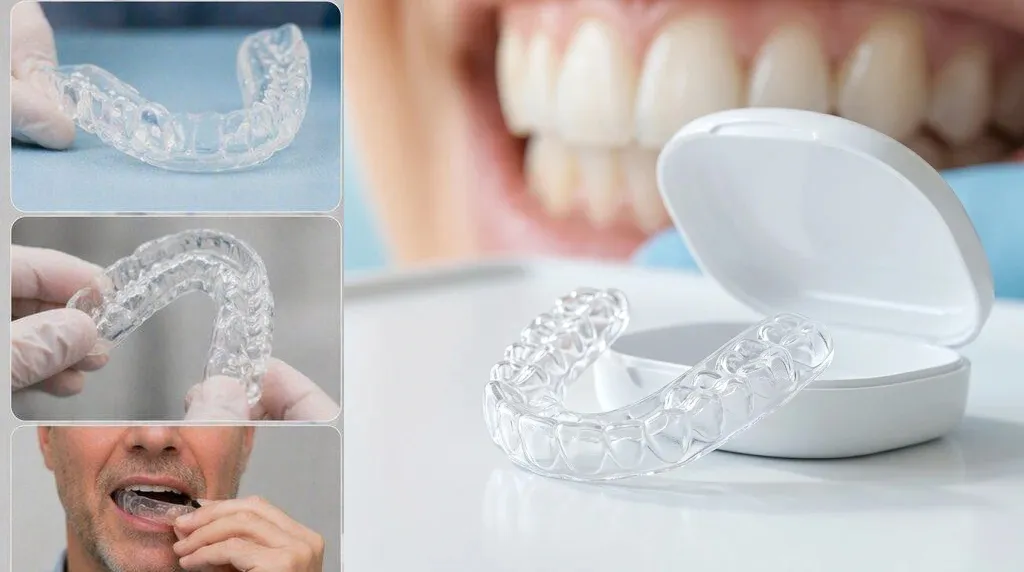
A night guard is a removable dental appliance that fits over your upper or lower teeth while you sleep. It places a smooth barrier between the two arches, so grinding and clenching force lands on the guard instead of on enamel, fillings or crowns. Dentists also call these appliances occlusal splints, bite guards or dental guards.
The “BPA-free” part describes the material. Here it means the manufacturer states that bisphenol A is not used in making the product. It does not mean chemical-free, and it does not mean suitable for every person. A guard can be BPA-free and still fit badly, wear out within weeks, or be wrong for someone with a particular bite problem.
One more distinction matters. A night guard for grinding is a different device from a snoring mouthpiece, which moves the lower jaw forward to keep the airway open. It is also different from an orthodontic aligner, which moves teeth, and from a sports mouthguard, which absorbs impact. These can look alike, but they are not interchangeable, and a standard guard does not treat snoring or obstructive sleep apnoea. If you suspect a breathing problem during sleep, that needs its own assessment. If you wear a clear retainer after orthodontic treatment, ask your dentist before swapping it for a grinding guard, because the two do different jobs.
What Is BPA, and Why Does It Come Up in Dentistry?
Bisphenol A in plain terms
Bisphenol A is an industrial chemical used to make polycarbonate plastics and epoxy resins, according to the American Dental Association’s overview of BPA. It has drawn attention because it can act on hormone-responsive tissue, which is why many people try to limit exposure. For most of us, food and drink packaging is a far larger source than anything in a dentist’s office.
BPA versus BPA-derived ingredients
Dentistry’s connection to BPA is indirect. The ADA explains that several monomers (the small molecules that link together to form a hard resin), including Bis-GMA, Bis-DMA and Bis-EMA, are derived from BPA. Trace amounts of leftover BPA may be present in some of these resins, and small, short-lived rises in BPA have been detected in saliva and urine after treatment with resin-based materials. That research mostly concerns fillings, sealants and orthodontic adhesives, not removable guards. If you want to understand how those fillings harden, HealthPage’s explainer on how a dental curing light sets filling resin covers the process.
The FDI World Dental Federation’s revised 2026 policy statement on BPA takes a balanced position. It says BPA is not intentionally added to dental materials but can occur in trace amounts through certain monomers, and it urges stakeholders to work toward eliminating exposure. It also says any restrictions should follow scientific evidence and be proportionate, since resin-based materials remain essential to oral care.
So there is no reason for alarm, and no reason to assume that every guard is free of the issue. The honest answer is that formulations differ between products and manufacturers.
How a Night Guard for Teeth Grinding Works
Bruxism is the habit of clenching or grinding your teeth, often during sleep and often without you knowing. Over months and years it can wear down the protective surface of your tooth enamel, flatten biting surfaces, and contribute to cracks, sensitivity and chipped crowns or veneers. Some people notice jaw stiffness, sore facial muscles, morning headaches or clicking in the jaw joint.
A well-fitted guard spreads biting forces across its surface and keeps teeth from rubbing directly on one another. That also helps protect crowns, veneers and fillings. The guard is intended to wear instead of your teeth, which is why it eventually needs replacing.
What a guard does not do is switch off the grinding. It protects, and it may ease muscle strain for some people, but it generally does not remove the cause. Stress, sleep disruption, bite problems, certain medications and caffeine or alcohol use are all discussed as contributors, and the evidence for any single cause is mixed. That is a good reason to treat the guard as one part of a plan that includes a dental check-up.
Materials Used in BPA-Free Dental Guards
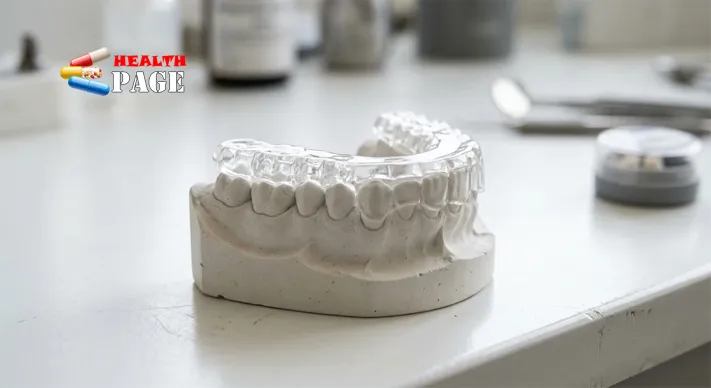
Guards are generally made from one of a few material families, and each trades off comfort against durability.
Thermoplastic materials soften with heat and can be shaped. Boil-and-bite guards and many thin vacuum-formed guards fall in this group. Some are soft and cushioned, others firmer.
Acrylic-based materials are hard and rigid. Dentists often use them for stabilisation splints made in a laboratory from impressions or digital scans.
Dual-layer designs pair a harder outer shell with a softer inner lining, aiming for both strength and comfort.
Softer is not automatically better. A very soft guard can feel pleasant at first but may wear through quickly if you grind heavily, and some people clench harder on a soft surface. A firmer guard may last longer but needs more careful fitting so the edges do not irritate your gums. Choosing hardness is a job for your dentist, who can consider how severely you grind and what restorations you have.
On the question of safe materials for night guards, the key point is that a material’s name does not settle whether it is BPA-free. “Thermoplastic” and “acrylic” describe broad categories, and the exact formulation varies by manufacturer. Older polycarbonate plastics are made from BPA, so a vague “plastic” description is not reassuring on its own. Look for the specific resin and ask for documentation rather than relying on a category label.
BPA-Free Mouth Night Guard: 5 Safety Checks Before You Buy
Check 1: Verify the BPA-free claim
Start with the label, packaging and the manufacturer’s own website, not just the online seller’s listing. Look for a clear statement about BPA, ideally tied to the specific product and not to a general range. If the claim is unclear, email the company and ask whether BPA is intentionally used in this product and whether they can confirm the claim in writing. A manufacturer that makes a real effort to answer is a good sign. Remember what the claim covers: according to the FDI statement above, trace BPA can come from derived monomers, so the wording of the claim and its scope matter.
Check 2: Understand the material composition
Ask what the guard is actually made of. A product-specific answer sounds like “a polycaprolactone-based thermoplastic” or “a thermoplastic elastomer”, not just “medical-grade plastic”. Ask for the safety data sheet or technical specification if one exists. Also ask whether the guard is a single material or layered. If a seller cannot say what the guard is made from, treat that as a reason to look elsewhere.
Check 3: Confirm dental suitability and fit
Safe materials still do little good in a guard that does not fit. A secure guard stays in place without you biting down to hold it, has no sharp or rough edges, does not press on your gums, and lets your teeth meet evenly without rocking. Check that the product is made for nighttime grinding and clenching specifically, and not for sports or snoring. If you have crowns, veneers, implants, loose teeth, braces or jaw-joint pain, have a dentist look at the guard before you commit.
Check 4: Look for safety and quality documentation
Biocompatibility means a material has been evaluated for how it behaves in contact with the body for its intended use. Ask whether the manufacturer can share testing information for the material. In the United States, the FDA lists over-the-counter mouthguards for bruxism under product code OBR, and the FDA’s classification entry describes the category’s purpose and shows its class as unclassified. Many guards reach the US market through a 510(k) premarket notification. FDA clearance, however, is not a blanket approval of every product or an assurance that a guard is BPA-free, so treat it as one useful piece of evidence among several.
Check 5: Plan for cleaning, wear and replacement
A guard is a daily-use item, so look for care instructions that are specific and easy to follow. Be wary of products that give none. Ask how long the manufacturer expects the guard to last under typical use, and what signs of wear to watch for. Cleaning, storage and replacement are covered in more detail below.
A quick list of questions to put to any seller:
- Is BPA intentionally used in this exact product?
- Can you provide the full material composition?
- Has the material been tested for biocompatibility?
- Is the guard designed for nighttime grinding?
- Can you supply written documentation for the BPA-free claim?
Custom vs. Over-the-Counter BPA-Free Night Guards
Both options can work, and neither is automatically safer or BPA-free. The real differences are in fit, adjustability and professional input.
| Feature | Custom-made guard | Over-the-counter guard |
|---|---|---|
| How it’s made | From impressions or digital scans | Pre-formed or self-fitted |
| Fit | Individually adjusted | Depends on product and fitting |
| Comfort | Can be refined by a dentist | Varies widely |
| Cost | Generally higher | Generally lower |
| Dental assessment | Built into the process | Wise if you have symptoms or dental work |
| BPA-free proof | Ask the lab or clinic | Ask the manufacturer |
A custom guard usually follows an examination, a check of your teeth, gums and bite, then impressions or scans, laboratory fabrication and a fitting appointment where the dentist adjusts the contacts. That process is the main benefit, because the person fitting it can spot problems. An over-the-counter guard can be a reasonable short-term or budget choice for mild symptoms, particularly while you wait for an appointment, but the fit is only as good as the product and how you shape it. If you choose a custom guard, ask the clinic which material the laboratory uses, because the BPA question applies there too.
How to Clean and Maintain a BPA-Free Night Guard
Good care keeps a guard hygienic and helps it hold its shape.
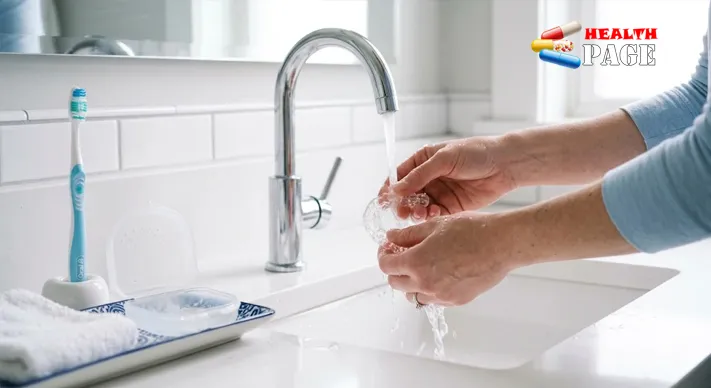
- Rinse it with cool or lukewarm water after taking it out.
- Brush it gently with a soft toothbrush. Avoid abrasive toothpaste, which can scratch the surface and give bacteria somewhere to hide.
- Avoid hot water. Heat can warp thermoplastic guards and spoil the fit.
- Skip harsh chemicals such as strong alcohol-based products unless the manufacturer says they are safe for that material.
- Let it dry before storing it in a clean, ventilated case, and wash the case regularly.
- Keep it away from pets. Dogs find these irresistible.
Inspect it often. Cracks, thin patches, rough edges, a loose fit or a changed shape all mean the guard needs attention. Bring it to dental appointments so your dentist can check both the guard and your teeth.
When Should You Consult a Dentist?
Book an appointment if you notice any of the following, especially if they continue for more than a couple of weeks:
- Persistent jaw pain, or morning jaw stiffness or headaches
- Tooth sensitivity that is new or getting worse
- Chipped, cracked or worn teeth, or damaged fillings and crowns
- Pain when biting down
- Gum soreness or irritation from a guard
- A guard that has become loose, cracked or uncomfortable
A tooth that feels mobile deserves prompt attention, since grinding forces can stress the structures that hold teeth in place. HealthyPost has a practical guide on what to do about a loose tooth, though a dentist should always examine it. If you are pregnant, have jaw-joint conditions, or take medicines that affect sleep or muscle tone, mention that when you ask about a guard.
Frequently Asked Questions
Are BPA-free night guards safe?
They can be, but the label alone does not prove it. Safety depends on the whole material, its testing, a proper fit and appropriate use. Ask for documentation and have a dentist review the fit if you have any dental concerns.
Do all night guards contain BPA?
No. Materials vary widely, and many guards are made from resins that are not BPA-based. Equally, you cannot assume that any particular guard is free of BPA, so ask the maker about the specific product.
Can I wear a BPA-free mouth guard every night?
Night guards are designed for nightly wear, and many dentists recommend exactly that for confirmed bruxism. Follow your dentist’s schedule, and stop and seek advice if you get new jaw, tooth or gum pain.
Are custom guards better than over-the-counter ones?
Custom guards usually offer a more precise fit and can be adjusted, which helps comfort and retention. They are not automatically safer or BPA-free, and a well-chosen over-the-counter guard can be adequate for some people.
How long does a night guard last?
It depends on the material, how hard you grind and how well you care for it. Some last months and others several years. Watch for thinning, cracks or changes in fit, and ask your dentist at check-ups.
Can a night guard stop teeth grinding?
Not reliably. It protects your teeth from the damage, but it does not necessarily stop the habit. Addressing contributing factors such as stress and sleep habits may help, and your dentist can advise on that.
Conclusion
Choosing a BPA-free mouth night guard comes down to evidence you can check: a clear claim from the maker, a named material, testing information, a fit that suits your mouth, and instructions you can follow. Each of those matters more than a single label. None of it needs to be frightening, since the research on BPA in dentistry mainly concerns trace exposure from resin-based treatments, and the sensible response is to ask good questions rather than avoid protection altogether. If you grind your teeth, have crowns or veneers, or wake up with jaw pain, talk to a dentist before buying. For related reading, HealthPage’s dental guides cover everyday oral care.
References
- American Dental Association, “Bisphenol A” (Oral Health Topics): https://www.ada.org/resources/research/science-and-research-institute/oral-health-topics/bisphenol-a
- FDI World Dental Federation, “Bisphenol A in Dentistry” (policy statement, revised 2026): https://fdiworlddental.org/sites/default/files/2026-04/DPS1-Bisphenol-A.pdf
- US Food and Drug Administration, “Mouthguard, Over-the-Counter” (product code OBR, Total Product Life Cycle database): https://www.accessdata.fda.gov/scripts/cdrh/cfdocs/cfTPLC/tplc.cfm?id=OBR

Dr. Suleman Khan is a registered Dental Surgeon dedicated to modern preventative oral health, maxillofacial insights, and advanced clinical treatment approaches. Based at the prestigious
Government Dental College and Hospital in Ahmedabad and registered under the Dental Council of India, he brings extensive hands-on experience in public health dentistry and preventative medicine.
As a core specialist panelist on the HealthPage Medical Review Board,
Dr. Khan provides expert clinical oversight, rigorous fact-checking, and medical verification for our oral health and dental surgery articles. He focuses on simplifying dense orthodontic and hygienic concepts into accessible, safe, and actionable guidance that reflects current healthcare standards.
✉ Professional Inquiries:
[email protected]
