
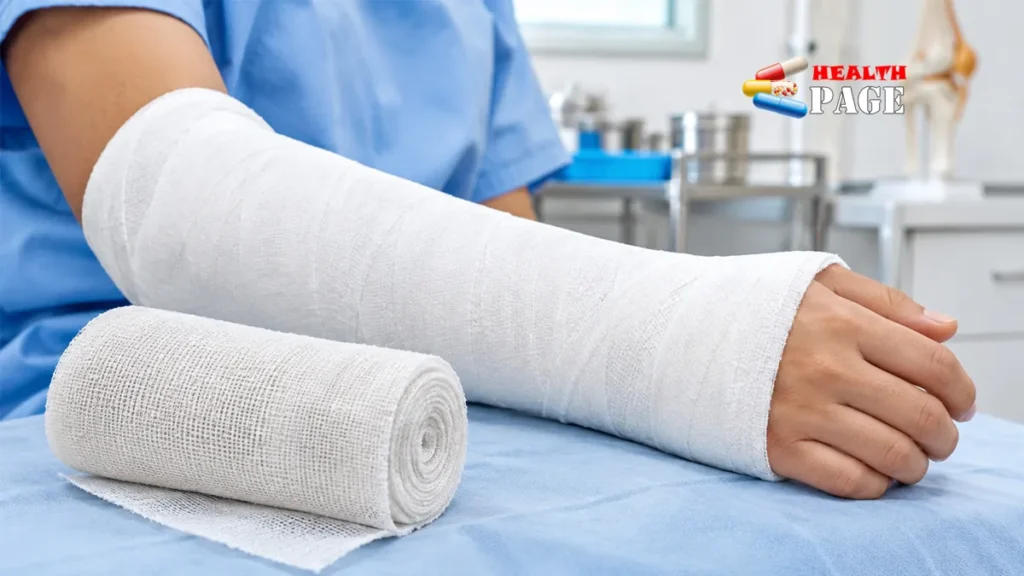
Gypsum Bandage: 7 Important Facts About Uses, Application and Cast Care
Medical Disclaimer: The information provided in the article “Gypsum Bandage: 7 Important Facts About – Uses, Application and Cast Care”, written by Dr. John Ma (Orthopedic Surgery), is intended for general educational and informational purposes only and does not constitute professional medical advice, diagnosis, or treatment. Always seek the advice of your physician or another qualified healthcare provider with any questions you may have regarding a medical condition, injury, or cast care. Never disregard professional medical advice or delay in seeking it because of something you have read in this article.
A gypsum bandage is a traditional orthopedic casting material used to immobilize injured bones and support recovery after certain fractures and surgical procedures. Commonly known as a plaster of Paris bandage, it consists of a gauze strip coated with a special gypsum-based powder that hardens when activated with water. Once applied by a trained healthcare professional, it forms a rigid structure that helps keep the injured body part in a prescribed position.
Although newer synthetic casting materials are available, plaster casts remain useful because they are relatively inexpensive, easy to mold, and capable of providing firm support. Understanding their composition, medical uses, application, drying time, and potential complications can help patients make better-informed decisions about their treatment and recovery.
Here are seven important facts about gypsum bandages, along with practical advice on proper cast care.
1. What Is a Gypsum Bandage?
A gypsum bandage is a medical casting material designed to provide external support and immobilization to an injured body part. It is commonly used in orthopedics, particularly when a fractured bone needs to be held in an appropriate position while healing.
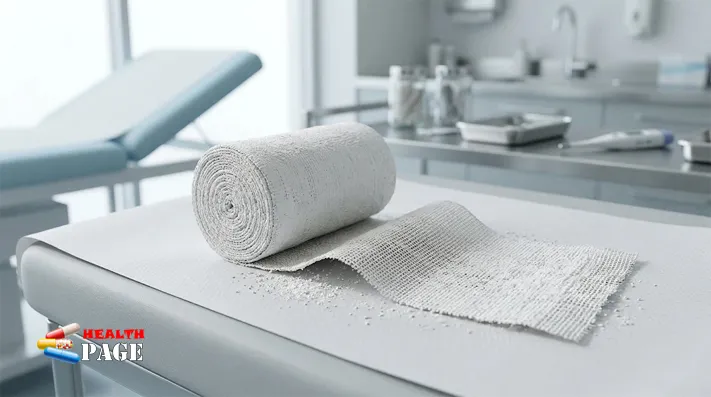
A typical gypsum bandage roll consists of a flexible gauze fabric evenly coated with plaster of Paris powder. When dry, the roll remains flexible enough to be stored and handled. After immersion in water, the coating becomes workable and gradually hardens.
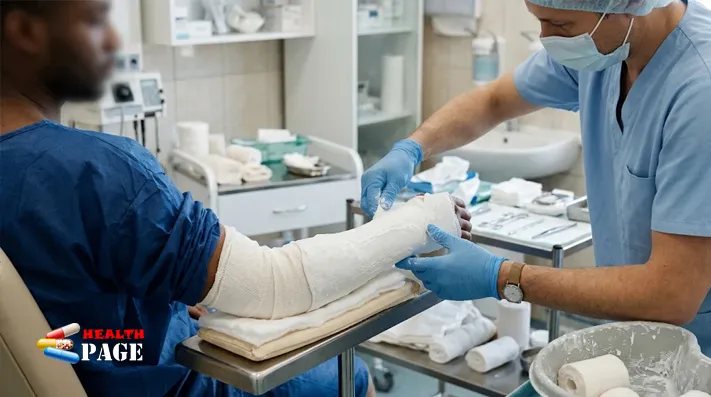
Healthcare professionals use these bandages to create a plaster cast around a properly padded arm, leg, or another suitable anatomical area.
Why is it called a plaster of Paris bandage?
The terms gypsum bandage and plaster of Paris bandage are often used interchangeably in medical settings. However, they describe slightly different aspects of the material:
- Gypsum is the naturally occurring mineral used to produce plaster of Paris.
- Plaster of Paris is the processed powder applied to the gauze.
- A plaster cast is the rigid supporting structure created after the bandage has been activated and shaped.
The finished cast holds the injured area relatively still, helping protect it from unnecessary movement during treatment.
2. What Is a Gypsum Bandage Made Of?
A traditional plaster bandage contains two principal components: a textile supporting material and a mineral-based coating.
Main components
1. Gauze fabric
The gauze provides the flexible foundation of the bandage. It allows the material to be wrapped and shaped around an appropriately padded body part.
2. Plaster of Paris powder
The powder is responsible for the hardening property. It is made primarily from calcium sulfate hemihydrate, which reacts with water to form a solid crystalline structure.
3. Water
Water activates the chemical setting process. It allows the plaster particles to react and gradually transform into a rigid material.
Understanding gypsum and plaster of Paris chemically
Natural gypsum is composed of calcium sulfate dihydrate, with the chemical formula:
\[ CaSO_4\cdot 2H_2O \]
When gypsum is heated under controlled conditions, it loses part of its chemically bound water and becomes calcium sulfate hemihydrate:
\[ CaSO_4\cdot \frac{1}{2}H_2O \]
This processed material is commonly called plaster of Paris.
Suggested in-article image 1
3. How Does a Gypsum Bandage Work?
The hardening of a plaster of Paris bandage occurs through a chemical process known as hydration.
When the dry bandage is immersed in water, calcium sulfate hemihydrate reacts with water and converts back into calcium sulfate dihydrate. During this reaction, small crystals form and interlock with one another, creating a firm structure.
The chemical reaction is:
\[ CaSO_4\cdot \frac{1}{2}H_2O+ \frac{3}{2}H_2O \rightarrow CaSO_4\cdot 2H_2O \]
This reaction explains why a wet plaster bandage gradually becomes hard even before all its moisture has evaporated.
Two stages of the hardening process
It is useful to distinguish between initial setting and complete drying.
Initial setting: The material begins losing its flexibility and develops a firm structure. Depending on the product and preparation conditions, this may occur within approximately 5–12 minutes.
Complete drying: Excess moisture gradually leaves the cast. The material becomes more suitable for handling and reaches its intended working strength.
These are not identical processes. A cast can feel hard on the outside while still containing moisture internally.
The AO Surgery Reference provides professional orthopedic guidance on casting techniques, including plaster working and setting times. Its educational material describes how setting time varies with the casting material and preparation conditions.
4. What Are the Medical Uses of Gypsum Bandages?
The primary purpose of gypsum bandages is fracture immobilization. By restricting unnecessary movement, a plaster cast helps maintain the prescribed position of an injured bone while the body’s natural healing process takes place.
However, not every fracture requires a complete plaster cast. The decision depends on the location, severity, stability, swelling, and other characteristics of the injury.
Common Gypsum Bandage Uses
Forearm fractures: Plaster casts may be used for selected radius and ulna fractures to support the forearm during healing.
Wrist fractures: Certain distal radius and wrist injuries may require immobilization to maintain appropriate alignment.
Hand and finger injuries: Selected fractures involving the hand or fingers may be supported using smaller casts or specialized plaster splints.
Lower-leg fractures: Some tibial and fibular injuries can be managed with an appropriately designed cast when surgery is not necessary.
Ankle injuries: Certain fractures and severe injuries around the ankle require temporary or longer-term immobilization.
Pediatric fractures: Children with selected stable fractures may benefit from plaster casting, depending on their age, injury pattern, and clinical assessment.
Postoperative orthopedic care: A plaster cast or splint may sometimes be used after orthopedic surgery to protect the treated area and limit movement.
The cast does not directly repair the broken bone. Instead, it provides mechanical support while the body forms new bone tissue.
For a better understanding of the healing process, readers can also explore HealthPage’s guide to the five stages of fracture healing.
Suggested in-article image 2
5. How Is a Plaster Cast Applied?
Proper plaster cast application requires knowledge of anatomy, fracture management, skin protection, and circulation assessment. It should only be performed by appropriately trained healthcare professionals.
The process generally involves several clinical stages.
Step 1: Assessment of the injury
The clinician examines the injured area and reviews appropriate imaging, such as X-rays, when required. The assessment helps determine whether a cast, splint, or another treatment is suitable.
Step 2: Positioning the injured body part
The limb is positioned according to the fracture pattern and the treatment plan. Maintaining the appropriate position is important for supporting the injured bone.
Step 3: Protective padding
Soft padding is applied to protect the skin and reduce friction and pressure over sensitive areas, including bony prominences.
Step 4: Preparing the plaster bandage
The gypsum bandage is prepared according to the manufacturer’s instructions. Its working time and setting characteristics depend on the particular product and application conditions.
Step 5: Applying and molding the cast
The clinician applies the activated bandage over the protective padding and shapes it to provide the required support. The cast must not create unnecessary pressure or restrict circulation.
Step 6: Checking circulation and comfort
After application, the healthcare professional checks the fit and assesses circulation, sensation, and movement in the fingers or toes, as appropriate.
Step 7: Providing aftercare instructions
The patient receives instructions about drying, limb elevation, permitted movement, weight-bearing restrictions, warning signs, and follow-up appointments.
A poorly fitted cast can cause pressure injuries or circulation problems. For this reason, professional assessment is essential throughout treatment.
6. How Long Does a Gypsum Bandage Take to Dry?
The drying time of a gypsum bandage is an important consideration because a newly applied cast may feel firm before it has reached its full strength.
There are two different time periods to understand:
| Stage | Approximate time | What happens |
|---|---|---|
| Initial setting | 5–12 minutes | The plaster begins to harden |
| Further hardening | Several hours | The cast gradually becomes firmer |
| Complete drying | Around 24–48 hours, sometimes longer | Excess moisture leaves the cast |
These are general estimates rather than guaranteed times. The actual duration depends on several factors:
- Cast thickness: Thicker casts generally require more time to dry.
- Environmental humidity: Humid conditions can slow moisture evaporation.
- Product formulation: Different manufacturers produce bandages with different setting characteristics.
- Application conditions: The amount of water used and the overall construction can influence the process.
Precautions while the cast is drying
Patients should follow these precautions:
- Allow the cast to dry naturally.
- Keep it uncovered so moisture can escape.
- Avoid resting a newly applied plaster cast on hard surfaces, which can create dents.
- Do not use a heater, radiator, or hairdryer to speed up drying.
- Avoid putting pressure on the cast before the healthcare professional confirms it is sufficiently firm.
Can you walk on a newly applied plaster leg cast?
Not necessarily. A cast may feel hard but still be vulnerable to damage. Walking is permitted only when the treating clinician specifically authorizes weight-bearing and confirms that the cast is suitable for it. Some plaster walking casts need approximately 48–72 hours before they can safely bear weight, depending on their construction.
7. How Should You Care for a Gypsum Cast?
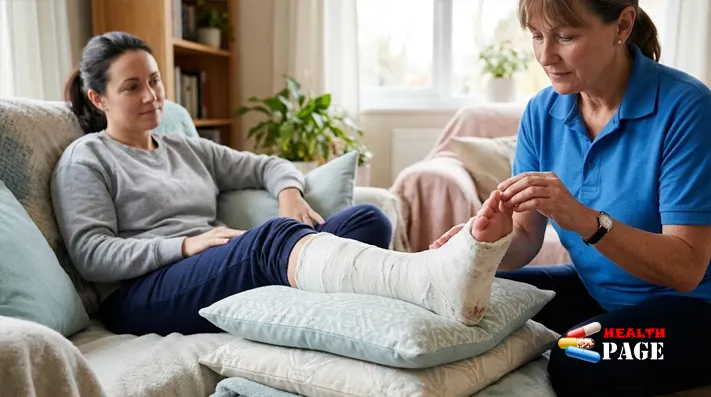
Proper plaster cast care helps protect the injured area, reduce discomfort, and prevent avoidable complications.
A cast is designed to remain in place for a specific period. However, its effectiveness also depends on how well the patient follows the recommended precautions.
Keep the cast dry
Traditional plaster casts are not waterproof. Water can soften the plaster and damage the padding underneath.
During bathing or showering, use an appropriate waterproof cast protector. Avoid submerging the cast in water, even when it is covered.
If the cast becomes wet internally, contact your healthcare provider for advice rather than attempting to repair or dry it independently.
Elevate the injured limb
Swelling is common after fractures and can increase during the first few days following cast application.
Keeping the injured arm or leg elevated, particularly during the first 24–72 hours, may help reduce swelling and discomfort.
For an arm cast, support the hand above the level of the elbow when resting. For a leg cast, follow the clinician’s advice about comfortable elevation.
Move unaffected fingers and toes
If your fingers or toes are not immobilized, gently moving them as instructed can help maintain mobility and reduce stiffness.
Movement of other unaffected joints may also be encouraged, depending on the injury and treatment plan.
Do not force movement or exercise a joint if your clinician has restricted it.
Protect the cast from pressure and damage
A plaster cast can crack, become soft, or develop dents if handled improperly.
Avoid:
- Knocking the cast against hard objects.
- Standing or walking on it without medical permission.
- Pulling out its internal padding.
- Cutting or modifying its edges yourself.
- Placing heavy objects on it.
Never insert objects inside the cast
Itching beneath a cast can be uncomfortable, particularly when the skin becomes warm or sweaty.
However, inserting pens, sticks, coat hangers, or other objects can scratch the skin and cause wounds or infection.
If itching becomes persistent or severe, contact your healthcare provider for appropriate advice.
Attend follow-up appointments
Follow-up visits allow the healthcare professional to assess the cast, monitor swelling, review fracture alignment, and evaluate healing.
Depending on the injury, repeat X-rays may be necessary to determine whether the bone remains in the correct position.
The American Academy of Orthopaedic Surgeons (AAOS) cast and splint care guidance provides additional patient advice about swelling, protecting casts, and recognizing complications.
Suggested in-article image 3
Gypsum Bandage vs. Fiberglass Cast: What Is the Difference?
Both traditional plaster and fiberglass are used to manufacture orthopedic casts. They serve a similar purpose, but their physical properties and practical characteristics differ.
| Feature | Gypsum / plaster cast | Fiberglass cast |
|---|---|---|
| Main material | Plaster of Paris | Synthetic fiberglass |
| Weight | Relatively heavy | Generally lighter |
| Molding | Highly moldable | Requires appropriate molding |
| Setting | Generally slower | Generally faster |
| Drying | Often 24–48 hours or longer | Usually much faster |
| Water resistance | Traditional plaster is not waterproof | Some systems offer water-resistant options |
| Cost | Generally less expensive | Often more expensive |
| X-ray visibility | Can interfere more with imaging | Generally more radiolucent |
Which cast is better?
Neither material is automatically the better choice for every patient.
Plaster is often preferred when detailed molding is important, while fiberglass may be more convenient because of its lighter weight and durability.
However, the choice depends on the fracture, swelling, required support, availability, patient circumstances, and the treating clinician’s judgment.
The AAOS explains these differences in its patient guidance on casts and splints.
What Are the Possible Risks and Complications?
Although gypsum bandages are widely used in orthopedic treatment, an incorrectly fitted cast or a change in swelling beneath it can cause problems.
The term Gypsum Bandage side effect is sometimes used to describe these complications. Strictly speaking, most problems are related to cast pressure, skin conditions, or impaired circulation rather than a chemical reaction to the plaster itself.
Potential complications include:
1. Skin irritation: Friction, moisture, and pressure can irritate the skin beneath the cast.
2. Pressure sores: Excessive pressure over bony areas can damage the skin and underlying tissues.
3. Nerve compression: A tight cast may place pressure on nearby nerves, causing numbness, tingling, or altered sensation.
4. Circulation problems: Swelling and excessive cast pressure may restrict blood flow to the affected limb.
5. Infection: Skin wounds or surgical sites beneath a cast can occasionally become infected.
6. Cast damage: Water, excessive pressure, or physical impact can weaken or crack the plaster.
7. Compartment syndrome: In rare but serious situations, increasing pressure within the muscles and surrounding tissues can threaten circulation and tissue function. This is a medical emergency.
When Should You Contact a Doctor?
A cast should not cause progressively worsening pain or loss of sensation. Certain symptoms require prompt medical attention rather than waiting for the next scheduled appointment.
| Warning sign | Possible concern |
|---|---|
| Increasing or severe pain | Excessive pressure or another complication |
| Numbness or tingling | Possible nerve compression |
| Blue, pale, or unusually cold fingers or toes | Impaired circulation |
| Increasing swelling | Pressure beneath the cast |
| Burning or blister-like pain | Skin or pressure injury |
| Inability to move fingers or toes | Possible nerve or circulation problem |
| Unpleasant smell or discharge | Possible skin injury or infection |
Contact your healthcare provider immediately if these symptoms develop. Severe or rapidly worsening pain, loss of movement, or signs of impaired circulation require emergency assessment.
Do not attempt to loosen, cut, or remove the cast yourself. If compartment syndrome is suspected, emergency evaluation is essential because delayed treatment can result in permanent tissue damage.
Frequently Asked Questions
1. What is a gypsum bandage used for?
A gypsum bandage is primarily used to immobilize fractured bones and support orthopedic treatment. It can be applied to selected wrist, forearm, hand, ankle, and lower-leg injuries. Healthcare professionals may also use plaster casts after certain orthopedic operations to protect the treated area and restrict unwanted movement.
2. Is a gypsum bandage the same as a plaster of Paris bandage?
Yes, the terms are commonly used to describe traditional plaster-impregnated medical bandages. However, chemically, gypsum is calcium sulfate dihydrate, while plaster of Paris is calcium sulfate hemihydrate. The latter is the active ingredient responsible for the hardening process when water is added.
3. How long does a gypsum bandage take to harden?
A traditional plaster of Paris bandage generally begins setting within a few minutes. Initial hardening often takes approximately 5–12 minutes, depending on the product and preparation conditions. However, initial setting does not mean the cast is completely dry or ready to bear weight.
4. How long does a plaster of Paris cast take to dry completely?
Most traditional plaster casts require approximately 24–48 hours to dry, although thicker casts and environmental conditions can extend this period. A cast may feel hard on the outside before it is completely dry. Allow it to dry naturally and follow your healthcare professional’s instructions.
5. Can a gypsum plaster cast get wet?
No. Traditional gypsum plaster casts should be kept dry because moisture can weaken the plaster and damage the internal padding. Protect the cast while bathing or showering. If water penetrates the cast, contact your healthcare provider for advice about its condition and whether replacement is necessary.
6. What is the difference between a plaster cast and a fiberglass cast?
Plaster casts are generally heavier, less expensive, and easier to mold precisely. Fiberglass casts are usually lighter, stronger, and faster to set. Both can provide effective fracture support. The most appropriate material depends on the injury and the clinician’s assessment.
Conclusion
A gypsum bandage remains an established and useful material in orthopedic fracture management. Its ability to transform from a flexible, plaster-coated gauze roll into a rigid supporting structure makes it suitable for immobilizing selected fractures and protecting injured limbs.
Its benefits include affordability, excellent moldability, and reliable mechanical support. However, traditional plaster casts are relatively heavy, require adequate drying time, and can cause complications if they are poorly fitted or improperly maintained.
Understanding the application process, drying requirements, and warning signs helps patients participate more safely in their recovery. Most importantly, a gypsum bandage should always be applied, monitored, and removed under appropriate medical supervision.
References
The following authoritative resources support the medical and technical information in this article:
- AO Foundation – AO Surgery Reference: Orthopedic casting techniques and plaster setting times.
- American Academy of Orthopaedic Surgeons (AAOS): Care of Casts and Splints.
- Healthdirect Australia: Cast Care – Patient Guidance.

Dr. John Ma is a dedicated Orthopaedic Surgeon with extensive experience in musculoskeletal health and surgical care. He currently serves at Royal Brisbane and Women’s Hospital, Australia, where he provides expert treatment for complex orthopaedic conditions. Passionate about advancing patient outcomes, Dr. Ma combines evidence‑based practice with compassionate care, helping individuals restore mobility and improve quality of life. Through his contributions to healthcare, he continues to support patients in achieving long‑term wellness and recovery.