
Bladder Diverticulum: Symptoms, Causes, Diagnosis and Treatment
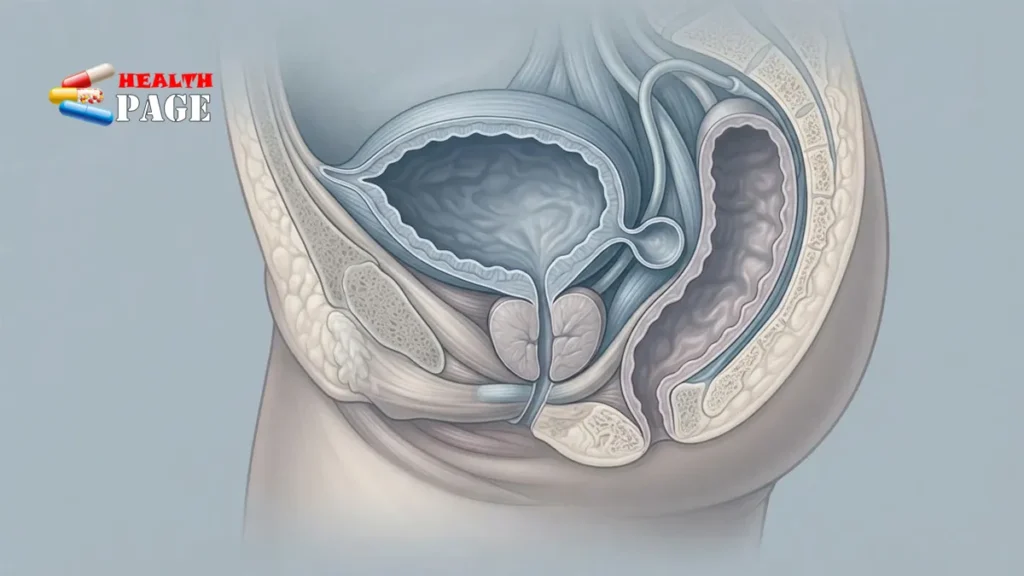
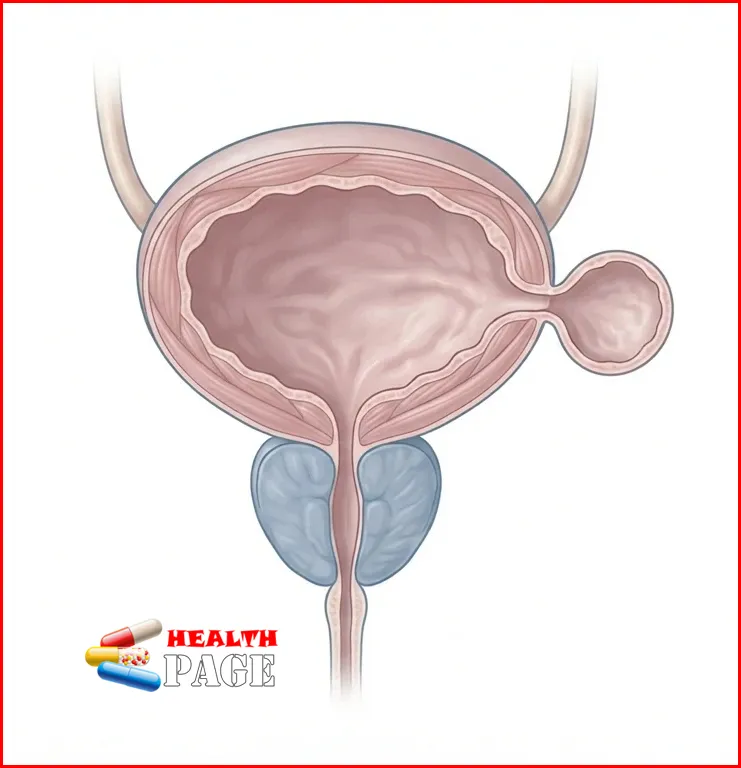
A bladder diverticulum is a small pouch that bulges outward from the bladder wall and stays connected to the bladder through a narrow neck. Many people have no symptoms at all and only learn about it when a scan or cystoscopy done for something else, often repeated urinary infections or blood in the urine, shows the pouch. Whether it needs treatment depends mainly on whether it causes problems such as infections, stones or poor bladder emptying, rather than on its size alone.
This guide explains how a bladder diverticulum forms, what symptoms to watch for, how doctors confirm it, and how monitoring and surgery are used.
This article is for general information and does not replace advice from a doctor. If you have urinary symptoms, especially blood in your urine, please see a doctor.
What Is a Bladder Diverticulum?
The bladder wall contains a thick layer of muscle, called the detrusor, that squeezes urine out. In a bladder diverticulum, the inner lining (mucosa) pushes through a weak spot between muscle fibres, forming a thin-walled sac. Because the sac has little or no muscle of its own, it does not squeeze effectively. Urine that flows into it tends to drain slowly or incompletely.
That trapped urine explains most of the problems linked to the condition. Stagnant urine is a good place for bacteria to grow, and over time it can allow stones to form. The sac can also be large. The most extreme case I found in your source text, a diverticulum of more than 20 cm across, is a rare report and not typical.
Most bladder diverticula are found in adults, with roughly nine in ten cases occurring in adults. They are much more common in men than in women, which fits with the main cause of the acquired type: prostate-related blockage.
Types and Causes of Bladder Diverticulum
Doctors usually divide bladder diverticula into two groups, because the cause shapes both the likely number of pouches and the treatment plan.
| Congenital (present from birth) | Acquired (develops later) | |
|---|---|---|
| Typical number | Usually a single pouch | Often several |
| Usual cause | Weakness in the bladder muscle | Raised pressure inside the bladder |
| Who is affected | Mostly children, mainly boys | Mostly men over about 60 |
| Wall structure | Often includes some muscle fibres | Usually little or no muscle |
These are general patterns, and individual cases vary.
Congenital diverticula
A congenital diverticulum develops when part of the bladder muscle is weak or underdeveloped, often near the point where the ureter joins the bladder. Some are linked to inherited connective tissue conditions, such as Ehlers-Danlos syndrome and Menkes disease, and they can occur in other syndromes. In these cases there are often multiple pouches. In many children, however, no cause is found.
Acquired diverticula
In adults, the usual story is long-term difficulty emptying the bladder. When urine cannot leave freely, the bladder must push harder. Over time the muscle thickens, then weakens, and the lining starts to bulge through the weakest areas. Common reasons for this extra pressure include:
- an enlarged prostate (benign prostatic hyperplasia), which is the most common cause in older men
- a narrowing of the urethra (a stricture)
- a blockage at the bladder neck
- a neurogenic bladder, meaning the nerves controlling the bladder do not work properly, for example after a spinal injury or stroke
- posterior urethral valves in boys, which are membranes that block the urethra at birth
Because treating the blockage is usually the first step, finding a diverticulum often leads doctors to look for the underlying cause as well.
Symptoms of Bladder Diverticulum
Many diverticula cause no symptoms, which is why they are so often found by accident. When symptoms do appear, they generally come from urine sitting in the pouch rather than from the pouch itself. They can include:
- Repeated urinary tract infections, with burning when passing urine, going often in small amounts, and lower abdominal or back pain
- A feeling that the bladder has not emptied, or needing to pass urine a second time soon afterwards (called double voiding)
- A sense of fullness in the lower abdomen
- Blood in the urine, which is less common
- In children, bedwetting or pain on one side of the lower abdomen has been described, but these are not specific to this condition
An important point is that these symptoms overlap with many other urinary problems, including prostate enlargement. Symptoms alone cannot confirm a diverticulum, and imaging is needed.
When to see a doctor
Please see a doctor if you notice blood in your urine, even once, or if you have repeated infections. A high temperature with back or side pain suggests a possible kidney infection and needs prompt medical attention. The NHS explains why blood in the urine should always be checked, because it can come from the bladder, kidneys or urethra and has several causes, from infection to cancer.
Possible Complications
Most people with a small, quiet diverticulum do well. The concern is what long-term urine stagnation can cause:
- Recurrent or persistent urine infections, which can be hard to clear because the pouch keeps bacteria in place
- Bladder stones forming inside the pouch
- Kidney problems in some people, particularly if the diverticulum sits near a ureter opening and affects urine flow from the kidney, or if infection spreads upward
- Cancer inside the diverticulum, which is uncommon but important
On that last point, tumours arising in a diverticulum make up roughly 2 to 10 percent of bladder tumours, according to the StatPearls clinical reference. The wall of the pouch has little muscle, so a cancer there may reach the outside of the bladder earlier than one in a normal bladder wall. This is the main reason doctors recommend ongoing follow-up even when there are no symptoms. Painless blood in the urine is the warning sign most often linked to such tumours, and what early bladder cancer can look like is worth reading about if you are concerned.
I could not verify other complications mentioned in the original text, such as rupture leading to peritonitis, so I have not listed them here.
How Bladder Diverticulum Is Diagnosed
A doctor will usually start with your history, a physical examination, and in men a rectal examination to assess the prostate. A PSA blood test may be considered. Urine tests, including a culture to identify any bacteria, are common.
Imaging and bladder examination then confirm the diagnosis:
- Ultrasound is often the first test. The diverticulum appears as a rounded, fluid-filled pouch next to the bladder. Doppler ultrasound can show that it is connected to the bladder, which helps tell it apart from other cysts.
- Voiding cystourethrography (VCUG) uses contrast dye and X-rays taken while you pass urine. It shows the pouch’s location, size and shape, and is considered a good test for this purpose.
- CT or MRI show the surrounding anatomy in more detail, particularly when stones, a tumour or another pelvic problem is suspected.
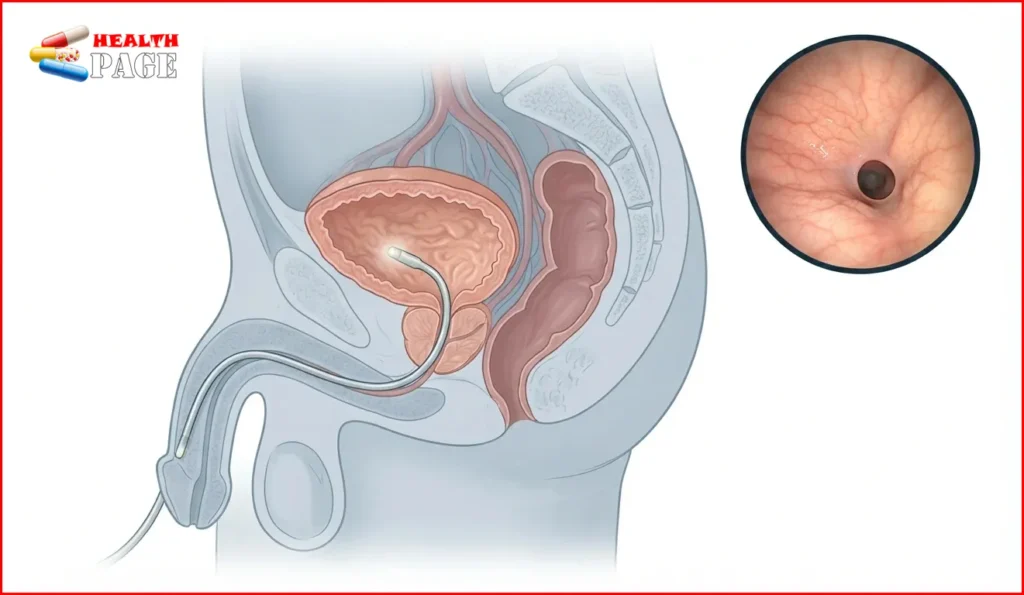
- Cystoscopy uses a thin camera passed through the urethra. The doctor can see the opening of the pouch, check the inside for stones or abnormal tissue, and take a biopsy if anything looks suspicious.
- Urodynamic tests measure bladder pressure and flow, and are useful when a blockage or nerve problem is suspected.
During pregnancy, kidney and urinary tract differences can sometimes be noticed on routine ultrasound scans, although a diverticulum itself is usually identified after birth.
A diverticulum can be mistaken for other pelvic cysts or for a ureterocele, which is a swelling at the end of the ureter inside the bladder. A key difference is that a diverticulum is joined to the bladder through its neck, and that link is what imaging looks for.
Treatment of Bladder Diverticulum
Treatment depends on whether the diverticulum causes problems, what is behind it, and your general health.
Monitoring
If the diverticulum was found by chance and you have no symptoms or complications, regular follow-up with a urologist is often enough. Doctors check symptoms, urine tests and sometimes repeat cystoscopy. The StatPearls reference notes that the best interval for these checks is not well defined, so the schedule is set individually. Anyone being monitored should know the warning signs: blood in the urine, painful urination, and new or worsening urinary symptoms.
Treating the underlying blockage
When the pouch is the result of an obstruction, relieving that obstruction is usually the first step. In a man with an enlarged prostate, this could mean medication or a prostate procedure. A catheter may be used for a time to keep the bladder drained. Clean intermittent catheterisation can also help people who cannot have surgery or who still have symptoms after the blockage is relieved.
Surgery to remove the diverticulum
Surgical removal, called diverticulectomy, is generally considered when the diverticulum causes infections, stones, poor emptying or when there is cancer or suspicion of cancer. There are several approaches:
- Open surgery can be done by opening the bladder (transvesical), working from outside the bladder (extravesical), or combining both approaches. A combined approach may be needed for large pouches or when the pouch is stuck to surrounding tissue.
- Laparoscopic surgery uses small incisions and a camera. Compared with open surgery it has been linked to a shorter hospital stay and less need for painkillers, although it can take longer and is technically demanding.
- Robot-assisted surgery works similarly, with 3D vision and fine instrument control that can help near the ureter. Early published series reported an average hospital stay of around 2.4 days.
Because many diverticula sit close to the ureter, surgeons take care not to injure it, and a thin tube (stent) may be placed in the ureter for protection. Ureteral injury is the most serious surgical risk, though it is uncommon.
Endoscopic treatment
For people who are frail or not fit for prolonged surgery, a camera-guided approach through the urethra may be used. The surgeon can widen or resect the neck of the pouch so that it drains better, or treat its lining. It is less invasive than open surgery, though it may not remove the pouch itself, so it suits particular situations rather than everyone.
Children
The reasons for surgery are similar to those in adults. In children with several diverticula linked to a connective tissue condition, however, doctors often prefer observation and medical management, since healing after surgery can be poorer and the pouches may come back.
Risks and Recovery After Surgery
As with any abdominal or pelvic operation, risks include infection, bleeding, a urine leak, and injury to nearby structures such as the ureter or bowel. Your surgical team will explain these in relation to your own health.
After surgery, a catheter is usually left in for a period so the bladder can heal, and antibiotics may be given. Surgeons commonly encourage gentle walking soon after the operation and may advise drinking enough fluids. Heavy lifting and strenuous activity are usually restricted for a number of weeks, and the exact timing varies, so follow the instructions you are given. Follow-up visits, often with an ultrasound to check how well the bladder empties, are arranged by your urologist.
The original article gave a fixed schedule of visits every three months and four ultrasounds a year. I could not confirm this in the sources I reviewed, so I have left it out.
Outlook and Prevention
If the diverticulum is small and quiet, many people live with it for years without trouble. When it is treated and any underlying blockage is corrected, symptoms often improve substantially. Treatment can be effective, but it is not a guarantee. A new pouch can form if the cause is not resolved, and checks may still be advised afterwards.
A congenital diverticulum cannot be prevented. For the acquired type, the practical step is to avoid the long-term pressure that causes it: do not ignore difficulty passing urine, a weak stream or repeated infections, and see a doctor early so that a blockage can be treated.
Frequently Asked Questions
Is a bladder diverticulum dangerous?
Often it is not. Many small diverticula cause no trouble. The risks come from urine stagnating in the pouch, which can lead to infections, stones and, rarely, cancer. That is why a urologist usually advises follow-up.
Can a bladder diverticulum go away on its own?
A diverticulum does not usually disappear by itself. In some people, correcting the cause, such as a blockage, helps symptoms improve even if the pouch is still there. Removing the pouch itself generally needs a procedure.
Does a bladder diverticulum always need surgery?
No. Surgery is generally reserved for pouches that cause infections, stones, poor emptying, or concern for a tumour. People with no symptoms are often monitored instead.
Can a bladder diverticulum turn into cancer?
A diverticulum is not cancer, but the stagnant urine and chronic irritation inside it are linked to a higher chance of tumours developing there. This is uncommon, yet important, which is why blood in the urine should always be investigated.
Can children have a bladder diverticulum?
Yes, although about nine in ten cases are in adults. In children it is often congenital, and it may be found while investigating urinary infections or reflux of urine toward the kidneys.
What is a Hutch diverticulum?
It is a type of diverticulum that forms close to where a ureter enters the bladder. It is described as paraureteral, meaning beside the ureter. The original text called it “paraurethral,” which refers to a different structure.
Key Takeaways
A bladder diverticulum is a pouch in the bladder wall that often causes no symptoms but can trap urine, raising the chance of infection, stones and, occasionally, tumours. The most useful steps are to find out why it formed, to treat any blockage, and to keep up with follow-up. If you have blood in your urine, repeated urinary infections or trouble emptying your bladder, speak to a doctor rather than waiting, as these symptoms deserve a proper check whatever the cause.
References
- StatPearls Publishing. Bladder Diverticulum. StatPearls, NCBI Bookshelf (also indexed on PubMed).
- NHS. Blood in urine. NHS website.

Medical Reviewer: Dr. He Feng, MD
Specialist in Urology & Andrology | Clinical Contributor
Dr. He Feng is an expert urologist and andrologist practicing at
Beijing Jishuitan Hospital, widely recognized as the
Fourth Medical College of Peking University in China. With extensive clinical experience
in advanced genitourinary health, Dr. Feng specializes in the diagnostic assessment, management,
and treatment of complex urological conditions, obstructive urinary disorders, and male reproductive health.
His medical contributions on HealthPage focus on translating complex urological pathologies—such
as prostate health, urolithiasis (kidney stones), and renal system care—into highly accessible,
evidence-based guidance for patients globally.
Clinical Affiliation & Triage:
Beijing Jishuitan Hospital (The Fourth Medical College of Peking University)
Professional Inquiries:
[email protected]