
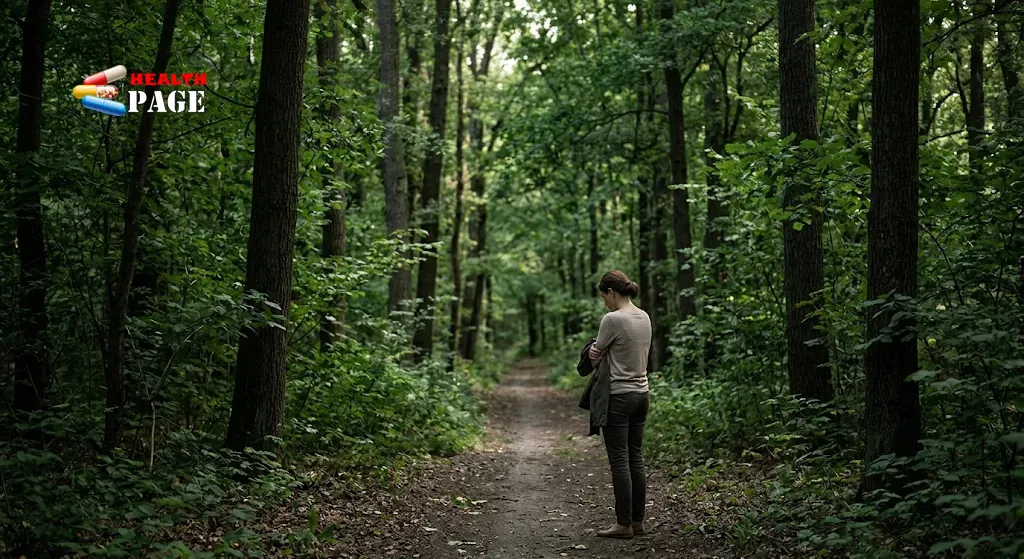
Hylophobia: Meaning, 7 Symptoms, Causes, and Treatment of Fear of Forests
Written by: Dr. Sana Lodhi (General Medicine)
Medical Disclaimer: The content provided in the article “Hylophobia: Meaning, 7 Symptoms, Causes, and Treatment of Fear of Forests” is for informational and educational purposes only. It is not intended to be a substitute for professional medical advice, diagnosis, or treatment. Always seek the advice of a qualified physician or licensed mental health provider with any questions you may have regarding a medical or psychological condition. Never disregard professional medical advice or delay in seeking it because of something you have read in this article.
Most people feel a little uneasy on a dark woodland path at dusk. For someone with hylophobia, that unease becomes something much larger: a surge of dread at the edge of a forest, a pounding heart at the sight of tall trees on a screen, or a habit of turning down every hike, camping trip and countryside picnic. This guide explains the meaning of hylophobia, how its symptoms show up, what may cause it, how clinicians assess it and which treatments have the strongest evidence.
What Is Hylophobia?
What is hylophobia? It is the informal name for an intense, persistent fear of forests and wooded places, often including the fear of getting lost among trees. The word comes from the Greek hyle, which means wood or forest, combined with phobos, meaning fear. (Hyle also appears in philosophy with a different meaning, so context matters when you see the term.)
The hylophobia meaning has a clinical limit worth knowing. It is a descriptive label, not a separate diagnosis in the DSM-5-TR, the manual psychiatrists use to classify mental health conditions. A clinician would usually think of this kind of fear as a specific phobia, with the natural environment as the trigger, alongside fears of storms, heights or deep water.
Specific phobias are common. The MSD Manual’s clinical summary estimates they affect about 8% of women and 3% of men in any 12-month period, so a fear of forests sits within a well-recognised family of conditions.
Ordinary caution and phobia are not the same thing. Being wary of unmarked terrain, wild animals or a forest after dark is sensible. The fear becomes a phobia when it is out of proportion to the real danger, shows up almost every time the trigger appears and starts shaping what you do. A person who takes a well-lit, well-signposted park trail and still feels panicky is in a different position from someone who avoids a remote woodland at night.
What Does Fear of Forests Feel Like?
Fear of forests is not one single experience, and it varies from person to person. Some people feel it only when they are physically among trees. Others feel it at a distance, when a friend suggests a woodland walk or a film shows a dark wood.
Common experiences include a sense of being unsafe in dense trees, a strong worry about losing the path and not being able to get out, and alarm at unfamiliar noises such as snapping branches or animal calls. Some people become uncomfortable in dark or isolated woodland in particular, while for others forest photographs or videos are enough to set off anxiety.
Forests make good raw material for an anxious mind. Visibility is limited, landmarks are few, phone signal can be poor, and sounds come from directions you cannot see. When information is incomplete, the brain tends to fill the gaps, and an ordinary rustle can be read as a threat. People who live mostly in cities, and rarely practise finding their way in natural surroundings, may feel this more strongly.
7 Common Symptoms of Hylophobia
Symptoms of hylophobia are those of any specific phobia, triggered by woodland. The NHS lists severe anxiety, dizziness, a noticeable heartbeat, chest tightness, nausea, trembling and a strong fear of fainting or losing control as typical features of a phobic reaction. The seven groups below organise those reactions into a form that is easier to recognise. They describe a possible phobic response. They are not a checklist that diagnoses anything on its own.
1. Intense fear and anxiety. The core feature is overwhelming fear when approaching, entering or even thinking about a forest, usually far stronger than the situation warrants. Many people also know the fear is excessive and still cannot talk themselves out of it.
2. Rapid heartbeat. The heart may race or pound the moment a trigger appears. Some people feel it in the throat or neck, and palpitations felt in the throat or chest are a common feature of anxiety, even though they can feel alarming.
3. Sweating and trembling. Adrenaline prepares the body to flee or fight, so sweating, shaky hands and weak legs are common.
4. Breathlessness or chest tightness. Breathing becomes quick and shallow, and the chest may feel tight. Anxiety is a recognised cause of this, and stress can cause real chest pain, although new or severe chest pain should never be assumed to be harmless without a medical opinion.
5. Dizziness and nausea. Lightheadedness, an unsettled stomach and sometimes a pale or flushed face can appear in the middle of an episode.
6. Panic-like reactions. In some cases the fear escalates into a panic attack: a feeling of being trapped, of losing control or of something terrible about to happen. If you are unsure whether the sensations come from anxiety or the heart, a guide to the difference between anxiety and heart palpitations can help you understand the overlap, though it cannot replace an assessment.
7. Avoidance. This may be the most important symptom because it is the one that shapes daily life. People skip hikes, school trips, family outings, certain driving routes and even films or images with forests in them.
In severe cases, some clinics report fainting. This is uncommon and more often tied to blood-injection-injury phobias, so it should not be treated as a typical feature.
What Causes Hylophobia?
Phobias rarely have a single, clear cause, and plenty of people with a fear of forests cannot point to an origin at all. The NHS notes that many phobias can be linked to a frightening event or stressful situation, and that they can also be learned from others, but the picture is often mixed. The factors below are possible contributors rather than rules.
- A frightening experience. Getting lost in woods, being separated from adults as a child or witnessing something upsetting in a forest can leave a lasting association between trees and danger.
- Early childhood experiences. Scary moments during early outdoor activities can shape how a place feels for years afterwards.
- Learned fear. Children who watch a parent react with fear to woods, wild animals or insects can absorb that reaction without any direct experience of their own.
- Fear of the unknown. Darkness, poor visibility and unfamiliar sounds, plus the worry of being far from help, can feed fear in people who are not used to open countryside.
- Media and folklore. Horror films, ghost stories and fairy tales have long placed forests at the centre of threat. This is unlikely to cause a phobia alone, but it can colour how a place is perceived.
- A general vulnerability to anxiety. The NIMH lists a history of anxiety or other mental health conditions in biological relatives and nervousness in new situations during childhood among the factors linked to phobias. That points to risk, not inheritance of a specific fear.
Not everyone with a fear of forests has experienced trauma, and having one frightening experience does not mean a phobia will follow. Often it is a mixture of temperament, experience and what a person learns to do next, because avoidance tends to keep the fear alive.
Is Hylophobia Different From Dendrophobia?
Yes, and the difference is the specific trigger. The three terms below are often mixed up, but they describe different fears that can nonetheless overlap in one person.
| Term | What it describes | Example |
|---|---|---|
| Hylophobia | Fear of forests or wooded areas | Panic on a woodland trail, even in daylight |
| Dendrophobia | Fear of trees themselves | Distress around a single large tree in a garden |
| Nyctophobia | Fear of darkness | Anxiety at night anywhere, indoors or out |
A person with dendrophobia may be fine in a forest clearing but uneasy beneath one large tree. Someone with nyctophobia might be quite comfortable in a sunny forest and frightened of a dark bedroom. Someone with hylophobia may fear woods in daylight and darkness alike. Knowing which trigger is at the centre helps a clinician choose where to begin treatment.
How Is Hylophobia Diagnosed?
There is no blood test or scan for a phobia. Diagnosis rests on a conversation with a qualified mental health professional, such as a psychologist, a psychiatrist or another suitably trained clinician. They will usually ask about your triggers, how the fear started, how often it occurs and how intense it feels. They will want to know what you avoid, how much it affects work, school, relationships and leisure, and whether another anxiety condition could be involved.
Structured questionnaires are sometimes used alongside the interview. The clinician will then consider whether your experience meets the DSM-5-TR criteria for a specific phobia. According to the MSD Manual, these include marked fear that lasts six months or longer, that nearly always appears with the trigger, is out of proportion to the actual danger and leads to avoidance or significant distress or impairment. The same source notes that a diagnosis should not be made if another condition explains the picture better.
The assessment matters because fear of woods can sit alongside other problems, including panic disorder, generalised anxiety, post-traumatic stress after a specific event, or fears focused on animals, insects or being alone. Each might call for a slightly different emphasis in treatment.
Treatment Options for Hylophobia
No studies have tested treatments specifically for hylophobia. The treatment approach comes from research on specific phobias in general, which has a clear message: psychological therapy is the foundation. The National Institute of Mental Health describes psychotherapy as the primary treatment for phobias.
Cognitive behavioural therapy (CBT). CBT helps people notice the thoughts that feed the fear (“I will be lost forever”, “something is watching me”), test them against reality and build different responses. The NIMH calls it a well-established and effective treatment for anxiety disorders such as phobias.
Exposure therapy. This is a form of CBT and the best-studied approach for phobias. The idea is to face the feared situation gradually, in a planned way and with professional guidance, so the brain learns that the feared outcome does not happen. The MSD Manual reports that exposure therapy is more effective than no treatment in approximately 85% of patients with specific phobias, and that it is often the only therapy needed.
For a fear of forests, a therapist might build a ladder like this:
- Thinking about or describing a forest.
- Looking at forest photographs.
- Watching woodland videos.
- Visiting a calm, open outdoor setting such as a park.
- Gradually approaching a wooded area, with support.
This is an illustration of how exposure works, not a self-treatment programme. Doing it without guidance can backfire if a person is overwhelmed and retreats, because that can strengthen the fear.
Relaxation and breathing techniques. Slow breathing and muscle relaxation can reduce the physical side of anxiety and are often taught alongside exposure. They help people stay in a situation long enough to learn from it.
Medication. Medication is not automatically needed for a specific phobia. The NIMH says medications may help with symptoms in specific circumstances, and a clinician may occasionally consider short-term options when a feared situation cannot be avoided. That decision depends on your symptoms and other conditions, and self-medicating is not safe. Hypnosis is sometimes mentioned for phobias, but the evidence is weaker than for exposure-based therapy.
When Should You Seek Professional Help?
A good rule of thumb is to look for help when the fear is no longer a quirk and has started to shrink your life. That might mean the fear keeps interfering with everyday activities, you are avoiding things that matter to you (school trips, family holidays, a job that involves travel), or your body reacts so strongly that it leaves you physically drained. It also applies when the fear is lasting or growing instead of fading.
A GP is a good first stop, and they can refer you to a psychologist, psychiatrist or another suitably qualified mental health professional. If your symptoms include chest pain, fainting or a heartbeat that does not settle, get a medical check, because anxiety can mimic heart problems and the reverse is also true. For wider background on anxiety and related conditions, you can browse HealthyPost’s patient education guides.
Frequently Asked Questions
What does hylophobia mean?
It is a term for an intense, irrational fear of forests and wooded areas, built from the Greek words for wood and fear. It names a pattern of fear rather than a formal diagnosis.
Is hylophobia a real phobia?
The fear is real, and clinicians treat it within the category of specific phobia. The label “hylophobia” itself is informal and does not appear as its own entry in the DSM-5-TR.
What is the difference between hylophobia and dendrophobia?
Hylophobia is a fear of forests as a whole environment, while dendrophobia is a fear of trees themselves. A person may have one, the other or both.
Can looking at forest pictures trigger hylophobia?
For some people, images and videos can bring on anxiety, because the brain responds to what the scene represents. That is also why pictures are often used as an early, low-intensity step in exposure therapy.
Can hylophobia be treated?
Yes. Specific phobias generally respond well to CBT and exposure-based treatment, and many people see real improvement with professional support.
Is fear of forests the same as fear of darkness?
No. Nyctophobia is fear of darkness anywhere, whereas a fear of forests is tied to wooded places. They can overlap, particularly with night-time woodland, but they are separate triggers.
Final Thoughts
Fear of forests covers a wide range, from natural caution about unfamiliar terrain to a phobic response that limits where a person feels able to go. Hylophobia is not a formal diagnosis, but the distress behind it is genuine, and the evidence for treating specific phobias is encouraging. If forest-related anxiety is getting in the way of your life, talking to a GP or a mental health professional is a sound first step, and gradual, guided therapy can help people go back to places they once avoided.
References
- NHS. “Phobias: Causes and self-help.” https://www.nhs.uk/mental-health/conditions/phobias/self-help/
- National Institute of Mental Health. “Phobias and Phobia-Related Disorders.” https://www.nimh.nih.gov/index%2ephp/health/publications/phobias-and-phobia-related-disorders
- MSD Manual Professional Edition. “Specific Phobias.” https://www.msdmanuals.com/professional/psychiatric-disorders/anxiety-and-trauma-and-stressor-related-disorders/specific-phobias

Dr. Sana Lodhi is a qualified medical doctor (MBBS) with a strong commitment to patient care and evidence‑based medicine. With years of clinical experience and her current role at Liaquat University of Medical & Health Sciences (LUMHS), she brings trusted medical insights to readers, simplifying complex health topics into clear, practical guidance. Her passion lies in promoting preventive healthcare, empowering individuals to make informed decisions, and bridging the gap between medical knowledge and everyday wellness. At HealthyPost.co.uk, Dr. Lodhi shares expert perspectives on health, lifestyle, and medical awareness to help readers live healthier, more balanced lives.