
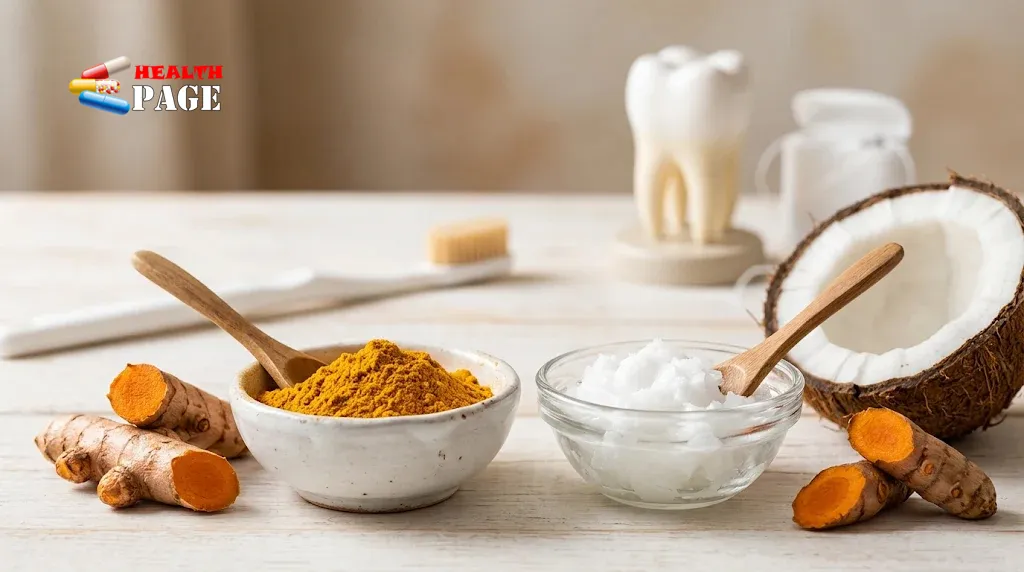
Turmeric Powder and Coconut Oil: 5 Facts About Teeth Whitening
Medical Disclaimer: The information provided in the article “Turmeric Powder and Coconut Oil: 5 Facts About Teeth Whitening” is written by Dr. Suleman Khan (Dental Surgery) for educational and informational purposes only. It is not intended as a substitute for professional dental or medical advice, diagnosis, or treatment.
Natural remedies and at-home teeth whitening methods can vary in effectiveness and may affect tooth enamel or gum tissue differently depending on individual oral health. Always consult with a licensed dentist or qualified healthcare provider before trying any new dental care or whitening regimen, and never disregard professional dental advice because of something you have read in this article.
Spend a few minutes on social media and you will probably meet someone swearing that a paste of turmeric powder and coconut oil turned their dull teeth bright in a week. The appeal is easy to see. Both ingredients are already in the kitchen cupboard, both have long histories in traditional medicine, and neither sounds as harsh as a chemical bleach.
The short answer to the question people are really asking is that there is no credible clinical evidence this mixture whitens natural tooth enamel. Turmeric’s strong yellow pigment can also leave a yellow tinge behind if it isn’t properly brushed away, which is the concern dentists raised when ADA News reported on the trend. The five facts below cover what happens when you combine the two ingredients, whether the whitening claim holds up, what each ingredient may genuinely offer, the side effects worth knowing, and which methods actually change tooth colour.

1. What Happens When You Mix Turmeric Powder and Coconut Oil?
Mixing the two does not create a new compound or a special dental ingredient. You simply get a yellow, oily paste in which each ingredient keeps its own properties.
What turmeric brings to the mix
Turmeric comes from the root of Curcuma longa, a plant related to ginger. Its colour and most of its studied activity come from curcuminoids, a group of pigments that includes curcumin. In laboratory work, curcumin has shown antioxidant and anti-inflammatory activity. The U.S. National Center for Complementary and Integrative Health (NCCIH) is more cautious about people: it says we do not know enough to conclude that turmeric or curcumin is beneficial for any health purpose.
What makes coconut oil different
Coconut oil is a saturated fat, and roughly half of its fatty acids is lauric acid. That fatty acid has shown antimicrobial activity in laboratory settings, which is one reason coconut oil is used in oil pulling, the traditional practice of swishing oil around the mouth. Coconut oil contains no bleaching agent of any kind.
How curcumin absorption works
Here is where the pairing comes from. Curcumin is poorly absorbed when swallowed, because the gut takes up very little and the liver breaks down much of what gets through. Researchers have explored several ways around this. One is combining curcumin with piperine, a compound in black pepper, which NCCIH identifies as a way to improve bioavailability. Because curcumin is fat-soluble, it is also generally thought to dissolve better alongside dietary fat, which is why turmeric features in so many oil-based dishes.
That reasoning has limits. No reliable human evidence puts a figure on how much coconut oil improves curcumin absorption, so any claim of “several times more” should be treated with suspicion. There is also a more basic problem. Absorption describes what reaches your bloodstream after you swallow something. A paste rubbed onto tooth surfaces and rinsed away is a different situation, and a better-absorbed curcumin molecule does nothing to the colour of enamel.
2. Does Turmeric Powder and Coconut Oil Whiten Teeth?
This is the question that brings most readers here, and the honest answer is no, not in any way that has been demonstrated.
Why people try turmeric powder and coconut oil for teeth
The trend rests on a few ideas that sound reasonable. Turmeric is a “natural” ingredient, coconut oil leaves the mouth feeling clean, and several social media creators report brighter teeth after a few uses. Online recipes vary wildly in their ratios, which is itself a clue that nobody has tested a standard formula. A tooth that looks slightly cleaner after vigorous brushing with any powder is not evidence of whitening.
What the research and dentists say
Whitening, in the dental sense, means changing the colour of the tooth itself. The American Dental Association describes this as a chemical process driven by bleaches such as hydrogen peroxide or carbamide peroxide. Neither turmeric nor coconut oil contains either one. Whitening toothpastes, by contrast, work mainly through mild abrasives and polishing agents that remove surface stains without altering the tooth’s underlying shade.
I could not find any clinical trial showing that turmeric and coconut oil teeth whitening works on natural enamel. The ADA News item mentioned earlier reports that dentists cited in the original coverage saw no credible evidence of benefit. Some people may see a brief improvement in appearance, but that is usually surface cleaning from brushing, not a change in shade, and ordinary toothpaste does the same job.
Can turmeric stain your teeth?
It can. Turmeric dyes fabric, worktops and plastic, and teeth are not immune, especially if the paste lingers around the gum line or sits on rough areas. Creators who promote the paste often warn that it stains toothbrushes yellow, which tells you something about how readily the pigment sticks to things. Plaque and hardened deposits make staining worse, and yellow tartar on the inner surfaces of the teeth is a common reason teeth look yellow in the first place, so a pigment paste applied over it solves nothing.
Yellowness also isn’t always a surface problem. Tooth enamel is slightly translucent, and as it thins with age or wear, the naturally yellower dentin underneath shows through. No paste, however it is mixed, can rebuild enamel or lighten dentin.
3. Potential Oral Health Benefits of Turmeric and Coconut Oil
None of this means the ingredients are worthless. It means their possible benefits have to be assessed one at a time, because there is no meaningful research on the combination as a dental product.
Coconut oil and oil pulling
Oil pulling has been studied more than most home remedies. A 2020 systematic review of randomised trials on coconut oil pulling, published in Heliyon, concluded that the evidence was limited, with some signs that it might help oral hygiene and a clear call for better-designed trials. Studies in this area tend to be small and to measure plaque or gum inflammation rather than tooth colour. The American Dental Association has not recommended oil pulling, citing insufficient evidence, and it certainly does not treat it as a substitute for brushing and cleaning between the teeth.
If your interest is a gentler daily rinse, a comparison of natural and fluoride mouthwash options is a better starting point than oil pulling, because fluoride has proven protective value against decay.
Turmeric and its potential anti-inflammatory properties
Curcumin’s anti-inflammatory properties are the reason turmeric appears in oral-health research at all. NCCIH notes that small studies have looked at turmeric and curcumin in oral formulations for oral mucositis, the painful mouth sores that can follow cancer treatment, and it describes the evidence overall as preliminary. That setting involves carefully prepared products under clinical supervision. It says very little about whether kitchen turmeric stirred into oil can calm gum inflammation or prevent disease at home.
What the available dental research actually shows
Putting the pieces together, the picture looks like this:
- Coconut oil: limited, low-certainty evidence for a modest effect on plaque or gum health, and none for whitening.
- Turmeric: interesting laboratory findings and early clinical work in specific conditions, but nothing establishing a benefit for teeth or gums.
- The combination: no clinical evidence that it does more than either ingredient alone.
Laboratory results are a starting point for research, not proof that something works in a human mouth.
4. Turmeric Powder and Coconut Oil Benefits and Side Effects
Potential benefits and traditional uses
Both ingredients have a legitimate place in the kitchen and in traditional practice. Turmeric has been used in Ayurvedic, Chinese, Thai and other systems of medicine for centuries, and coconut oil is a staple cooking fat across much of the tropics. Eating them as part of meals is ordinary and, for most people, unproblematic. The argument of this article is narrower: a food or traditional remedy has not become a dental treatment simply because it is popular.
Possible side effects of turmeric
The most immediate problem is the yellow staining already described. Beyond that, eating large amounts of turmeric can upset some people’s digestion, and allergic reactions or irritation of the mouth and gums are possible for anyone sensitive to the spice.
Concentrated supplements deserve separate mention. NCCIH warns that highly bioavailable curcumin products may harm the liver, and liver injury has been reported in some people taking them. Its advice is to stop the product and speak to a health professional if you notice fatigue, nausea, poor appetite, dark urine or jaundice. Culinary turmeric used in cooking is a very different matter from these supplements, but the episode shows why “more absorption” is not automatically a good thing.
Possible side effects of coconut oil
Coconut oil is high in saturated fat, so using large amounts as a regular part of your diet is worth discussing with a doctor if you are watching your cholesterol. In the mouth, long swishing sessions can cause jaw ache or nausea. Accidentally inhaling oil is a rare but recognised risk, particularly for people with swallowing difficulties. Practically speaking, never spit oil or turmeric paste into the sink, because solid fat can build up in pipes. A bin is safer.
The larger risk is behavioural. If a home remedy pushes out proper brushing with fluoride toothpaste, or delays a dental visit for a toothache, you could end up with more decay and gum disease than you started with.
Who should exercise caution
Speak to a dentist or doctor before trying the mixture if you have any of the following:
- A liver condition, or you take regular medication or supplements
- Pregnancy or breastfeeding
- Sensitive teeth, receding gums, or worn enamel
- Dental work such as fillings, crowns or veneers, which do not respond to whitening agents and may collect stain
- Difficulty swallowing, or a young child who might swallow the mixture
5. Safer and Evidence-Based Ways to Whiten Teeth
If you want a lighter smile, several approaches have real evidence behind them. They differ in what they can and cannot do, so it helps to match the method to the type of stain.
Professional teeth whitening
In the UK, only a dentist or another registered dental professional can legally carry out teeth whitening, and it is generally a private treatment rather than an NHS one, as the NHS explains on its teeth whitening page. A dentist first checks that your teeth and gums are healthy, then either applies a peroxide gel in the surgery or makes custom trays for supervised use at home. Shop-bought kits in the UK are legally limited to a tiny hydrogen peroxide concentration, which is why they tend to be slow and less effective. Temporary sensitivity is the most common side effect of peroxide whitening, and whitening only changes natural teeth, not crowns, fillings or dentures.
Whitening toothpaste and peroxide-based products
According to the American Dental Association’s whitening guidance, toothpastes mainly lift extrinsic (surface) stains, while products containing carbamide or hydrogen peroxide can change the intrinsic colour of the tooth. Look for the ADA Seal on products sold in the United States, and ask your dentist which type suits your stains.
| Approach | What it works on | Evidence |
|---|---|---|
| Turmeric powder and coconut oil paste | Nothing proven | No credible clinical evidence; may stain |
| Whitening toothpaste | Surface stains | Supported for stain removal, not for changing tooth shade |
| Peroxide strips or gels | Natural tooth colour | Supported; sensitivity is common |
| Dentist-supervised whitening | Natural tooth colour | Supported; checked by a professional |
| Professional cleaning | Plaque, tartar, surface stain | Supported; often the first step |
Daily dental hygiene habits
Most everyday dullness comes from plaque and surface stain, and good habits do more than any paste. Brush twice a day with fluoride toothpaste, clean between your teeth, and have plaque and hardened deposits removed with a professional clean, which is what a prophy dental treatment involves.
Cutting back on frequent coffee, tea, red wine and smoking will slow new stains. If you have been eating or drinking something acidic, it also helps to know how long to wait after eating to brush your teeth, so you are not scrubbing softened enamel. For a broader routine, protecting your teeth from childhood to adulthood covers the fundamentals.
Frequently Asked Questions
Can I mix turmeric powder and coconut oil for my teeth?
You can, but there is no evidence it whitens them, and it may leave a yellow tinge. If you are curious about natural options, a dentist can tell you whether oil pulling or any other habit is worth adding to a normal routine.
Does turmeric powder make teeth yellow?
It can stain them temporarily, particularly if it is left on rough surfaces, plaque or tartar. Rinsing and brushing thoroughly reduces the risk but does not remove it entirely.
Is coconut oil good for oral hygiene?
Evidence is limited. Some small trials suggest oil pulling may modestly reduce plaque or gum inflammation, but it does not replace brushing and cleaning between teeth.
Can turmeric and coconut oil remove plaque?
There is no good evidence that the mixture does. Plaque is removed mechanically, by brushing, flossing or interdental brushes, and by a dental professional.
How can I whiten my teeth safely at home?
Brush with fluoride toothpaste, consider an ADA-accepted whitening toothpaste for surface stains, and ask your dentist about supervised home trays if you want a real change in shade.
Final Verdict: Should You Use Turmeric Powder and Coconut Oil for Teeth Whitening?
Probably not. Turmeric powder and coconut oil are fine ingredients to cook with, and coconut oil pulling may have a small supporting role for some people. As a teeth whitener, though, the mixture is unproven, and the pigment can work against you. If your goal is a brighter smile, start with a conversation with your dentist, because the right treatment depends on whether your discolouration is surface stain, enamel wear or something deeper.
Medical Disclaimer: This article is for general information only and is not a substitute for professional dental or medical advice. Speak to a qualified dentist or doctor before changing your oral care routine or using supplements.
References
- American Dental Association, “Whitening” (ADA Library, Oral Health Topics): https://www.ada.org/resources/ada-library/oral-health-topics/whitening
- National Center for Complementary and Integrative Health, “Turmeric”: https://www.nccih.nih.gov/health/turmeric
- ADA News, “Dentists urge against viral turmeric-coconut oil tooth-whitening trend”: https://adanews.ada.org/huddles/dentists-urge-against-viral-turmeric-coconut-oil-tooth-whitening-trend

Dr. Suleman Khan is a registered Dental Surgeon dedicated to modern preventative oral health, maxillofacial insights, and advanced clinical treatment approaches. Based at the prestigious
Government Dental College and Hospital in Ahmedabad and registered under the Dental Council of India, he brings extensive hands-on experience in public health dentistry and preventative medicine.
As a core specialist panelist on the HealthPage Medical Review Board,
Dr. Khan provides expert clinical oversight, rigorous fact-checking, and medical verification for our oral health and dental surgery articles. He focuses on simplifying dense orthodontic and hygienic concepts into accessible, safe, and actionable guidance that reflects current healthcare standards.
✉ Professional Inquiries:
[email protected]
