

Coronary Artery Bypass Graft ICD-10: 1 Key Code (Z95.1) Explained
If you are looking for the coronary artery bypass graft ICD-10 code, the answer is Z95.1, Presence of aortocoronary bypass graft. It is the ICD-10-CM code that tells anyone reading a medical record that a person has had coronary artery bypass graft (CABG) surgery and still has the graft in place. The code is billable, and it carries no changes in the FY 2027 code set, which runs from October 1, 2026 through September 30, 2027.
That one-line answer covers most lookups. The confusion usually starts afterward. A chart might say “history of CABG,” a clinic note might say “status post bypass,” and a patient portal might show Z95.1 next to a heart condition and leave you wondering whether something is wrong. This article explains what the code means, what it does not mean, and where it stops being the right code.
What Is the ICD-10 Code for Coronary Artery Bypass Graft?
In the United States, diagnoses are classified with ICD-10-CM, the clinical modification of the World Health Organization’s ICD-10, maintained by the CDC’s National Center for Health Statistics. Under that system, the coronary artery bypass graft ICD-10 code looks like this:
| Element | Detail |
|---|---|
| Code | Z95.1 |
| Official description | Presence of aortocoronary bypass graft |
| Inclusion term | Presence of coronary artery bypass graft |
| Parent category | Z95, Presence of cardiac and vascular implants and grafts |
| Billable | Yes |
| Code set | ICD-10-CM, FY 2027 |
The “Z” in the code matters. Z codes sit in the chapter for factors that influence health status and contact with health services. They describe circumstances around a person’s health rather than an active illness, injury, or symptom. Z95.1 belongs to the same family as the pacemaker code (Z95.0), the prosthetic heart valve code (Z95.2), and the coronary angioplasty implant code (Z95.5).
One caution about geography. ICD-10 has national versions, and the code you see on a UK, German, or Australian record may be worded or structured differently. This article covers the US ICD-10-CM system.
What Does Z95.1 Mean?
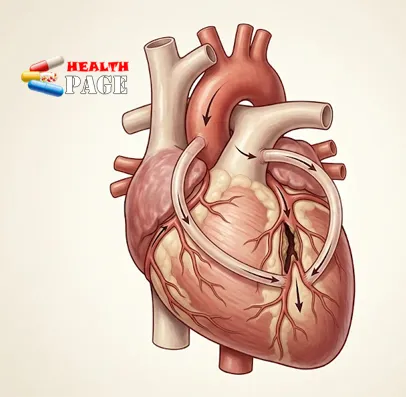
CABG is an operation in which a surgeon takes a healthy blood vessel, often a vein from the leg or an artery from the chest wall, and attaches it so blood can flow around a narrowed or blocked section of a coronary artery. The NHS overview of coronary artery bypass graft surgery describes it as an operation to improve blood flow to the heart. For a plain-language walkthrough of how blood normally travels through the heart before and after such a detour, HealthPage has a step-by-step guide to blood flow through the heart.
The Z95.1 ICD-10 code records one fact: a bypass graft is present. It does not say which arteries were bypassed, how many grafts were placed, what vessel was used, or how the operation was done. It also says nothing about whether the grafts are open and working well. A person can carry this code for decades without it implying anything about their current heart health.
This is why a coder or clinician sees the code as a marker of surgical status rather than a diagnosis of disease. It tells the next provider, “this heart has been rerouted,” which shapes how chest pain is evaluated, how imaging is read, and how surgical risk is weighed.
History of Coronary Artery Bypass Graft ICD-10: Why the Word “History” Can Mislead
Many people search for the history of coronary artery bypass graft ICD-10 code, and the phrase is natural. Surgery happened in the past, so “history of” feels accurate. Clinicians write “hx of CABG” in notes for the same reason, and searches for hx of coronary artery bypass graft ICD-10 follow the same logic.
ICD-10-CM draws a careful line here, though. The official guidelines separate two ideas:
- Personal history codes describe a condition that is over and no longer being treated, such as a cancer that was removed and has not returned.
- Status codes describe an existing state, including the presence of an implant, device, or graft.
A bypass graft does not disappear after surgery. It remains in the body, so Z95.1 is classed as a status code rather than a plain personal-history code. The FY 2027 Official Guidelines for Coding and Reporting explain this distinction, and they note that the classification’s own instructions take precedence over the guidelines.
In practice, “history of CABG” in a chart does not automatically mean a history code applies. A coder looks at what the provider actually documented, namely that the patient had bypass surgery and has grafts in place, and selects the code that reflects it. That is why Z95.1, not a history-of code, is generally what a reader finds attached to a CABG patient’s record.
Status Post Coronary Artery Bypass Graft ICD-10
“Status post” is the most direct documentation phrase you will see, usually abbreviated “s/p CABG.” The ICD-10-CM Alphabetic Index sends status post coronary artery bypass graft ICD-10 lookups straight to Z95.1, which makes this the cleanest match between clinical language and the code.
This is also where timing comes up. Some people assume the code belongs only to the weeks after surgery. It does not work that way. Because it describes an existing graft, Z95.1 can be reported years later at a cardiology follow-up, a primary care visit, a pre-operative evaluation for an unrelated procedure, or a routine stress test, whenever the graft is relevant to the encounter and documented. The code reflects a lasting state, not a recovery window.
When Is Z95.1 Used?
Z95.1 typically shows up as a supporting code, one that adds context to the main reason for a visit. A few realistic situations:
- A patient with a CABG in their past sees a cardiologist for a routine follow-up, and Z95.1 documents the surgical status alongside the visit reason.
- A person scheduled for knee replacement has a pre-operative workup, and their bypass status is recorded because it affects anesthesia and cardiac risk assessment.
- A patient presents with new chest discomfort, and the evaluation notes the existing grafts because that history changes which tests make sense.
- An annual primary care visit includes a problem list review where the bypass status is carried forward.
In each case, the code adds information without replacing the main diagnosis. Whether to report it at a particular encounter depends on the documentation and the coding rules that apply to that setting.
CABG Status vs. Active Heart Disease and Graft Complications
Here Z95.1 gets misread most often, so it deserves a careful look.
It does not mean active coronary artery disease. CABG treats symptoms and blood flow problems caused by coronary artery disease, but surgery does not cure the underlying condition. If a provider documents current coronary artery disease, that diagnosis is coded separately, from the coronary atherosclerosis codes in the I25 category, with Z95.1 added to show the graft status. The reverse also holds: not everyone with a bypass history has active disease flaring up, and the code does not suggest they do. Related risk factors have their own codes too. HealthPage’s explainer on the ICD-10 code for high cholesterol shows how a condition like that is classified independently of surgical status.
It does not describe a graft complication. The Z95 category carries an Excludes2 note pointing to complications of cardiac and vascular devices, implants, and grafts (T82.-). Under an Excludes2 note, the two situations are not the same thing, but a patient can have both, and both codes can be reported when documented. So if a provider documents a problem with the graft itself, such as a narrowing or blockage in it, the complication needs its own appropriate code. Z95.1 alone would leave out the most important part of the story.
It does not prove the surgery worked. The code is silent on graft patency and outcomes. Anyone interpreting a record should avoid reading success or failure into it.
The table below shows how common documentation tends to map. It is a general guide, and final assignment always depends on the full record.
| What the record says | Typical coding direction |
|---|---|
| “Status post CABG” or “s/p CABG” | Z95.1, per the Alphabetic Index |
| “Presence of bypass graft” | Z95.1 |
| “History of CABG” | Coder confirms graft is in place; usually Z95.1 |
| Active coronary artery disease, s/p CABG | Disease code from I25, plus Z95.1 |
| Documented graft complication | Complication code from T82.- as documented |
| CABG performed during an inpatient stay | ICD-10-PCS procedure code, not Z95.1 |
ICD-10-CM vs. ICD-10-PCS: Diagnosis Codes and Procedure Codes
The last mix-up concerns a second code set. ICD-10-CM, which contains Z95.1, classifies diagnoses and conditions. ICD-10-PCS, developed by the Centers for Medicare & Medicaid Services, classifies procedures performed in inpatient hospital settings. Both start with “ICD-10,” but they answer different questions: one asks “what condition or status is this?” while the other asks “what was done?”
A CABG procedure code in PCS is built from several details, including how many coronary arteries were bypassed, the source of the bypass, the type of graft material, and the surgical approach. Coronary bypass procedures fall under the Heart and Great Vessels body system, in codes that begin with 021. One example in the CMS code listings is 02100Z9, described as a bypass of one coronary artery from the left internal mammary artery, open approach. Reading that, you can see how specific a procedure code is compared with the single generic Z95.1.
Because they serve different purposes, the two are never interchangeable. The operation gets a PCS code at the time it is performed. Afterward, the lasting presence of the graft is represented by Z95.1 on later encounters. For readers who want a broader primer on how diagnosis coding works and how to search for codes, HealthPage’s guide to diagnosis codes in ICD-10 is a useful starting point.
Frequently Asked Questions
What is the ICD-10-CM code for coronary artery bypass graft?
Z95.1, Presence of aortocoronary bypass graft. Its inclusion term, “Presence of coronary artery bypass graft,” makes the connection to CABG explicit.
Is Z95.1 the code for “history of CABG”?
Usually, yes, in effect. Because the bypass graft remains in the body, it is classified as a status rather than a past condition that has resolved. The coder still relies on the actual documentation rather than the word “history” alone.
Does having Z95.1 mean I currently have heart disease?
No. The code shows that a graft exists. Any active coronary artery disease would be documented and coded separately. If you are unsure what a code on your record means for you personally, your cardiologist or primary care clinician is the right person to ask.
Can Z95.1 be used if there is a problem with the graft?
It can still appear, since an Excludes2 note allows both codes together when both apply. But a documented complication needs its own appropriate T82.- code, and Z95.1 alone would not describe it.
Is Z95.1 used on the day of the surgery?
The surgery itself is reported with an ICD-10-PCS procedure code in inpatient settings. Z95.1 reflects the ongoing presence of the graft and is generally used on later encounters. Whether it fits a specific claim depends on the setting and the record.
Conclusion
The coronary artery bypass graft ICD-10 answer is short, but the reasoning behind it is worth understanding. Z95.1 says one thing clearly: a bypass graft is present. It does not diagnose active disease, certify that the surgery was successful, replace a complication code, or stand in for the procedure code used when the operation was performed. Keep those four distinctions in mind and most confusing records become easy to read.
For patients, the practical next step is simple. If a code on your paperwork raises questions, ask your care team what it means for you. For coders and billing staff, the next step is to check the full documentation and the current official guidelines before assigning anything. If you want to keep reading about heart topics on the same site, HealthPage’s cardiology section is a good place to continue. For a broader picture of the operation behind this code, the site’s article on open heart surgery and recovery covers what the procedure involves.
References
- Centers for Disease Control and Prevention, National Center for Health Statistics. ICD-10-CM: What to know. https://www.cdc.gov/nchs/icd/icd-10-cm/index.html
- CDC/NCHS. ICD-10-CM Official Guidelines for Coding and Reporting, FY 2027 (October 1, 2026 – September 30, 2027). https://ftp.cdc.gov/pub/Health_Statistics/NCHS/Publications/ICD10CM/2027/ICD-10-CM-October-1-2026-FY27-Guidelines.pdf
- NHS. Coronary artery bypass graft (CABG): What it is. https://www.nhs.uk/tests-and-treatments/coronary-artery-bypass-graft/what-it-is/

Dr. Akram Chang is a veteran Cardiac Specialist with extensive clinical experience serving at the historic
Gulab Devi Teaching Hospital in Lahore.
Specializing in clinical cardiology, myocardial preservation, and preventative cardiovascular health, he dedicates his medical career to both critical inpatient care and global public health literacy.
As a core panelist on the HealthPage Medical Review Board,
Dr. Chang provides rigorous clinical oversight, expert fact-checking, and medical verification for our thoracic and circulatory care resources. His analytical oversight ensures that complex hospital diagnostics are translated into safe, actionable, and strictly evidence-based lifestyle habits.
✉ Professional Inquiries:
[email protected]