
Fascia Gun: 7 Uses, Potential Benefits, and Safety Tips
Medical Disclaimer: This article is intended for general informational and educational purposes only. It discusses the potential uses, benefits, and safety precautions of fascia guns (percussion massage devices). It is not a substitute for professional medical advice, diagnosis, or treatment.
Fascia guns may not be suitable for everyone. Use them gently and follow the manufacturer’s instructions. Avoid using them over bones, joints, the neck, injured or swollen areas, or other sensitive parts of the body. Consult a qualified healthcare professional before use if you have an underlying medical condition, an injury, or concerns about whether this device is appropriate for you.
Written by: Dr. John Ma (Orthopedic Surgery)
If your shoulders ache by mid-afternoon, or your calves feel like wood after a long run, a fascia gun can look like an easy fix. It is a handheld device, usually sold as a massage gun, that taps rapidly against a muscle to ease tightness for a while. That “for a while” matters. The research so far supports short-term changes in how muscles feel and how far a joint moves. It does not show that these devices repair injured tissue, “release” fascia, or resolve chronic pain. This guide explains what the device is, seven realistic ways people use it, how to use it safely, and who should skip it.
What Is a Fascia Gun?
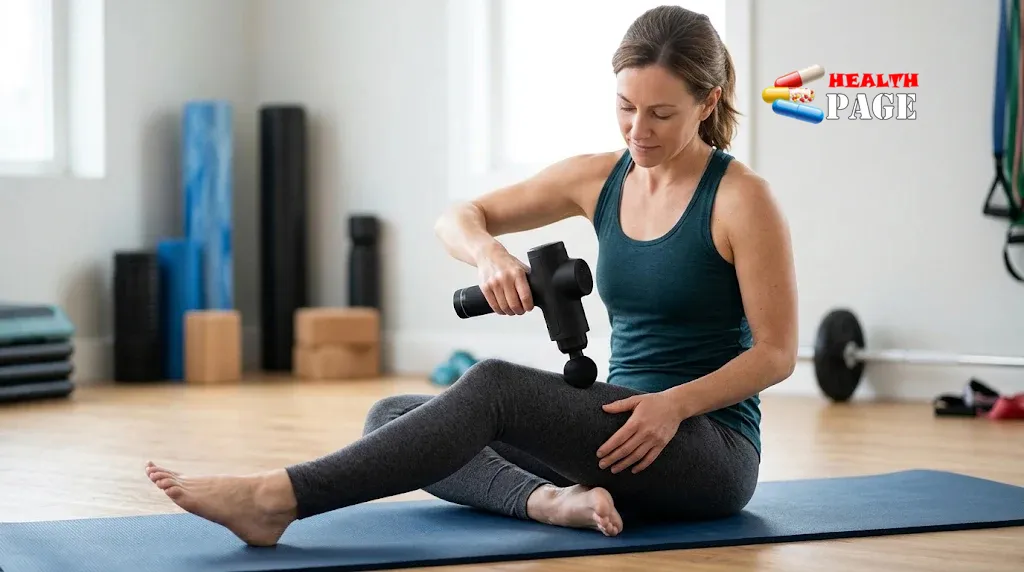
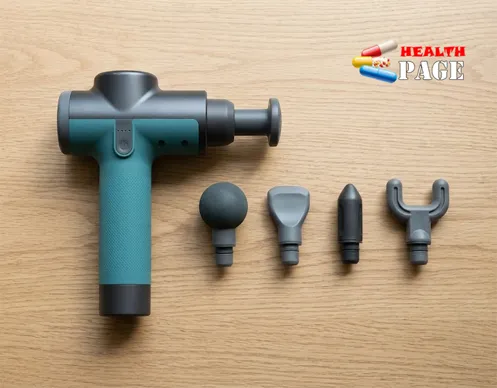
So, what is a fascia gun? It is a battery-powered handheld device that most people would call a massage gun or percussion massager. A small motor drives a shaped attachment back and forth in short, rapid strokes. When you rest the head against a muscle, each stroke delivers a quick pulse of pressure into the soft tissue beneath it. Most models offer several speed settings and interchangeable heads, and many are sold as a fascia gun massager.
The name points to a popular idea. Fascia is the thin sheet of connective tissue that wraps around muscles and other structures, and tightness there is often blamed for stiffness. Hands-on techniques aimed at this tissue are known as myofascial release. A consumer device, however, has not been shown to break up fascia or remove adhesions. What it more plausibly does is change how a muscle feels and how freely a joint moves for a short period. That is useful, but it is a more modest claim.
A fascia gun is also different from clinical shockwave therapy. Shockwave devices deliver focused pressure waves in a supervised setting, usually for specific tendon or soft-tissue problems, and they work at intensities that home devices don’t match. A fascia gun is closer to a mechanical version of rhythmic tapping.
The people who use them range from runners and gym regulars to desk workers with a stiff upper back. Some patients also use one because a physical therapist suggested it.
How Does a Fascia Gun Work?
The basic mechanism is simple. A motor moves the head repeatedly against the skin and the muscle underneath, creating rapid mechanical stimulation. Researchers are still working out why this can leave a muscle feeling looser. The likely explanations involve the nervous system: the stimulation may change how tension and discomfort are sensed, and the muscle may relax as a result. The American Physical Therapy Association’s ChoosePT resource says current evidence suggests massage guns may reduce feelings of muscle discomfort, and that the effects are generally temporary.
Some popular claims are best left out. There is no solid evidence that a massage gun pushes oxygen into deep muscle, flushes out lactic acid, or permanently improves circulation. Lactic acid is also not the cause of the soreness you feel a day or two after hard exercise. That soreness, called delayed-onset muscle soreness (DOMS), is linked to temporary muscle damage from unfamiliar or intense effort.
7 Potential Benefits and Uses of a Fascia Gun
Before the list, it helps to know how strong the evidence is. A 2023 systematic review of massage guns found only 11 eligible studies, all measuring short-term outcomes, and the authors described their quality as moderate. The findings leaned toward better flexibility and range of motion, and toward reduced stiffness after fatiguing exercise. Strength, balance, agility and explosive performance either didn’t improve or got slightly worse. A separate 2023 review in the International Journal of Sports Physical Therapy was more optimistic, reporting short-term gains in flexibility and less musculoskeletal pain after repeated treatments. The research is encouraging in places, but it is patchy and the reviews don’t fully agree.
1. May Help Relieve Muscle Tightness
The most common reason to use a fascia gun is the feeling of a tight, stiff muscle after exercise or a long stretch in one position. Gentle percussion can make that sensation ease for a while. It is the sort of benefit you notice in the moment, and it should not be mistaken for a fix for whatever caused the tightness.
2. May Improve Short-Term Flexibility
This is the best-supported use. The 2023 review above noted gains in the flexibility of muscles such as the hamstrings and calves. If you’ve ever found that you can touch a little closer to your toes after a few minutes on the back of your legs, that is the effect being described. How long the change lasts is less clear, because most studies measured results soon after treatment.
3. May Help With Post-Exercise Muscle Discomfort
Many people reach for a fascia gun on the evening after a hard workout. Here the evidence is thinner than the marketing suggests. A small trial of 17 people found that percussive massage gave temporary relief from perceived soreness at 24, 48 and 72 hours after intense arm exercise, but did not speed up actual recovery until 72 hours. A 2026 meta-analysis of randomised trials found no clear reduction in DOMS, and the certainty of that finding was rated very low. So it may make soreness feel a bit better for an hour or two, but it shouldn’t be expected to shorten recovery. A genuinely strained muscle is a different matter from ordinary soreness, and our guide to how long a pulled muscle takes to heal explains why.
4. May Ease Everyday Muscle Tension
Desk work is hard on the upper back and shoulders, and a few minutes of gentle massage across the broad muscles there can take the edge off. Position matters, though. Aim for the fleshy muscle beside the neck and across the top of the shoulders, never the front of the throat or the bones of the spine. If your tension comes with a forward-leaning head posture from phone and laptop use, the posture itself deserves attention, and our article on tech neck symptoms and exercises covers that side.
5. May Support Pre-Exercise Mobility
A minute or so on large muscles before activity may leave them feeling ready to move. It is not a substitute for a proper warm-up, which raises your heart rate and rehearses the movements you are about to do. The 2023 review also found no performance benefit, and sometimes a decrease, in strength and explosive activities, so it isn’t a good choice right before a sprint or a heavy lift.
6. May Help You Wind Down After Activity
After a run, a hike or a lifting session, some people use a fascia gun at a low setting as part of a cool-down. The appeal here is relaxation more than performance. ChoosePT suggests that gentle stretching after using the device may help you feel more relaxed and move more comfortably, which makes it a reasonable pairing.
7. Offers Convenient At-Home Massage
Portability is the practical advantage. You can use the device for a few minutes whenever a muscle feels tight, without booking an appointment. It won’t replicate the judgement of a trained therapist, but it can fill the gaps between sessions for people who already get professional massage.
How to Use a Fascia Gun Safely
Anyone searching for how to use a fascia gun is usually trying to avoid two mistakes: pressing too hard and staying too long. The following steps draw on guidance from ChoosePT and University of Utah Health.
- Pick the right attachment. A round or flat head suits large muscle groups such as the thighs, glutes and upper back. Bullet-shaped heads are more pointed and are meant for small areas, so beginners can leave them in the box. Follow the manufacturer’s instructions for any other head.
- Start on the lowest speed. Switch the device on before it touches your body, and only raise the setting if the low one feels comfortable.
- Let the device do the work. Rest it lightly on the muscle. Forcing it into the tissue doesn’t make it more effective and increases the chance of bruising or irritation.
- Keep it moving. Glide slowly along the length of the muscle rather than parking on one sore point. If a spot is especially tight, ChoosePT says you can pause there for 10 to 30 seconds before moving on.
- Stop if something feels wrong. Sharp pain, tingling, numbness, new bruising or soreness that is getting worse are all reasons to stop. Pain that spreads beyond the treated area is another. Deep pain in the buttock that runs down the back of the leg can have other causes, such as piriformis syndrome, and a gun won’t address it.
For duration, ChoosePT and University of Utah Health both suggest no more than about 2 to 3 minutes on any one muscle. Treat that as a ceiling rather than a target. There is no universal medical prescription for time or frequency, and shorter sessions of 10 to 30 seconds on a small area are a reasonable place to begin. Hold the head roughly perpendicular to the muscle, as Utah Health advises, and ask someone to help with places you can’t reach comfortably, such as the mid-back.
Where Should You Avoid Using a Fascia Gun?
Massage guns are intended for muscle tissue. Anywhere that nerves, blood vessels or bone sit close to the surface calls for caution.
| Area | Why caution is needed |
|---|---|
| Front and sides of the neck | Arteries, veins and nerves lie near the surface |
| Spine and bony points, including the kneecap | Little muscle padding; tendons and bursae can be irritated |
| Inner elbow, front of the hip, back of the knee | Important nerves and blood vessels pass through |
| Armpits and groin | Sensitive nerves and vessels, plus delicate tissue |
| Outer knee just below the joint (fibular head) | A nerve runs close to the surface here |
| Visible veins; bruised, swollen or broken skin | Higher risk of irritation, bruising or pain |
The first four rows follow ChoosePT and University of Utah Health guidance. The outer knee, armpit and visible-vein entries reflect basic anatomy and general caution, so confirm them with a clinician if you are unsure.
If you have back pain that seems to come from the spine rather than the muscles, such as disc degeneration, a massage gun isn’t a treatment and shouldn’t be used directly over the vertebrae.
Who Should Avoid Using a Fascia Gun?
A massage gun isn’t right for everyone. ChoosePT recommends talking with a healthcare provider first if you have a blood-clotting disorder or take blood thinners, a recent fracture, surgery or significant injury, osteoporosis or fragile bones, or an active infection, open wound or skin condition in the area. Suspected or diagnosed deep vein thrombosis belongs on that list too, because pressure on a clot is a risk nobody should gamble with. People with pacemakers or other implanted devices should check the manufacturer’s guidance and ask their doctor.
Reduced sensation is another reason for caution. If a limb is numb, or you have peripheral neuropathy, you may not notice when pressure is too strong. Unexplained numbness is worth investigating on its own, and our article on what causes numbness in one leg lists the possibilities.
People who are pregnant should ask their provider before using one, particularly near the lower back and abdomen. The same applies to anyone being treated for a serious medical condition. This isn’t a complete list, and individual medical advice should always take priority over general guidance.
Fascia Gun vs. Regular Massage Gun: Is There a Difference?
Not in any meaningful medical sense. “Fascia gun,” “massage gun,” and “percussion massager” generally describe the same kind of motor-driven device, and no separate standardised technology makes one fundamentally different from another. What does vary between models is stroke length (how far the head travels), the number of speed settings, the attachments included, battery life and noise. Choosing a device comes down to comfort and practicality, not whether it carries the word “fascia.”
Frequently Asked Questions
Does a fascia gun really work?
It depends on what you expect. Studies suggest it can temporarily improve flexibility and how muscles feel. Evidence that it prevents injury, speeds recovery or treats a medical condition is weak or absent.
How often can I use one?
There is no medically established schedule. Some physical therapists consider brief daily use acceptable, provided each session is short and comfortable. Regular use isn’t required, and a device that leaves you more sore the next day is being used too hard or too long.
Is a fascia gun safe for beginners?
Generally, yes, when used on large muscles at the lowest setting with light pressure. Beginners are most likely to get into trouble by pressing too hard or stopping on one spot for too long.
Should I use it before or after exercise?
Either is reasonable. A brief session beforehand may help muscles feel ready to move, although it shouldn’t replace a warm-up. After exercise, it may ease the sensation of tightness. Skip it just before explosive or maximal efforts, where the evidence suggests it doesn’t help.
Can it help with soreness from a tough workout?
It may make the soreness feel better for a short time, but the evidence that it shortens recovery from DOMS is inconsistent. Rest, sleep and gradually progressing your training matter more.
Can it replace physiotherapy or a professional massage?
No. A physical therapist can assess why a muscle keeps tightening and recommend exercises that address the cause. A massage gun treats the symptom for a short time.
Final Thoughts
A fascia gun can be a handy optional tool for temporary muscle relaxation and short-term mobility. It is not a treatment for injuries, nerve problems or persistent pain, and it doesn’t replace exercise, stretching or professional care. Gentle, informed and occasional use beats stronger or longer sessions, and more pressure doesn’t produce better results. If your discomfort keeps coming back or is accompanied by swelling, weakness or numbness, see a clinician. Our orthopedics articles are a good place to read further about musculoskeletal conditions.
References
- American Physical Therapy Association (ChoosePT). How to Use a Massage Gun Safely for Muscle Tension, Soreness, and Recovery.
- University of Utah Health. Massage Guns: How to Use Them Safely and Effectively.
- Ferreira RM et al. The Effects of Massage Guns on Performance and Recovery: A Systematic Review. Journal of Functional Morphology and Kinesiology, 2023.

Dr. John Ma is a dedicated Orthopaedic Surgeon with extensive experience in musculoskeletal health and surgical care. He currently serves at Royal Brisbane and Women’s Hospital, Australia, where he provides expert treatment for complex orthopaedic conditions. Passionate about advancing patient outcomes, Dr. Ma combines evidence‑based practice with compassionate care, helping individuals restore mobility and improve quality of life. Through his contributions to healthcare, he continues to support patients in achieving long‑term wellness and recovery.