
Low Progesterone Symptoms: 7 Signs, Causes and When to Seek Help
Irregular periods, spotting a few days before bleeding starts, restless nights, a mood that feels slightly off: it is easy to wonder whether these are low progesterone symptoms, and just as easy to find websites that say they are. The reality is more nuanced. Progesterone genuinely influences the menstrual cycle, sleep, mood and early pregnancy, and a shortfall can contribute to changes in all of them. Yet the same symptoms also appear with thyroid disease, stress, polycystic ovary syndrome (PCOS) and perimenopause, and no symptom on its own can show that your level is low. This guide explains what progesterone does, which signs may point to a problem, what lies behind them, how doctors test for it and when an appointment is worth booking.
What progesterone does, and why a low reading isn’t always a problem
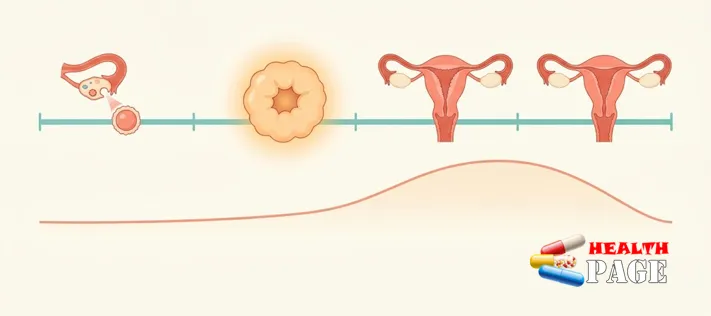
Progesterone is a steroid hormone best known for its role in the second half of the menstrual cycle. After an egg is released, the empty follicle turns into a temporary structure called the corpus luteum, which produces progesterone for roughly two weeks. The hormone thickens and stabilizes the uterine lining so a fertilized egg could implant. If no pregnancy follows, the corpus luteum breaks down, progesterone falls and the lining sheds as a period. If pregnancy does occur, the corpus luteum keeps going until the placenta takes over hormone production during the first trimester.
That timeline explains a point many articles skip: progesterone is supposed to be low for much of the cycle. Levels stay low before ovulation, after menopause, and in anyone using contraception that suppresses ovulation. A blood sample taken on day 5 of a cycle will almost always show a low value, and that says nothing about deficiency. What matters is whether progesterone rises after ovulation, how far and for how long. This is why doctors discuss progesterone and ovulation together: without ovulation there is no corpus luteum, and without a corpus luteum there is no rise.
Low progesterone symptoms: 7 signs and what else could explain them
The signs of low progesterone in females tend to be subtle, and almost every one overlaps with another condition. Cleveland Clinic lists irregular or missed periods, headaches, anxiety or low mood and changes in mood among the features seen in people who are not pregnant, while also stressing that only a healthcare provider can say whether levels need checking. Think of the following as reasons to pay attention, not a checklist for self-diagnosis.
1. Irregular or missed periods
When ovulation is skipped or unpredictable, the post-ovulation progesterone rise is missing and the cycle loses its rhythm. You might see cycles that vary by a week or more, delayed periods, or a flow that changes from month to month. Because progesterone is naturally low in the first half of every cycle, irregular bleeding cannot be blamed on a deficiency without further evidence. A dedicated section on this follows below.
2. Spotting before your period
Symptoms of low progesterone before period can include light bleeding in the days leading up to menstruation, sometimes with a short luteal phase, meaning roughly 10 days or fewer between ovulation and the next period. Spotting alone proves nothing, though. Hormonal contraception, cervical or uterine changes and early pregnancy can all cause it, and if there is any chance you could be pregnant it helps to know how a light period differs from implantation bleeding.
3. Difficulty getting pregnant
Without regular ovulation there is no normal post-ovulation progesterone rise, and conception becomes harder. Low progesterone is rarely the whole story, however. Ovulation disorders, PCOS, thyroid disease, blocked fallopian tubes and sperm-related factors all need to be considered before attributing infertility to one hormone.
4. Mood changes and anxiety
A breakdown product of progesterone, allopregnanolone, acts on GABA receptors, part of the brain’s main calming system. That is one reason hormonal shifts can affect mood, and some women notice more irritability or anxiety in the days before a period. Mood symptoms have countless other causes, from stress to depression, so they cannot be used to diagnose a hormone problem.
5. Sleep disturbances
The same calming pathway is linked to sleep. Women sometimes report trouble falling asleep, waking repeatedly or feeling unrefreshed in the premenstrual days or during perimenopause. Caffeine, stress, sleep apnea and thyroid conditions can look identical.
6. Headaches and migraines
Shifts in estrogen and progesterone around menstruation can trigger menstrual headaches or migraines in some women. The fall in estrogen is generally considered the better-established trigger, so headaches are weak evidence of low progesterone by themselves.
7. Hot flashes and night sweats
These are most relevant in perimenopause, when ovulation becomes erratic and progesterone production becomes less reliable. Estrogen changes drive hot flashes more directly, so they are not specific to progesterone.
| Symptom | Why progesterone may be involved | Common alternative explanations |
|---|---|---|
| Irregular or missed periods | Ovulation is skipped, so no post-ovulation rise | PCOS, thyroid disease, stress, perimenopause, pregnancy |
| Spotting before a period | A short luteal phase may let the lining break down early | Contraception, cervical or uterine changes, early pregnancy |
| Trouble conceiving | Irregular ovulation, less support for the lining | Tubal, sperm-related or age-related factors |
| Mood changes, anxiety | Progesterone’s metabolites act on calming brain pathways | Stress, depression, thyroid disease, sleep loss |
| Poor sleep | The same pathway affects relaxation and sleep | Stress, caffeine, sleep disorders, perimenopause |
| Headaches, migraines | Hormone shifts around menstruation can trigger them | Estrogen withdrawal, dehydration, tension, other triggers |
| Hot flashes, night sweats | Hormone decline during perimenopause | Estrogen changes, overactive thyroid, medications |
You may also see joint pain, dull skin, weaker immunity or bone loss listed as symptoms of low progesterone elsewhere online. These are not established signs, and pinning them on a hormone can delay finding the real cause.
What causes low progesterone?
Most answers to what causes low progesterone come back to one mechanism: ovulation that is absent, late or weak. Beyond that, a handful of conditions and circumstances can interfere with the signals that trigger it.
- Irregular or absent ovulation (anovulation). The corpus luteum only forms after an egg is released, so a cycle without ovulation has no meaningful progesterone surge.
- PCOS. PCOS and progesterone are closely linked because infrequent ovulation leaves long stretches without the usual rise. Other clues can include acne, excess facial or body hair and insulin resistance.
- Thyroid disorders and high prolactin. An underactive or overactive thyroid can disturb the cycle. Hyperprolactinemia, meaning abnormally high prolactin, can suppress ovulation and sometimes causes milk production unrelated to breastfeeding.
- Stress, intense exercise and low body weight. The hypothalamus, which coordinates reproductive hormones, responds to energy shortage and heavy physical or emotional strain. Significant weight loss or under-eating can switch ovulation off.
- Perimenopause and reduced ovarian function. As menopause approaches, ovulation becomes less predictable, which makes progesterone patchy. Premature ovarian insufficiency can cause the same pattern before age 40. Perimenopause often brings other changes too, such as vaginal dryness, which mostly reflects falling estrogen.
- Other endocrine conditions. Adrenal and other hormone disorders can contribute, though they are far less common explanations.
Luteal phase deficiency (LPD) deserves separate mention because it is often cited as the textbook cause. The term describes a luteal phase that is too short, progesterone that is too low, or a uterine lining that does not respond properly. A typical luteal phase lasts 12 to 14 days, with a range of about 11 to 17. According to the American Society for Reproductive Medicine, however, there is controversy over how LPD should be diagnosed, and it has not been proven to be an independent cause of infertility or recurrent pregnancy loss. It is better seen as a pattern that often points to an underlying issue than as a diagnosis in itself.
Low progesterone and irregular periods
The link becomes clearer when you follow the cycle step by step. Progesterone is low before ovulation. After the egg is released, the corpus luteum starts producing it, and the hormone keeps the uterine lining stable. If there is no pregnancy, progesterone drops and the lining sheds, which is the period. Low progesterone and irregular periods go hand in hand when that sequence breaks at the start, because without ovulation the lining is never given its steadying signal.
One detail surprises many people: you can still bleed in a cycle without ovulation. Estrogen may build the lining, and it eventually breaks down and bleeds, but the timing and flow are often unpredictable. That is why a period that arrives does not prove ovulation happened. Cycles that keep changing length, unusually heavy or light flow, or unusually watery or pink period blood are all worth mentioning to a doctor, who will look at PCOS, thyroid function, prolactin and perimenopause alongside progesterone.
Does low progesterone affect fertility and pregnancy?
Before pregnancy, progesterone prepares the lining for implantation, so ovulation disorders that reduce it can make conceiving harder. As noted above, though, the evidence for luteal phase problems as an independent cause of infertility is limited, and clinicians generally look for the underlying cause rather than treating the hormone number alone.
In early pregnancy the picture changes. The corpus luteum supplies progesterone at first, and the placenta gradually takes over during the first trimester. A low progesterone measurement in early pregnancy can accompany a pregnancy that is not developing normally, but it is often a marker of that situation rather than its cause. Levels also vary from hour to hour, so a single result cannot confirm that a pregnancy is viable, and it cannot rule out an ectopic pregnancy either. Doctors rely on symptoms, ultrasound and repeated hCG testing instead.
Some women are offered progesterone treatment in pregnancy, but only in specific circumstances. NICE guidance in England recommends vaginal micronised progesterone for women who have bleeding in early pregnancy, have had a previous miscarriage and have an intrauterine pregnancy confirmed on a scan. The recommendation draws on a large UK trial, where women with bleeding but no previous miscarriage did not see a higher live-birth rate. A low result alone is not a reason to start it.
Other conditions matter too. If you have a history of thyroid disease or symptoms such as unusual fatigue or palpitations, it is worth reading about thyroid problems during pregnancy and raising them early with your midwife or doctor.
How low progesterone is diagnosed
Symptoms cannot show whether progesterone is low, so diagnosis starts with a conversation about your cycle history, any pregnancy plans and other symptoms, followed by a blood test if it is useful. Timing is critical. “Day 21” only suits a 28-day cycle. A better target is roughly seven days before your next expected period, which falls in the middle of the luteal phase when progesterone should peak. If your cycles are irregular, a doctor may need to track ovulation first or repeat the test.
Many clinicians treat a mid-luteal level above about 3 ng/mL (roughly 10 nmol/L, the unit many UK laboratories use) as evidence that ovulation recently occurred. It does not prove progesterone is high enough to support a pregnancy, and some doctors prefer to see a higher figure. Progesterone is released in pulses, and the ASRM notes that levels can swing up to eightfold within 90 minutes, so one result is a clue rather than a verdict. Reference ranges also differ between laboratories.
Depending on your symptoms, other tests may include thyroid function, prolactin, other reproductive hormones, a pelvic ultrasound or a pregnancy test. Nobody needs every test, and the list should follow the suspected cause.

Can you increase progesterone naturally?
No food, herb or supplement has been shown to reliably raise progesterone or correct an underlying hormonal disorder. Claims about soy, kelp, spinach, lemons or ginger are not supported, and the body cannot convert plant compounds such as those in wild yam into progesterone. Self-prescribing creams, supplements or progesterone products is a poor idea when you do not know why levels are low.
What you can do is support the conditions in which ovulation normally happens:
- Eat regularly and adequately. A balanced pattern with eggs and other proteins, leafy greens, berries and citrus fruit, whole grains, nuts, seeds and healthy fats provides nutrients involved in normal hormone function. It is general nutrition, not a progesterone treatment.
- Aim for a stable weight. Both substantial weight loss and excess weight can affect reproductive hormones, and crash dieting is more likely to harm than help.
- Make room for rest. Chronic stress can interfere with reproductive signalling in some women. Regular moderate exercise, relaxation techniques and consistent sleep hours are reasonable habits.
Medical treatment options
Treatment depends on the cause, on whether you want to conceive and on whether you are pregnant. If PCOS, a thyroid disorder or high prolactin is responsible, treating that condition is the first step. A fertility specialist may suggest medication to help ovulation occur. Progesterone itself is prescribed in selected situations, as capsules, vaginal preparations or injections: for example during certain fertility treatments, in specific pregnancy-related situations like the NICE recommendation described above, or alongside estrogen in menopausal hormone therapy to protect the womb lining. It is not suitable for everyone, so it should only be taken on medical advice.
When to see a doctor
Book an appointment if you notice:
- Periods that are repeatedly irregular, missed or noticeably changed
- Spotting between periods that keeps happening
- Difficulty becoming pregnant after trying for a year, or six months if you are over 35
- Signs of a thyroid or other hormone problem, such as unexplained fatigue, weight change or temperature sensitivity
Seek emergency care straight away if pregnancy is possible or confirmed and you have severe abdominal or pelvic pain, pain on one side of the lower abdomen, heavy vaginal bleeding, dizziness, fainting or collapse, or shoulder-tip pain along with abdominal pain or bleeding. These can signal an ectopic pregnancy or another serious complication. Do not wait for a progesterone test, and remember that a low result can neither confirm nor exclude an ectopic pregnancy.
Frequently asked questions
Can stress lower progesterone? It can in some women. Significant physical or emotional stress can disrupt ovulation, and when ovulation is affected, progesterone production falls with it. Everyday stress does not necessarily cause this, and persistent cycle changes should still be checked.
Is “estrogen dominance” the same as low progesterone? Not exactly. The phrase is common online but is not a formal medical diagnosis. Low progesterone can leave estrogen’s effects relatively unopposed, yet a doctor will want to know the actual cause rather than label the pattern.
Can I have low progesterone and still get regular periods? Possibly. The ASRM notes that luteal phase deficiency has been diagnosed in normally menstruating women, although how reliably it can be identified is debated. Regular cycles are a good sign but not proof of ideal progesterone levels.
Does the contraceptive pill cause low progesterone? Hormonal contraception suppresses ovulation, so your own progesterone stays low. That is an expected effect, not a deficiency, and testing natural levels while on the pill is not meaningful.
Can I check my progesterone at home? Temperature charts and ovulation tests give clues about whether you ovulate, but a blood test ordered by a clinician and timed to your cycle remains the standard way to measure progesterone.
The takeaway
Low progesterone symptoms such as irregular periods, premenstrual spotting, poor sleep and mood changes are real and worth taking seriously, but they are not reliable proof of a hormone shortage. The more useful question is usually why ovulation is irregular, and that points towards conditions like PCOS, thyroid disease, high prolactin, heavy stress or perimenopause. If your cycle has been unpredictable for a few months, keep a simple diary of bleeding, spotting, sleep and mood and take it to your appointment. For more on this subject, you can browse our wider collection of gynecological and reproductive health guides. This article is for general information and does not replace advice from a doctor.
References
- American Society for Reproductive Medicine, Practice Committees. “Diagnosis and treatment of luteal phase deficiency: a committee opinion.” Fertility and Sterility, 2021;115:1416–23.
- National Institute for Health and Care Excellence (NICE). “Ectopic pregnancy and miscarriage: diagnosis and initial management (NG126).”
- Cleveland Clinic. “Low Progesterone.”

Dr. Wang Zhixin is a distinguished Chief Physician specializing in comprehensive gynecology, perinatology, and maternal healthcare systems. She serves at the acclaimed
Shenzhen Maternity and Child Healthcare Hospital, a premier Grade-III Class-A medical center associated with Southern Medical University. With decades of clinical leadership, Dr. Wang is widely recognized for her contributions to reproductive wellness, prenatal diagnostic precision, and advanced clinical research safeguarding maternal-fetal medical outcomes.
As a core specialist panelist on the HealthPage Medical Review Board,
Dr. Wang leverages her senior clinical oversight to meticulously fact-check, audit, and medically verify our reproductive medicine and maternal wellness guides. Her analytical reviews ensure that intricate obstetric protocols and feminine wellness data are rendered into safe, authoritative, and completely evidence-based reference resources for global audiences.
✉ Professional Inquiries:
[email protected]