

Thyroid Disorders in Pregnancy: Symptoms, Risks, and Management
Medical Disclaimer
This article, Thyroid Disorders in Pregnancy: Symptoms, Risks, and Management, has been written by Dr. Liping Shen (Gynecologic Oncology). The content provided is for informational and educational purposes only and should not be construed as professional medical advice, diagnosis, or treatment. Always seek the advice of your physician or other qualified health provider with any questions you may have regarding a medical condition.
Thyroid disorders in pregnancy worry people for good reason. The thyroid helps run the body’s energy supply, and for the first half of pregnancy it also supports your baby’s brain and nervous system. An underactive or overactive thyroid that goes unrecognised can raise the chance of miscarriage, high blood pressure and early birth. Even so, the British Thyroid Foundation says that once the thyroid is under control there is no reason you should not have a successful pregnancy and a healthy baby.
This article covers what the thyroid does in pregnancy, the symptoms of low and high thyroid function, and how UK test results are read. It also covers treatment options and what to expect after the birth. It is general information and does not replace your own care team. Never change thyroid medication without their advice.
What the thyroid does, and why pregnancy puts it under pressure
The thyroid is a butterfly-shaped gland at the front of the neck. It makes two hormones, thyroxine (T4) and triiodothyronine (T3), which set the pace of metabolism, heart rate, body temperature and energy use. A pituitary hormone called thyroid-stimulating hormone (TSH) tells the gland how much to produce. TSH rises when the thyroid is underperforming and falls when it is overactive.
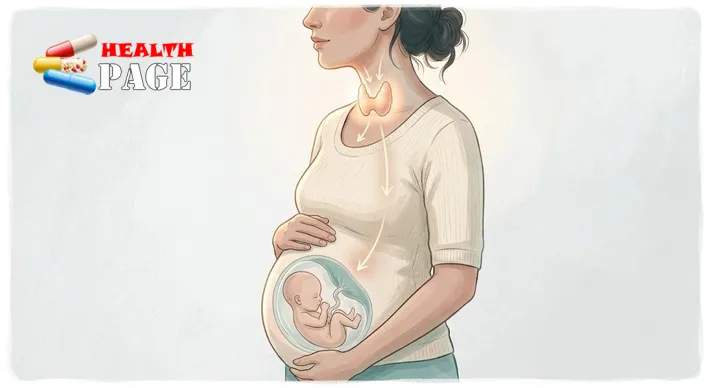
Pregnancy changes this in two ways. First, your baby cannot make its own thyroid hormone in the early months and depends on yours, so your supply has to rise to cover both of you. Second, pregnancy hormones alter how tests behave. Human chorionic gonadotropin (hCG), which peaks in the first trimester, gives the thyroid a mild push, so TSH can dip in perfectly healthy women. Rising levels of binding proteins also change total hormone readings.
The two broad problems are hypothyroidism (an underactive thyroid) and hyperthyroidism (an overactive one). Some people are diagnosed before conceiving, while others first meet the problem during or after pregnancy.
Hypothyroidism in pregnancy: causes, symptoms and risks
The most common cause is Hashimoto’s thyroiditis, an autoimmune condition in which the immune system attacks the thyroid. Other causes include previous thyroid surgery, earlier radioactive iodine treatment and, in some parts of the world, too little iodine in the diet.
Hypothyroidism in pregnancy symptoms
The symptoms build gradually, and many look like ordinary pregnancy, so a blood test is the only reliable way to tell the difference. The ones to watch for include:
- Tiredness that seems out of proportion, even allowing for pregnancy
- Feeling cold when others are comfortable
- Dry skin and thinning or brittle hair
- Constipation
- Slowed thinking, poor concentration or low mood
- Muscle aches and cramps
- A visible swelling at the front of the neck
Muscle cramps show how much these symptoms overlap. They are common in later pregnancy for reasons that have nothing to do with the thyroid, as this overview of the common causes of muscle cramps explains. A single symptom proves little. A cluster of symptoms, or a personal or family history of thyroid disease, is what should prompt testing.
What untreated hypothyroidism can do
Overt hypothyroidism that goes untreated is linked with miscarriage, anaemia, high blood pressure disorders including pre-eclampsia, premature birth and low birth weight. If the deficiency is severe and prolonged, it can also affect the baby’s neurological development. These outcomes are not inevitable. Risk depends on how low the hormone levels are, how long they stay low and how quickly treatment starts.
Milder disease is less clear-cut. Subclinical hypothyroidism means a raised TSH with a normal free T4, and specialist reviews note there is no consensus on whether correcting it improves outcomes for the child. The picture is similar for thyroid antibodies. The BTF notes that raised thyroid peroxidase (TPO) antibodies are linked with a higher miscarriage risk, but large trials found no benefit from giving levothyroxine to women with positive antibodies and normal thyroid function. Guidance has also moved towards avoiding unnecessary testing and overtreatment of mild abnormalities, which is why decisions in these borderline cases are individual.
How hypothyroidism is treated
Treatment is levothyroxine, a synthetic version of T4 that is safe in pregnancy. Most people already on it need more once they conceive. The BTF’s patient leaflet describes a common approach. As soon as a pregnancy test is positive, the dose goes up straight away, usually by 25–50 micrograms daily, and many people do this by doubling their usual dose on two days each week. A blood test then follows so the dose can be fine-tuned. Your own clinician will confirm what suits you, so contact your GP or specialist the day you find out rather than waiting for a routine appointment.
Blood tests continue through pregnancy, often every four to six weeks in the first half depending on local protocol. After the birth, most people return to their pre-pregnancy dose, with a check a few weeks later.
Hyperthyroidism in pregnancy: causes and symptoms
Two situations account for most cases. Graves’ disease is an autoimmune condition in which antibodies keep the thyroid switched on, and it is the most common cause of persistent overactivity. Gestational transient thyrotoxicosis is a temporary surge in thyroid hormone driven by high hCG in early pregnancy. It often goes along with severe nausea and vomiting and usually settles by itself as pregnancy progresses.
Symptoms can include:
- A fast, pounding or irregular heartbeat
- Feeling hot and sweating more than usual
- Trembling hands
- Weight loss, or poor weight gain despite eating
- Anxiety, irritability or restlessness
- Muscle weakness
- An enlarged thyroid and, in Graves’ disease, prominent or irritated eyes
A quicker pulse and feeling warm are part of normal pregnancy, so what counts is how marked the symptoms are and whether they persist. If your heart seems to thump in your throat or chest, this guide to what heart palpitations feel like in the throat describes when palpitations deserve a doctor’s attention.
When overactivity is poorly controlled, the risks include miscarriage in early pregnancy, high blood pressure complications, poor growth of the baby and premature delivery. Graves’ disease has an extra dimension. Its stimulating antibodies (TSH receptor antibodies, or TRAb) can cross the placenta and, rarely, cause temporary overactivity in the baby. A maternal TRAb blood test helps predict this, and higher levels usually mean closer monitoring.
Hyperthyroidism during pregnancy treatment
When treatment is needed, antithyroid drugs are the mainstay. The BTF says propylthiouracil (PTU) is the drug of choice before conception and in the first three months, because it is associated with fewer and less severe birth defects than carbimazole. If you conceive while on carbimazole, you should be switched as soon as possible. Many UK protocols then return to carbimazole later in pregnancy, because PTU carries a small risk of serious liver injury. Specialist reviews acknowledge that the evidence behind this switching strategy is limited, which is one reason the decision belongs with your specialist.
Several principles apply regardless of the drug:
- The lowest effective dose is used. The drugs cross the placenta, and too much can make the baby’s thyroid underactive and cause a goitre.
- “Block and replace” regimens, which add levothyroxine to a high antithyroid dose, are not used in pregnancy.
- Do not stop the tablets yourself. The BTF stresses that an untreated overactive thyroid poses a greater risk to the pregnancy than the medication does.
- A specialist may sometimes add short-term symptom relief, such as a beta-blocker, for a racing heart.
Gestational transient thyrotoxicosis is handled differently. It often needs no antithyroid drugs at all, and care centres on hydration, controlling sickness and repeat blood tests, which is why a clinician must tell it apart from Graves’ disease.
Radioactive iodine is never used in pregnancy, because it can damage the baby’s developing thyroid. Surgery is rarely needed, but if it is, the BTF notes it is ideally carried out in the middle three months.
Thyroid levels during pregnancy in the UK: reading your results
Thyroid function tests usually measure TSH and free T4, the unbound hormone available to tissues. Free T3 is sometimes added when overactivity is suspected. Antibody tests (TPO antibodies for Hashimoto’s, TRAb for Graves’) may help assess risk. The BTF has a useful explainer on thyroid function tests if you want more background.
The key point is that no single TSH range applies to every pregnant woman. Healthy pregnancy TSH tends to sit lower than in non-pregnant adults, and the right range depends on the laboratory method, the trimester and the local population. Older guidance quoted fixed ceilings of roughly 2.5 to 3.0 mIU/L, while the 2017 American Thyroid Association guideline suggested an upper limit of around 4.0 mIU/L only when a local range is unavailable. In practice, UK laboratories and maternity units apply their own pregnancy-specific intervals, so a result that looks “high” on a general lab printout may be normal for your trimester.
| Result pattern | What it can suggest | Usual next step |
|---|---|---|
| High TSH, low free T4 | Overt hypothyroidism | Start or increase levothyroxine promptly |
| High TSH, normal free T4 | Subclinical hypothyroidism | Assess with antibodies and local guidance; treatment is individualised |
| Low TSH, high free T4 or T3 | Overactive thyroid, such as Graves’ or hCG-driven | Repeat tests, antibodies, specialist advice |
| Low TSH, normal free T4, early pregnancy | Often a normal hCG effect | Usually repeat testing before drawing conclusions |
| TSH and free T4 within pregnancy-specific ranges | Normal thyroid function | Routine care; continue any existing treatment |
For people taking levothyroxine, the target differs from the diagnostic range. The BTF recommends keeping TSH below 2.5 mU/L before and during pregnancy. Local protocols vary, and the Royal College of Obstetricians and Gynaecologists (RCOG) published an updated Green-top guideline on thyroid disorders in pregnancy in 2025. Both undertreatment and overtreatment cause harm, so a dose should never be changed on one number alone.

Managing thyroid disease while pregnant: practical steps
Good management is mostly about timing and communication. Tell your GP, midwife or obstetrician early about any previous thyroid diagnosis, thyroid surgery, current medication or worrying symptoms, because people with known thyroid disease generally need early testing. If you are still planning a pregnancy, ask for a thyroid check beforehand. Doing so gives you time to adjust medication before conception.
Medication timing. Levothyroxine absorbs best on an empty stomach, taken consistently each day. Iron, calcium and antacids such as Gaviscon interfere with absorption, so they should be taken several hours before or after it. Iron tablets, often prescribed for anaemia, can also cause constipation. If your bowel habit starts to swing between hard and loose, this guide to hard stool followed by soft stool covers the usual causes, though it is worth mentioning to your midwife either way.
Caffeine and symptoms. If you have an overactive thyroid, everyday triggers can make symptoms harder to interpret. Caffeine speeds the heart on its own, and NHS advice is to keep intake under 200 mg a day in pregnancy. This overview of caffeine’s effects on heart rate is a useful starting point if you already feel jittery.
Iodine. The thyroid needs iodine, but too much can be as unhelpful as too little. Talk to a healthcare professional before taking iodine supplements, particularly if you follow a vegan diet or take several pregnancy vitamins, and avoid kelp products unless advised.
Extra monitoring. If you have poorly controlled hyperthyroidism, Graves’ antibodies or other risk factors, your care plan may include specialist review, additional growth scans and thyroid checks for the baby around the birth.
Can thyroid problems affect the baby?
They can, which is why monitoring matters, but the risk is usually well controlled. Thyroid hormone is essential for brain and nervous system development, so both a significant deficiency and uncontrolled excess are best avoided. A diagnosis does not mean a baby will have problems. With treatment and regular testing, most do not.
Newborn screening gives extra reassurance. In the UK every baby has a heel-prick test shortly after birth that checks for congenital hypothyroidism, which affects roughly one baby in 2,000 to 3,000, and treatment can start very quickly. Babies of mothers with Graves’ disease may also need additional checks.
After the birth: postpartum thyroiditis and breastfeeding
Thyroid care does not end at delivery. Postpartum thyroiditis, a temporary inflammation of the thyroid, follows about 5 to 10 percent of pregnancies according to the BTF. It usually appears between six and twelve months after the birth and is more common in women with thyroid antibodies. Typically there is an overactive phase with a racing heart, anxiety and tiredness, followed by an underactive phase with fatigue, low mood, feeling cold and dry skin. Because new parents are tired anyway, the symptoms are easy to dismiss. Many people recover fully, but around a third develop permanent hypothyroidism and need long-term levothyroxine.
Women with a history of Graves’ disease can relapse after birth, with the risk staying high for a year. The BTF suggests a blood test around three months after delivery.
Levothyroxine is safe during breastfeeding. Antithyroid drugs can also usually be taken at low doses, ideally in smaller divided doses after feeds. Higher doses may prompt a blood test for the baby to check its thyroid.
When to seek medical advice
Contact your midwife, GP or specialist promptly if you have a known thyroid condition and discover you are pregnant. The same applies to persistent palpitations, severe fatigue, marked heat or cold intolerance, unexplained weight changes or new swelling in the neck. Seek urgent care for chest pain, fainting, breathlessness or a very fast heartbeat with significant illness. Anyone with known hyperthyroidism who develops high fever, severe agitation or confusion should also seek urgent care, as these can signal a rare emergency.
Frequently asked questions
Can an underactive thyroid stop me getting pregnant?
An untreated or undertreated underactive thyroid can make conception harder, partly because periods may become heavy, irregular or stop. Fertility usually improves once hormone levels are corrected. An overactive thyroid can also reduce fertility until it is controlled.
Does a low TSH in early pregnancy mean I have an overactive thyroid?
Not necessarily. Because hCG stimulates the thyroid, TSH often falls in the first trimester. Doctors usually look at free T4, symptoms and sometimes antibodies, and repeat the test before deciding anything.
Do thyroid antibodies mean I will miscarry?
Positive TPO antibodies are associated with a higher chance of miscarriage, but most women with them still have healthy pregnancies. When thyroid function is normal, large trials have found no benefit from levothyroxine. Your team may simply check your TSH during pregnancy.
Will my baby need thyroid tests?
All UK babies have the routine heel-prick screen. Babies of mothers with Graves’ disease or high TRAb levels may need extra monitoring, which your maternity team will plan with you.
Is it safe to take seaweed or kelp supplements?
It is best to avoid them unless a healthcare professional advises otherwise. Iodine content in these products can vary widely, and excessive iodine can disturb thyroid function.
Conclusion
Thyroid disorders in pregnancy sound alarming, yet they are among the more manageable conditions in antenatal care. Hypothyroidism and hyperthyroidism need different treatments, but both depend on the same basics: early recognition, pregnancy-specific test interpretation, carefully adjusted medication and follow-up that continues after birth. Knowing the symptoms of an underactive thyroid, how hyperthyroidism is treated in pregnancy and why UK ranges differ by trimester helps you ask better questions. A sensible next step is to tell your maternity team about any thyroid history at your first appointment and to book a blood test if symptoms persist. For further reading on pregnancy and women’s health, see HealthPage’s pregnancy and women’s health guides.
References
- British Thyroid Foundation. Pregnancy and fertility in thyroid disorders (patient leaflet, revised 2021). https://www.btf-thyroid.org/pregnancy-and-fertility-in-thyroid-disorders
- British Thyroid Foundation. Pregnancy and thyroid disorders: for professionals (summarises the 2025 RCOG guideline). https://www.btf-thyroid.org/pregnancy-and-thyroid-disorders
- Royal College of Obstetricians and Gynaecologists. Management of Thyroid Disorders in Pregnancy, Green-top Guideline No. 76 (2025), BJOG. https://obgyn.onlinelibrary.wiley.com/doi/10.1111/1471-0528.18088 (the full text was not accessible to me, so claims from it are taken from the BTF summary above).

Dr. Liping Shen is a Gynecologic Oncologist at Peking University International Hospital. Specializing in gynecologic malignancies and modern surgical staging, she provides rigorous clinical reviews to ensure medical accuracy in patient education. For inquiries, connect via email at [email protected].