
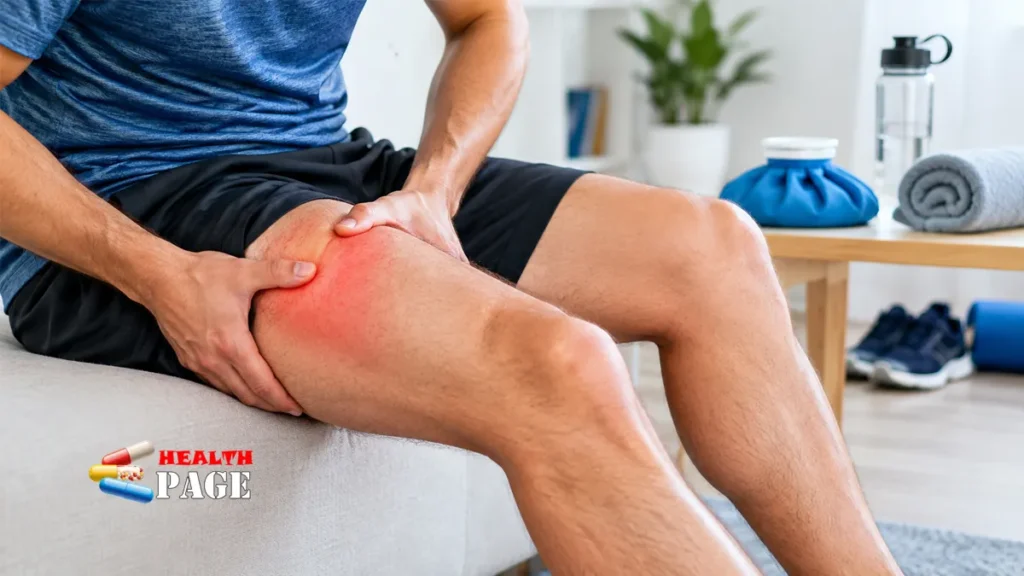
How Long Does a Pulled Muscle Take to Heal? Recovery Tips
You stood up from a squat, sprinted for a bus, or reached for a box on a high shelf, and something in your leg, back or shoulder gave way with a sharp pull. Now every movement reminds you of it. The question most people ask next is how long does a pulled muscle take to heal. The honest answer depends on how badly the muscle fibres were damaged. A mild strain often settles within a few weeks, a moderate one can take several weeks to a few months, and a severe tear can take months and sometimes needs surgery.
This guide explains what those ranges mean in practice, why two people with the “same” injury can recover at different speeds, what helps in the first days, and how to tell when a pulled muscle is something that needs a professional’s attention.
How Long Does a Pulled Muscle Take to Heal? A Quick Timeline
The NHS notes that most sprains and strains feel better after about two weeks, but advises avoiding strenuous exercise such as running for up to eight weeks because of the risk of further damage. It also says severe injuries can take months to return to normal (NHS: Sprains and strains). Cleveland Clinic gives a similar picture by grade, which is summarised below.
| Strain grade | What has happened to the muscle | Typical pulled muscle recovery time |
|---|---|---|
| Grade 1 (mild) | A few fibres are overstretched or slightly torn | Days to a few weeks |
| Grade 2 (moderate) | A partial tear affecting strength and movement | Several weeks, sometimes a few months |
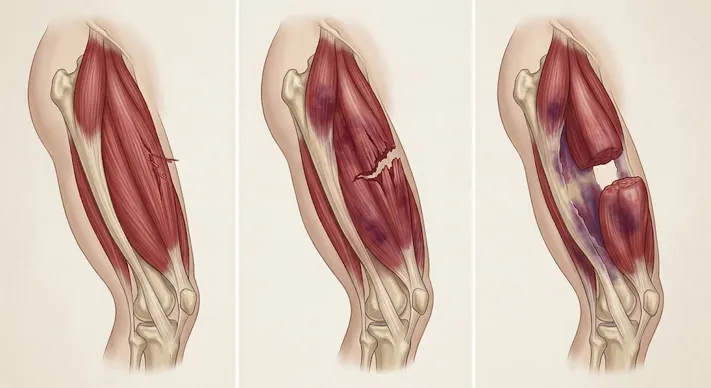
| Grade 3 (severe) | The muscle is torn all the way through | Months; surgery is sometimes needed |
These are general patterns rather than deadlines. A runner with a grade 1 hamstring strain and a warehouse worker with a grade 1 back strain may be back to full duty on quite different schedules, because the demands on the muscle are so different.
What Is a Pulled Muscle?
A pulled muscle is the everyday name for a muscle strain: an injury in which muscle fibres are stretched beyond their limit or torn. Mayo Clinic adds that a strain can also involve the tendon, the fibrous tissue that anchors muscle to bone, and that the lower back and the hamstrings at the back of the thigh are among the most commonly affected areas (Mayo Clinic: Muscle strains).
A useful way to picture it is a rope made of many strands. Overstretch it a little and a few strands fray, but the rope still holds. Overload it badly and a large share of the strands snap, and the rope can no longer take a load. Muscle behaves in a similar way, which is why a grade 1 strain hurts but works while a grade 3 strain may not work at all.
A strain is not the same as a sprain. A strain affects muscle or tendon, while a sprain affects a ligament, the band of tissue connecting two bones at a joint. Strains can happen suddenly, such as during a sprint or an awkward lift, or build up gradually through repetitive movement.
Symptoms of a Pulled Muscle
The symptoms of a pulled muscle vary with severity, but commonly include:
- Pain or tenderness at a specific spot, often linked to a particular movement
- Swelling, and bruising that may appear a day or so after the injury
- Muscle spasms
- Weakness or trouble using the muscle normally
- Limited range of movement
An acute strain tends to announce itself immediately, sometimes with a tearing or popping feeling. A chronic strain builds over days or weeks of repeated use. Muscle cramps can feel similar in the moment, but a cramp is a sudden involuntary tightening that usually passes, whereas a strain leaves pain and tenderness behind. If you are unsure which you are dealing with, this overview of what causes muscle cramps explains the usual triggers.
One caution applies throughout this article: symptoms alone cannot reliably tell you the grade. A badly bruised, swollen thigh might be a moderate strain or something more serious, and only an examination, sometimes with an MRI or ultrasound scan, can say for certain.
Grade 1, 2 and 3 Muscle Strain Recovery Time in Detail
The grade 1 2 and 3 muscle strain recovery time ranges above are easier to understand with a few everyday scenarios. These are illustrations, not case studies.
Grade 1: tight, sore, but usable
Imagine a weekend footballer who feels a pull in the back of the thigh, finishes the game gingerly and wakes up stiff the next day. Walking is fine, stairs are uncomfortable, and there is no obvious bruise. This is the typical mild strain, and Cleveland Clinic describes it as the most common type. Cleveland Clinic says it should heal within a few weeks (Cleveland Clinic: Muscle strain). Very mild cases may settle in days, but pain fading is not proof that the tissue has regained its strength.
Grade 2: weakness and visible bruising
Now picture someone who lifted a heavy box with poor form and felt a sharp pain in the lower back or shoulder. The following day there is noticeable bruising, the muscle feels weak, and certain movements are painful. A grade 2 injury has torn through a significant part of the muscle, which affects both strength and movement. Cleveland Clinic says moderate strains may take several weeks to months to heal completely. Physiotherapy is commonly part of the picture at this stage.
Grade 3: a complete tear
A grade 3 strain usually announces itself dramatically: a pop, immediate loss of function, severe pain, and sometimes a visible gap or dent in the muscle. Cleveland Clinic notes that a complete tear might need surgery to repair it, and that recovery after surgery can take four to six months, sometimes beginning with a period of immobilisation. This is an injury for a doctor, not for home treatment.
Why Recovery Times Vary So Much
Several factors shape how long your own recovery takes.
Severity and location. How much of the muscle is torn matters most, but so does which muscle it is. A calf or hamstring that has to carry your body weight with every step is harder to rest than a small muscle in the forearm.
What you need your body to do. The NHS and Cleveland Clinic both stress that recovery is tied to what you return to. Walking to the shops and sprinting on a football pitch place very different loads on a healing hamstring.
Age and general health. Healing tends to be slower in some people than others, and long-term health conditions can play a part, which is one reason a clinician’s advice is better than a fixed number.
Previous injuries. Muscles that have been torn before are more likely to tear again, and Cleveland Clinic notes that scar tissue can be stiffer and more brittle than healthy muscle.
Habits that keep the problem going. Strains of the neck and upper back often come from posture and repetitive positions rather than a single event. If you spend hours looking down at a screen, the muscles may keep being overloaded while you try to heal, which is a pattern covered in this guide to tech neck symptoms and exercises.
What to Do in the First Few Days
For the first two to three days, the NHS recommends the PRICE approach: protect the injury, rest it, apply ice, use compression and elevate it.
- Protect and rest. Stop the activity that caused the injury and avoid putting strain on the area.
- Ice. Apply an ice pack, or a bag of frozen vegetables wrapped in a tea towel, for up to 20 minutes every two to three hours. Never place ice directly on bare skin.
- Compression and elevation. A bandage can support the area during the day, and keeping the limb raised on a pillow helps with swelling.
During the first couple of days, the NHS also advises avoiding heat, alcohol and massage, because they may increase swelling. Once the pain allows, you do not need to stay completely still. The NHS suggests gently moving the area as soon as pain does not stop you, so the muscle does not become stiff.
For pain relief, the NHS suggests paracetamol first and ibuprofen gel, mousse or spray to help with swelling, with ibuprofen tablets as an option if needed. Anti-inflammatory tablets are not suitable for everyone, so a pharmacist can advise on what is safe alongside any other medicines or health conditions you have.

How to Heal a Pulled Muscle Faster, Realistically
No treatment has been shown to guarantee faster healing, and it is worth being sceptical of anything that promises one. What you can do is avoid slowing yourself down.
Sleep and a balanced diet support the body’s repair work in general terms, though no particular food or supplement has been proven to speed up muscle healing. Staying away from painful activities protects the damaged fibres, while keeping gently mobile prevents unnecessary stiffness. Cleveland Clinic lists physical therapy as part of treatment once the first few days have passed, because a therapist can guide specific exercises for rehabilitating the muscle. It also mentions platelet-rich plasma injections but describes them as still unproven, which is a good example of a treatment that sounds promising but is not routine.
If progress stalls, ask for help rather than pushing harder. The NHS says physiotherapy may help when a strain is taking longer than usual to improve, and in many areas of the UK you can self-refer to community musculoskeletal services without seeing a GP first.
Returning to Exercise Safely
Calendar days are a poor guide to readiness. A better question is whether the muscle can do what you are about to ask of it. Many clinicians look for signs such as:
- Normal daily activities no longer cause pain
- Movement through the full range feels similar to the other side
- Strength feels comparable to the uninjured side
- Light versions of your sport or exercise do not bring the pain back
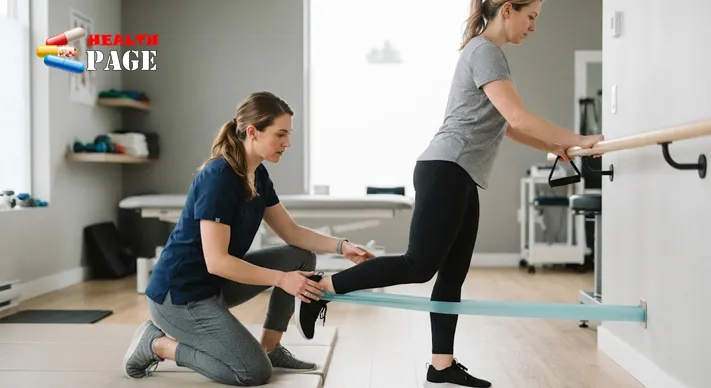
Treat these as general markers rather than a formal test, since a physiotherapist can assess your specific muscle and sport more accurately. Muscle strain rehabilitation exercises usually progress from gentle movement to light strengthening and then to activity-specific work, increasing a little at a time. If pain returns or the muscle feels weak during activity, step back a stage and consider an assessment. Returning too early is one of the common reasons for re-injury, and the NHS guidance on avoiding strenuous exercise for up to eight weeks is a reminder that feeling better is not the same as being ready.
When a Pulled Muscle Is Not Just a Pulled Muscle
Most strains are minor, but some injuries that feel like one are not. The NHS advises getting help from NHS 111 if the injury is very painful or getting worse, there is a large or growing amount of swelling or bruising, you cannot put weight on it or walk more than a few steps, it feels very stiff, or it is not improving after treating it yourself. A fever or feeling hot, cold or shivery alongside the injury could indicate infection.
Call 999 or go to A&E if you heard a crack at the time of injury, the body part has changed shape or is pointing at an odd angle, it is numb or tingling, or the skin has turned blue or grey or feels cold. These can be signs of a broken bone. Fractures follow a different timeline and need different management, as this article on rib fracture healing time illustrates.
Mayo Clinic also recommends seeing a healthcare professional if symptoms get worse, pain is serious or not improving, you have numbness or tingling, or you have trouble using the muscle. That last point matters for persistent back pain in particular. A back strain that refuses to settle, or comes with other symptoms, may have another cause such as a worn spinal disc, a condition outlined in this guide to disc degeneration.
This article is for education and cannot diagnose an injury. A clinician may examine the area and, if a significant tear or another problem is suspected, arrange imaging.
Frequently Asked Questions
Can a pulled muscle heal in three days?
A very mild strain may feel much better in a few days, but that usually reflects settling pain rather than fully restored strength. Because the muscle can still be vulnerable, easing back into activity is safer than going straight to full intensity.
Should I stretch a pulled muscle?
Not forcefully in the early period. Aggressive stretching can aggravate a fresh injury. Gentle movement within comfortable limits is sensible once pain allows, and a physiotherapist can advise when and how to add more.
When should I see a doctor?
Seek help promptly for severe or worsening pain, large swelling or bruising, a pop at the time of injury, inability to use the muscle or bear weight, numbness, or discolouration. Also book an assessment if the injury is not clearly improving after a few days of sensible self-care.
Is heat or ice better for a pulled muscle?
For the first couple of days, the NHS recommends ice wrapped in a towel and advises avoiding heat because it may increase swelling. Once the early phase has passed, some people find warmth comforting for stiffness, but ask a clinician if you are unsure.
Why does my pulled muscle still hurt weeks later?
Healing is gradual, and a moderate strain can take weeks to months. Pain that is not improving, or that is getting worse, is a reason to have the injury checked, since it may be a more significant tear or a different problem altogether.
The Takeaway on Healing Time
So, how long does a pulled muscle take to heal? Most mild strains improve within a couple of weeks and are largely resolved within a few, moderate strains often take several weeks to a few months, and severe tears can take months and may need surgery. The more useful measure is function rather than the calendar: pain settling, movement returning, strength matching the other side, and the muscle tolerating the activity you want to do.
If you are unsure how serious your injury is, getting it checked is a reasonable and low-cost step. For more musculoskeletal guides, you can browse the orthopedics section at HealthPage.
References
- NHS. Sprains and strains. https://www.nhs.uk/conditions/sprains-and-strains/
- Cleveland Clinic. Muscle Strain (also titled “What To Do When You Pull a Muscle”). https://my.clevelandclinic.org/health/diseases/22336-muscle-strains
- Mayo Clinic. Muscle strains – Symptoms and causes. https://www.mayoclinic.org/diseases-conditions/muscle-strains/symptoms-causes/syc-20450507

Dr. John Ma is a dedicated Orthopaedic Surgeon with extensive experience in musculoskeletal health and surgical care. He currently serves at Royal Brisbane and Women’s Hospital, Australia, where he provides expert treatment for complex orthopaedic conditions. Passionate about advancing patient outcomes, Dr. Ma combines evidence‑based practice with compassionate care, helping individuals restore mobility and improve quality of life. Through his contributions to healthcare, he continues to support patients in achieving long‑term wellness and recovery.