
Why Sleeping on Your Right Side Could Be Worsening Your Acid Reflux
Medical Disclaimer: This article has been written by Dr. Sana Lodhi for educational and informational purposes only and does not constitute formal medical advice. The content is not intended to be a substitute for professional medical diagnosis, advice, or treatment. Always seek the advice of your physician or qualified health provider with any questions you may have regarding acid reflux, GERD, or any other medical condition.
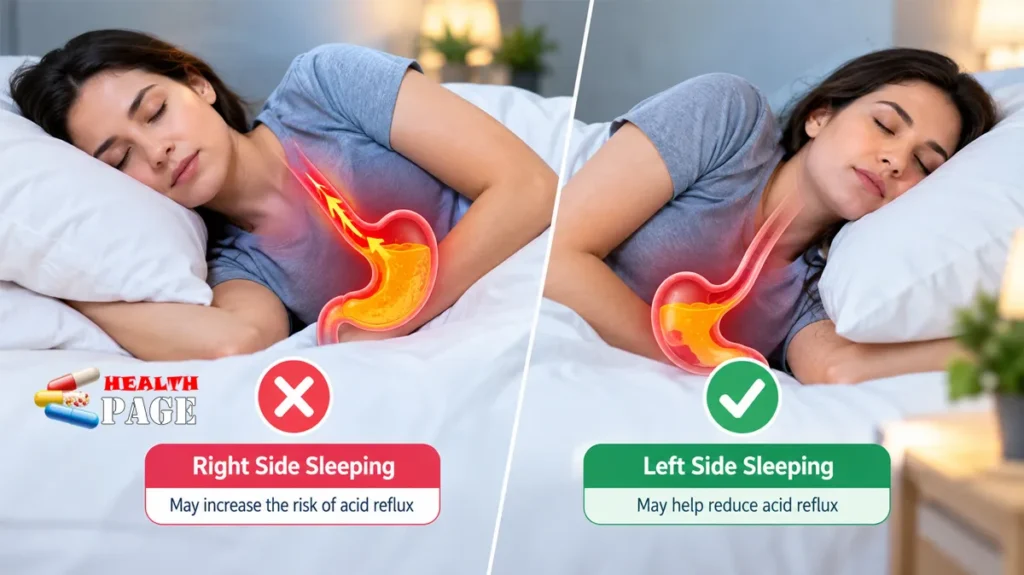
You settle into bed after dinner, and within half an hour there is a familiar burn behind the breastbone or a sour taste creeping up your throat. Many people blame the late snack or the second coffee, and those can matter. But the side you lie on matters too. Gastroenterology guidance and physiological research point the same way: sleeping on left side for acid reflux is generally the better choice, while lying on the right tends to keep stomach contents against the esophageal opening.
That does not mean right-side sleeping causes GERD in everyone, and no position cures it. The evidence supports something narrower and more useful: position changes how much acid reaches the esophagus and how quickly it clears, and you can adjust it tonight at no cost.
Why Sleeping on Your Right Side May Worsen Acid Reflux
The esophagus joins the stomach at the gastroesophageal junction, where a ring of muscle called the lower esophageal sphincter (LES) works as a one-way valve. It opens to let food through and closes to keep stomach contents from flowing back up. Reflux happens when that barrier lets material slip past.
When reflux is frequent enough to cause symptoms or damage the esophageal lining, doctors call it gastroesophageal reflux disease, or GERD. Its typical symptoms are heartburn, a burning sensation rising from the upper abdomen toward the neck, and regurgitation, the effortless return of sour or bitter fluid toward the mouth.
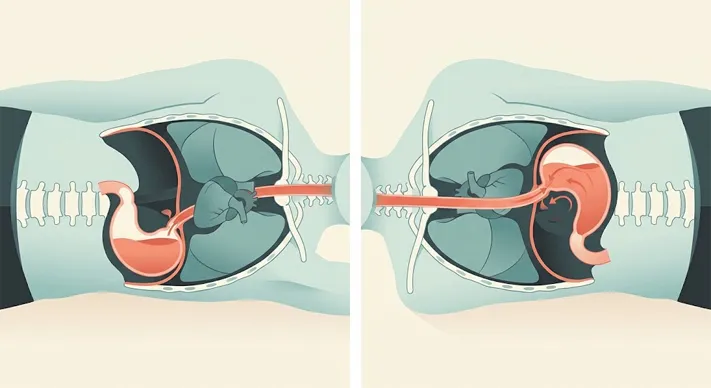
Anatomy explains much of the rest. The stomach is a curved, J-shaped pouch that sits mostly on the left side of the body, and food and acid collect along its lower, outer curve. Picture a half-full water bottle lying on its side. If the opening sits above the water line, nothing escapes. If it sits below the water line, the liquid runs out. Lying on your left leaves the esophageal opening above the pool of stomach contents. Lying on your right tips it below the pool, so contents rest against the valve instead of away from it.
The American College of Gastroenterology’s 2022 GERD guideline describes the same mechanism. Compared with lying left side down, lying right side down increases nighttime reflux and reflux after meals, probably because the junction ends up in a dependent position relative to the stomach contents. The guideline concludes that patients may be advised to avoid sleeping on the right.
Anatomy is not destiny. People with a strong LES and healthy esophageal motility may sleep on either side without symptoms. Position matters most when the barrier is already weakened.
Sleeping on Left Side for Acid Reflux: What the Research Shows
A 2023 systematic review and meta-analysis in the World Journal of Clinical Cases pooled studies comparing sleep positions in people with GERD. Left-side lying was associated with less time spent in an acidic state (acid exposure time) and faster clearance of acid from the esophagus, compared with both the right side and the back. The right side and the back did not differ significantly from each other, so the advantage belongs to the left side. The authors also noted that the number of available studies was limited.
Symptoms have been tested as well. In a 2022 double-blind, sham-controlled trial in Clinical Gastroenterology and Hepatology, 100 adults with nighttime reflux symptoms were advised to sleep on the left. Half also wore a small chest device that vibrated when they rolled onto the right side. The other half wore a sham version that vibrated only during the first 20 minutes. About 44% of device users had a reduction of at least 50% in their nighttime reflux score, against 24% of the sham group.
Two details deserve attention. The sham group improved too, likely because everyone received left-side advice and because reflux symptoms naturally fluctuate. And more than half of device users did not reach the 50% mark. Positional therapy helped a meaningful share of people, not all of them.
The fair summary is that sleeping position can reduce reflux, but the evidence does not show that it cures GERD. Left-side sleeping is a low-cost, low-risk strategy to try alongside other measures. It does not replace medical care when symptoms are frequent or severe.
What Is the Best Sleeping Position for GERD?
For most people with nighttime symptoms, the best sleeping position for GERD is the left side, ideally with the upper body slightly raised. The table compares the main options.
| Position | What research suggests | Practical note |
|---|---|---|
| Left side | Less acid exposure and faster clearance than right side or back | Best starting point for nighttime reflux |
| Right side | Linked to more nighttime and after-meal reflux | Worth avoiding if you wake with heartburn |
| Flat on back | No clear difference from right side in pooled acid measures | Consider raising the upper body |
| Upper body elevated | Guidelines suggest it for nighttime symptoms | Raise the torso, not just the head |
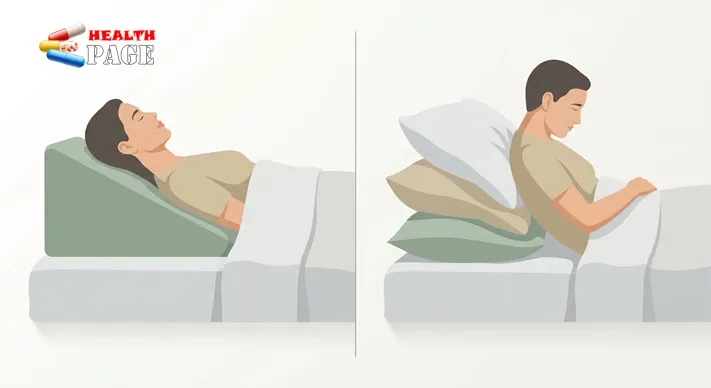
Elevation works with gravity rather than anatomy. The ACG guideline suggests elevating the head of the bed for nighttime GERD symptoms, although it rates the supporting evidence as low quality. The National Institute of Diabetes and Digestive and Kidney Diseases (NIDDK) advises an incline of 6 to 8 inches, using a foam wedge or pillows under both the head and upper back.
The difference between raising the head and sloping the torso is where most people go wrong. Stacking pillows under the head alone tends to bend the neck and fold the body at the waist, which does not create the gentle slope that helps. A wedge pillow for acid reflux, blocks under the head-end bed legs, or an adjustable base gives a straight incline.
Elevation and side position are not mutually exclusive. One uses gravity, the other uses stomach anatomy, and nothing stops you from combining them.
Right Side vs Left Side Sleeping: What About Digestion?
Searches on sleep position often blur two separate things. Reflux is the backward movement of stomach contents into the esophagus. Digestion covers stomach emptying, movement through the intestines, gas, bloating and bowel habits, which involve different organs and mechanisms. The research discussed here concerns reflux and esophageal acid exposure.
That means broader claims, such as left-side sleeping improving digestion for everyone or the right side being unhealthy, go further than the evidence. Someone without reflux who sleeps comfortably on the right has no particular reason to change. Someone whose heartburn wakes them at 2 a.m. has a good reason to experiment.
Overlapping symptoms add to the confusion. Bloating, trapped gas and constipation-related abdominal pressure can make the upper abdomen feel tight after dinner, and they may make reflux more noticeable in people already prone to it. The processes still differ. Noting when symptoms begin, whether right after eating, after lying down or on waking, helps separate them.
How Sleeping Position Affects Heartburn at Night
Several factors combine overnight, and position touches most of them.
Upright, gravity helps keep stomach contents where they belong. Lying flat removes most of that help, so even a small leak across the sphincter reaches the esophagus easily.
Clearance matters as much. While awake, you swallow often, and each swallow sweeps refluxed fluid back down while saliva helps neutralize acid. During sleep, swallowing and saliva production drop, so acid that reaches the esophagus can linger. The ACG guideline lists reduced salivary production and impaired esophageal clearance among the contributors to GERD, and the 2023 review found slower clearance on the right side than the left.
Then there is sleep itself. Nocturnal acid reflux symptoms can wake you with burning, coughing or a choking sensation, and reflux can fragment sleep without full awakening. Some people notice a hoarse voice or a lingering cough in the morning, although those symptoms have many other causes and should not be blamed on reflux automatically.
Nighttime Acid Reflux Remedies Worth Trying
Timing is the simplest lever. NIDDK says finishing meals at least three hours before lying down may ease nighttime symptoms, and the ACG guideline suggests avoiding meals within two to three hours of bedtime. A smaller evening meal helps further, since a fuller stomach has more to push upward.
Trigger foods are more individual than most lists imply. According to the ACG guideline, alcohol, chocolate, peppermint and high-fat foods lowered LES pressure in laboratory studies. Coffee, caffeine, citrus and spicy food had little effect on LES pressure in the same studies, although they may irritate the esophagus in some people. That argues for a symptom diary over a blanket ban. Record what you ate, when, how long before bed, and whether symptoms followed.
For a structured starting point, a 7-day meal plan for acid reflux shows how lower-fat, less acidic meals can fit into an ordinary week.
Weight loss is the best-supported lifestyle measure. The ACG guideline strongly recommends it for people with overweight or obesity who have GERD symptoms, and it suggests avoiding tobacco. Neither is quick, but both reduce reflux regardless of sleeping position.
Over-the-counter antacids can relieve occasional mild heartburn, but NIDDK cautions against daily use or use for severe symptoms without a doctor’s input. Acid-suppressing medicines such as proton pump inhibitors (PPIs) and H2 blockers are options for frequent symptoms, and a clinician can advise on which one and for how long. One practical detail from the ACG guideline is that PPIs work better taken 30 to 60 minutes before a meal than at bedtime.
A realistic evening routine pulls these together:
- Finish dinner at least three hours before bed, with a moderate portion.
- Stay upright afterward; a short walk is fine.
- Raise the head end of the bed or use a wedge that lifts the whole torso.
- Start the night on your left side.
- Keep a brief symptom note for two weeks, then adjust.
How to Train Yourself to Sleep on Your Left Side
Most people change position several times a night without noticing, so the realistic goal is to make left the default: the position you fall asleep in and drift back to.
A long body pillow hugged against the chest supports the upper arm and makes rolling onto the right side less natural. A small pillow or rolled towel behind the back acts as a gentle bumper. A pillow between the knees keeps the hips aligned if left-side sleeping aggravates lower-back or hip pain. Starting the night on the left matters because the stomach is typically fullest in the hours after dinner.
Some people find all-night left-side sleeping uncomfortable. Spending more of the night on the left than on the right is a sensible target. Wearable positional devices like the one in the 2022 trial exist, but availability varies and most people can try the simpler methods first. If you have shoulder pain, sleep apnea or another condition that affects how you can sleep, check with a clinician before changing your position.
When Should You See a Doctor for Nighttime Acid Reflux?
Lifestyle changes are reasonable for occasional reflux. See a healthcare professional if heartburn is frequent, regularly interrupts sleep, continues despite these changes, or needs repeated over-the-counter medicine. A clinician can also check whether something other than reflux is responsible.
Some symptoms call for prompt evaluation rather than waiting: difficulty or pain when swallowing, persistent vomiting, bleeding from the digestive tract, unexplained weight loss, or signs of anemia. The ACG guideline recommends endoscopy as the first test for people with swallowing difficulty or these alarm symptoms.
Chest pain needs particular caution. The ACG guideline notes that GERD can cause chest pain indistinguishable from cardiac pain, and a HealthPage guide on how gas and reflux can mimic heart-related chest pain shows how easily the two are confused. New, severe or unexplained chest pain should not be assumed to be heartburn. Seek emergency care for chest pressure or pain that comes with shortness of breath, sweating, nausea, or pain spreading to the arm, jaw or back.
Frequently Asked Questions About Sleeping Positions and Acid Reflux
Is sleeping on the left side better for acid reflux?
For most people with GERD, probably yes. Pooled research found less acid exposure and faster acid clearance on the left side than on the right side or back. The studies are limited and individual responses vary, so treat it as something to test.
Can left-side sleeping stop acid reflux completely?
Unlikely on its own. In the 2022 trial, 44% of device users cut their nighttime reflux score by at least half, which means most did not reach that mark. Position works best alongside meal timing, elevation, trigger management and, when needed, medication.
How high should you elevate your head for nighttime acid reflux?
NIDDK suggests an incline of 6 to 8 inches. The slope should start at the waist, using a wedge, bed risers or an adjustable base, rather than bending the neck over a stack of pillows.
How long before bed should you stop eating?
NIDDK suggests at least three hours before lying down, and the ACG guideline suggests avoiding meals within two to three hours of bedtime. Smaller evening portions help as well.
Is it bad to sleep flat on your back if you have acid reflux?
It is not ideal. Pooled data showed more acid exposure on the back than on the left side, and lying flat removes gravity’s help. Raising the upper body can improve it. People without reflux often sleep on their backs without trouble.
What should you do if acid reflux wakes you at night?
Sit up or stand instead of lying flat, and give the symptoms a few minutes to settle. An antacid taken as directed on the label may ease occasional episodes. When you return to bed, lie on your left with the upper body raised. If it happens often, see a clinician, and treat severe or unexplained chest pain as an emergency.
Putting It Together
Sleeping on left side for acid reflux is one of the few lifestyle changes backed by both anatomy and measured acid exposure, and it costs nothing to try. It works best as part of a routine: an earlier, lighter dinner, an incline that lifts the torso, a left-side starting position, and attention to personal triggers.
Keep expectations realistic. Some people improve a great deal, others only a little, and persistent or severe symptoms deserve a conversation with a healthcare professional. A good next step is a two-week trial. Change one or two habits, keep a short symptom note, and bring it to your appointment if the nights are not getting better.
References
- Katz PO, Dunbar KB, Schnoll-Sussman FH, Greer KB, Yadlapati R, Spechler SJ. ACG Clinical Guideline for the Diagnosis and Management of Gastroesophageal Reflux Disease. American Journal of Gastroenterology, 2022;117(1):27–56. https://pubmed.ncbi.nlm.nih.gov/34807007/
- Simadibrata DM, Lesmana E, Amangku BR, Wardoyo MP, Simadibrata M. Left lateral decubitus sleeping position is associated with improved gastroesophageal reflux disease symptoms: A systematic review and meta-analysis. World Journal of Clinical Cases, 2023;11(30):7329–7336. https://pmc.ncbi.nlm.nih.gov/articles/PMC10643078/
- National Institute of Diabetes and Digestive and Kidney Diseases (NIDDK). Treatment for GER & GERD (https://www.niddk.nih.gov/health-information/digestive-diseases/acid-reflux-ger-gerd-adults/treatment) and Eating, Diet, & Nutrition for GER & GERD (https://www.niddk.nih.gov/health-information/digestive-diseases/acid-reflux-ger-gerd-adults/eating-diet-nutrition).

Dr. Sana Lodhi is a qualified medical doctor (MBBS) with a strong commitment to patient care and evidence‑based medicine. With years of clinical experience and her current role at Liaquat University of Medical & Health Sciences (LUMHS), she brings trusted medical insights to readers, simplifying complex health topics into clear, practical guidance. Her passion lies in promoting preventive healthcare, empowering individuals to make informed decisions, and bridging the gap between medical knowledge and everyday wellness. At HealthyPost.co.uk, Dr. Lodhi shares expert perspectives on health, lifestyle, and medical awareness to help readers live healthier, more balanced lives.