
Prosopometamorphopsia: Symptoms, Causes, Diagnosis, and Treatment
Medical Disclaimer: The information provided in the article “Prosopometamorphopsia: Symptoms, Causes, Diagnosis, and Treatment” is for educational and informational purposes only and is not intended as a substitute for professional medical advice, diagnosis, or treatment. Always seek the advice of your physician or another qualified healthcare provider with any questions you may have regarding a medical condition. Never disregard professional medical advice or delay in seeking it because of something you have read in this article.
Written by: Dr. Sana Lodhi (General Medicine)
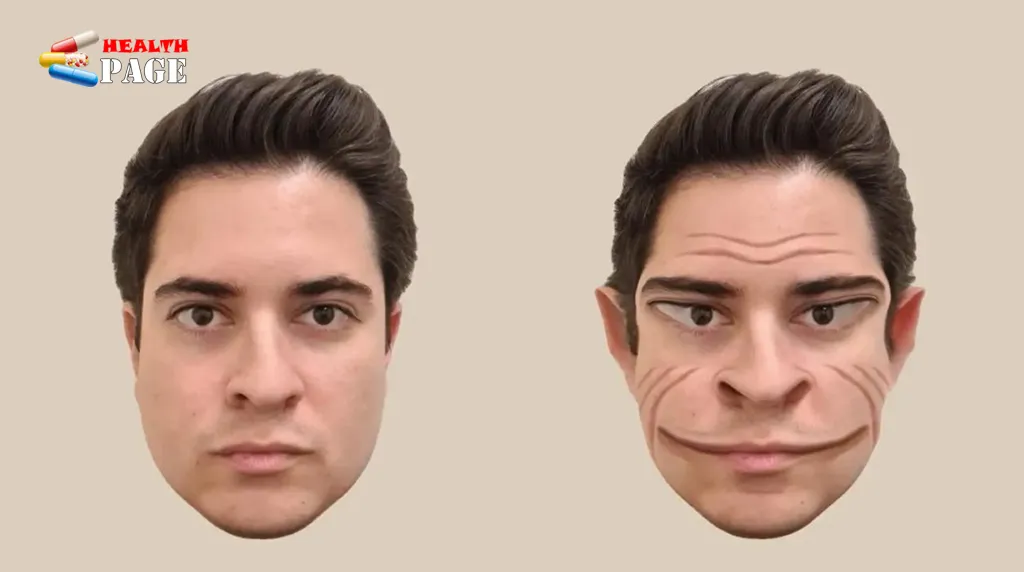
Picture sitting across from someone you love and watching their face stretch, droop, or slide slightly out of place. You know exactly who they are, but the face in front of you will not look right. That is the daily experience of people with prosopometamorphopsia (PMO), an extremely rare disorder of visual perception in which real faces appear distorted even though the faces are normal and the eyes are working. The problem seems to lie in how the brain assembles facial information. This article explains what PMO looks like, what may cause it, how it is investigated, and what treatment can realistically offer. It also covers what to do if you are asking yourself why you see distorted faces.
What Is Prosopometamorphopsia?
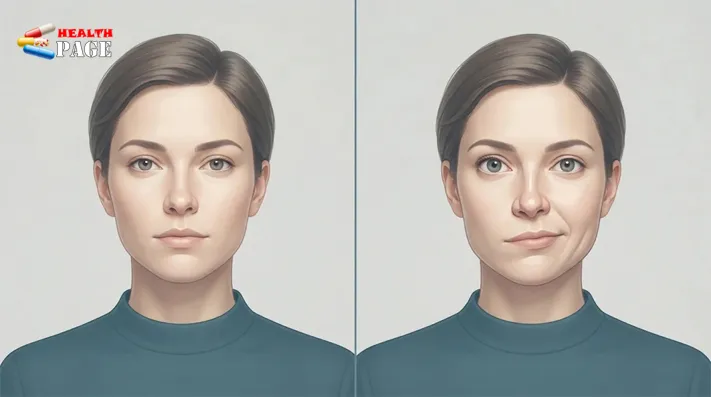
The name combines the Greek prosopon (face) with metamorphopsia, the medical term for distorted vision. In PMO, faces may look stretched, swollen, drooping, twisted, or oddly colored. Objects such as cups, houses, and cars usually look normal. Many people can still recognize who they are looking at, because their ability to identify faces may be largely intact.
The earliest documented case dates to 1904. A woman reported that her eyes looked enlarged and contorted after several epileptic seizures. The term itself was introduced decades later by MacDonald Critchley. Fewer than 100 cases have been published, and researchers at Dartmouth College believe the true number is higher, because many people never learn that their experience has a name.
PMO is different from a hallucination. A hallucination means seeing something that is not there. In PMO, a real face is present and its appearance is altered. That distinction matters, because it explains why PMO is a perceptual disorder rather than a psychiatric symptom in most reported cases.
Prosopometamorphopsia Symptoms
The defining symptom is seeing human faces as distorted. What people describe varies considerably:
- Shape changes: faces look elongated, flattened, swollen, or narrow.
- Displaced features: a nose appears shifted sideways, or a mouth sits at a slant.
- Texture and color changes: skin may look uneven, grooved, or oddly tinted.
- Moving features: in one recent case study, features seemed to droop, shrink, expand, rotate, or briefly vanish.
- Unusual impressions: some people describe faces as demonic, dragon-like, or animal-like.
The distortions may cover the whole face or only one half. Some people notice them only in person, while others see them in photos, on screens, and in mirrors too. Episodes can last days or weeks in many reported cases, but they can also continue for years.
The emotional impact can be as significant as the visual one. People may feel anxious during conversations, avoid eye contact, or withdraw from social situations. Some stay silent about their symptoms because they fear being told they are mentally ill, which delays diagnosis.
Types of Prosopometamorphopsia
Clinicians usually describe PMO by which faces or which part of a face is affected. These are patterns, not separate diseases.
| Pattern | What is distorted | Notes |
|---|---|---|
| Full-face PMO | Both halves of a face | One of the two most commonly described patterns |
| Hemi-PMO | Only the left or right half | Often linked to damage on one side of the brain |
| Own-face PMO (autoprosopometamorphopsia) | The person’s own reflection | Reported in people who see mirrors as distorting |
Prosopometamorphopsia Causes
The causes are not fully understood, and there is no single explanation for every case. A 2021 review of 81 cases in the journal Cortex concluded that the brain regions that build our perception of faces form a widely distributed network. That network can keep functioning surprisingly well even when parts of it are compromised.
Reported associations include stroke, head injury, brain tumors, cysts, epilepsy, and migraine. One published case involved a man with autoimmune encephalitis and seizures. People with persistent distortions are usually examined for these conditions, which is why a proper medical assessment matters. Many of these are long-term conditions, and a wider range of chronic health conditions can overlap in the symptoms they produce.
Migraine deserves a mention. Visual disturbances such as zigzag lines or blind spots are well known in migraine aura, and some people with PMO have a migraine history. If you are unsure whether your episodes are migraine-related, reading about the everyday causes of headaches can help you describe your pattern to a doctor.
Not every person has a visible lesion. Some have normal scans, and a small number report distortions for as long as they can remember, suggesting a developmental form.
Brain Regions Involved in Facial Perception
Several areas contribute to how we see faces:
- Occipital lobe: the visual processing hub at the back of the brain. In the Cortex review, bilateral distortions were linked mainly to right-sided and bilateral occipital damage.
- Temporal lobe, including the fusiform gyrus: contains face-selective regions that help us recognize and interpret faces.
- Corpus callosum: the bridge between the two hemispheres. Distortions affecting only one half of a face were linked to damage on the same side as the distorted half and to the back part of this bridge, called the splenium.
- Parietal and frontal regions: the review found tentative evidence that they help join the halves of a face together.
No single region has been shown to cause PMO in every case.
Why Do Faces Look Distorted?
The eyes act like a camera. The brain acts like the editing software that turns raw images into a face you can read, recognize, and respond to. Seeing a face as a unified whole, rather than as a collection of features, depends on many regions working together.
An analogy helps. Think of a panorama stitched from two separate photos. If the stitching software misaligns the overlap, the final picture can look warped even though both original photos were fine. Researchers think something similar may happen with the halves of a face when the connecting pathways are disrupted, although this idea is still tentative.
This also explains why PMO is not a typical eye problem. Retinal conditions can cause straight lines to look wavy, but they usually affect everything in the affected area of vision, not just faces. That is why an eye examination is a sensible early step in checking whether the distortion originates in the eye or the brain.
Why Do I See Distorted Faces?
Distorted faces have more than one possible explanation. PMO is one. Others include migraine-related visual disturbances, seizure activity, injury or illness affecting the brain, other perceptual disturbances, and eye conditions. A single odd moment, such as a face looking strange when you are exhausted or in poor light, does not mean you have PMO.
Persistent or recurring distortions deserve a medical assessment even when nothing else seems wrong. Sudden distortion needs faster action. If it appears with a severe headache, weakness, numbness, facial drooping, confusion, difficulty speaking, or sudden vision loss, treat it as an emergency. These can be signs of a stroke, and the NHS stroke guidance explains the FAST signs and why calling emergency services immediately matters. In emergency departments, brain imaging is often the first step, and how quickly CT results reach ER doctors varies by hospital and urgency.
Prosopometamorphopsia vs. Prosopagnosia
The two terms look alike but describe different problems. Historically, PMO was sometimes treated as a form of prosopagnosia, or face blindness. Current research shows the two conditions can occur separately, and their underlying mechanisms only partly overlap.
| Feature | Prosopometamorphopsia | Prosopagnosia |
|---|---|---|
| Core problem | Faces look distorted | Faces are hard to identify |
| How a face appears | Altered or warped | Usually looks normal |
| Recognizing people | Often preserved | Often impaired |
| Affects objects? | Usually not | Not typically |
Put simply, PMO changes how a face looks, while prosopagnosia affects knowing whose face it is. They can coexist. A 2025 case study of a young person with lifelong distortions also found difficulty recognizing face identity.
How Is Prosopometamorphopsia Diagnosed?
There is no single test for PMO. Diagnosis rests on a detailed history and a search for underlying causes.
A clinician will usually ask when the distortions began, whether they appeared suddenly or gradually, whether they affect the whole face or one side, and whether they appear in photos and mirrors. They will also ask about migraines, seizures, head injuries, and medications.
Typical investigations include:
- A neurological examination to check brain function and visual processing.
- An eye examination to rule out retinal or optic nerve problems.
- Brain MRI to look for lesions or structural changes. If you are curious about the scan itself, how MRI sequences differ explains why doctors may use more than one type.
- EEG and blood tests when epilepsy or another medical cause is suspected.
- Face perception testing, sometimes at specialist research centers.
Because so few clinicians have encountered PMO, misdiagnosis can happen. Researchers at Dartmouth have heard from people who were treated for psychosis when the underlying issue was visual, which is why a careful neurological and visual workup matters.
Prosopometamorphopsia Treatment
No treatment is proven to cure PMO. Jan Dirk Blom, a psychiatrist who co-authored the 2021 review, has said there is no single drug that works for all cases. Treatment generally targets whatever is causing the symptoms.
If epilepsy is responsible, a neurologist may recommend antiseizure medication. If a stroke, tumor, or cyst is found, treatment follows the standard approach for that condition. When migraine is involved, managing attacks and triggers may help. Some people have improved after treatment of an underlying condition, but individual case reports are not proof that a particular medication works.
Some non-drug approaches are being explored. One woman with PMO found her distortions eased when she wore orange-tinted glasses, and researchers found that color influenced the distortions in a small number of other cases. This is early, individual-level evidence, not an established therapy, so any lenses should be assessed by a specialist.
Antipsychotics deserve caution. They are sometimes prescribed when distorted faces are assumed to be psychiatric, but researchers have raised concerns about that approach when the cause is perceptual. If you are on any prescription, how medicines are used and monitored safely is worth understanding, and changes should only be made with your prescriber.
Practical coping steps may help alongside medical care: adjusting lighting, taking short visual breaks during long conversations, noting what makes distortions better or worse, and seeking counseling if anxiety or isolation builds.
Can Prosopometamorphopsia Go Away?
For some people, yes. The 2021 review reported relatively high recovery rates, and in many cases distortions fade within days or weeks. Others continue for months or years. A man described in a 2024 Lancet report had distortions for about 31 months, and an MRI lesion was unchanged after a year of follow-up.
Outcome seems to depend on the cause, the location of any brain abnormality, and whether the underlying condition can be treated. Since most knowledge comes from case reports and small series, doctors cannot predict recovery with confidence for any one person.
Living With Prosopometamorphopsia
Living with PMO can be isolating, especially when friends and relatives do not understand the experience. Telling trusted people what you see can reduce misunderstandings, such as being mistaken for rude or distant when you look away from someone’s face.
Other helpful steps include seeing a neurologist, asking for a neuro-ophthalmology opinion if your doctor agrees, and talking to a mental health professional about anxiety or low mood. Needing that support does not mean PMO is psychiatric. It reflects how stressful the symptoms can be.
What Does Scientific Research Tell Us?
The evidence is still developing. Four pieces of work stand out, with different levels of certainty:
- 2021 review (Cortex): analyzed 81 cases and linked patterns of facial distortion to particular brain regions, supporting a network model of face perception.
- 2024 case report (The Lancet): Dartmouth researchers worked with a 58-year-old man to build realistic images of the distortions he saw. His faces looked normal on screens and paper but distorted in person, and he could still recognize people.
- Early-emerging PMO preprint (2025–2026): a detailed case of a teenager with lifelong, shifting distortions. It is a preprint, so it has not necessarily completed peer review.
- 2026 conference abstract (American Academy of Neurology): pooled lesion data from reported cases dating back to 1947 and proposed that disconnection between face-processing areas may matter. This is emerging research, not proof of a single mechanism.
A November 2026 case from Dartmouth also described a man who saw features of his cat in people’s faces, showing that memory can influence what we see.
Frequently Asked Questions
Is prosopometamorphopsia a mental illness?
No. It is generally understood as a perceptual disorder linked to how the brain processes faces. Anxiety or depression can develop because of the distress, but the distortions themselves are not a psychiatric symptom in most reported cases.
Which doctor should I see about distorted faces?
A GP or family doctor is a sensible first stop, followed by a neurologist and an eye specialist if needed. Go to the emergency department right away if the distortion is sudden and comes with stroke-like symptoms.
Does PMO affect objects, or only faces?
Usually only faces, though some people report effects on other visual stimuli. Distortions that affect everything in one part of your vision point more toward an eye problem.
Can I test myself for PMO at home?
No. Checking whether photos or mirrors look distorted can help you describe your symptoms, but it cannot confirm PMO. A medical assessment is needed to find any underlying cause.
Can PMO affect children?
Most reported cases involve adults, but researchers have described lifelong, early-emerging cases. Children may not realize that faces look different to others, so a parent noticing odd comments about faces is worth mentioning to a doctor.
Conclusion
Prosopometamorphopsia is rare, poorly known, and often distressing, but it is not imaginary. It reflects real differences in how the brain assembles faces, and in many cases the distortions improve or resolve, especially when an underlying cause is found and treated.
If faces have started to look wrong, note when it began, whether it affects one side or both, and whether photos look the same. Then book a medical assessment. Seek emergency help immediately if the change is sudden or comes with weakness, speech trouble, or vision loss.
References
- Blom JD, ter Meulen BC, Dool J, ffytche DH. “A century of prosopometamorphopsia studies.” Cortex, 2021;139:298–308. PubMed: https://pubmed.ncbi.nlm.nih.gov/33865569/
- Dartmouth College. “If Faces Appear Distorted, You Could Have This Condition” (report on Mello et al., The Lancet, 2024): https://pbs.dartmouth.edu/news/2024/03/if-faces-appear-distorted-you-could-have-condition
- NHS. “Signs of stroke – act FAST”: https://www.nhs.uk/actFAST

Dr. Sana Lodhi is a qualified medical doctor (MBBS) with a strong commitment to patient care and evidence‑based medicine. With years of clinical experience and her current role at Liaquat University of Medical & Health Sciences (LUMHS), she brings trusted medical insights to readers, simplifying complex health topics into clear, practical guidance. Her passion lies in promoting preventive healthcare, empowering individuals to make informed decisions, and bridging the gap between medical knowledge and everyday wellness. At HealthyPost.co.uk, Dr. Lodhi shares expert perspectives on health, lifestyle, and medical awareness to help readers live healthier, more balanced lives.