
First-Degree AV Block Explained: Causes, Symptoms & Treatment
This article, “First-Degree AV Block Explained: Causes, Symptoms & Treatment,” was written by Dr. Akram Chang (Cardiovascular Medicine).
The information provided in this article is intended solely for educational and informational purposes and does not constitute medical advice, diagnosis, or treatment. Always consult a qualified healthcare professional or cardiologist regarding any medical condition, symptoms, or treatment options, and never disregard or delay seeking professional medical advice based on content you have read here. If you are experiencing severe symptoms such as chest pain, fainting, or shortness of breath, seek immediate emergency medical care.
Most people who have a first degree AV block never feel anything. The finding usually turns up by accident, on an ECG ordered before surgery, during a sports medical or while a doctor investigates something unrelated. The result can sound alarming on paper, so many people end up searching for answers. The short version is that a first-degree AV block is the mildest kind of heart block. Electrical signals travel more slowly than usual between the upper and lower chambers of the heart, yet none of them are lost. In an otherwise healthy person it generally needs nothing more than occasional monitoring.
The details matter, though. The cause, the length of the delay and your general heart health all affect what the finding means for you. This guide covers each of these in turn.
What Is First-Degree AV Block?
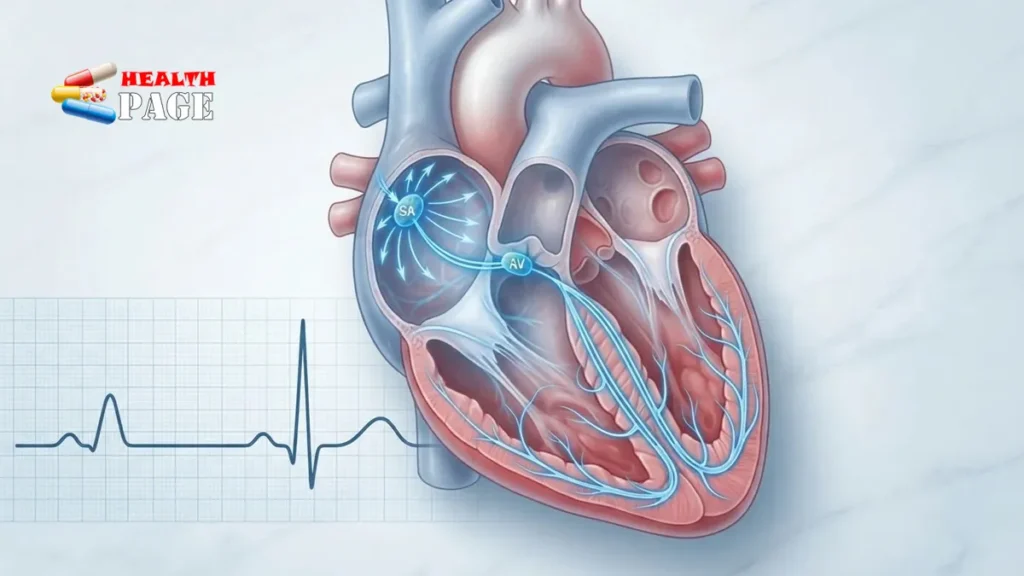
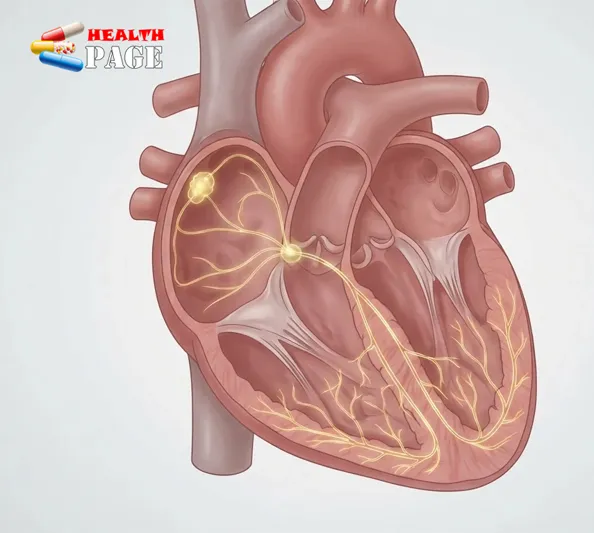
First-degree AV block, also called first degree heart block or 1st degree AV block, is a delay in the heart’s electrical conduction system. Each heartbeat starts in the sinoatrial (SA) node, the heart’s natural pacemaker, in the upper right chamber. The signal spreads across the atria, the two upper chambers, and reaches the atrioventricular (AV) node. The AV node briefly holds the signal back, which lets the atria finish emptying blood into the ventricles before they contract. If you want a refresher on the mechanics, how blood moves through the heart explains the chambers and valves involved.
In first-degree block, that pause at the AV node lasts longer than it should. The important point is that every atrial impulse still reaches the ventricles, so no beats are skipped. Cardiologists describe this as delayed conduction rather than interrupted conduction, and the British Heart Foundation describes it as the least severe type of heart block, one that usually needs no treatment. The condition carries the diagnostic code I44.0 in the ICD-10 classification.
Because it causes delay without dropped beats, it should not be confused with complete (third-degree) heart block, in which no signals pass from the atria to the ventricles.
Understanding the PR Interval
Doctors identify the condition on an electrocardiogram (ECG) by measuring the PR interval, the time from the start of atrial activation (the P wave) to the start of ventricular activation (the QRS complex). It is essentially a stopwatch for the journey across the AV node.
In adults, a normal PR interval lasts about 120 to 200 milliseconds. First-degree AV block is diagnosed when it stays longer than 200 milliseconds, and when each P wave is still followed by a QRS complex. The delay is also consistent from one beat to the next, which is how the condition differs from the more variable patterns seen in second-degree block.
A PR interval above 300 milliseconds is usually called marked first-degree block, and this is the point at which the delay is considered “marked”. It deserves a closer look because the timing between the atria and ventricles can become noticeably out of step.
An isolated long PR interval is not read on its own. Clinicians interpret it alongside the heart rhythm, the width of the QRS complex, your symptoms and your medical history.
What Causes First-Degree AV Block?
Causes fall into two broad groups: changes in how the nervous system influences the heart, and underlying structural or medical conditions. Sometimes no clear cause is found at all.
Functional causes
The vagus nerve slows conduction through the AV node. When vagal (parasympathetic) tone is high, the PR interval stretches. This is common in well-trained endurance athletes, and prevalence above 10% has been seen in groups of young athletes. In that setting the finding is usually harmless, and it often shortens during exercise as the body shifts away from vagal dominance. Vagal tone can also rise during sleep, which is why a long PR interval sometimes appears only at night.
Underlying medical conditions
In other people, the delay reflects a change in the heart or conduction tissue itself. Possible contributors include:
- Coronary artery disease and heart attack, particularly one affecting the lower wall of the heart, which supplies blood to the AV node
- Myocarditis, which is inflammation of the heart muscle, and some forms of cardiomyopathy
- Age-related scarring (fibrosis) or calcification of the conduction tissue
- Congenital heart conditions and previous heart surgery
- Hypothyroidism
- Electrolyte disturbances involving potassium, magnesium or calcium
- Inflammatory and infiltrative conditions such as lupus, rheumatoid arthritis and sarcoidosis, and infections such as Lyme disease
Lyme carditis is worth singling out because it can produce AV block that fluctuates quickly, sometimes moving between degrees over a short period, so it needs prompt medical assessment.
Medications that slow AV conduction
Several widely used medicines slow the AV node as part of how they work. They include beta-blockers, the calcium channel blockers verapamil and diltiazem, digoxin and some antiarrhythmic drugs such as amiodarone. Whether a given medicine produces a long PR interval depends on the dose, your other conditions and individual sensitivity. Many people take these drugs for years without trouble.
If you take any of them, do not stop or change the dose on your own, even if you read about a link to AV block. Abruptly stopping a beta-blocker, for example, can cause serious problems. Any review of your treatment should come from the prescriber who knows your full history.
First-Degree AV Block Symptoms
For most people, there are no symptoms to describe. All the electrical impulses still arrive, so the ventricles keep pumping normally. The medical literature repeatedly describes the condition as almost always silent.
Symptoms are more likely when the PR interval is markedly prolonged, or when another heart problem is present. In those cases people occasionally report:
- Light-headedness or dizziness
- Unusual tiredness or reduced stamina
- Shortness of breath on exertion
- Awareness of the heartbeat, or palpitations
- A slower-than-usual pulse
These symptoms are nonspecific. Anaemia, thyroid disease, poor sleep, anxiety and many other common conditions can produce the same complaints, so it would be a mistake to blame every episode of fatigue on a long PR interval. When the interval is very long, the atria can end up contracting against valves that have not yet opened, which is the mechanism behind the so-called pacemaker-syndrome-like discomfort sometimes described in marked cases.
Fainting, severe dizziness, chest pain, significant breathlessness or sudden weakness are not features to dismiss as part of a mild first-degree block. They may point to a different cardiac problem or a more advanced conduction abnormality. Caffeine and stimulants can also affect how your heartbeat feels, which is another reason to look at the whole picture before drawing conclusions.
Is First-Degree AV Block Dangerous?
In most people it is not. An isolated first degree AV block in someone without structural heart disease or symptoms is generally regarded as a benign finding. Its significance depends on a handful of factors:
- How long the PR interval is
- Whether it is temporary or persistent
- Whether there is underlying heart disease
- Whether other ECG abnormalities, such as a widened QRS complex, are present
- Whether you have symptoms
Can it progress?
This is the question people worry about most, and the honest answer is that the evidence is mixed. A first-degree block can coexist with disease elsewhere in the conduction system, and some patients do go on to develop more advanced block. The British Heart Foundation notes that AV blocks can turn into higher-degree blocks. Even so, StatPearls points out that it is not clear whether the block itself is prone to progression or whether it simply occurs more often in people who already have organic heart disease.
Progression is therefore possible but not inevitable, and many people remain stable for decades, particularly those with vagally driven delay. This is the reason doctors often recommend routine follow-up rather than either alarm or complete reassurance.
Long-term outlook
For people who are otherwise healthy, the outlook is generally good. Athletes with a long PR interval attributable to vagal tone usually need no restriction. When the block accompanies heart disease, the outlook is driven mainly by that underlying condition.
Difference Between First-, Second- and Third-Degree AV Block
The three degrees describe how many electrical impulses reach the ventricles, which is what separates a minor finding from an urgent one.
| Type | What happens | General significance |
|---|---|---|
| First-degree | Every impulse reaches the ventricles, but more slowly | Usually mild |
| Second-degree | Some impulses fail to reach the ventricles | Varies; Mobitz II is more concerning |
| Third-degree (complete) | No impulses pass from atria to ventricles | Serious; often needs a pacemaker |
Second-degree block has two forms. In Mobitz type I (Wenckebach), the PR interval lengthens with each beat until one ventricular beat is dropped. In Mobitz type II, beats are dropped suddenly without that progressive lengthening, which makes it less predictable and more likely to need treatment.
Conduction problems can also arise lower down in the ventricles. A bundle branch block affects the pathways beyond the AV node, and is a separate condition even though it may appear on the same ECG.
How Is First-Degree AV Block Diagnosed?
A standard 12-lead ECG is the key test. It takes a few minutes, is painless and shows the prolonged PR interval directly. Typical findings are a PR interval over 200 milliseconds, the same length on every beat, and a QRS complex after every P wave.
Because a single recording captures only a moment in time, doctors may add other tests depending on the picture:
- Medical history and examination. Questions about symptoms, medications, previous heart problems and family history, along with a check of pulse and blood pressure.
- Holter or ambulatory monitor. A portable recorder worn for a day or two, or longer, to catch changes that come and go.
- Exercise ECG. It shows how conduction behaves under stress, which helps separate a vagal pattern from a structural one.
- Echocardiogram. An ultrasound scan assessing chamber size, valves and pumping function.
- Blood tests. To check electrolytes, thyroid function, markers of inflammation and, when a heart attack is suspected, troponin.
- Electrophysiology study. Rarely needed, and reserved for cases where the site or meaning of the delay stays uncertain.
Consumer devices have started to appear in this conversation too. A smartwatch ECG is designed mainly to detect atrial fibrillation and is not a reliable way to measure the PR interval, so a suspicious reading should go to a clinician for a proper 12-lead tracing.
First-Degree AV Block Treatment
Most people with an uncomplicated, symptom-free block need no specific treatment. As StatPearls puts it, for the majority of patients there is no need for treatment, and without symptoms surveillance is enough. The NHS likewise says heart block that causes no symptoms does not usually need treatment. What happens next is individual.
Monitoring. A doctor may suggest periodic ECGs, routine check-ups and a conversation about which new symptoms should prompt you to get in touch.
Medication review. If a drug appears to be contributing, the prescriber may adjust the dose or choose an alternative when that is clinically sensible. Again, this should never be done on your own.
Treating the underlying cause. Where another problem is driving the delay, it becomes the focus: managing coronary artery disease, treating myocarditis, correcting a significant electrolyte imbalance, or addressing an underactive thyroid.
Is a pacemaker necessary? Usually not. A pacemaker is not a standard response to first-degree block alone. Specialists may consider one in selected cases, for example when the PR interval is markedly prolonged and clearly tied to symptoms, or when more advanced conduction disease has developed. These decisions rest on the full clinical picture, not the diagnosis alone.
Lifestyle and Precautions
No lifestyle change has been shown to reverse a first-degree block, but protecting your overall cardiovascular health is sensible, particularly if an underlying condition is involved. General measures include regular physical activity suited to your health, a balanced eating pattern (this cardiologist-recommended diet for heart health is a practical starting point), a healthy weight, controlled blood pressure and cholesterol, good diabetes management, avoiding smoking and keeping alcohol modest. Take prescribed medicines as directed and attend follow-up appointments.
Many people with uncomplicated first-degree block can exercise normally, and there is no reason to assume strenuous activity must be avoided. If you have symptoms, a very long PR interval or known heart disease, ask your doctor what level of exertion is appropriate for you.
When Should You See a Doctor?
Arrange an assessment if you:
- Have just learned of a first-degree block on an ECG and no one has explained it
- Have recurrent dizziness or unexplained tiredness, or notice you can do less than before
- Have a history of heart disease
- Take medicines that affect AV conduction
- Develop new palpitations or breathlessness
Fainting, chest pain, severe breathing difficulty or collapse needs emergency care. In the UK, the NHS advises calling 999 if you have heart block and develop chest pain, or if you have severe difficulty breathing.
Frequently Asked Questions
Is first degree heart block serious?
Usually not. In people without symptoms or structural heart disease it is generally considered a mild finding. Its importance depends on the PR interval, your underlying health and whether symptoms occur.
Can first-degree AV block go away?
Sometimes. If a medicine, an electrolyte imbalance or another reversible condition is responsible, correcting it can shorten the PR interval. In other cases the pattern persists without causing problems.
Does first-degree AV block cause a slow pulse?
Not by itself. A slow heart rate may coexist with it, for instance in athletes or people on certain medicines, but the block does not drop beats and so does not necessarily lower the pulse.
Can I drive or play sport with it?
Most people with an uncomplicated finding can do both. If you have had fainting episodes or other symptoms, your doctor should advise on driving and exercise, because the underlying reason matters more than the block.
What is the difference between first- and second-degree AV block?
In first-degree block, every impulse reaches the ventricles, just with a delay. In second-degree block, some impulses never arrive, so ventricular beats are missed.
Could a long PR interval be a normal variation?
Yes, particularly in trained athletes and during sleep, where high vagal tone slows the AV node. A doctor can usually tell from your history and ECG whether it is a normal variation or needs follow-up.
Conclusion
A first degree AV block is, in the large majority of cases, a quiet finding rather than a threat. It reflects slower conduction through the AV node, it is identified by a PR interval above 200 milliseconds, and it rarely needs treatment when there are no symptoms and no underlying heart disease. What deserves attention is the context: a very long PR interval, symptoms such as fainting or breathlessness, or a heart condition that could be driving the change.
If an ECG has just shown this finding, a practical next step is to ask your doctor three things: what is the likely cause, do any of my medicines play a part, and how often should this be rechecked. Those answers will tell you far more than the label alone.
References
- StatPearls (NCBI Bookshelf), First-Degree Heart Block
- NHS, Heart block
- British Heart Foundation, Heart block

Dr. Akram Chang is a veteran Cardiac Specialist with extensive clinical experience serving at the historic
Gulab Devi Teaching Hospital in Lahore.
Specializing in clinical cardiology, myocardial preservation, and preventative cardiovascular health, he dedicates his medical career to both critical inpatient care and global public health literacy.
As a core panelist on the HealthPage Medical Review Board,
Dr. Chang provides rigorous clinical oversight, expert fact-checking, and medical verification for our thoracic and circulatory care resources. His analytical oversight ensures that complex hospital diagnostics are translated into safe, actionable, and strictly evidence-based lifestyle habits.
✉ Professional Inquiries:
[email protected]