
Scalp Massage: 7 Benefits and How to Do It Properly
Scalp massage is one of the simplest self-care habits there is. It needs only clean hands and a few quiet minutes, and many people find it relaxing. It also comes with a bigger promise, that it can make your hair grow. The honest answer to that second claim is more cautious. A small amount of early research suggests regular massage may make existing hairs slightly thicker, but nothing yet shows it can regrow lost hair or treat a condition like pattern baldness. As a relaxing, low-risk part of a scalp-care routine, though, it’s easy to justify.
This guide covers what the habit can reasonably do, what the research shows (and doesn’t), how to do it step by step, and when hair changes call for a professional rather than a better technique.
What Is Scalp Massage?
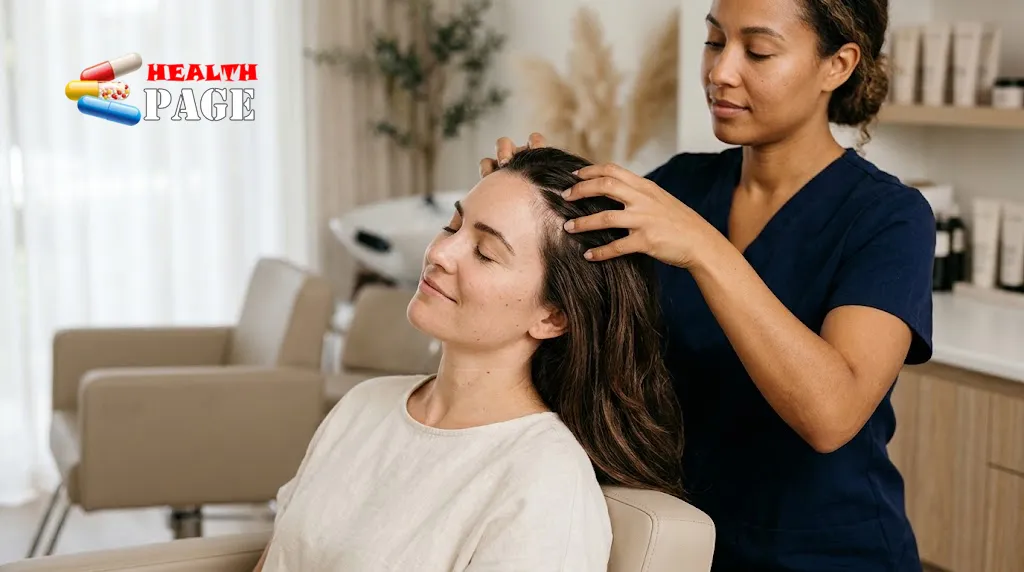
Scalp massage means applying gentle, rhythmic pressure to the skin of the head with the pads of your fingers, a soft-bristled brush, or a handheld device. The pressure moves the skin over the tissue beneath it, and that tissue includes the layer where hair follicles sit. Some people do it for a few minutes in the shower, others as an evening wind-down, and others in a salon or spa setting.
The technique itself is ordinary. What gets people into trouble is the claims attached to it online, particularly around blood flow and hair regrowth, which we’ll untangle below.
Does Scalp Massage Help Hair Growth?
The short version: possibly a little, in healthy hair, and the evidence is thin.
The study people cite most is a 2016 trial of standardized scalp massage in nine healthy men. Each participant received four minutes of massage a day for 24 weeks using a massage device. Average hair thickness in the massaged area rose from about 0.085 mm to 0.092 mm. That is a difference of roughly seven thousandths of a millimetre. The study did not report a meaningful change in how fast hair grew. It was tiny, it included no one with significant hair loss, and it was funded in part by a commercial company, so it can’t tell us whether massage helps people who are actually losing hair.
A 2019 survey of people with androgenetic alopecia (the medical term for pattern hair loss) also reported improvements after daily massage. Because those results were self-reported rather than measured in a controlled clinical setting, they are useful for generating research questions but can’t establish that massage works.
So when someone asks, “does scalp massage help hair growth?”, a fair reply is that it may modestly thicken hair shafts and it’s unlikely to hurt, but it hasn’t been shown to be a treatment for hair loss.
7 Potential Benefits of Scalp Massage
The benefits of scalp massage fall into two groups: things that are well within reach for most people, and things that remain uncertain. I’ve kept them in order of how solid the case is.
1. It’s relaxing in the moment
Most people find rhythmic pressure on the head soothing. That alone is a legitimate reason to do it. Relaxation doesn’t need a clinical trial to count as a benefit, even if it’s hard to measure.
2. It may ease tightness in the scalp, temples, and neck
The scalp sits over thin muscles that connect with the forehead and the back of the neck. Many people carry tension there after long hours at a screen or a stressful day, and slow kneading of the area can loosen it. The evidence here is mostly experiential rather than rigorously tested, so treat it as a likely but unproven benefit.
3. It may lower some stress markers
A 2016 study of 34 female office workers compared 15-minute and 25-minute massage sessions, twice a week for ten weeks, against a control group. The massaged groups showed lower cortisol and norepinephrine levels (both stress hormones) and lower blood pressure readings. Heart rate did not change significantly.
There are caveats. The sample was small, the sessions were delivered by a trained practitioner, and the program also included shoulder, neck, and facial massage, so scalp work alone can’t be credited for the effect. It suggests a relaxation benefit, not a treatment for high blood pressure.
4. It may slightly thicken existing hairs
This is the finding from the nine-man trial described above. The effect was small, measured in healthy hair, and has not been widely replicated. Think of it as an interesting lead, not a promise.
5. It helps lift flakes and product buildup
Massaging with your fingertips while shampooing loosens dead skin cells, dry flakes, and residue from styling products so they rinse away more easily. This is a practical, mechanical benefit, and it also helps shampoo and conditioner spread evenly across the scalp rather than only the lengths.
6. It makes you familiar with your scalp
Regular touch helps you notice changes early, such as a tender spot, a patch of scaling, an unusual bump, or an area where hair looks thinner. Catching these sooner can mean a faster appointment with a doctor if something doesn’t look right.
7. It’s an easy habit to keep
It costs nothing, takes minutes, and pairs well with something you already do, like washing your hair or winding down in the evening. A routine you’ll actually stick with is worth more than a perfect one you abandon in a week.
You may notice what’s missing from this list: “boosts blood flow to the follicles.” Massage does temporarily increase circulation in the skin, and that claim shows up on nearly every hair-growth page. But more blood flow does not automatically mean more hair, and no study has shown it to be the reason massage works, so I haven’t counted it as a standalone benefit.
What the Research Does and Doesn’t Show
It helps to put the evidence side by side, because the claims online often outrun the studies.
| Claim | What the evidence suggests | Strength |
|---|---|---|
| Reduces stress hormones | Small controlled study found lower cortisol and norepinephrine | Preliminary |
| Thickens existing hair | One 24-week trial of nine men; very small change | Very limited |
| Speeds hair growth | No significant change in growth rate in that trial | Not shown |
| Reverses baldness | No controlled evidence | Not supported |
| Improves scalp cleanliness | Mechanical loosening of flakes during washing is plausible | Practical, not trial-tested |
The common thread is size. The studies are small, short, and in specific groups. They’re enough to say massage is worth trying for relaxation and routine care, and not enough to recommend it in place of a treatment for hair loss.
How to Massage Your Scalp Properly
If you’ve been wondering how to massage your scalp without making things worse, the answer is mostly about being gentle and unhurried. Here is a simple approach that works on dry or wet hair.
Start with clean hands and short nails, or use the soft pads of your fingers so your nails don’t scratch. If you want to massage while shampooing, apply shampoo first and work it through.
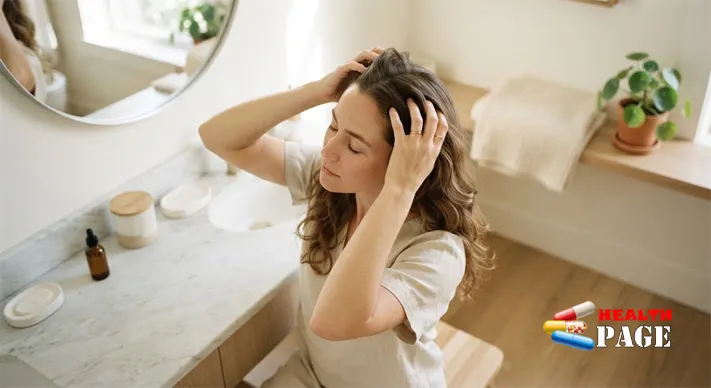
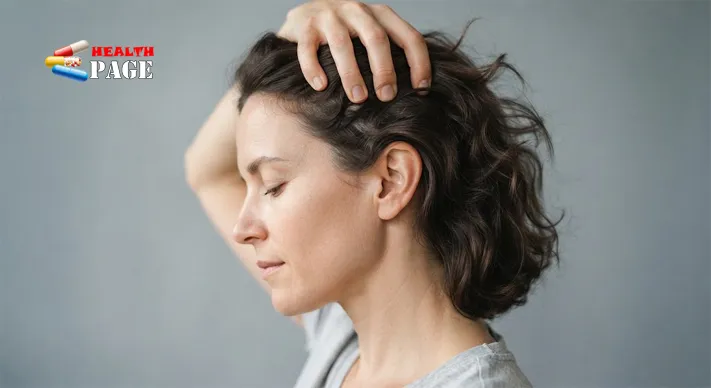
Place your fingertips on your scalp near the hairline, with firm but comfortable pressure. You should feel the skin move over the bone beneath it, rather than your fingers sliding across the hair. This is the key detail: you are shifting the scalp itself, not rubbing the hair.
Make small, slow circles, about the size of a coin. Work from the front hairline back toward the crown, then down the sides above the ears, and finally up from the nape of the neck. Spend extra time where you feel tightness, such as the temples and the base of the skull.
Finish with a few long, light strokes from the forehead back over the top of the head, then rinse if you were shampooing. Keep the pressure light enough that you could comfortably keep going for several more minutes. Pain is a signal to ease off.
Avoid tugging, twisting, or vigorous back-and-forth scrubbing. Rough rubbing can tangle strands, cause breakage, and irritate the skin, which is the opposite of what you’re after.
How Long and How Often?
There is no medically established “best” duration or frequency. The nine-man trial used four minutes a day, and the stress study used 15 or 25 minutes twice a week, but these were research protocols, not recommendations. Both are reasonable places to start.
A sensible approach is to begin with three to five minutes a day, or a longer session a couple of times a week, and adjust according to how your scalp feels. If your scalp becomes sore, red, or itchy, cut back. More is not automatically better.
Dry Massage, Shampoo Massage, Tools, and Oils
You can massage a dry scalp, a wet one in the shower, or one coated with a little oil. None is clearly superior, so choose what suits your hair and schedule. Massaging during shampooing is the most practical because it doubles as cleansing, while a dry massage in the evening may feel better as a relaxation ritual.
| Option | Best for | Things to keep in mind |
|---|---|---|
| Fingertips | Everyone; most control over pressure | Keep nails short to avoid scratching |
| Soft silicone brush | Loosening flakes during shampooing | Use light pressure on a wet scalp |
| Electric or vibrating massager | Hands-free relaxation | Not what the hair-thickness study tested; avoid on irritated skin |
| Oil-assisted massage | Dry scalp or personal preference | Can irritate or leave residue; wash out thoroughly |
Tools are optional. Your own fingers do everything a device can, and the one study that measured hair thickness used a standardized mechanical device, not a vibrating one, so a vibrating massager shouldn’t be assumed to produce the same effect.
Oils are also optional. They can make a massage feel smoother and may suit a dry scalp, but they don’t guarantee thicker hair. Essential oils in particular can irritate the skin or trigger allergic reactions, especially if applied undiluted. If you’re curious about popular options, our guide to onion oil for hair looks at the uses, risks, and evidence behind one common home remedy. Patch-test any new product on a small area first.
Scalp Massage for Hair Loss: Realistic Expectations
Massage can be a pleasant addition to a hair-care routine, but it is not a substitute for finding out why you’re losing hair. Hair loss has many causes, including genetics, hormonal changes, thyroid problems, iron deficiency, recent illness, medication side effects, stress, and some scalp conditions. The right treatment depends on which one applies.
The American Academy of Dermatology notes that effective treatment begins with finding the cause, and a board-certified dermatologist can examine your scalp, ask about your history, and order tests if needed. Some types of hair loss regrow on their own, while others need treatment to prevent further loss, and the timing can matter: the earlier treatment starts, the more likely it is to help.
If you’re using scalp massage for hair loss, treat it as supportive and keep your expectations modest. Don’t delay seeing a professional while you wait to see whether massage works.
It’s worth getting your hair checked sooner rather than later if you notice:
- Sudden or rapid shedding
- Round or patchy bald spots
- Hair loss alongside scalp pain, scaling, redness, or sores
- Thinning that keeps getting worse over several months
- Hair loss after starting a new medication or following a major illness
Safety Precautions
Scalp massage is generally low-risk, but a few situations call for caution. Skip it over open wounds, cuts, active infections, or areas that are painful, swollen, or inflamed. If you have a scalp condition such as psoriasis, seborrheic dermatitis, or a fungal infection, ask a doctor before massaging the affected skin, because friction can worsen it.
Stop if massage causes pain, new irritation, or more hairs coming out than usual. Persistent itching is also worth investigating rather than massaging through. If your scalp is itchy and you’re in midlife, for instance, hormonal changes can be a factor, and our article on itchy scalp in perimenopause explains common causes and relief options.
If you have a history of neck injury, severe headaches, or a medical condition affecting your head or spine, check with a healthcare professional before starting. A few other habits are worth avoiding: massaging with very hot water, using harsh scrubs, and starting a new routine of strong oils or devices all at once, so that if something irritates you can tell what caused it.
Frequently Asked Questions
Can scalp massage damage your hair?
Gentle massage with the pads of your fingers shouldn’t. Rough rubbing, pulling, or scrubbing can tangle strands, cause breakage, and irritate the skin. If you notice more hair than usual coming out, lighten your touch or pause for a while.
Is it normal to see a few hairs come out during massage?
Yes. Most people shed roughly 100 hairs a day, and massage can dislodge hairs that were already loosened and ready to fall. A handful of strands is normal. A noticeable increase that continues over weeks is worth discussing with a doctor.
How long before I’d notice any difference in my hair?
Relaxation effects can be immediate. For hair thickness, the one trial that found a change ran for 24 weeks, and the change was too small to see with the naked eye. If you’re hoping for visible results, massage alone is unlikely to deliver them.
Should I use oil or massage a dry scalp?
Either works, and neither has been shown to be better for hair growth. Oil may feel pleasant on a dry scalp, but it can irritate sensitive skin or leave residue. If you’re prone to flaking or breakouts on your scalp, a dry or shampoo-time massage is a simpler starting point.
Can I do scalp massage every day?
For most people, yes, provided it’s gentle and your scalp stays comfortable. If you notice redness, tenderness, or itching, take a few days off.
Conclusion
Scalp massage is a simple, inexpensive habit with real everyday value: it helps many people relax, makes washing more thorough, and keeps them in touch with the condition of their scalp. The research on hair is more tentative. One small trial suggests a slight thickening of existing hair, and no study has shown that massage reverses hair loss. A reasonable way to approach it is to enjoy it for what it reliably offers, keep the pressure gentle, and treat any hair growth as a bonus rather than the goal.
If your hair is changing in ways that worry you, the most useful next step isn’t a new technique. It’s an appointment with a GP or dermatologist who can work out the cause.
References
- Koyama T, et al. “Standardized Scalp Massage Results in Increased Hair Thickness by Inducing Stretching Forces to Dermal Papilla Cells in the Subcutaneous Tissue.” Eplasty, 2016. PubMed
- Kim I-H, Kim T-Y, Ko Y-W. “The effect of a scalp massage on stress hormone, blood pressure, and heart rate of healthy female.” Journal of Physical Therapy Science, 2016. PubMed Central
- American Academy of Dermatology Association. “Hair loss: Diagnosis and treatment.” aad.org

Dr. Jacob Cote, MD, FRCPC, is a board-certified dermatologist practicing at The Ottawa Hospital in Ontario, Canada. Specializing in medical dermatology, clinical skin pathology, and advanced acne therapies, Dr. Cote brings years of institutional hospital experience to the editorial board. He is dedicated to translating complex, evidence-based dermatological research into practical preventative skin health strategies for everyday readers. At HealthPage, he ensures all clinical guidelines and skincare recommendations are rigorously reviewed and align with current Canadian Dermatology Association standards.