
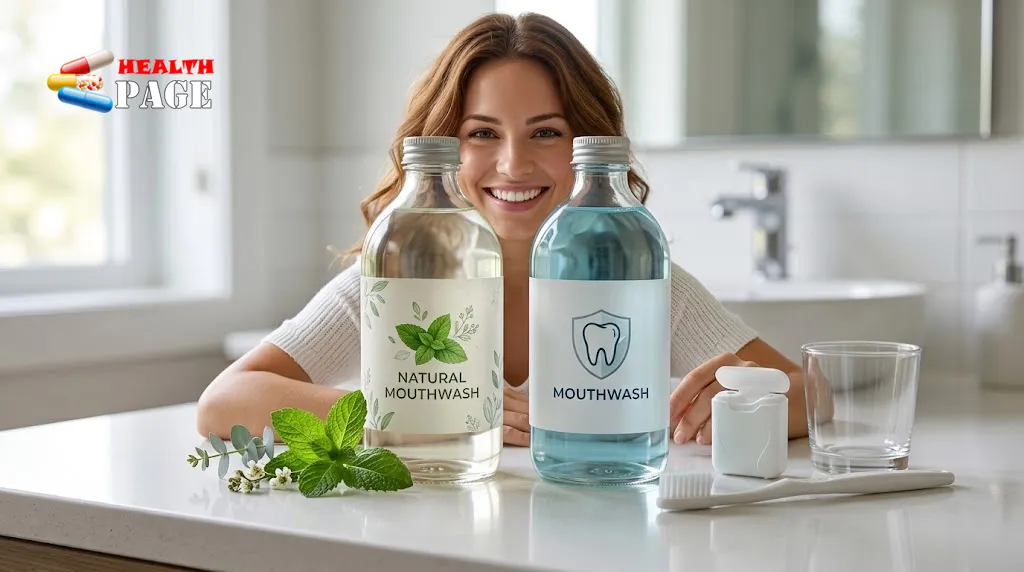
Natural Mouthwash vs. Fluoride Mouthwash: What’s the Difference?
The information provided in this article, titled “Dr. Suleman Khan (Dental Surgery)”, is intended for educational and informational purposes only and does not constitute professional medical or dental advice, diagnosis, or treatment.
Always seek the advice of a qualified dentist, physician, or other licensed healthcare provider with any questions you may have regarding a medical or dental condition. Never disregard professional medical advice or delay seeking it because of something you have read in this article.
Choosing a mouthwash can be surprisingly confusing. One bottle may emphasize plant-based ingredients and essential oils, while another highlights fluoride or cavity protection. A third may advertise itself as alcohol-free. So, is natural mouthwash actually different from fluoride mouthwash, and does one offer more benefit than the other?
The key is to look beyond the front of the bottle. “Natural,” “fluoride-free,” and “alcohol-free” describe different characteristics, while ingredients such as fluoride, essential oils, and cetylpyridinium chloride (CPC) have specific oral-health roles. Some products can even be natural and contain fluoride.
For most people, the better question is not simply which category sounds healthier. It is what you want the mouthwash to do and which active ingredients support that goal.
What Is Natural Mouthwash?
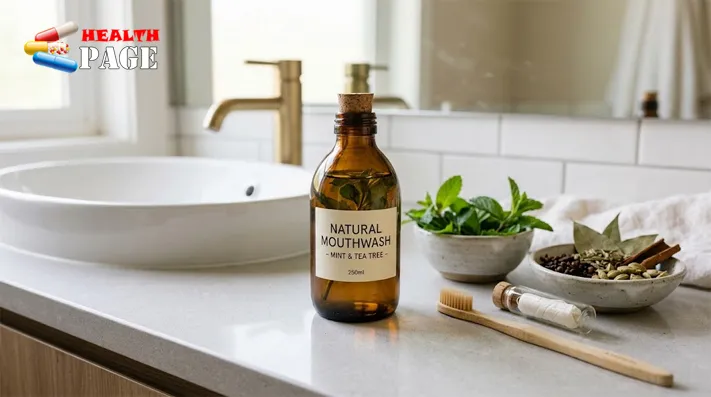
Natural mouthwash is not a standardized clinical category. The term is generally used to describe products that emphasize ingredients perceived as naturally derived, such as essential oils, plant extracts or xylitol.
That does not automatically tell you whether a product prevents cavities, controls plaque, reduces gingivitis or simply freshens breath.
For example, a mouthwash marketed as natural could be:
- Fluoride-free and alcohol-free
- Alcohol-free but contain fluoride
- Fluoride-containing and include essential oils
- Primarily designed to freshen breath
- Formulated with antimicrobial ingredients for plaque and gum control
This distinction matters because natural does not mean fluoride-free, and fluoride-free does not necessarily mean natural.
The American Dental Association (ADA) separates mouthrinses broadly into cosmetic and therapeutic products. Therapeutic mouthrinses contain active ingredients intended to help with concerns such as plaque, gingivitis, bad breath or tooth decay.
So, when evaluating a natural-looking product, the ingredient list and evidence behind its claims are more informative than words such as “herbal,” “pure” or “plant-based.”
What Are the Potential Natural Mouthwash Benefits?
The potential natural mouthwash benefits depend heavily on the formulation.
Some essential-oil mouthrinses have evidence supporting their use as an addition to brushing and cleaning between the teeth. The ADA identifies essential oils among active ingredients that can help control plaque and gingivitis.
Potential benefits include:
Plaque control
Certain antimicrobial formulations can reduce plaque when used alongside mechanical cleaning. This does not mean that every herbal or natural mouthwash has the same effect.
Support for gum health
Some therapeutic mouthrinses can help reduce gingivitis, particularly when they are used as an adjunct to regular brushing and interdental cleaning.
If your concern is bleeding or inflamed gums, mouthwash should not be considered a substitute for addressing the underlying cause. Persistent gum symptoms may require a dental examination. For additional background, see this guide on gingivitis and gum inflammation.
Fresher breath
Some mouthwashes mainly provide a temporary improvement in breath odor. Others contain antimicrobial ingredients that may help control odor-producing compounds for longer.
That distinction is useful because masking bad breath is different from treating the dental or oral condition causing it.
An alternative for people who prefer simpler formulations
Someone may simply prefer a product containing fewer ingredients they recognize or ingredients derived from plants. That is a reasonable personal preference, but it should not be confused with proof of superior clinical effectiveness.
Does Natural Mouthwash Prevent Cavities?
This is where the difference between product categories becomes particularly important.
Not every natural mouthwash protects against tooth decay in the same way as a fluoride mouthwash.
Fluoride has an established role in preventing dental caries, commonly called tooth decay. Fluoride can support remineralization and make teeth more resistant to acid-related mineral loss. The ADA identifies fluoride as a proven ingredient for helping prevent decay, and its oral-care guidance reports evidence supporting fluoride mouthrinses for people at elevated caries risk.
A fluoride-free mouthwash does not provide that fluoride-based anticaries action.
That does not mean every fluoride-free product is useless. A fluoride-free rinse may still contain ingredients intended to support plaque control, gum health or breath freshness. The important point is that these are different benefits.
Someone with frequent cavities, exposed tooth roots, dry mouth or another elevated decay risk may have different needs from someone who primarily wants a pleasant-tasting rinse for occasional breath freshness.
Natural Mouthwash vs. Fluoride Mouthwash: Key Differences
The simplest way to understand the comparison is to separate the product’s marketing category from its active ingredients.
| Feature | Natural mouthwash | Fluoride mouthwash |
|---|---|---|
| What defines it? | Usually its ingredient or marketing approach | Presence of fluoride |
| Fluoride | May contain fluoride or be fluoride-free | Contains fluoride |
| Cavity protection | Depends on formulation; fluoride-free products lack fluoride’s specific anticaries action | Provides fluoride’s established anticaries benefit |
| Plaque control | Depends on active ingredients | Depends on the complete formulation |
| Gingivitis support | Some formulations may help | Depends on additional active ingredients |
| Alcohol | May be alcohol-free, but not necessarily | May be alcohol-free or contain alcohol |
| Main consideration | Ingredients and evidence for the claimed benefit | Fluoride concentration, intended use and other active ingredients |
The important takeaway is that natural versus fluoride is not really an either-or comparison.
A product can be both plant-focused and fluoride-containing. Likewise, a product can be alcohol-free without being natural.
Is Fluoride-Free Mouthwash Better?
There is no general rule that a fluoride-free mouthwash is healthier or better for everyone.
Some people prefer a fluoride-free mouthwash because of personal preferences or because they are already receiving fluoride from toothpaste and other sources. However, choosing fluoride-free means giving up the specific cavity-prevention benefit associated with fluoride mouthrinse.
The ADA reports strong evidence for fluoride-containing mouthrinses in children at elevated risk of caries and lower-level evidence for adults using fluoride mouthrinse to reduce root-caries risk.
That does not mean every adult needs a fluoride mouthwash. Toothpaste, diet, oral hygiene, existing decay risk and professional dental advice all matter.
If you are prone to cavities, it is sensible to discuss your fluoride needs with a dentist rather than assuming that “fluoride-free” is automatically preferable.
What About Alcohol-Free Mouthwash?
Alcohol-free mouthwash and fluoride-free mouthwash are two completely different things.
Alcohol is an ingredient used in some formulations, while fluoride is an active ingredient with a specific role in preventing tooth decay. Therefore:
Alcohol-free does not mean fluoride-free.
And:
Fluoride-free does not mean alcohol-free.
A mouthwash can contain fluoride while being completely alcohol-free.
Alcohol may also be relevant for people with dry mouth. The ADA notes that alcohol-containing mouthrinses can be drying and that an alcohol-free formulation may be prudent for people managing xerostomia, or dry mouth.
Interestingly, evidence does not support the idea that removing alcohol automatically makes every essential-oil mouthwash more effective. A systematic review and meta-analysis published in 2025 found that, among the essential-oil formulations studied, alcohol-containing products produced greater plaque-control effects, while alcohol-free formulations were better appreciated for taste. The differences in gingival and bleeding outcomes in brushing studies were not significant.
So if comfort or dry mouth is your priority, alcohol-free may make sense. If plaque control is the priority, the entire formulation deserves consideration.
What Ingredients Should You Look For?
Instead of choosing a mouthwash solely because its label says “natural,” consider what its active ingredients are intended to accomplish.
Essential oils
Essential oils such as eucalyptol, menthol, thymol and methyl salicylate are used in some therapeutic mouthrinses. Certain formulations have evidence for plaque and gingivitis control when used alongside brushing and interdental cleaning.
Importantly, evidence for one standardized formulation should not automatically be applied to every product containing an essential oil.
Fluoride
Fluoride is particularly relevant when cavity prevention is the goal. A fluoride mouthwash can provide additional topical fluoride exposure, although it does not replace fluoride toothpaste or routine dental care.
Cetylpyridinium chloride
Cetylpyridinium chloride, or CPC, is an antimicrobial ingredient used in some therapeutic mouthrinses. The ADA identifies it as an ingredient that may help control plaque and gingivitis and may also be used for bad-breath control.
Xylitol
Xylitol is commonly found in oral-care products, including some mouthwashes. Its presence may contribute to a product’s formulation, but it should not be treated as automatically equivalent to fluoride for cavity prevention.
Herbal extracts
Plant extracts vary enormously. The fact that an ingredient comes from a plant does not by itself establish that a particular mouthwash prevents cavities or treats gum disease.
That is why phrases such as “chemical-free” should be treated cautiously. Everything in a mouthwash is made of chemicals in the scientific sense; what matters is the identity, concentration, safety and evidence for the ingredients being used.
How to Choose the Best Natural Mouthwash
There is no single best natural mouthwash for every person.
A more useful approach is to start with your oral-health goal.
If cavities are your main concern
Look at whether fluoride is included and consider your overall risk of tooth decay. People with recurrent cavities or other risk factors may need more individualized fluoride advice.
If plaque or gingivitis is the concern
Look for active ingredients with evidence supporting plaque or gingivitis control rather than relying on the word “natural.”
If dry mouth is an issue
An alcohol-free formulation may be more comfortable. Persistent dry mouth deserves attention because reduced saliva can increase the risk of tooth decay and other oral problems.
HealthPage also explains why persistent dry mouth can affect the teeth, gums and oral tissues in its guide to dry mouth and oral health.
If bad breath is your main reason for using mouthwash
Consider whether you need temporary breath freshening or help controlling an underlying cause. Persistent bad breath can be associated with dental problems, gum disease, dry mouth and other conditions.
A mouthwash may improve the symptom without resolving the source.
Check the claims
Be cautious with products promising to “detox” the mouth, cure gum disease, remove toxins or provide broad medical benefits without credible supporting evidence.
A credible product claim should be connected to a specific ingredient, formulation and appropriate evidence.
Does Mouthwash Replace Brushing?
No.
Even an effective therapeutic mouthwash is an addition to—not a replacement for—brushing and cleaning between the teeth.
The ADA specifically states that mouthrinse does not replace daily brushing and flossing or other interdental cleaning.
The basic routine remains straightforward:
- Brush your teeth twice a day with fluoride toothpaste unless your dental professional has advised otherwise.
- Clean between your teeth regularly with floss or an appropriate interdental cleaner.
- Use mouthwash when it addresses a specific need or fits your oral-care routine.
- Have persistent dental symptoms assessed rather than trying to manage them indefinitely with mouthwash.
The NHS similarly recommends regular brushing and interdental cleaning and notes that fluoride mouthwash can help prevent tooth decay.
When Should You Use Mouthwash?
Timing matters, particularly when you use a fluoride mouthwash.
The NHS advises against using mouthwash immediately after brushing because it can wash away the concentrated fluoride left on the teeth by fluoride toothpaste. It recommends using mouthwash at another time, such as after lunch, and advises avoiding food and drink for 30 minutes after fluoride mouthwash.
This is an easy mistake to make. If you brush your teeth and immediately rinse with mouthwash, you may unintentionally reduce the amount of toothpaste fluoride remaining on your teeth.
Always follow the product’s own instructions if they differ because formulations and recommended use can vary.
Is Natural Mouthwash Safe?
“Natural” does not automatically mean harmless.
Essential oils, flavoring agents and other ingredients can cause irritation or sensitivity in some people. If a mouthwash repeatedly causes burning, soreness, swelling or another persistent reaction, stop using it and discuss the problem with a dentist or healthcare professional.
Children also need special consideration. The ADA advises that children younger than 6 generally should not use mouthrinse unless directed by a dentist because they may swallow significant amounts. Product labels should also be checked for age-specific instructions.
Mouthwash should also never be used to delay treatment for a dental problem.
If you have persistent bleeding gums, swelling, tooth pain, loose teeth, recurrent mouth sores or ongoing bad breath, professional assessment is more appropriate than simply changing mouthwash.
Who May Benefit From Fluoride Mouthwash?
Fluoride mouthwash can be particularly relevant when a person has an elevated risk of tooth decay.
The ADA reports strong evidence supporting fluoride mouthrinses for children at elevated caries risk and some evidence for adults at risk of root caries.
However, that does not mean everyone needs one. Your existing fluoride exposure, toothpaste use, dental history and individual risk all matter.
People with recurrent cavities, exposed roots or significant dry mouth may benefit from discussing additional fluoride measures with a dental professional rather than selecting a product based solely on marketing.
Frequently Asked Questions
Is natural mouthwash better than fluoride mouthwash?
Not necessarily. The terms describe different characteristics. Some natural formulations may help with plaque or gingivitis, while fluoride provides an established benefit for preventing tooth decay.
Does natural mouthwash contain fluoride?
It can. “Natural” is not a standardized definition that automatically excludes fluoride. Check the ingredient list rather than assuming that a natural product is fluoride-free.
Is fluoride-free mouthwash safe?
A fluoride-free mouthwash can be safe when used as directed, but it does not provide the specific fluoride-based cavity-prevention benefit of a fluoride-containing rinse.
Is alcohol-free mouthwash better?
Not for everyone. Alcohol-free products may be preferable for people who experience dry mouth or dislike the sensation of alcohol, but removing alcohol does not automatically make a formulation more effective.
Can mouthwash replace brushing?
No. Mouthwash should complement regular brushing and interdental cleaning. It should not be considered a substitute for either.
What is the best natural mouthwash?
There is no universal answer. The most appropriate product depends on whether your priority is cavity prevention, plaque control, gum health, breath freshness, avoiding alcohol or another specific concern.
The Takeaway
The difference between natural and fluoride mouthwash is less straightforward than the labels might suggest.
Natural mouthwash describes a product’s formulation or marketing approach, not a guaranteed level of effectiveness. Some natural or essential-oil formulations can provide useful plaque and gingivitis support, but their benefits depend on the specific ingredients and evidence behind the product.
Fluoride serves a different purpose. It has an established role in tooth-decay prevention, making fluoride an important consideration for people with increased caries risk.
Likewise, choosing an alcohol-free mouthwash does not mean choosing a fluoride-free product. These are separate decisions.
Rather than asking which label sounds better, consider your actual oral-health needs. Look at the active ingredients, understand what they are intended to do, and be cautious about unsupported claims. Most importantly, use mouthwash as part of a broader oral-hygiene routine that includes regular brushing and cleaning between the teeth.
For anyone dealing with persistent bleeding, pain, swelling, tooth sensitivity, loose teeth or ongoing bad breath, the most useful next step is not necessarily a different mouthwash—it is a dental assessment.
References
- American Dental Association — “Mouthrinse (Mouthwash)”: Information on cosmetic and therapeutic mouthrinses, active ingredients, plaque and gingivitis control, fluoride, dry mouth and safe use. American Dental Association: Mouthrinse (Mouthwash)
- NHS — “How to keep your teeth clean”: Guidance on fluoride mouthwash, brushing, interdental cleaning and appropriate mouthwash timing. NHS: How to keep your teeth clean
- PubMed — “Essential oils mouthwash with or without alcohol in relation to effect on parameters of plaque and gingivitis”: 2025 systematic review and meta-analysis comparing alcohol-containing and alcohol-free essential-oil mouthwashes. PubMed: Essential-oil mouthwash systematic review and meta-analysis
4. For practical tips on maintaining healthy teeth and preventing common dental problems, see How to Protect Your Teeth.

Dr. Suleman Khan is a registered Dental Surgeon dedicated to modern preventative oral health, maxillofacial insights, and advanced clinical treatment approaches. Based at the prestigious
Government Dental College and Hospital in Ahmedabad and registered under the Dental Council of India, he brings extensive hands-on experience in public health dentistry and preventative medicine.
As a core specialist panelist on the HealthPage Medical Review Board,
Dr. Khan provides expert clinical oversight, rigorous fact-checking, and medical verification for our oral health and dental surgery articles. He focuses on simplifying dense orthodontic and hygienic concepts into accessible, safe, and actionable guidance that reflects current healthcare standards.
✉ Professional Inquiries:
[email protected]
