
Army Calculator for Body Fat: New 2026 Standards & WHtR Explained
This article, “Army Calculator for Body Fat: New 2026 Standards & WHtR Explained,” has been written by Dr. Sana Lodhi (General Medicine) for informational and educational purposes only.
The content, calculations, and body composition guidelines discussed herein are not intended to substitute for professional medical advice, diagnosis, or treatment, nor do they replace official military medical evaluations. Always consult a qualified healthcare provider or authorized military medical personnel regarding any questions about your health, fitness standards, or medical conditions.
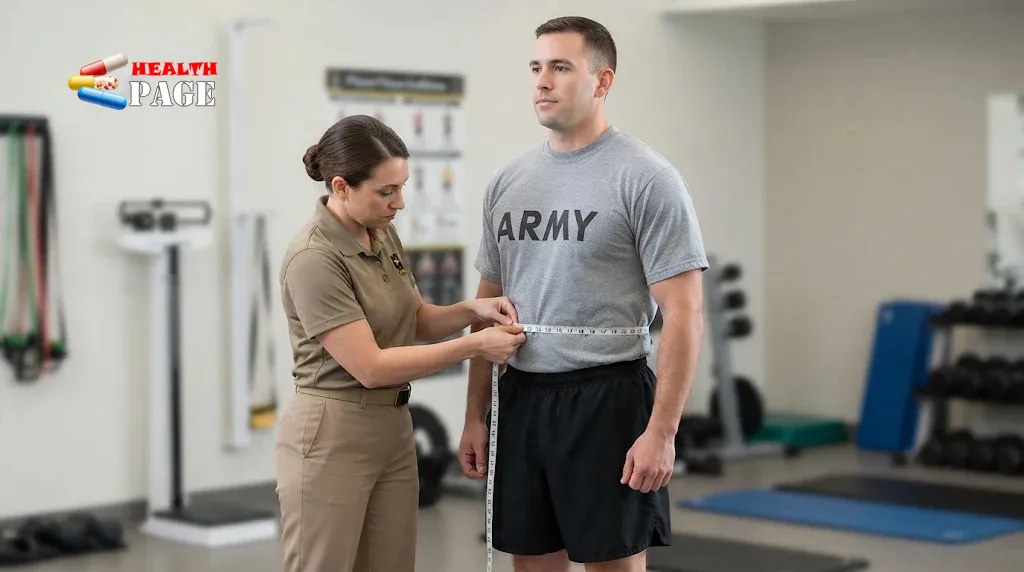
If you searched for an army calculator for body fat, the first thing to know is that the Army no longer measures body-fat percentage. The Army replaced its height and weight tables, the circumference-based tape test and supplemental body-fat assessments with the waist-to-height ratio (WHtR). Your waistline is measured at the navel and divided by your height in inches, and a result below 0.55 meets the benchmark.
Many older calculator pages still run the neck-and-waist tape formula. Those pages are now out of date, so any result they give you does not reflect how the Army assesses Soldiers today. This guide covers the current standard, how to run the numbers yourself, and what happens when a measurement doesn’t go your way. It is written for active-duty Soldiers, Guard and Reserve members, and applicants preparing for service.
Army Calculator for Body Fat: Check Your Ratio First
Army waist-to-height ratio calculator
Uses the 2026 Army rule: waist at the navel ÷ height, truncated to three decimals, must be below 0.550.
Planning estimate only. Official measurements and decisions are made by authorized Army personnel, and WHtR measures central adiposity, not total body-fat percentage or overall health.
Those values look out of range. Check that both are in centimeters.
';return} var u=cm?"cm":"in",W=Math.round(w*100),H=Math.round(h*100); /* integers avoid float errors */ var trunc=Math.floor(W*1000/H),pass=W*1000<550*H; var ratio=(trunc/1000).toFixed(3),raw=(W/H).toFixed(6); var limit=0.55*h; /* waist must be below this */ var t=Math.ceil(11*H/200)-1,maxW=(t/10).toFixed(1); /* highest 0.1 step that still passes */ var gap=((t*10-W)/100); /* positive = room to spare */ var pos=Math.max(2,Math.min(98,(trunc/1000)/0.7*100)),line=0.55/0.7*100; out.innerHTML='- Unrounded ratio
- '+raw+' '+ '
- Waist must be under
- '+limit.toFixed(2)+' '+u+' '+ '
- Highest passing waist (0.1 '+u+' steps)
- '+maxW+' '+u+' '+ '
- '+(gap>=0?'Room below the limit':'Over the limit by')+'
- '+Math.abs(gap).toFixed(1)+' '+u+'
A useful Army body composition calculator needs only two inputs: your waist circumference at the navel and your height, entered in inches or centimeters. From those it should show your ratio to three decimal places, say whether it falls below 0.550, and give the largest waist measurement that would still pass at your height. Weight, age and sex play no part in the Army calculation.
Treat the result as a planning estimate. Official measurements are taken by authorized Army personnel, and a website calculator cannot replace that process.
How the Army Waist-to-Height Ratio Formula Works
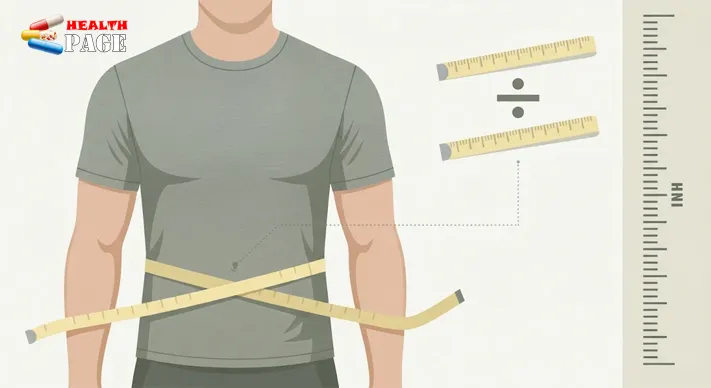
The formula is simple: waist circumference divided by height. Both numbers must use the same unit, and the result is a ratio rather than a percentage. The Army works in inches. fedweek
The unusual part is the rounding. The Army’s FAQ says digits beyond the third decimal place are disregarded, so .549 is a passing score and .550 is a failing score. In other words, the ratio is truncated, not rounded. A calculation of 0.5499 is recorded as 0.549 and passes. A calculation of 0.5500 fails. Because truncation never raises the number, the practical rule is that your true waist-to-height ratio has to be under 0.55.
Here is a worked example. A Soldier who is 70 inches tall with a 34-inch waist gets 34 ÷ 70 = 0.485714, which is recorded as 0.485. That is well under the line. At 70 inches tall, a waist under 38.5 inches keeps a Soldier below 0.55, since 70 × 0.55 = 38.5. A 38.5-inch waist at that height lands exactly on 0.550 and does not meet the standard.
How to Measure Your Waist and Height
The Army’s policy names one landmark: the waist is measured at the navel, or belly button. That is a change from the old tape test, which used the neck and a different abdominal site, and it makes self-checking much easier.
For a home estimate, a few habits improve accuracy:
- Use a flexible, non-stretch tape and keep it level all the way around, so it doesn’t dip at the back.
- Measure against bare skin or a thin layer, and don’t pull the tape into the skin.
- Take the reading at the same point in a normal breath, then repeat it two or three times and use the average.
- Measure height without shoes, standing straight against a wall.
These are general measurement habits, not a copy of the Army’s official procedure. Details such as posture, clothing and breathing are set by the directive and by the teams who run the screening, so follow their instructions on the day. A difference of half an inch matters more than it sounds. At 70 inches tall, the gap between 38.0 and 38.5 inches is the gap between passing and failing.
Height is the other half of the equation. If your own height reading and the Army’s differ by an inch, your ratio changes too, so don’t assume your self-reported height will be used.
Passing and Failing Results at a Glance
Because the standard is a single threshold, the easiest way to picture it is as a waist limit for each height. The table below shows the largest half-inch waist measurement that stays under 0.550 for common heights. These numbers come from the formula, not from an Army chart.
| Height (in) | Waist must be under (in) | Highest half-inch waist that passes (in) |
|---|---|---|
| 60 | 33.0 | 32.5 |
| 62 | 34.1 | 34.0 |
| 64 | 35.2 | 35.0 |
| 66 | 36.3 | 36.0 |
| 68 | 37.4 | 37.0 |
| 70 | 38.5 | 38.0 |
| 72 | 39.6 | 39.5 |
| 74 | 40.7 | 40.5 |
| 76 | 41.8 | 41.5 |
The ratio doesn’t depend on weight, so two Soldiers of the same height and waist get the same result whatever they weigh. A heavily muscled Soldier with a narrow waist can pass comfortably, while a lighter Soldier who carries fat around the midsection may not. That is the point of the metric: it is designed to flag central fat, not overall size.
What Happens After an Unsuccessful Measurement
An initial failure is not the final word. A Soldier above the standard gets a confirmation test by a different team on the same duty day to verify accuracy. A Soldier who exceeds the standard on both the initial screening and the same-day confirmation is flagged and enrolled in the Army Body Composition Program.
Several other rules affect how a Soldier is assessed:
- All Soldiers are screened at least twice per calendar year.
- Commanders can direct a WHtR assessment at any time if they believe a Soldier does not meet the standard.
- The earlier exemption for a high Army Fitness Test score of 465 or more has been removed, so a strong fitness result no longer waives the measurement.
- Existing medical exemptions for pregnant and postpartum Soldiers remain in effect.
There is also a transition protection. The Army is running a 180-day assessment of the new ratio to validate its accuracy, and no separation actions for failing WHtR will occur during that initial period. Further guidance may follow once that review is complete, so Soldiers should check current Army announcements rather than assume today’s rules are permanent.
What Changed: Previous Body Fat Standards vs. the 2026 Policy
For years, the Army screened Soldiers with height and weight tables, then used a tape test to estimate body-fat percentage for those who exceeded the table. That tape method estimated body fat from circumference measurements, and the allowed percentage varied by age and sex.
The new policy removes all of that. The Army states that all previous body-fat assessment methods, including the tape test, have been rescinded, and WHtR is the sole authorized method. The tape test and other body-fat assessments can no longer be used to challenge a WHtR result.
| Before 2026 | 2026 policy | |
|---|---|---|
| First screen | Height and weight tables | Waist-to-height ratio |
| Detailed method | Circumference tape test (body-fat %) | None; WHtR is the sole method |
| Standard | Percentage limits by age and sex | Ratio below 0.55 for all Soldiers |
| High fitness score exemption | Available at a qualifying test score | Rescinded |
The change came through Army Directive 2026-13. Secretary of the Army Dan Driscoll signed it on July 1, 2026, effective immediately and not retroactive. The Army announced it publicly on July 7, 2026. The directive applies to the Regular Army, Army National Guard and Army Reserve. For the record-keeping side, Army Sustainment Command told its Soldiers that WHtR data had to be entered into the Army Training Information System before October 1, 2026. Army Updates Body Composition Policy +2
If you are looking for the old Army body fat standards, they are now historical. Anyone searching for the Army body fat standards for 2026 will find that the percentage limits have been replaced by the single ratio threshold.
Army Standard vs. General Health Assessment
The Army threshold and the clinical health guidance are two different things, and they shouldn’t be mixed up. The waist-to-height ratio measures central adiposity, meaning fat stored around the abdomen. It is not a direct measure of total body fat, and it can’t diagnose obesity or predict an individual’s full health risk.
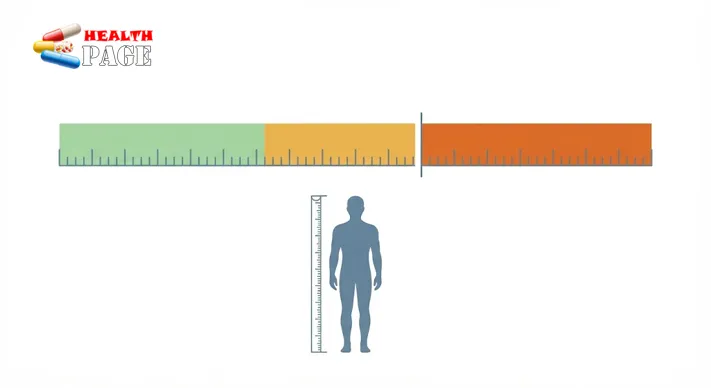
In the UK, NICE guidance sets health categories for adults. A ratio of 0.40 to 0.49 is considered healthy central adiposity, 0.50 to 0.59 is increased, and 0.60 or above is high. The NHS also offers a waist-to-height ratio calculator for general use. Higher ratios are associated with greater cardiometabolic risk, including type 2 diabetes and cardiovascular disease.
The consequence is that a Soldier can meet the Army standard at 0.54 and still sit in the “increased” health category. A passing Army result is a compliance outcome, not proof of excellent health, and a failing one is not a medical diagnosis. If your ratio sits in the higher health ranges, or you have symptoms or a family history that worry you, speak to a doctor. Steady changes to everyday habits, such as a heart-healthy eating pattern, are a sensible starting point, but personal medical advice should come from a qualified clinician.
Frequently Asked Questions
Does the Army still use the body-fat tape test?
No. The tape test has been rescinded, and WHtR is the only authorized assessment. A tape-test result can’t be used to challenge a WHtR measurement.
Is waist-to-height ratio the same as body-fat percentage?
No. WHtR compares one waist measurement to your height and says nothing directly about total body fat. Some news coverage describes it as a way of evaluating body fat, which blurs the distinction, but the number you get is a ratio, not a percentage.
Can I use a regular waist-to-height ratio calculator to check my Army result?
You can use one for an estimate, provided it uses the navel as the waist landmark, takes both measurements in the same unit, and applies the 0.55 threshold. Calculators built for general health may show different category labels, which are not the Army’s pass/fail line.
What if I’m right at the limit, say 0.549?
That is a pass under the Army’s truncation rule. Still, the margin is thin, and a small measurement variation, such as an extra half-inch of waist, could push a result over. Remeasuring carefully and consistently gives a more reliable picture.
How often will I be measured?
At least twice per calendar year, and commanders can also direct an assessment at any time.
Using an Army Calculator for Body Fat Wisely
The most important point is also the simplest: the Army standard is a ratio, and it must be strictly below 0.55 when your waist is measured at the navel and divided by your height in inches. A good army calculator for body fat will apply that rule, truncate to three decimals and show the waist limit for your height, but the official result will always come from the measurement team and the current directive.
A practical next step is to measure yourself carefully a few times, work out your ratio, and compare it with the limit for your height. If you land close to the line, or if your general health ratio is higher than you’d like, treat it as useful information rather than a verdict. Because the policy is still under its 180-day review, check army.mil or your unit’s guidance before any assessment.
References
- U.S. Army, “Army modifies body composition program, adopts waist-to-height ratio” (July 7, 2026): https://www.army.mil/article/293753/army_modifies_body_composition_program_adopts_waist_to_height_ratio
- U.S. Army, “Army Body Composition Program and Standards: Frequently Asked Questions”: https://www.army.mil/e2/downloads/rv7/tyf/ABCP_FAQ.pdf
- NHS, “Calculate your waist-to-height ratio”: https://www.nhs.uk/health-assessment-tools/calculate-your-waist-to-height-ratio

Dr. Sana Lodhi is a qualified medical doctor (MBBS) with a strong commitment to patient care and evidence‑based medicine. With years of clinical experience and her current role at Liaquat University of Medical & Health Sciences (LUMHS), she brings trusted medical insights to readers, simplifying complex health topics into clear, practical guidance. Her passion lies in promoting preventive healthcare, empowering individuals to make informed decisions, and bridging the gap between medical knowledge and everyday wellness. At HealthyPost.co.uk, Dr. Lodhi shares expert perspectives on health, lifestyle, and medical awareness to help readers live healthier, more balanced lives.