
Can Twins Cause a False Negative Pregnancy Test? What to Know
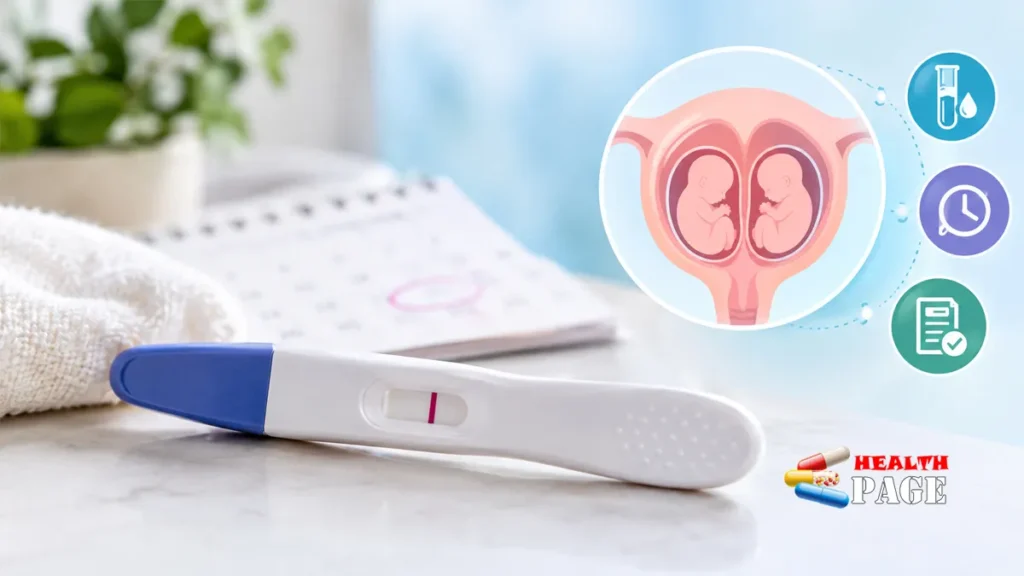
Staring at a negative test while your body insists otherwise is a particular kind of limbo. If you have also read that twins mean “extra hormone,” you may be wondering whether can twins cause false negative pregnancy test results is a real possibility. It is, but only rarely. A very high level of the pregnancy hormone can, in unusual cases, overwhelm certain urine tests and produce a negative result. Far more often, a negative test in someone who is pregnant simply means the test was taken too early, the urine was dilute, or the hormone has not yet reached a detectable level.
This article explains how pregnancy tests work, where the twin connection comes from, what the hook effect is, and what to do if you still suspect you are pregnant after a negative result.
How a home pregnancy test detects hCG
Home urine tests look for human chorionic gonadotropin (hCG), a hormone produced by cells that go on to form the placenta. According to the NHS, all pregnancy tests detect hCG, which starts to be produced around six days after fertilisation. Levels then rise quickly, but not instantly, and not at the same pace for everyone.
Each test has a detection threshold, the lowest hCG concentration in urine that produces a visible positive. Tests differ in how sensitive they are, which is why one brand might show a faint line a day or two before another. Blood tests can measure hCG as an exact number and generally pick up lower concentrations than urine tests, which is why a clinic may confirm a pregnancy that a home test has missed.
The same NHS page makes a point worth remembering: a positive result is almost certainly correct, while a negative result is less reliable. That asymmetry sits underneath everything below.
Can twins cause a false negative pregnancy test?
Short answer: rarely, and not through any mechanism specific to twins.
On average, twin pregnancies have higher hCG levels than singleton pregnancies at the same stage, though individual ranges overlap a great deal. Most people carrying twins get an ordinary, clearly positive test. The scenario people worry about involves hCG levels so high that the test’s chemistry stops working properly, a phenomenon called the high-dose hook effect.
Published case reports show this can happen in a multiple gestation. One case report in Cureus described a patient with repeatedly negative urine tests whose blood hCG was markedly elevated and whose ultrasound showed a multiple pregnancy. The authors noted that the most common cause of a false-negative urine test is still testing too soon after conception. A single case report shows that something is possible, not that it is common, and it tells us nothing about how often twins are affected.
Two practical corollaries follow. A negative home test is not a sign that you are carrying twins, and a high hCG result on its own cannot confirm twins either. Only an ultrasound can establish how many embryos are present.
The most common reasons for a false negative pregnancy test
Before the rare explanations, it helps to see how the usual ones compare. The table below summarises the main false negative pregnancy test causes and how likely each one is.
| Cause | How it leads to a negative result | How common |
|---|---|---|
| Testing too early | hCG has not yet reached the test’s threshold | Most common |
| Diluted urine | Drinking a lot of fluid lowers urinary hCG concentration | Common |
| Not following instructions | Reading the result too soon or too late, or using an expired test | Common |
| Lower-sensitivity test | Some tests need more hCG to show a positive | Occasional |
| Very high hCG (hook effect) | Excess hormone disrupts the test’s antibody chemistry | Rare |
| Ectopic or non-viable pregnancy | hCG may rise slowly or irregularly | Uncommon |
Timing deserves the most attention. Implantation, when the embryo attaches to the womb lining, happens several days after fertilisation, and hCG production only begins around that point. A person who ovulated late in their cycle may be testing on what they think is the day of a missed period when the pregnancy is, in fact, a few days younger than they assume. Irregular cycles make this more likely.
Concentration matters too. The NHS notes that a test can be done on urine collected at any time of day, but some test instructions suggest first-morning urine for very early testing because it tends to be more concentrated. Both can be true: any-time testing works well once your period is due, while early testing is where dilution can tip a borderline result into a negative.
What the hook effect actually is
Most home tests use a “sandwich” design. One antibody captures hCG, a second antibody linked to a dye attaches to a different part of the hormone, and the sandwich that forms creates the visible line. This works well across a broad range of hCG concentrations.
When hCG is extremely abundant, though, there can be more hormone than antibody. The capture antibodies and the dye antibodies each get saturated with separate hCG molecules, so fewer complete sandwiches form. The line fades or disappears. The name comes from the shape of the response curve on a graph, which rises and then curls back down like a hook. You may also see it called the prozone phenomenon.
The concentrations required are far higher than those in a typical pregnancy, and the exact level varies by test. Manufacturer and case-report sources give figures ranging from several hundred thousand to over a million mIU/mL, which is one reason no single threshold should be treated as definitive. Conditions that can push hCG that high include molar pregnancy and other forms of gestational trophoblastic disease, and several published hook effect reports involve those conditions rather than twins.
A related variant involves particular fragments of hCG in urine interfering with a test’s antibodies. This is another reason that a clinician, rather than a reader at home, should be the one to investigate suspected assay interference.
If a doctor does suspect the hook effect, the fix is usually straightforward. A case report in Cureus on a false-negative urine test notes that diluting the urine before repeating the test often overcomes the problem, because it restores a workable ratio of hormone to antibody. Laboratories can also run a different assay or a validated dilution on a blood or urine sample. Please do not try to diagnose this yourself by diluting urine at home and re-testing; dilution can just as easily push a genuine early pregnancy below the detection threshold.
Twin pregnancy hCG levels, and why they cannot confirm twins
It is tempting to treat hCG as a numerical clue about how many babies there are. In practice it is a poor one.
On average, twin pregnancies produce more hCG than singleton ones, but pregnancies vary widely in how fast hCG rises, and the ranges overlap. A singleton pregnancy can have a high reading, and a twin pregnancy can sit comfortably in the “typical” range. Gestational age, the timing of the blood draw, and the individual pregnancy all change how a number should be read, which is why clinicians look at trends over time and in context, not at a single result.
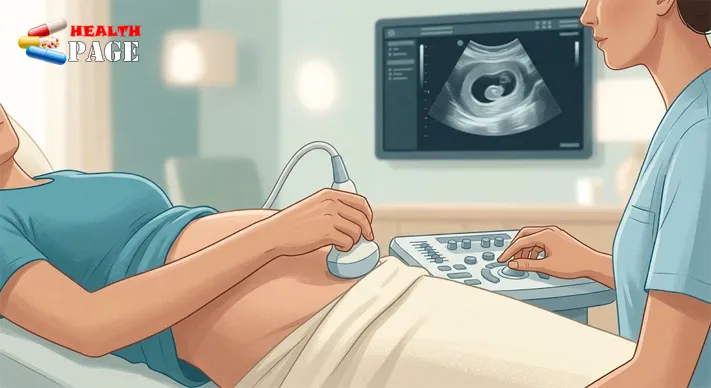
The same goes for symptoms. Strong nausea, marked tiredness, or very dark test lines are sometimes described online as signs of twins, but they are common in single pregnancies too. An ultrasound scan, interpreted by a trained professional, is what confirms the number of embryos or fetuses, and in a typical pregnancy this happens at the dating scan in the first trimester.
Pregnancy test negative but pregnant: what to do next
If you still think you could be pregnant after a negative result, a short, calm plan is usually enough.
- Wait a few days and test again. The NHS advises this directly, and speaking to your GP if a second test is negative but your period has not arrived.
- Count from the right date. If you do not know when your next period is due, the NHS recommends testing at least 21 days after the last time you had unprotected sex.
- Check the basics. Look at the expiry date, read the instructions, set a timer, and avoid drinking large amounts of fluid beforehand.
- Think about whether bleeding is changing the picture. Light spotting around the time of an expected period can look like a short or unusual period and lead someone to assume they are not pregnant. HealthyPost’s guide on whether you can have a period when you are pregnant explains why spotting and a true period are different, and why bleeding should never be treated as proof that pregnancy is impossible.
- Ask about a blood test. If symptoms continue and home tests stay negative, a quantitative blood hCG test or an early scan can settle the question. A clinician can also consider dilution or an alternative assay if there is a reason to suspect interference.
Do not wait for a repeat home test if your symptoms are concerning. That leads to the next section.
When a negative test should not reassure you
A negative home test cannot rule out an ectopic pregnancy, where a pregnancy implants outside the womb, usually in a fallopian tube. hCG can rise more slowly or irregularly in some ectopic and non-viable pregnancies, so tests may be negative or faint even when something is wrong.
Seek urgent medical help if you might be pregnant and have pain on one side of the lower abdomen, vaginal bleeding, or pain at the tip of your shoulder. Severe abdominal pain, fainting, collapse or heavy bleeding needs emergency care. Nobody should feel they have to prove a pregnancy first. Doctors can check with blood tests and an ultrasound regardless of what a home test said.
Frequently asked questions
Can twins cause a negative pregnancy test at four weeks?
It is possible to get a negative result at four weeks, but the usual reason is that the pregnancy is too early for the test to pick up. The hook effect is a far less likely explanation at that stage, because hCG is still low in the first weeks of any pregnancy, including twins.
Can high hCG levels make a pregnancy test negative?
Yes, but only at extremely high concentrations, well beyond what most pregnancies reach. This is the high-dose hook effect, and it is considered rare.
Does a negative pregnancy test mean I am not having twins?
A negative test does not tell you how many babies you are carrying, and it does not always rule out pregnancy. If your period has not arrived, repeat the test or speak to a healthcare professional.
Can a blood test detect a pregnancy that a urine test missed?
Often, yes. Blood tests can measure hCG more precisely and can detect lower amounts than many home tests. If interference is suspected, the laboratory may need to run additional testing.
When should I repeat a negative pregnancy test?
Waiting a few days is the standard advice. Take the next test with the same care, and book an appointment if it is also negative and your period still has not started.
Can hCG levels confirm twins?
No. Twin pregnancies tend to have higher average hCG, but the overlap with single pregnancies is large. An ultrasound scan is the method used to confirm twins.
The takeaway
Can twins cause a false negative pregnancy test? Occasionally, in principle, through the hook effect or other test limitations, and the published evidence is mainly isolated case reports. Testing too early remains the far more probable explanation for a negative result when you are pregnant. Neither a negative result nor a high hCG level can tell you whether you are expecting twins.
If something still feels off, repeat the test after a few days, count from the correct date, and speak to your GP or midwife if the result does not match your symptoms. A blood test or scan can usually give a clear answer quickly.
This article is general information and not a substitute for medical advice. Ideally, it should be reviewed by a qualified healthcare professional before publication.
References
- NHS. “Doing a pregnancy test.” nhs.uk.
- Cureus (2022). “A Case of a Negative Urine Pregnancy Test in a Multiple Gestation Pregnancy.” PubMed Central.
- Cureus. “False Negative Urine Pregnancy Test: Hook Effect Revealed.” PubMed Central.

Dr. Wang Zhixin is a distinguished Chief Physician specializing in comprehensive gynecology, perinatology, and maternal healthcare systems. She serves at the acclaimed
Shenzhen Maternity and Child Healthcare Hospital, a premier Grade-III Class-A medical center associated with Southern Medical University. With decades of clinical leadership, Dr. Wang is widely recognized for her contributions to reproductive wellness, prenatal diagnostic precision, and advanced clinical research safeguarding maternal-fetal medical outcomes.
As a core specialist panelist on the HealthPage Medical Review Board,
Dr. Wang leverages her senior clinical oversight to meticulously fact-check, audit, and medically verify our reproductive medicine and maternal wellness guides. Her analytical reviews ensure that intricate obstetric protocols and feminine wellness data are rendered into safe, authoritative, and completely evidence-based reference resources for global audiences.
✉ Professional Inquiries:
[email protected]