
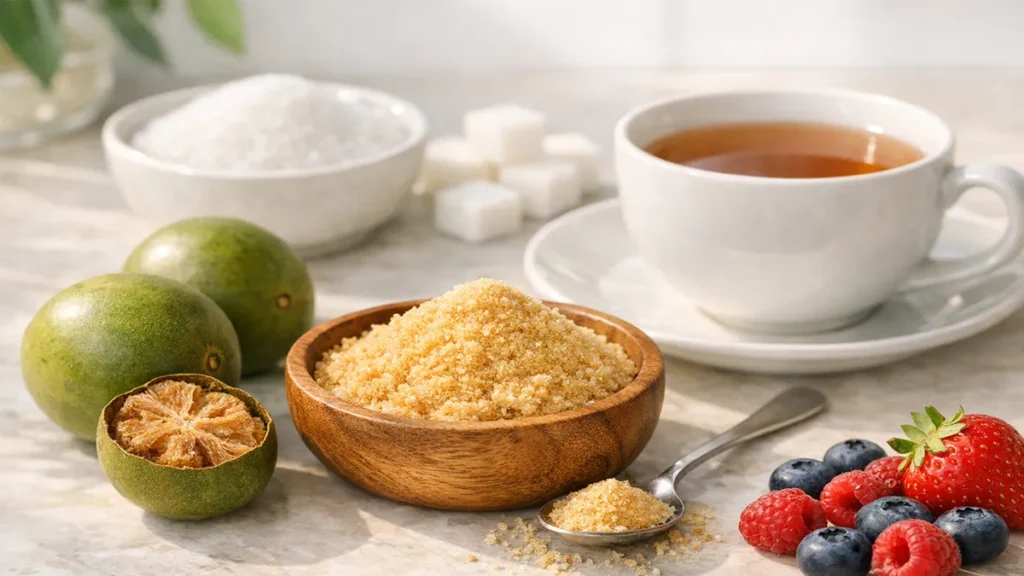
7 Powerful Reasons Monk Fruit Sweetener Beats Sugar
If you are trying to cut back on sugar without giving up sweetness, monk fruit deserves a close look. This small green fruit, also called Luo Han Guo, has moved from traditional Chinese medicine into modern kitchens, coffee shops, and health-focused food products. People now use it in everything from tea to protein shakes to baked goods.
So, what is monk fruit? It is a fruit native to southern China, especially Guangxi, where it has been used for centuries to soothe the throat and support respiratory comfort. Today, it is best known as a natural sweetener. Commercial monk fruit sweetener products are made by extracting mogrosides, the intensely sweet compounds in the fruit. These compounds can taste 150 to 200 times sweeter than regular sugar, yet contribute virtually no calories.
That shift matters. Sugar is everywhere, and many people feel trapped between wanting better health and wanting food that still tastes enjoyable. This is where monk fruit sugar alternatives stand out. They offer sweetness without the same blood sugar spike, calorie load, or dental downside linked to table sugar. But the story is bigger than sweetness alone. New research also points to antioxidant potential in the peel and pulp, adding another layer to the conversation.
In this guide, we will look at what is monk fruit and it’s benefits, why it may beat sugar in key areas, where caution still matters, and how to use it wisely in daily life.
What Is Monk Fruit?
Monk fruit is a round fruit from southern China. It has long been used in traditional remedies for coughs, sore throats, and “heatiness” symptoms. In Chinese herbal practice, it was valued for its cooling nature and gentle support for the lungs and throat.
Modern food science focuses on mogrosides. These natural compounds deliver intense sweetness without acting like regular sugar in the body. That is why monk fruit sweetener is now sold in powders, liquid drops, tabletop packets, and blended baking mixes.
In simple terms:
- The whole fruit has a long traditional history
- The extract is used as a sugar substitute
- It is often marketed as monk fruit sugar
- It is popular in low-carb, diabetic-friendly, and weight-conscious diets
1. Monk Fruit Sweetener Has Virtually Zero Calories
Sugar adds calories fast. A few sweet drinks, flavored coffees, or desserts can quietly raise daily intake by hundreds of calories. For people trying to manage weight, that adds up.
Monk fruit sweetener offers a different path. Because its sweetness comes from mogrosides rather than standard sugar molecules, it provides little to no usable calories in typical serving sizes.
Why this matters in real life
Imagine your morning routine:
- Tea with two teaspoons of sugar
- Sweetened yogurt
- A bottled iced coffee
That pattern may feel harmless, yet it can become a daily calorie surplus. Replacing some of those sugar sources with monk fruit-based options may help reduce intake without making food feel restrictive.
Best for
- Weight management
- Lower-calorie meal plans
- People reducing sugary drinks
- Those who want sweetness without “saving it for cheat days”
2. It Supports Better Blood Sugar Control
This is one of the strongest reasons many people switch. Unlike table sugar, monk fruit does not behave the same way in the bloodstream. Emerging research suggests monk fruit extract may help reduce post-meal glucose and insulin response compared with sugar-sweetened products.
That makes it especially relevant for:
- People with prediabetes
- People living with diabetes
- Anyone trying to avoid energy crashes after sweet foods
What the science suggests
Recent trials have reported lower post-meal blood glucose and insulin response when monk fruit extract is used in place of sugar. While no sweetener is a magic fix, this is meaningful. It suggests monk fruit may fit into a broader plan that includes whole foods, fiber, movement, and medical guidance.
For readers asking what is monk fruit and it’s benefits, this blood sugar advantage is often the biggest answer.
A practical example
If someone usually sweetens oatmeal with sugar, switching to monk fruit may lower the glycemic burden of that meal. The oats still contain carbs, but the added sweetener no longer piles on fast-acting sugar.
3. It Tastes Sweet Without Feeding Sugar Cravings the Same Way
Many sweeteners solve one problem and create another. Some leave a chemical aftertaste. Others keep people locked into a cycle of wanting more and more sweetness. Monk fruit can still taste intensely sweet, but many users find it easier to use in small amounts because it is so concentrated.
That matters because portion awareness becomes easier.
Why taste matters
A sugar substitute only works if people actually enjoy using it. Monk fruit often has a more pleasant profile than some artificial sweeteners, especially when blended well in drinks, yogurt, sauces, or baking mixes.
Still, not all products are equal. Some monk fruit sugar products are blended with erythritol or other bulking agents. Always check the label if you want a cleaner ingredient list.
Smart buying tips
Look for:
- Short ingredient lists
- No unnecessary fillers
- Clear labeling of sweetness equivalence
- Products designed for coffee, baking, or cooking
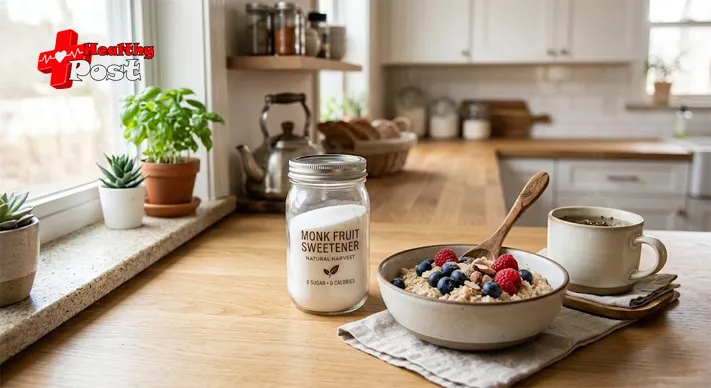
🟢 CAPTION: “Monk fruit sweetener fits easily into simple everyday meals.”
4. Monk Fruit Contains Antioxidant Compounds Beyond Sweetness
Most people know monk fruit as a sugar substitute. Fewer know that the fruit itself contains bioactive compounds being studied for wider health value. Newer research has highlighted antioxidants in the peel and pulp, including flavonoids, terpenoids, and amino acid-related compounds.
These compounds may help protect cells from oxidative stress. That is important because oxidative stress is linked with aging, inflammation, and metabolic strain.
Why this is promising
Table sugar offers sweetness, but no meaningful protective compounds. Monk fruit, by contrast, comes from a fruit with a deeper biological profile.
Researchers are now exploring whether monk fruit compounds may support:
- Heart health
- Metabolic health
- Inflammation balance
- Functional food development
This does not mean monk fruit is a cure or treatment. It means the fruit may offer more than sweetness alone, which sets it apart from refined sugar.
5. It Has Deep Traditional Roots and Modern Credibility
Some food trends appear overnight and disappear just as fast. Monk fruit is different. Its story stretches back centuries.
In traditional Chinese medicine, monk fruit was used for:
- Soothing the throat
- Relieving coughs
- Cooling internal heat
- Supporting the lungs
That history does not replace modern science, but it does add context. The fruit was valued long before it was sold in polished jars and packets.
Why heritage matters
People often ask what is monk fruit because they want more than a label claim. They want to know whether a food has a credible origin. Monk fruit does. It comes from a real place, a real agricultural tradition, and a long medicinal history centered in Guangxi.
Today, monk fruit plantations in China are also tied to eco-tourism and local cultural identity. That creates a rare connection between food, farming, health, and heritage.
6. Monk Fruit May Be Better for Teeth Than Sugar
Sugar feeds the bacteria that contribute to tooth decay. This is one of sugar’s most overlooked harms. Even people who watch calories may forget that sweet coffee drinks, candy, or sugary snacks can also affect dental health.
Monk fruit does not feed oral bacteria the same way sugar does. That makes it a useful choice for people who want to protect their teeth while still enjoying sweetness.
Compare the difference
| Feature | Table Sugar | Monk Fruit Sweetener |
|---|---|---|
| Calories | High | Virtually zero |
| Blood sugar impact | Raises quickly | Minimal to none |
| Insulin response | Can increase | Lower than sugar |
| Dental effect | Promotes decay | More tooth-friendly |
| Sweetness level | Standard | 150–200x sweeter |
| Traditional use | None | Long history in Chinese medicine |
Everyday example
If you drink several sweetened cups of tea a day, replacing sugar with monk fruit may help both calorie control and dental health. It is a small change that can matter over time.
For broader public guidance on reducing added sugars, the monk fruit sugar discussion becomes more meaningful when placed next to recommendations from the American Heart Association on added sugar limits.
7. It Fits Modern Diets Without Feeling Extreme
A major reason monk fruit beats sugar is flexibility. It fits many eating styles without demanding a total lifestyle overhaul.
It is commonly used in:
- Low-carb diets
- Keto-style plans
- Diabetic-friendly meal routines
- Calorie-conscious eating
- Sugar-reduction transitions
This flexibility matters because sustainable change rarely comes from perfection. It comes from substitutions people can keep using.
It works in familiar foods
You can use monk fruit in:
- Tea or coffee
- Smoothies
- Yogurt bowls
- Chia pudding
- Homemade desserts
- Sauces and marinades
But there are still cautions
Even natural sweeteners are not perfect for everyone.
Keep these points in mind:
- Some people dislike the taste of certain blends
- Very sweet products may irritate sensitive stomachs
- Traditional sources describe monk fruit as cooling, which may not suit those with weak digestion
- Moderation still matters
If you have digestive sensitivity, start small. If you manage diabetes, monitor your response within your full meal pattern. If a product contains erythritol or other additives, that may affect tolerance more than monk fruit itself.

Risks and Considerations Before You Switch
Even though monk fruit has clear advantages, balanced advice matters.
Possible downsides
- Some products are mixed with sugar alcohols
- Very intense sweetness may keep your palate used to sweet foods
- Premium products can cost more than sugar
- Availability is still limited in some regions, including parts of South Asia
A note for South Asian markets
There is still low awareness of monk fruit in Pakistan and nearby markets. That creates a gap, but also an opportunity. Imported monk fruit sweetener could appeal to health-conscious buyers, especially those managing diabetes or reducing refined sugar.
As awareness grows, monk fruit may appear in:
- Premium grocery stores
- Online health shops
- Functional beverages
- Wellness supplements
How to Use Monk Fruit Without Overdoing It
The goal is not to make every meal taste like dessert. The goal is to reduce sugar while keeping food enjoyable.
Try these simple steps:
- Start with beverages first
- Replace sugar in one daily habit
- Choose plain foods and sweeten lightly
- Compare labels before buying
- Use baking formulas made for monk fruit products
A little often goes a long way. Because monk fruit is so sweet, too much can overwhelm a recipe.
FAQs About Monk Fruit
Is monk fruit safe for people with diabetes?
It is generally considered a better option than sugar because it has little effect on blood glucose. Still, check blended ingredients and ask your doctor for personalized advice.
What is monk fruit made from?
It comes from Luo Han Guo, a fruit native to southern China. Sweeteners are made by extracting mogrosides from the fruit.
Does monk fruit taste exactly like sugar?
Not exactly. Many people find it pleasant, but taste varies by brand and blend. Some formulas taste cleaner than others.
Is monk fruit sweetener natural?
It is derived from a natural fruit. However, some commercial products include added bulking agents, so labels still matter.
Can monk fruit be used in baking?
Yes, but results depend on the product. Some are made for 1:1 sugar replacement, while pure extracts require tiny amounts.
Are there side effects from monk fruit sugar products?
Most people tolerate them well in moderate amounts. Digestive issues are more likely from additives in blended products than from monk fruit itself.
Final Thoughts
Sugar is familiar, cheap, and everywhere. But familiar does not always mean better. Monk fruit stands out because it offers sweetness with virtually no calories, less impact on blood sugar, and a long history rooted in traditional use. Add in promising antioxidant research, and it becomes easier to see why so many people now prefer monk fruit sweetener over standard sugar.
If you have been wondering what is monk fruit and it’s benefits, the answer is simple: it is a naturally sweet fruit extract that may support a smarter, more balanced relationship with sweetness. It will not solve every health issue, but it can be a useful tool. Start small, read labels carefully, and use it where sugar adds the least value and the most harm.
If you are ready to reduce sugar without making food joyless, monk fruit sugar alternatives may be one of the easiest upgrades to try.
References
- American Heart Association. Added Sugars. https://www.heart.org/en/healthy-living/healthy-eating/eat-smart/sugar/added-sugars
Pingback: sugar free cola: Impact on the Human Body, Risks, Benefits & Review