
7 Reasons High Oleic Safflower Oil is an Amazing Superfood for Cooking
If you have ever wondered what is safflower oil and whether it deserves a spot in your kitchen, you are not alone. Many home cooks are searching for healthier fats that still taste great and handle high heat. This golden oil checks many of those boxes and can fit easily into everyday meals. 🌿
Below, you will discover why this seed-derived oil stands out, how to use it, and when to be cautious.
1. Getting to Know This Versatile Seed Oil
Before exploring the benefits, it helps to understand where this oil comes from and how it is made.
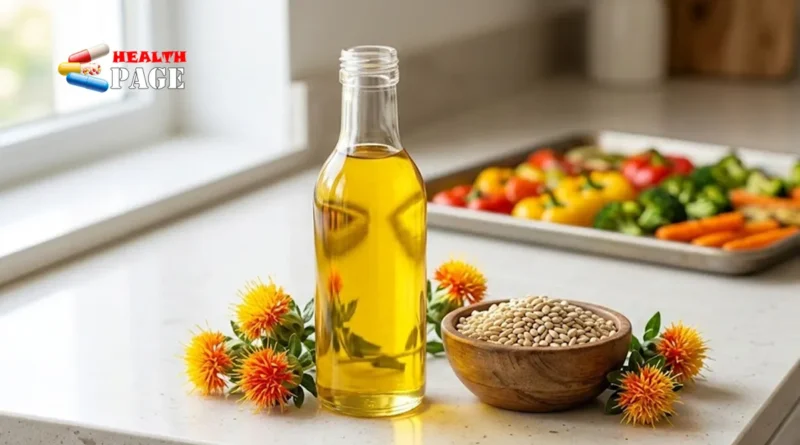
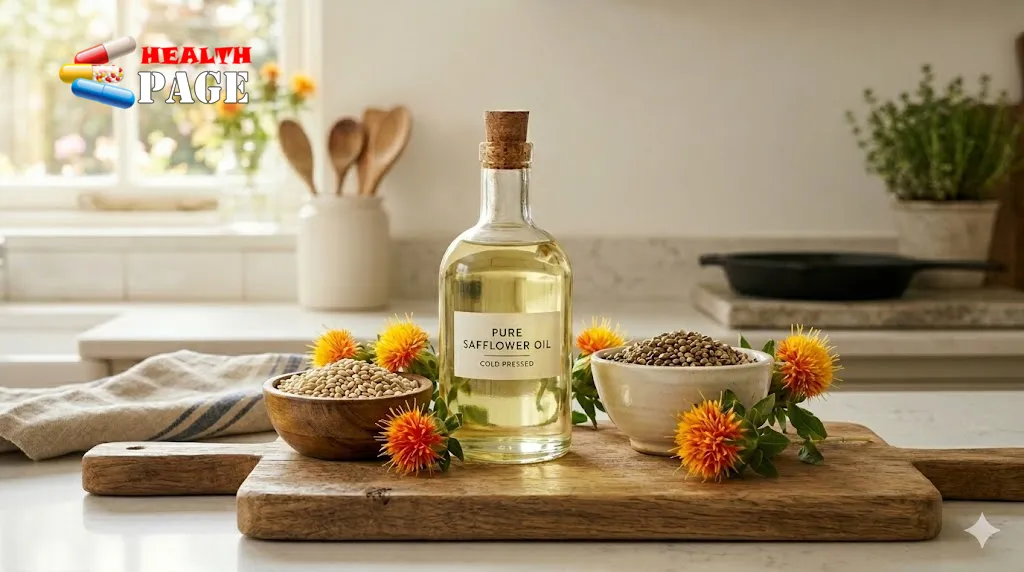
Safflower is a thistle-like plant with bright orange or yellow flowers. Its seeds are pressed to produce cooking oil. Because it comes from the seed, the answer to “is safflower oil a seed oil” is yes.
There are two main types of this oil:
- High-oleic
- High-linoleic
Each type has a different fatty acid profile and ideal use.
High-Oleic vs High-Linoleic: What You Need to Know
High-oleic varieties are rich in monounsaturated fats. These fats are more stable at high temperatures. That makes them great for frying, roasting, sautéing, and baking.
High-linoleic versions are rich in polyunsaturated fats. These fats are more delicate and prone to oxidation. They shine in cold uses, like salad dressings, dips, and drizzles.
Here is a simple comparison to guide your choice:
| Type of Oil | Main Fat Type | Best Uses | Storage Tip | Typical Smoke Point* |
|---|---|---|---|---|
| High-oleic | Monounsaturated | Frying, roasting, sautéing, baking | Store in a cool, dark cupboard | Very high |
| High-linoleic | Polyunsaturated | Salad dressings, cold dishes | Best kept in the refrigerator | Lower |
*Exact smoke point varies by brand and refinement.
In most cases, people choose high-oleic for cooking and high-linoleic for cold preparations.
2. Reason #1: A Rich Source of Healthy Fatty Acids 🥑
Fat often gets a bad reputation, yet your body depends on it. Healthy fats support hormones, brain function, and nutrient absorption.
This oil is an especially good source of unsaturated fats, including both:
- Monounsaturated fats (mainly in high-oleic varieties)
- Polyunsaturated fats (mainly in high-linoleic varieties)
These fats help your body:
- Build cell membranes
- Produce important hormones
- Absorb vitamins A, D, E, and K
An important detail is its low saturated fat content. Gram for gram, it usually has less saturated fat than olive oil or avocado oil. That can be useful if you are actively trying to limit saturated fat.
A realistic example:
- You love roasting vegetables a few times each week.
- You swap butter or shortening for this seed-based oil.
- You still get crisp, flavorful vegetables, but with more heart-friendly fats.
This simple shift can add up over months and years.
3. Reason #2: Supports Healthier Blood Sugar Levels
Blood sugar balance matters for everyone, not only people with diabetes. Energy crashes, cravings, and fatigue often link back to unstable blood sugar.
Research suggests that replacing some refined carbohydrates or saturated fats with unsaturated fats can improve:
- Insulin sensitivity
- Blood glucose control
In one study, women with type 2 diabetes consumed 8 grams of this oil daily. Over time, they showed:
- Reduced markers of inflammation
- Improved blood sugar levels
While this does not turn the oil into a miracle cure, it suggests a helpful role in a balanced meal plan.
A practical way to use this information:
- Drizzle a small amount over roasted non-starchy vegetables.
- Pair it with lean protein and fiber-rich carbs.
That combination can help reduce blood sugar spikes and support steady energy.
4. Reason #3: Helps Boost Heart Health ❤️
Heart health is one of the most studied areas for dietary fats. Unsaturated fats, especially monounsaturated types, are strongly linked with better cardiovascular outcomes.
This seed-derived oil may support your heart in several ways:
4.1. Can Help Lower LDL (“Bad”) Cholesterol
Replacing saturated fats, such as butter or lard, with unsaturated fats can lower LDL cholesterol. High LDL is a known risk factor for heart disease and stroke.
Using this oil for everyday cooking instead of solid fats may gently nudge cholesterol numbers in a better direction over time.
4.2. May Act as a Mild Blood Thinner
Some findings suggest this oil can make blood platelets less sticky. Less sticky platelets may:
- Lower the risk of blood clot formation
- Gently reduce blood pressure in some people
This potential blood-thinning effect is part of why it can be helpful, yet it also requires caution for certain groups, which we will discuss later.
A simple lifestyle example:
- You sauté fish and vegetables in this oil instead of deep-frying them.
- You reduce saturated fat and also gain beneficial unsaturated fat.
Small swaps like this can support heart health without sacrificing flavor.
5. Reason #4: Anti-Inflammatory Support for Modern Lifestyles 🌱
Chronic, low-grade inflammation is linked to many conditions, including:
- Heart disease
- Type 2 diabetes
- Some autoimmune conditions
This seed oil contains fatty acids that may help reduce inflammation markers in the body. Studies suggest it can lower certain inflammatory substances when used regularly in modest amounts.
While no single food can “cure” inflammation, your daily fat choices do matter. Pairing this oil with:
- Plenty of colorful vegetables
- Whole grains
- Lean proteins
- Herbs and spices like turmeric and ginger
can help build an overall pattern that is kinder to your body.
For many people, switching to this oil for stir-fries or sheet-pan dinners is an easy, realistic step in that direction.
6. Reason #5: Naturally Soothes and Protects Dry Skin 💧
This oil is not only useful in the kitchen. It can also support skin health, especially if your skin feels dry or rough.
6.1. Emollient Properties
When applied to the skin, it acts as an emollient. That means it:
- Softens and smooths rough areas
- Helps strengthen the skin barrier
- Locks in moisture
You might see it listed as an ingredient in:
- Body lotions
- Facial oils
- Hand creams
6.2. Natural Vitamin E Content
It contains vitamin E, a fat-soluble antioxidant. Vitamin E helps protect the skin from:
- Damage from free radicals
- Some effects of UV exposure
That does not replace sunscreen, but it can offer an extra layer of support.
6.3. Patch Test Is Important
Before you add it to your skincare routine, always do a 24-hour patch test:
- Apply a small amount to a discreet area, like the inner forearm.
- Wait 24 hours.
- Check for redness, itching, or a rash.
If your skin stays calm, you are more likely to tolerate it well.
7. Reason #6: High Oleic Safflower Oil Has a High Smoke Point 🔥
Here is where this oil really shines in the kitchen.
A smoke point is the temperature where oil begins to smoke and break down. When oil passes its smoke point, it can:
- Produce an unpleasant taste
- Generate harmful compounds and free radicals
High-oleic varieties have a very high smoke point, often higher than:
- Corn oil
- Canola oil
- Olive oil
That makes high oleic safflower oil an excellent choice for:
- Pan-frying
- Stir-frying
- Oven roasting at higher temperatures
- Baking where neutral flavor is desired
Because it stays stable, it is considered a safer choice for high-heat cooking than many other common options.
Imagine searing a piece of salmon at high heat. You want crisp edges, tender flesh, and minimal smoke. This stable oil can help you achieve that without burning quickly.
8. Reason #7: Can Fit Into a Weight-Conscious Lifestyle ⚖️
You may have seen bold claims that this seed oil “melts belly fat” or “guarantees weight loss.” That is misleading.
Here is the more accurate picture.
8.1. High in Calories
Like all fats, this oil is calorie-dense.
- One tablespoon contains roughly 120 calories.
If you pour it freely, calories add up very quickly. Even a “light” drizzle can be several tablespoons.
8.2. Possible Support, Not a Magic Bullet
Some people report feeling more satisfied when they include healthy fats in meals. That can, in theory, support appetite control. Better blood sugar balance may also lead to fewer cravings.
However, if you consistently eat more calories than your body needs, weight loss will stall, no matter how “healthy” the oil is.
8.3. Follow General Intake Guidelines
The USDA suggests most adults aim for about 5–7 teaspoons of oil per day, depending on age and sex. That includes all oils in your diet, not only this one.
To keep portions realistic:
- Measure oil with a teaspoon or tablespoon, especially at first.
- Use a spray bottle for a very light coating on pans or vegetables.
- Combine oil with vinegar, herbs, and citrus for flavorful but lighter dressings.
Used mindfully, this seed-based oil can fit into a weight-conscious, nutrient-dense diet, but it is not a shortcut.
9. How to Choose and Store This Oil Wisely 🛒
With so many bottles on the shelf, choosing can feel confusing. Here are simple guidelines.
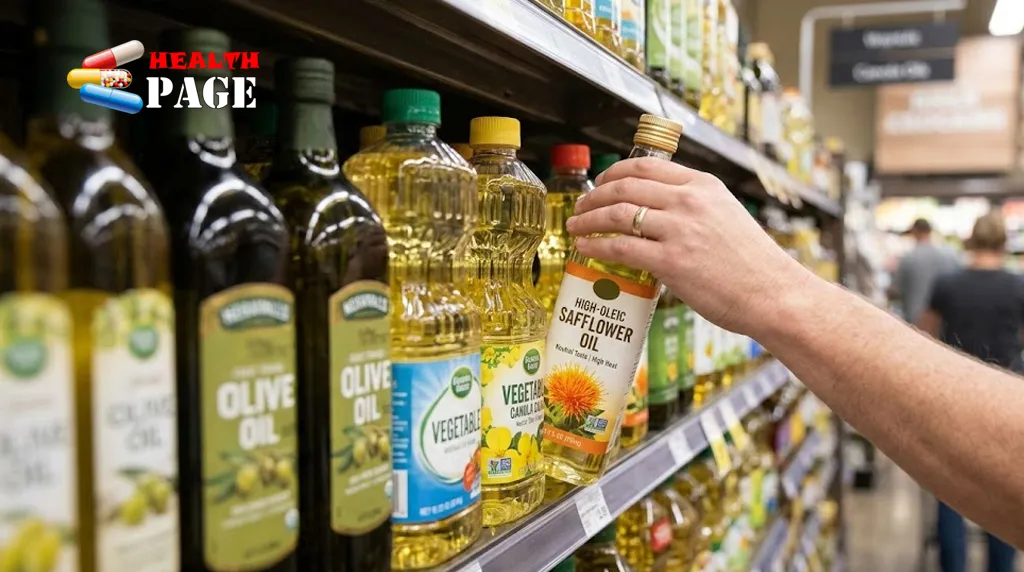
9.1. Read the Label
Look for:
- “High-oleic” on the front or back label for high-heat cooking.
- A note that it is suitable for frying, roasting, or baking.
- Minimal added ingredients.
For delicate uses, like salad dressings, a high-linoleic or unrefined version can offer a lighter flavor.
9.2. Refined vs Unrefined
- Refined oil
- More neutral flavor
- Higher smoke point
- Better for frying and roasting
- Unrefined oil
- More flavor and aroma
- Lower smoke point
- Better for cold uses
Most everyday cooks will prefer refined high-oleic for general cooking tasks.
9.3. Storage Tips
To protect freshness:
- Keep high-oleic bottles in a cool, dark cupboard.
- Keep high-linoleic varieties in the refrigerator.
- Close the cap tightly after each use.
- Avoid storing near the stove, where heat speeds oxidation.
If the oil smells rancid or “off,” it is best to discard it.
10. Safety, Side Effects, and Who Should Be Careful ⚠️
While this oil offers many benefits, it is not right for everyone in every situation.
10.1. Bleeding and Surgery Concerns
Because it may have a blood-thinning effect, some people need caution. It can slow clotting slightly, which might increase bleeding risk.
Use extra care if you:
- Have a known bleeding disorder
- Take blood-thinning medications, such as warfarin or certain supplements
- Are scheduled for surgery or major dental work
Always talk with your healthcare provider before making big changes to your fat intake in these cases.
10.2. Allergy Risk
Safflower belongs to the Compositae (Asteraceae) plant family. That group includes:
- Ragweed
- Daisies
- Marigolds
If you have allergies to these plants, you might react to this oil as well. Symptoms can include:
- Hives or rash
- Itching
- Swelling
- Breathing difficulty in severe cases
Anyone with a history of strong reactions to plants in this family should be especially cautious and discuss use with an allergist or physician.
11. Simple Ways to Use This Oil in Everyday Cooking 🍲
Knowing the health benefits is one thing. Using the oil in real meals is another. Here are practical ideas.
11.1. For High-Heat Cooking (High-Oleic)
Try:
- Stir-fries with lean chicken and mixed vegetables
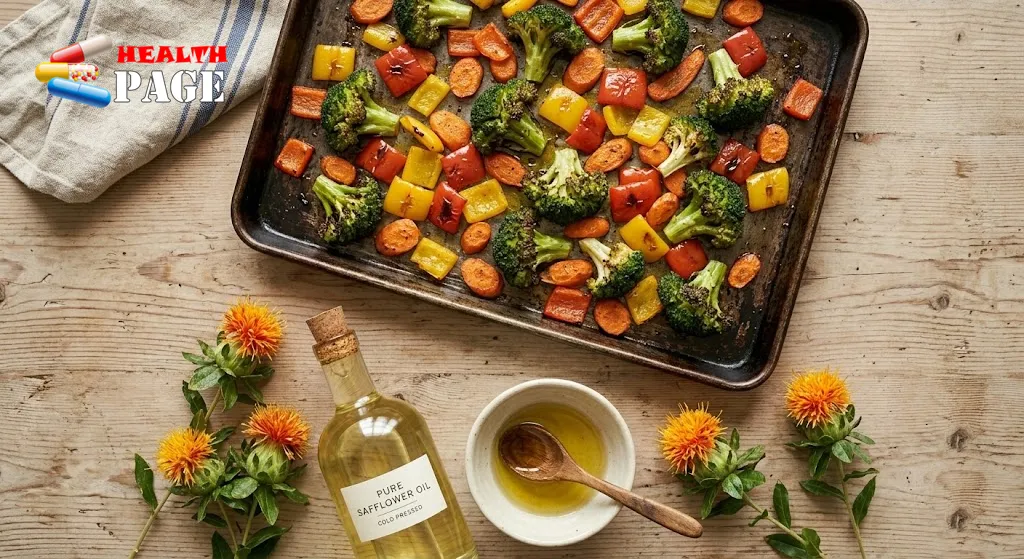
- Sheet-pan dinners with root vegetables and herbs
- Oven-roasted chickpeas for a crunchy snack
- Pan-seared tofu or fish for a crisp exterior
Because of its neutral flavor, it lets your herbs, spices, and ingredients shine.
11.2. For Cold Dishes (High-Linoleic or Unrefined)
Use a more delicate version to:
- Whisk into vinaigrettes with lemon, mustard, and herbs
- Drizzle over grain bowls or cooled roasted vegetables
- Blend into dips like hummus for extra creaminess
11.3. Helpful Kitchen Habits
To keep portions in check and maintain health benefits:
- Measure out oil before adding to pans.
- Combine with citrus juice or vinegar for flavor without excess calories.
- Rotate with other healthy fats, like extra-virgin olive oil or avocado oil.
If you are curious about overall health effects, this summary from is safflower oil healthy offers additional perspective.
12. FAQs About This Seed-Based Cooking Oil
1. Is safflower oil healthy?
Many people ask, “is safflower oil healthy?” The answer is that it can be, when used in moderation. It is rich in unsaturated fats and low in saturated fat, which supports heart and metabolic health. However, it is calorie-dense, so portion control is essential.
2. Is safflower oil a seed oil or vegetable oil?
It is both a seed oil and often grouped under the broader term vegetable oil. The oil is pressed specifically from the seeds of the safflower plant.
3. What is the best way to cook with high-oleic varieties?
High-oleic types are perfect for high-heat cooking. Use them for stir-fries, roasting, baking, or pan-frying. Their high smoke point makes them more stable than many common oils at higher temperatures.
4. Can I use this oil on my face or body?
Yes, many people use it as a skin-softening oil. Its emollient properties and vitamin E content can help with dry or rough skin. Always do a 24-hour patch test first to check for irritation or allergy.
5. Does it help with weight loss?
It may support weight management indirectly by improving satiety and blood sugar control. However, it does not cause weight loss on its own. It still contains about 120 calories per tablespoon, so total calorie balance remains key.
6. Who should avoid or limit this oil?
People with bleeding disorders, those on blood thinners, or anyone scheduled for surgery should speak with a healthcare provider before using it regularly. Individuals with allergies to ragweed, daisies, or related plants should also be cautious.
Conclusion: A Versatile, Heart-Smart Oil Worth Considering 🌟
Used thoughtfully, safflower oil can be a valuable part of a modern, health-focused kitchen. High-oleic varieties handle high heat beautifully, while high-linoleic options work well in cold dishes. Together, they offer:
- A rich source of unsaturated fatty acids
- Support for blood sugar and heart health
- Anti-inflammatory and skin-soothing properties
- A high smoke point for safer high-heat cooking
At the same time, it is important to remember that this oil is still high in calories and not suitable for everyone. Bleeding risks, allergies, and overall calorie intake all deserve careful attention.
If you are curious, start small: pick up a bottle of high-oleic oil, use it to roast vegetables or sear fish, and notice how it fits your cooking style and health goals. With mindful portions and balanced meals, this seed-based superfood can become a reliable ally in your kitchen. 💚

Pingback: jeni's passion fruit dreamsicle recall: 7 Shocking Facts You Must Know
Pingback: Celery Juice: 10 Powerful Benefits and Side Effects You Must Know