

10 Amazing Facts About Jowls & How to Get Rid of Them Fast
If you have started noticing jowls in the mirror, you are not alone.
That soft skin along the jawline can feel very discouraging.
Maybe your once sharp jaw now looks softer in photos.
Maybe you lift your cheeks with your fingers and think, “I wish it stayed like this.”
These feelings are completely normal and very common.
Understanding what are jowls, why they happen, and which options are worth trying can change everything.
With the right information, you can choose realistic, safe steps that match your lifestyle and budget.
This guide will walk you through ten surprising facts about drooping along the jaw.
Then you will see a clear plan for how to get rid of jowls as quickly and safely as possible.
1. Jowls Are Extremely Common and Not a Personal Failing 💬
On almost every face, mild jowls eventually appear.
They are not a sign that you did anything wrong.
What exactly are jowls?
In simple terms, they are:
- Loose or sagging skin along the lower cheeks
- Soft tissue that hangs slightly past the jawbone
- A change that blurs the line between jaw and neck
Medical descriptions of what are jowls explain that they are a normal result of aging skin and gravity.
They show up differently on every jowls face depending on bone structure, fat distribution, and skin thickness.
Why they feel so emotionally heavy
Changes around the jawline can feel very visible.
This area shapes how youthful and energetic we appear.
People often say:
- “I look tired, even when I am rested.”
- “I feel younger than I look in photos.”
You deserve to know this: jowling is a mechanical change, not a reflection of your worth.
There are many ways to soften it, and you can decide which feel right for you.
2. Collagen and Elastin Loss Are the Main Drivers 🎯
The biggest shift under the surface involves collagen and elastin.
Think of these as your skin’s scaffolding and springs.
- Collagen gives skin strength and structure.
- Elastin allows skin to bounce back after movement.
Over time, your body makes less of both proteins.
At the same time, enzymes break down the collagen you already have.
Key triggers that speed up jowling
Several factors accelerate this breakdown:
- Long term sun exposure without protection
- Smoking or vaping
- Air pollution and oxidative stress
- High sugar diets that damage collagen fibers
- Chronic stress and poor sleep
When the collagen network weakens, skin on the lower face loses its support.
Fat pads under the cheeks also slide downward over time.
Together, these changes create that soft droop along the jaw.
Dermatology resources that explain what are jowls often highlight this collagen loss as the central cause.
This is why so many treatments focus on stimulating new collagen production.
3. Everyday Habits Can Make Sagging Better or Worse 🧠
While we cannot stop time, we can influence how quickly changes show.
Certain daily habits either protect your jawline or stress it.
Habits that may worsen a drooping jawline
- Constant screen time with your head bent forward
- Side sleeping without good pillow support
- Frequent yo-yo dieting causing repeated weight shifts
- Grinding or clenching your teeth, especially at night
Looking down at a phone for hours can encourage neck and lower face laxity.
Over years, that posture may deepen creases and fold lines.
Habits that help support the lower face
- Using a stand to keep devices at eye level 📱
- Sleeping on your back when possible
- Maintaining a stable, healthy weight
- Wearing sunscreen daily on face, neck, and jawline
- Managing stress with walks, breathing exercises, or journaling
These steps alone will not erase sagging.
However, they can slow further drooping and help any treatment last longer.
4. Prevention Can Start Earlier Than You Think 🧴
Many people wait until they clearly see lower face sagging.
By then, they feel they must “fix” something.
Starting earlier is more about maintenance than repair.
You can support your skin’s structure long before significant sagging appears.
In your 20s and 30s
You may not see visible jowling yet.
Still, your collagen production has already begun to decline.
Helpful steps at this stage:
- Daily broad-spectrum sunscreen SPF 30 or higher
- Gentle antioxidant serum in the morning
- A low-strength retinoid at night, if tolerated
- Avoiding smoking and heavy tanning
These habits build a “savings account” of collagen.
Later in life, your jawline may hold its shape longer.
In your 40s and 50s
You may notice early softening along the jawline.
At this point, prevention blends with treatment:
- Stronger retinoids or retinol products, under guidance
- Regular use of moisturizers with peptides and ceramides
- Possible introduction of in-office procedures that stimulate collagen
Starting earlier does not mean you missed your chance if you start later.
Skin can respond to support at almost any age.
5. Skincare Alone Can Help More Than You Expect 🧪
No cream can perform a surgical facelift.
Still, topical products can visibly improve texture and firmness around the jaw.
Key skincare ingredients for a firmer jawline
Look for:
- Retinoids (retinol, tretinoin)
- Increase cell turnover and collagen production
- Peptides
- Support skin structure communication and repair
- Niacinamide
- Improves barrier function and fine lines
- Vitamin C
- Antioxidant that supports collagen and brightens tone
- Hyaluronic acid
- Plumps surface hydration, making skin look smoother
Applied consistently, these ingredients can:
- Soften fine lines near the mouth
- Improve skin “bounce” on the lower cheeks
- Enhance the overall look of a sagging jawline
How to use skincare realistically
- Apply retinoids slowly to avoid irritation.
- Always pair active ingredients with sunscreen.
- Give products at least three months before judging results.
Evidence based guides on what are jowls often emphasize that topical care supports skin health.
However, deeper structural changes often need procedures for stronger lifting.
6. Facial Exercises: Helpful or Overhyped? 🧘♀️
You may see social media videos promising a “natural facelift” with facial yoga.
The idea sounds appealing and very simple.
The truth is more nuanced.
How facial exercises might help
Some small studies suggest that targeted facial exercises can:
- Build muscle volume in cheeks
- Improve perceived facial fullness
- Slightly lift the midface appearance
If muscles under the skin become stronger and fuller, the overlying skin may look less droopy.
Potential downsides
However, there are concerns:
- Overworking certain muscles may deepen expression lines.
- Some exercises pull repeatedly on delicate skin.
If you want to try facial exercises:
- Focus on gentle, controlled movements.
- Avoid pulling or stretching your skin with your fingers.
- Combine exercises with overall posture and neck strength work.
Think of these routines as a small helper, not a miracle cure.
They can complement, but rarely replace, medical treatments.
7. Non-Surgical Treatments Can Quickly Improve the Jawline ⚡
Many people want visible improvement without surgery.
Modern dermatology offers several in-office treatments that can tighten and contour the lower face.
These cannot fully replace a facelift for very advanced sagging.
However, they can make jowls far less noticeable, often with minimal downtime.
Common non-surgical options
Below is an overview of popular choices.
Exact results and safety depend on your provider’s skill and your starting anatomy.
| Treatment Type | How It Works | Best For | Typical Downtime |
|---|---|---|---|
| Radiofrequency microneedling | Heat plus needles stimulate collagen | Mild to moderate skin laxity | 1–3 days redness |
| Ultrasound lifting (e.g., Ultherapy) | Focused energy targets deep tissues | Lifting along jaw and brow | Minimal, some soreness |
| Injectable fillers | Add support and volume above jawline | Early sagging, contouring | 0–2 days swelling |
| Thread lifts | Dissolvable threads create lifting effect | Mild to moderate drooping, quick lift | Bruising, soreness |
| Laser resurfacing | Removes damaged surface, boosts collagen | Texture, fine lines, mild tightening | Days to weeks healing |
A skilled dermatologist or facial plastic surgeon can help personalize this menu.
They can explain which combination matches your goals and skin type.
A note on Botox
People often ask about botox for jowls.
Botulinum toxin relaxes muscles.
It does not directly lift sagging skin.
However, it can:
- Soften bands in the neck
- Slightly refine the jawline when used with other methods
Non-surgical treatments usually offer gradual improvement.
Results build over months as new collagen forms.
8. Surgery Is Not the Only Option, but Sometimes It Is the Best One 🏥
For significant sagging, non-surgical methods may not be enough.
In these cases, surgical procedures can provide the most dramatic and lasting change.
Surgical options for advanced sagging
- Lower facelift
- Tightens deeper tissues and removes extra skin
- Redefines the jawline and smooths lower cheeks
- Neck lift
- Focuses on loose neck skin and banding
- Often combined with a lower facelift
- Liposuction under the chin
- Removes excess fat for a cleaner angle
- May be done with other procedures
Surgery involves more cost, downtime, and risk.
However, it often delivers the strongest improvement for heavy sagging.
A board certified facial plastic surgeon or plastic surgeon can evaluate:
- Skin quality
- Bone structure
- Fat distribution
- Health conditions and expectations
They will help you decide whether surgery fits your goals and comfort level.
9. Weight Changes Strongly Influence Your Jawline ⚖️
Weight gain and weight loss both affect how your lower face looks.
This effect can be surprising and emotional.
When weight increases
Extra fat around the cheeks and jaw can:
- Blur the jawline
- Create fullness under the chin
- Make jowling appear more pronounced
Even mild sagging can seem worse when extra weight adds downward pull.
When weight decreases
Weight loss can:
- Reveal bone structure more clearly
- Reduce fullness under the chin
Yet, rapid or large weight loss may also:
- Leave behind loose skin
- Make existing sagging look more visible
This can feel unfair after working hard to improve your health.
Many people report feeling conflicted about their new jowls face despite feeling fitter.
If you plan to lose a significant amount of weight, discuss timing with a dermatologist or surgeon.
You may want to finish major weight changes before investing in certain procedures.
10. Your Confidence Matters as Much as Your Jawline ❤️
Treatments can change how your face looks.
How you feel about yourself, however, is much larger than any single feature.
Emotional impact is real
People with drooping along the jaw often share:
- “I feel older than I really am.”
- “I avoid video calls now.”
- “I keep comparing my face to older photos.”
Your feelings deserve respect, not dismissal.
Wanting change is okay.
Needing compassion for yourself is essential.
Blending appearance goals with self-kindness
You can:
- Seek professional treatments if they fit your values and budget
- Use makeup or hairstyles that flatter your jawline
- Work on self talk that treats your face with respect
Remember, visible sagging is one sign of a life lived.
Laughter, talking, and expression all shape the lower face over time.
Your worth does not sag, wrinkle, or stretch.
You are allowed to care about your appearance and your mental well being together. 💗
How to Get Rid of Jowls Fast: A Realistic Action Plan 🚀
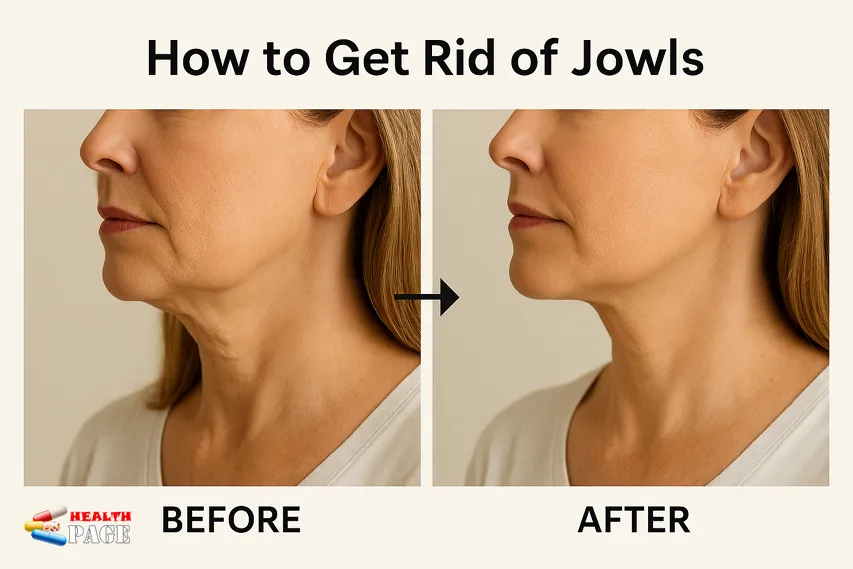
Many people want a clear roadmap for how to get rid of jowls as quickly as possible.
“Fast” will look different for each person, depending on budget, tolerance for downtime, and starting point.
Below is a layered approach, from simplest to most intensive.
You can choose one step or combine several.
Step 1: Strengthen your daily foundation (Week 1 onward)
Start with changes that protect results from any future treatment.
- Apply SPF 30 or higher to face, neck, and jaw daily.
- Add a gentle retinoid at night, if your skin tolerates it.
- Use a moisturizer with peptides and niacinamide.
- Position screens at eye level.
- Aim for regular sleep and stress relief activities.
These do not deliver instant lifting.
They prepare your skin to respond better and age more slowly.
Step 2: Try targeted at-home tools (Weeks 4–12)
Some home devices aim to support collagen and circulation.
Examples include microcurrent tools or low energy radiofrequency devices.
They may:
- Gently stimulate muscles
- Improve short term skin tightness and glow
Results tend to be modest and depend heavily on consistency.
Follow manufacturer instructions and avoid overuse.
Step 3: Consider non-surgical in-office treatments (Months 1–6)
For noticeable yet non-surgical improvement, discuss options with a dermatologist.
Based on your exam, they may suggest:
- Radiofrequency microneedling for overall tightening
- Ultrasound lifting along the jaw and neck
- Filler placement to restore cheek support above the jaw
These treatments aim to:
- Firm the skin
- Reduce shadows beside the mouth
- Create a smoother jawline transition
Most people need a series of sessions.
Results can build over several months.
Medical providers often use educational resources on what are jowls to explain these options in detail.
A good consultation feels like a two way conversation, not a sales pitch.
Step 4: Explore surgical options for the most dramatic lift (Months 6+)
If sagging is moderate to severe, or if you want the strongest change:
- Schedule consultations with at least two board certified surgeons.
- Ask to see before and after photos of similar patients.
- Discuss recovery time, scars, and realistic results.
Surgery offers the fastest visible change once performed.
Yet the decision itself should never feel rushed.
FAQs About Jowls and Jawline Tightening ❓
1. At what age do jowls usually start to appear?
Many people notice early softening in their late 30s or 40s.
For others, visible sagging appears later.
Genetics, sun exposure, and lifestyle all play important roles.
2. Can skincare alone get rid of sagging along the jaw?
Skincare can significantly improve texture, firmness, and fine lines.
However, it usually cannot fully reverse deeper sagging.
Think of products as support tools, not complete solutions for advanced drooping.
3. Does weight loss always make jowls worse?
Not always.
Moderate, gradual weight loss can sharpen your jawline.
Large or rapid loss can sometimes leave extra skin, making sagging more noticeable.
Skin quality and age influence this response.
4. Is Botox the best treatment for a sagging jawline?
Botulinum toxin can help in specific cases, especially with neck bands.
However, it does not directly tighten loose skin.
Most people need a blend of other treatments, such as collagen stimulating procedures or fillers.
5. Are non-surgical treatments safe for all skin tones?
Many modern devices and techniques work safely on diverse skin tones.
Still, certain lasers and deep peels may carry more risk for darker skin.
Choose a provider experienced with a wide range of complexions.
6. How long do non-surgical results usually last?
It varies by treatment:
- Fillers: 6–24 months
- Radiofrequency or ultrasound: results can last 1–2 years
- Thread lifts: often 1–2 years
Lifestyle, sun exposure, and skin care also influence how long results remain visible.
Trusted Resources for Learning More 🌐
If you want a medical overview of what are jowls, including causes and treatment types,
you can review this explanation from Cleveland Clinic:
what are jowls.
For more detail on injectables and botox for jowls, Healthline provides a clear guide:
botox for jowls.
You can also explore in depth articles on skin aging and collagen support in related guides on this site.
Conclusion: Moving Forward With Knowledge and Kindness 🌈
Sagging along the jawline can feel frustrating and deeply personal.
Yet jowls are a near universal part of aging, not a flaw unique to you.
You have many options, from daily skincare and lifestyle shifts to advanced procedures.
Understanding how to get rid of jowls begins with realistic expectations and trustworthy information.
To recap:
- Jowling is driven by collagen loss, gravity, and genetics.
- Habits like sun protection and smart skincare can slow progression.
- Non-surgical treatments can significantly soften a drooping jawline.
- Surgery provides the most dramatic change when sagging is advanced.
- Your comfort, safety, and self respect should guide every choice.
You deserve to feel informed, supported, and hopeful about your face.
Whether you choose subtle tweaks or bigger changes, your value remains the same. 💖
If you feel ready, your next step can be simple:
start with one small habit today, or schedule a consultation with a qualified skin professional.
Your future self, and your jawline, will thank you.