

7 Shocking Facts About How Long Can You Live After Your Appendix Bursts
If you’re searching “how long can you live after your appendix bursts,” you’re probably scared for yourself or someone you love. ❤️🩹 That fear is understandable. A burst appendix is a true medical emergency. Untreated, it can be fatal within days. With fast surgery, though, survival is nearly 100%.
This article breaks down what really happens, how long you can survive, what the pain feels like, and when to rush to the ER. You’ll also see real-life style descriptions of the pain, so you know what to watch for.
Important: This article is for education only and not a substitute for medical care. If you suspect appendicitis, seek emergency help immediately.
Fact #1: A Burst Appendix Can Kill You Within 5–7 Days if Untreated
The harsh reality is that you cannot safely live long after your appendix bursts without treatment. Doctors estimate that:
- In the first 24–48 hours after rupture, your body is fighting a losing battle.
- By 5–7 days without treatment, widespread infection and organ failure make death extremely likely.
So when people ask, “how long can you live after your appendix bursts?”, the honest medical answer is:
- You may survive a few days.
- But after around 5–7 days without prompt treatment, it is almost always fatal.
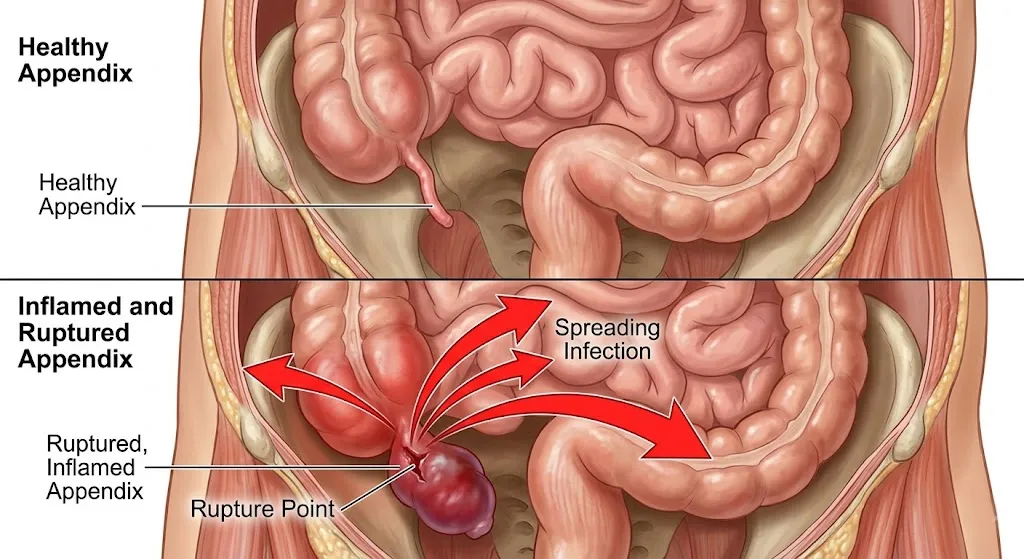
The appendix is a small pouch attached to the large intestine. When it bursts, it spills pus, stool, and bacteria into the abdominal cavity. This triggers:
- Peritonitis – infection of the thin lining inside your abdomen.
- Sepsis – infection spreading into the bloodstream, damaging organs like the kidneys, lungs, and heart.
Without surgery and strong antibiotics, this infection overwhelms the body.
✅ Key takeaway: You cannot “wait and see” with a burst appendix. Time lost can cost your life.
Fact #2: Rupture Often Happens 48–72 Hours After Symptoms Start
Another shocking fact is how fast things can go wrong.
In many people, the appendix ruptures 48–72 hours after symptoms begin, especially if they do not get medical care. But this timeline can vary by age and health:
- Children and older adults may rupture sooner or have less typical symptoms.
- People with weaker immune systems can deteriorate faster.
- Some may take a little longer, but the risk grows with every passing hour.
The process looks like this:
- Blockage: Something blocks the opening of the appendix.
- Hardened stool
- Swollen lymph tissue
- Less commonly, a tumor
- Bacterial overgrowth: Trapped mucus and bacteria multiply inside.
- Pus buildup: The appendix fills with pus, swelling and stretching.
- Pressure and death of tissue: Blood flow decreases, tissue starts to die.
- Rupture: The wall of the appendix tears, spilling infected material into the abdomen.
Doctors talk about a “critical window”:
- After about 36 hours of untreated symptoms, the risk of rupture rises by about 5% every 12 hours.
- That means the longer you wait, the higher your chance of a burst appendix.
🩺 What this means for you: If you have ongoing, sharp right lower abdominal pain—especially with fever or nausea—get checked the same day, not “later this week.”
Fact #3: Survival Is Nearly 100% With Early Treatment
Here’s the hopeful side. While people wonder “how long can you live after your appendix bursts,” the better question is: how likely are you to survive if you seek help early?
The answer: almost everyone survives when appendicitis is treated before rupture.
- Early treatment (before burst):
- Mortality rate: less than 1%
- Treatment: Emergency appendectomy (surgical removal of the appendix)
- Outcome: Full recovery is expected in most people
- Delayed treatment (48–72 hours after symptoms):
- Higher chance the appendix has already ruptured
- Increased risk of peritonitis and sepsis
- Longer hospital stays and more complications
- No treatment (5–7 days+):
- Infection spreads widely
- Major organ failure becomes likely
- Almost always fatal
In many developed countries, early surgery and antibiotics have made appendicitis one of the most survivable emergencies, as long as it’s treated soon.
For deeper background on the condition, resources like the National Institute of Diabetes and Digestive and Kidney Diseases offer trustworthy information.
✅ Key message: Don’t wait for the pain to “settle down.” With appendicitis, early surgery can mean a fast, full recovery.
Fact #4: Appendicitis Pain Is Often 9/10 and Truly Unforgettable 😖
People often underestimate how much appendicitis hurts. Many describe it as some of the worst pain of their lives.
How the pain usually starts
Classically, appendicitis pain:
- Begins as a dull ache near the belly button
- Then moves to the lower right side of the abdomen over several hours
- Becomes sharp, stabbing, or burning
Common descriptions from patients include:
- “It felt like somebody stabbed me—hot and burning.”
- “I was doubled over, thought I was going to die.”
- “I couldn’t stand up, curled into the fetal position.”
Most people rate the pain as:
- 8–9 out of 10
- Worse with:
- Walking or moving
- Coughing or sneezing
- Deep breathing
- Pressing on the lower right abdomen
Other early appendicitis symptoms
Along with pain, you may notice:
- Nausea or vomiting 🤢
- Loss of appetite
- Low-grade fever
- Chills
- Constipation or diarrhea
- Bloating or abdominal swelling
- Rapid heart rate
This combination—severe right-sided abdominal pain plus fever and nausea—is a red flag for appendicitis.
Fact #5: When the Appendix Bursts, Pain May Briefly Ease… Then Get Much Worse
One of the most dangerous myths is that if your pain suddenly improves, you’re getting better. With appendicitis, that is not always true.
When the appendix finally ruptures:
- The intense, focused pressure in the appendix is released.
- This can cause a short period of less intense pain.
- Some patients feel a brief “relief” and think they’re improving.
But what is actually happening is terrifying:
- Infection is now spreading through the abdomen.
- Bacteria and pus irritate the entire peritoneal lining.
- This leads to peritonitis and possibly sepsis.
Within hours after rupture, most people develop:
- Widespread abdominal pain, not just in the lower right
- Abdomen that feels hard, rigid, or board-like
- High fever
- Chills and shaking
- Fast heart rate
- Severe weakness, confusion, or feeling like you may faint
So, if you’re wondering how long can you live after your appendix bursts, remember:
- That moment of “relief” after intense pain is a red alert, not a sign of recovery.
- You now have even less time to get life-saving care.
Fact #6: Complications of a Burst Appendix Can Be Devastating
When the appendix bursts and infection spreads, several serious complications can develop. These are the reasons untreated rupture is so deadly.
1. Peritonitis
Peritonitis is an infection of the thin lining that covers the abdominal organs.
Symptoms:
- Intense, constant abdominal pain
- Abdomen feels rigid or board-like
- Extreme pain when the doctor presses or releases the abdomen
- High fever
- Nausea and vomiting
Peritonitis requires emergency surgery and strong IV antibiotics. Without treatment, it leads quickly to sepsis and organ failure.
2. Sepsis
Sepsis occurs when infection spreads to the bloodstream and causes the body to go into overwhelming inflammation.
Warning signs of sepsis can include:
- Very high or very low temperature
- Fast heart rate
- Rapid breathing
- Confusion or difficulty staying awake
- Extreme weakness
Severe sepsis or septic shock can shut down vital organs like:
This is a major reason that, 5–7 days after a burst appendix without treatment, death is so common.
3. Abscesses
Sometimes, instead of spreading everywhere at once, the body tries to wall off the infection, forming an abscess (a pocket of pus).
- These abscesses may form around the appendix area.
- They can cause ongoing pain, fever, and illness.
- Doctors may need to:
- Drain the abscess using a needle guided by imaging (CT or ultrasound).
- Give several days of IV antibiotics.
- Delay surgery until the infection is better controlled.
Though abscesses can “buy time,” they are still serious and need careful follow-up.
Fact #7: Emergency Surgery and Antibiotics Can Still Save You After a Rupture
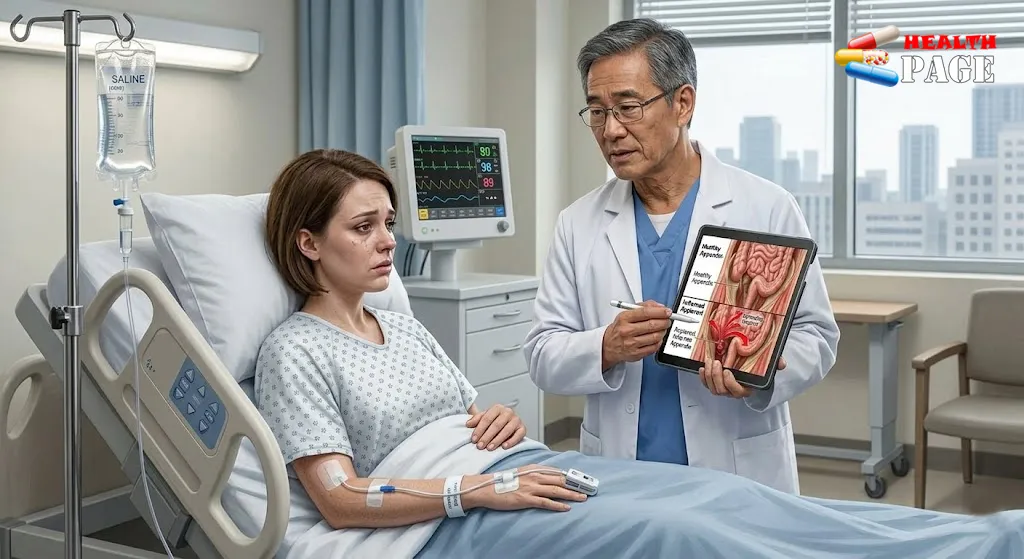
Even if the appendix has already burst, all hope is not lost—as long as you seek emergency care quickly.
Typical treatment after a burst appendix
- Emergency appendectomy
- The surgeon removes the appendix.
- They wash out the abdominal cavity to clear pus and infected fluid.
- Surgery can be:
- Laparoscopic (several tiny cuts and a camera)
- Open (a larger cut in the lower right abdomen)
- Antibiotics
- Strong IV antibiotics in the hospital.
- Often followed by oral antibiotics at home.
- Abscess drainage (if needed)
- A radiologist may insert a needle or small catheter under imaging guidance.
- This drains collections of pus before or after surgery.
Recovery after a burst appendix
Recovery is usually longer and harder than with simple appendicitis:
- Hospital stay: Often 5–10 days.
- Full recovery: Can take several weeks.
- You may feel:
- Tired and weak
- Sore at incision sites
- Less hungry for a while
Some people may later develop:
- Adhesions: Bands of scar tissue in the abdomen.
- Occasional digestive issues.
- Rarely, bowel obstruction from scar tissue.
Still, with modern surgery and antibiotics, many people who reach the hospital in time after a rupture can survive and return to normal life.
Appendicitis vs. Burst Appendix: Quick Comparison
Here’s a simple table to help you understand the difference between appendicitis pain and burst appendix:
| Aspect | Appendicitis Pain | Burst Appendix |
|---|---|---|
| Onset | Dull near belly button → sharp lower right | Pain spreads across the abdomen |
| Intensity | Severe, often 9/10 | May briefly ease, then becomes worse and widespread |
| Symptoms | Nausea, vomiting, fever, loss of appetite | Sepsis, peritonitis, abscesses, high fever |
| Treatment | Appendectomy before rupture | Emergency surgery + strong antibiotics |
| Survival | Nearly 100% with early medical care | Often fatal within 5–7 days if left untreated |
How Bad Does Appendicitis Hurt, Really?
Many people wonder if their pain is “bad enough” to be appendicitis. Here’s what most patients describe:
- Starts as vague discomfort or dull pain near the navel.
- Over several hours, moves to the lower right side.
- Becomes sharp, stabbing, burning, or cramping.
- Pain worsens with:
- Walking or movement
- Coughing or sneezing
- Pressing on the painful area
Common additional symptoms:
- Nausea and sometimes vomiting 🤮
- Loss of appetite
- Low-grade fever or chills
- Mild diarrhea or constipation
- Feeling “off” or unusually tired
If the appendix ruptures:
- Pain may temporarily lessen, then:
- Spreads across the entire abdomen
- Becomes severe again
- Is joined by high fever and extreme illness
If something feels wrong and different from usual stomach bugs, trust that feeling and seek urgent care.
FAQs About Burst Appendix and Survival
1. How long can you live after your appendix bursts without treatment?
Most people can only survive a few days after a rupture. By 5–7 days untreated, the infection usually causes fatal organ failure. This is why a burst appendix is a true emergency.
2. Can you survive a burst appendix?
Yes—if you get immediate medical care. Emergency surgery and antibiotics can save many people, even after rupture. Without treatment, however, survival is very unlikely after several days.
3. Is a burst appendix always obvious?
Not always. Some people have less typical symptoms, especially children and older adults. Mild or shifting pain, or temporary relief after intense pain, can be misleading. Any severe or persistent abdominal pain deserves medical evaluation.
4. How can I tell if it’s appendicitis or just gas or a stomach bug?
While only a doctor can diagnose you, warning signs of appendicitis include:
- Pain that moves to the lower right abdomen
- Pain that gets steadily worse, not better
- Pain with fever, nausea, or vomiting
- Pain that worsens when you walk or cough
Gas pain or minor stomach bugs usually come and go and are less focused on one spot.
5. Can appendicitis go away on its own?
In rare cases, mild appendicitis can seem to improve, but there’s always a risk it can flare and rupture. Doctors generally recommend removing the appendix or closely managing with antibiotics under specialist care.
6. How fast should I go to the ER if I suspect appendicitis?
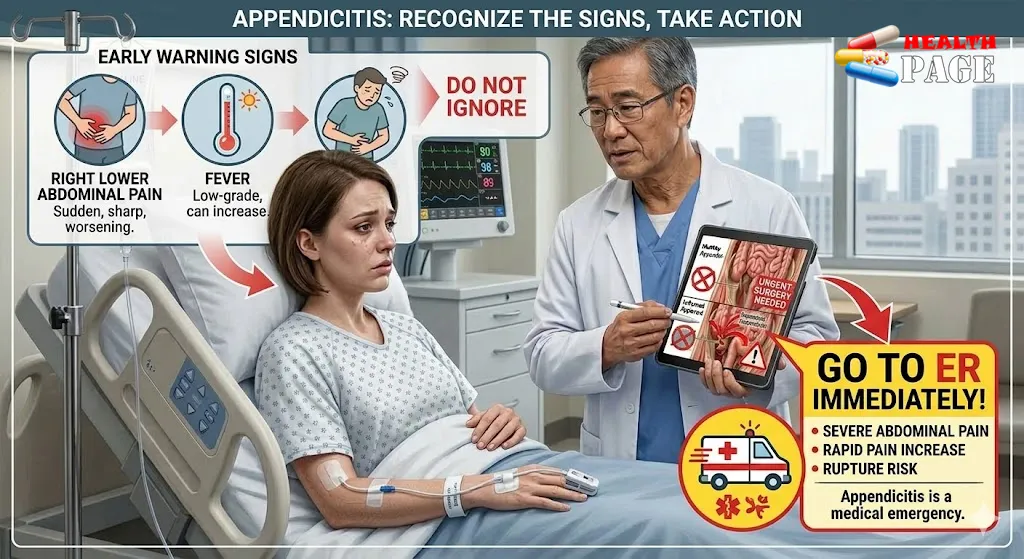
Immediately. Do not wait overnight or “until the weekend is over.” The risk of rupture rises with every hour after symptoms start, and early treatment is almost always safer and easier.
Final Takeaway: Don’t Gamble With Appendicitis—Time Is Everything ⏱️
When people ask “how long can you live after your appendix bursts,” it often comes from fear and uncertainty. The truth is:
- A burst appendix, left untreated, can be fatal within 5–7 days.
- Infection spreads quickly, leading to peritonitis, sepsis, and organ failure.
- Once sepsis sets in, survival drops dramatically.
But there is also hope:
- Early surgery for appendicitis offers nearly 100% survival and a relatively quick recovery.
- Even after rupture, emergency surgery and antibiotics can still save your life if you seek help fast.
✅ If you or someone you love has:
- Sharp, worsening pain in the lower right abdomen
- Pain with fever, nausea, vomiting, or chills
- Pain so bad you can’t stand up straight or move easily
Go to the emergency room immediately.
Acting quickly may mean the difference between:
- A short hospital stay and full recovery
vs. - A life-threatening infection in just a few days
Your life is worth more than “waiting to see if it gets better.” When it comes to appendicitis, sooner is always safer.