

7 Powerful Facts About Early Pregnancy Urine Color You Must Know
Pregnancy often begins with quiet changes before the world can see them. A missed period may raise the first question. Then come subtle body clues, like nausea, fatigue, breast tenderness, and changes in bathroom habits. One sign many women notice early is early pregnancy urine color. It can feel surprising, even worrying, when urine suddenly looks brighter, darker, or stronger than usual.
In most cases, these changes are linked to hydration, hormones, vitamins, and the body’s rapid adjustment to pregnancy. Still, urine can also offer useful clues about your health. It is like a daily snapshot of how your body is coping with the demands of growing a baby. 💛
This article explains what to watch for, what is usually normal, and when a color change may need medical attention. You will also learn how prenatal urine testing works, why urinary tract infections are more common in pregnancy, and how to keep your urinary health on track.
1. Urine is mostly water, so color often reflects hydration first
Before talking about pregnancy changes, it helps to know what urine actually is.
Urine is about 95% water. The rest contains:
- Electrolytes
- Metabolites
- Hormones
- Waste products
- Small amounts of salts and minerals
That is why color can change so easily. If you drink less water, urine becomes more concentrated. If you drink more, it often turns pale yellow or nearly clear.
During pregnancy, this basic rule still matters. In fact, it matters even more because your body needs more fluid to support:
- Increased blood volume
- Placenta function
- Amniotic fluid balance
- Kidney filtration
- Baby’s circulation
A pregnant woman may notice darker urine after a busy morning, vomiting, or not drinking enough. That does not always signal danger, but it should not be ignored either.
What normal urine color often looks like
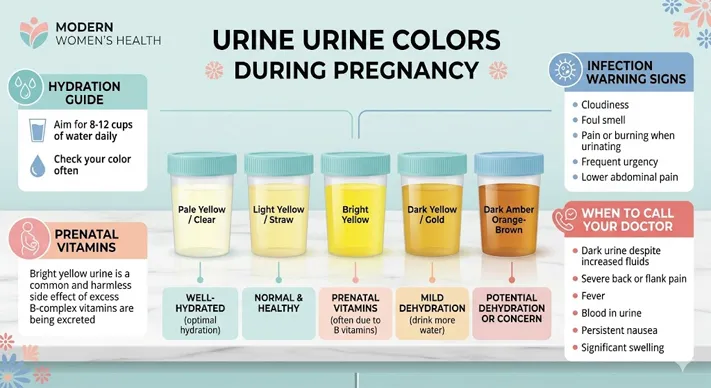
Here is a simple guide:
| Urine Color | Common Meaning | What To Do |
|---|---|---|
| Pale yellow | Well hydrated | Keep current fluid intake |
| Clear | Very hydrated | Usually fine, avoid overhydration |
| Bright yellow | Often due to prenatal vitamins | Usually normal |
| Dark yellow | More concentrated, possible dehydration | Drink more water |
| Amber | Significant concentration | Increase fluids and monitor |
| Cloudy | Possible infection or discharge contamination | Discuss with a doctor if persistent |
| Pink or red | Blood, food dyes, or other causes | Seek medical advice |
| Sweet-smelling | May suggest high sugar levels | Ask for evaluation |
Color alone does not tell the whole story, but it is an important clue.
2. Hormones in early pregnancy can change urine patterns quickly
One of the most important facts about early pregnancy urine color is that hormones begin reshaping kidney and bladder function very early.
Soon after conception, the body starts producing more:
- hCG
- Progesterone
- Estrogen
These hormones do far more than support the pregnancy. They also affect how the kidneys filter blood and how the urinary tract behaves.
How hormones influence urine
hCG rises quickly in early pregnancy. It supports the pregnancy and is the hormone detected by pregnancy tests.
Progesterone relaxes smooth muscles. That includes parts of the urinary tract. This relaxation can slow urine flow slightly, which may increase the risk of urinary infections.
Estrogen helps regulate many pregnancy changes, including blood flow and tissue response.
At the same time, blood volume starts increasing. More blood moving through the kidneys often means more urine production. That is one reason many women feel they are always heading to the bathroom, even before the bump appears.
A real-life example
A woman in her sixth week of pregnancy may notice two things at once: frequent urination and brighter urine. She may assume something is wrong. In reality, she could simply be drinking more water while also starting prenatal vitamins.
That combination is common and usually harmless.
Does positive early pregnancy urine color exist?
Many people search for positive early pregnancy urine color, hoping there is one exact shade that proves pregnancy. There is not.
Urine color alone cannot confirm pregnancy. A positive pregnancy test detects hCG. Urine color can change in pregnancy, but it is not a reliable standalone sign.
Still, certain changes may happen alongside early pregnancy, such as:
- More frequent urination
- Bright yellow urine after vitamins
- Darker urine if nausea causes dehydration
If pregnancy is possible, a test is the right next step.

3. Bright yellow urine is often caused by prenatal vitamins, not illness
This is one of the most misunderstood pregnancy symptoms.
If your urine suddenly turns neon or bright yellow after starting prenatal vitamins, that is usually not harmful. It often happens because of B vitamins, especially riboflavin.
These vitamins are water-soluble. Your body uses what it needs, and the extra amount leaves through urine. The result can look dramatic in the toilet bowl, but it is often expected.
Why prenatal supplements matter here
Pregnancy increases the need for nutrients like:
- Folate
- Iron
- B vitamins
- Vitamin D
- Calcium
Prenatal vitamins help fill nutritional gaps. Yet they can also affect urine color and sometimes odor.
Iron supplements may darken urine too
Some women take extra iron during pregnancy for anemia or low iron stores. Iron can sometimes make urine appear darker. It may also change stool color, which can be even more noticeable.
When bright yellow is probably normal
Bright yellow urine is usually harmless when:
- You recently started prenatal vitamins
- You feel well otherwise
- There is no pain or burning
- There is no strong unusual odor
- The color fades with hydration or timing
When to ask your doctor
Call your provider if bright or dark urine happens with:
- Fever
- Pain when urinating
- Lower abdominal pain
- Blood
- Persistent bad smell
- Vomiting and poor fluid intake
For broader guidance on healthy pregnancy habits, the pregnancy resources from the CDC can help you understand what body changes are common and when to ask for care.
4. Dark yellow urine may be an early sign that your body needs more fluids
Pregnancy makes hydration more important than ever. Even mild dehydration can leave you feeling worse.
If urine looks dark yellow, your body may be telling you it needs more water. This becomes especially common in early pregnancy when nausea and vomiting interfere with normal drinking habits.
Why dehydration happens faster in pregnancy
Several factors can lead to concentrated urine:
- Morning sickness
- Food aversions
- Increased blood volume
- Hot weather
- Exercise
- Not drinking enough during busy days
Dark yellow urine does not always mean an emergency. But repeated dark urine deserves attention.
A simple way to think about it
Imagine your kidneys as a filter and water as the rinsing system. When there is enough water, the filter runs smoothly. When water drops, the waste becomes more concentrated, and the urine gets darker.
Healthy hydration tips during pregnancy 💧
Try these simple habits:
- Aim for 8 to 10 cups of water daily
- Sip small amounts through the day
- Keep a bottle nearby
- Add lemon or cucumber if plain water feels hard to tolerate
- Eat hydrating foods like watermelon, oranges, and cucumber
- Ask your provider for help if vomiting prevents drinking
Early pregnancy urine color during pregnancy can vary day to day
Yes, the phrase sounds repetitive, but many women search exactly for early pregnancy urine color during pregnancy because they want reassurance that daily shifts can happen. They can.
Urine may look different:
- In the morning
- After taking vitamins
- After eating certain foods
- During nausea
- After a long walk
- On hotter days
The key is to look for patterns, not one isolated change.
For evidence-based information about routine prenatal care and body changes, the prenatal care guidance from ACOG explains why urine checks matter during pregnancy.
5. Urine tests during pregnancy can reveal hidden health problems early
Many women feel surprised by how often urine is tested during prenatal visits. But these checks are not routine for no reason. They help catch problems before symptoms become serious.
Common urine tests in prenatal care
Urinalysis
This basic test can check for:
- Protein
- Glucose
- pH level
- Ketones
- Signs of infection
- Blood
Urine culture
This test looks for bacteria when a urinary tract infection is suspected. It is especially useful because some pregnant women have bacteria in the urine without obvious symptoms.
24-hour urine collection
This is used in selected cases. It may help measure:
- Total protein
- Kidney function
- Certain pregnancy complications
What key urine markers may suggest
| Marker in Urine | What It May Mean | Why It Matters in Pregnancy |
|---|---|---|
| Protein | Possible preeclampsia or kidney stress | Needs prompt medical follow-up |
| Glucose | Possible gestational diabetes | May require blood sugar testing |
| Bacteria | Urinary tract infection | Infection can spread if untreated |
| Ketones | Poor intake or dehydration | Common with severe nausea |
| Blood | Irritation, infection, stones, or other causes | Should be evaluated |
Why these tests matter so much
Pregnancy changes can hide or mimic symptoms. A woman may feel tired and assume that is normal. But if protein appears in urine with swelling and high blood pressure, that could point toward preeclampsia.
Another woman may feel thirsty and urinate often. That can happen in normal pregnancy. But if sugar appears in urine, gestational diabetes may need to be ruled out.
Urine testing is one of the simplest tools in prenatal medicine. It gives fast clues with very little burden on the patient.
6. UTIs are more common in pregnancy and should never be ignored
Urinary tract infections are one of the most important reasons to pay attention to urine changes in pregnancy.
Pregnancy increases UTI risk because hormonal changes relax the urinary tract. As the uterus grows, it can also place pressure on the bladder. This can interfere with normal emptying, giving bacteria more opportunity to grow.
Common UTI symptoms during pregnancy
Watch for:
- Burning with urination
- Frequent urge to urinate
- Pelvic discomfort
- Cloudy urine
- Strong-smelling urine
- Lower abdominal pain
- Fever or chills in severe cases
Sometimes the urine may not change color much at all. That is why color should never be your only guide.
Why untreated UTIs can become serious
If not treated, a lower urinary infection can move upward to the kidneys. Kidney infections during pregnancy can become dangerous for both mother and baby.
Possible complications include:
- High fever
- Severe pain
- Dehydration
- Hospital treatment
- Increased pregnancy risks
That is why prompt treatment matters.
Prevention steps that truly help 🚻
These habits can reduce risk:
- Drink enough water daily
- Wipe front to back
- Urinate before and after sex
- Avoid douches and scented soaps
- Wear breathable cotton underwear
- Do not hold urine for long periods
A practical example
A pregnant woman may notice cloudy urine and feel pressure when urinating. She might assume the baby is just pressing on her bladder. But if burning begins too, she should call her provider. A quick test can often identify a UTI early.
The urinary tract infection information from NIDDK offers reliable details on symptoms, causes, and treatment.
7. Unusual odor, leakage, or sweet-smelling urine can signal more than normal pregnancy changes
By mid to late pregnancy, many women also notice changes beyond color.
Urine may smell different. Small leaks may happen when coughing or laughing. Bathroom visits often increase again as the uterus puts more pressure on the bladder.
Some of this is expected. Still, some changes deserve medical review.
Odor changes can be harmless
Urine odor may shift due to:
- Asparagus
- Garlic
- Spices
- Coffee
- Vitamins
- Concentration from low fluids
A stronger smell does not automatically mean infection. But a foul smell with pain, burning, or cloudy urine should be checked.
Sweet-smelling urine may need attention
Sweet-smelling urine can sometimes be linked to elevated sugar levels. If this happens with:
- Excessive thirst
- Frequent urination
- Fatigue
- Recurrent infections
your provider may evaluate for gestational diabetes.
Leakage becomes common later
As pregnancy advances, pressure on the bladder grows. Pelvic floor muscles may also weaken. That can lead to urinary leakage, especially with:
- Sneezing
- Laughing
- Lifting
- Exercise
This is common, but mention it at prenatal visits. Your provider may suggest pelvic floor exercises or other support.
When red, pink, or brown urine needs urgent care
These colors should never be brushed aside. Possible causes include:
- Blood in the urine
- Infection
- Kidney stones
- Dehydration
- Other medical issues
If you see red or brown urine, contact a healthcare professional right away.
Tips for healthy urine during pregnancy
Protecting urinary health does not require complicated steps. Small daily habits make a real difference.
1. Stay hydrated
Aim for 8 to 10 cups of water each day unless your provider advises otherwise.
2. Eat a balanced diet
Choose:
- Fruits
- Vegetables
- Whole grains
- Lean proteins
- Healthy fats
This supports kidney function and blood sugar balance.
3. Keep up with hygiene
Use these basics:
- Wipe front to back
- Change underwear daily
- Choose breathable cotton fabrics
- Avoid scented intimate products
4. Do not skip prenatal visits
Routine urine testing can spot issues before you feel sick.
5. Monitor warning signs
Call your provider if you notice:
- Persistent dark urine
- Red or pink urine
- Burning with urination
- Strong or foul odor
- Fever
- Pelvic pain
- Sweet-smelling urine with excessive thirst
Frequently Asked Questions
What color is urine in early pregnancy?
It can vary. Pale yellow is often normal. Bright yellow may come from prenatal vitamins. Dark yellow may suggest dehydration.
Can urine color confirm pregnancy?
No. Positive early pregnancy urine color is not a medical diagnosis. Only a pregnancy test can confirm pregnancy.
Is bright yellow urine normal in pregnancy?
Yes, often. Prenatal vitamins, especially B vitamins, commonly cause bright yellow urine.
When should I worry about early pregnancy urine color?
Seek care if urine is red, brown, persistently dark, cloudy with pain, or strongly foul-smelling.
Does early pregnancy urine color during pregnancy stay the same every day?
No. It can change with hydration, food, supplements, time of day, and overall health.
Can a UTI change urine color in pregnancy?
Yes. A UTI may cause cloudy urine, darker urine, or stronger odor. It may also cause burning and pelvic discomfort.
Conclusion
Changes in early pregnancy urine color can be unsettling, especially in those first weeks when every body signal feels important. Most of the time, the cause is simple. Hydration, prenatal vitamins, hormones, and normal body shifts all affect urine appearance. But some changes can signal infection, dehydration, gestational diabetes, or other concerns that need medical care.
The most important step is not to panic, but not to ignore patterns either. Watch for color changes that persist. Pay attention to odor, pain, burning, or blood. Keep drinking enough water, attend prenatal visits, and speak up about symptoms early. 🌸
Your body often gives clues before problems grow larger. Understanding early pregnancy urine color during pregnancy helps you respond with calm, confidence, and timely care. If something feels off, trust that instinct and contact your healthcare provider.
References
- Centers for Disease Control and Prevention. pregnancy
- American College of Obstetricians and Gynecologists. prenatal care
- National Institute of Diabetes and Digestive and Kidney Diseases. urinary tract infection